

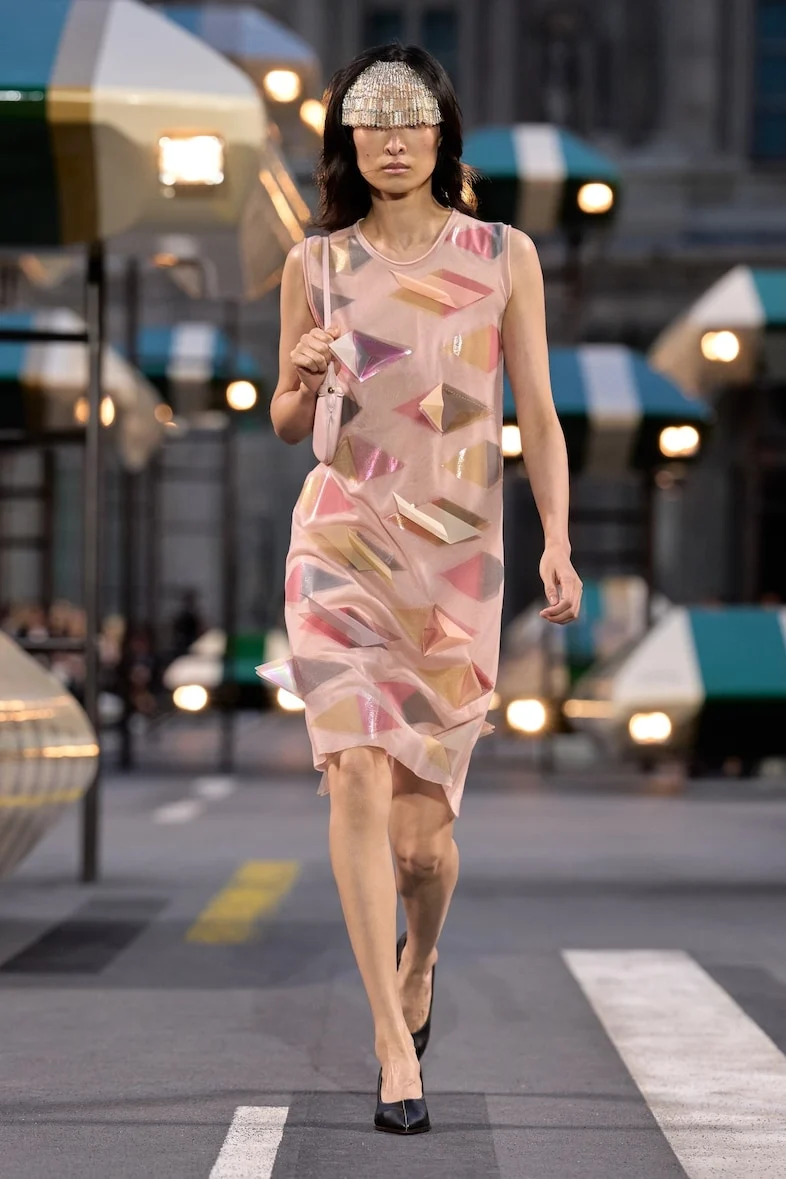
In the heart of Paris, amidst the sprawling, storied architecture of the Louvre, Nicolas Ghesquière, the artistic director of women’s collections at Louis Vuitton, delivered a masterclass in motion. For his Spring/Summer 2027 (SS27) presentation, Ghesquière transformed the Cour Carrée into a surreal, high-speed autobahn, complete with suspended, hovering vehicles. While the spectacle served as a nod to retro-futurist aesthetics—reminiscent of the cinematic optimism of 2015—the true gravity of the show lay not in the hovering metal, but in the ethereal, weightless garments that moved through the space with the grace of a shifting breeze.
The collection was a profound exploration of ergonomie—a term Ghesquière used repeatedly backstage to describe the symbiotic relationship between fabric and form. By eschewing the structured, armor-like silhouettes that have defined his recent tenure at the house, Ghesquière opted for a radical, fluid lightness, creating a wardrobe that prioritizes the freedom of the body in motion.
The Scenography: A Commentary on Urban Stasis
Fashion weeks in Paris are defined by a frenetic, often gridlocked pace. The city becomes a tangle of static luxury vehicles, hurried editors, and fashion enthusiasts darting between appointments. Ghesquière’s set design was a deliberate, satirical mirror of this reality. By placing a highway inside the hallowed, static walls of the Louvre, he juxtaposed the ancient with the industrial.
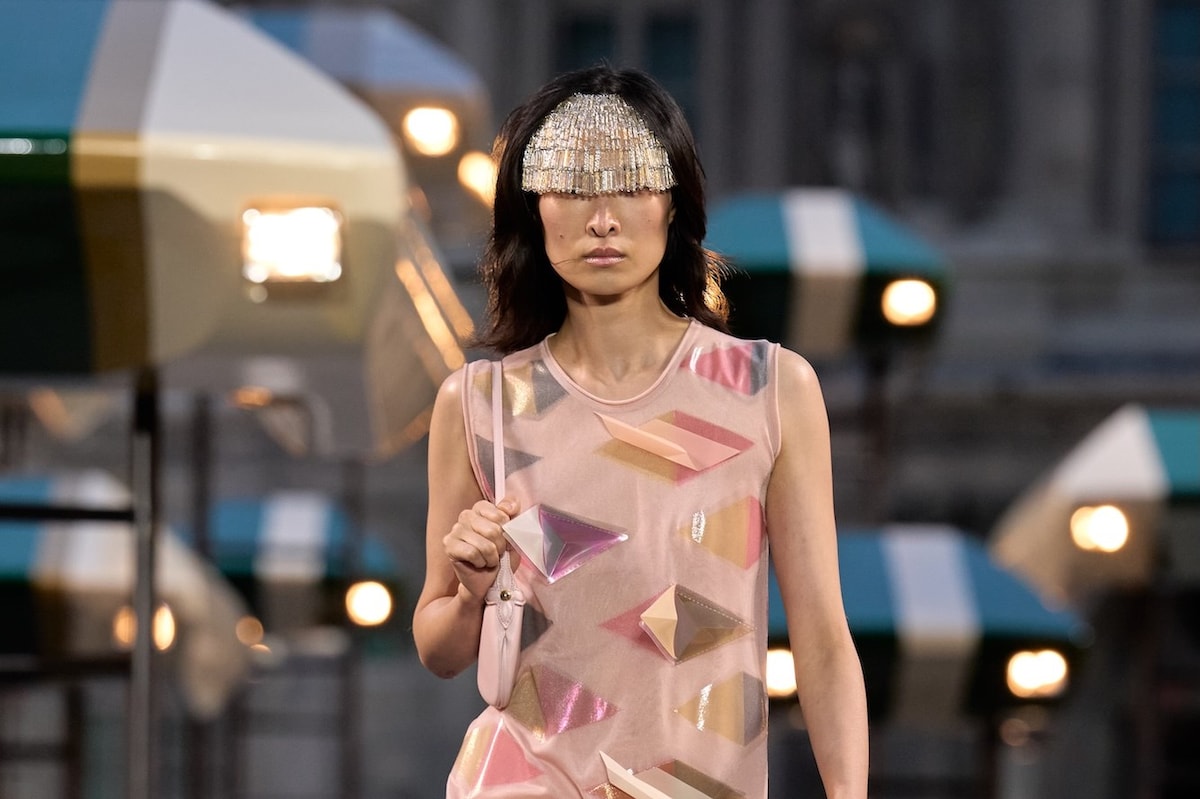
However, the inspiration was more grounded than the floating cars suggested. Ghesquière revealed that his initial spark came from archival mid-20th-century photographs of the Louvre and the Palais Royal. In those decades, these historic citadels were frequently utilized as mundane car parks for municipal employees. This jarring contrast—the utilitarian clutter of vehicles within the refined, historic architecture—triggered a design process centered on the tension between the stationary and the mobile.
A Chronology of the Collection’s Genesis
The development of the SS27 collection did not happen in a vacuum. It represents the latest chapter in Ghesquière’s long-standing obsession with retro-futurism and architectural engineering.
- The Early Inspirations: Long before his time at Louis Vuitton, Ghesquière’s work at Balenciaga in 2008 showcased stiff, race-car-inspired dresses that stood independently of the body. They were architectural, rigid, and protective.
- The Pivot: In the lead-up to the 2027 season, Ghesquière began to move away from the "armor" aesthetic he had perfected in previous seasons—most notably the hooded, structured silhouettes of late 2026 that prioritized protection against an uncertain world.
- The Design Phase: For SS27, the focus shifted to the physical properties of the clothes themselves. Drawing inspiration from Louis Vuitton’s own history—specifically the founder’s obsession with reducing the weight of heavy 19th-century trunks—Ghesquière challenged his atelier to fight gravity. The objective was to create garments that feel virtually non-existent on the wearer.
Supporting Data: The Engineering of Softness
The technical achievement of this collection lies in its material composition. "Engineering fabric to fight gravity," as Ghesquière described it, involved a departure from traditional tailoring.
The Material Palette
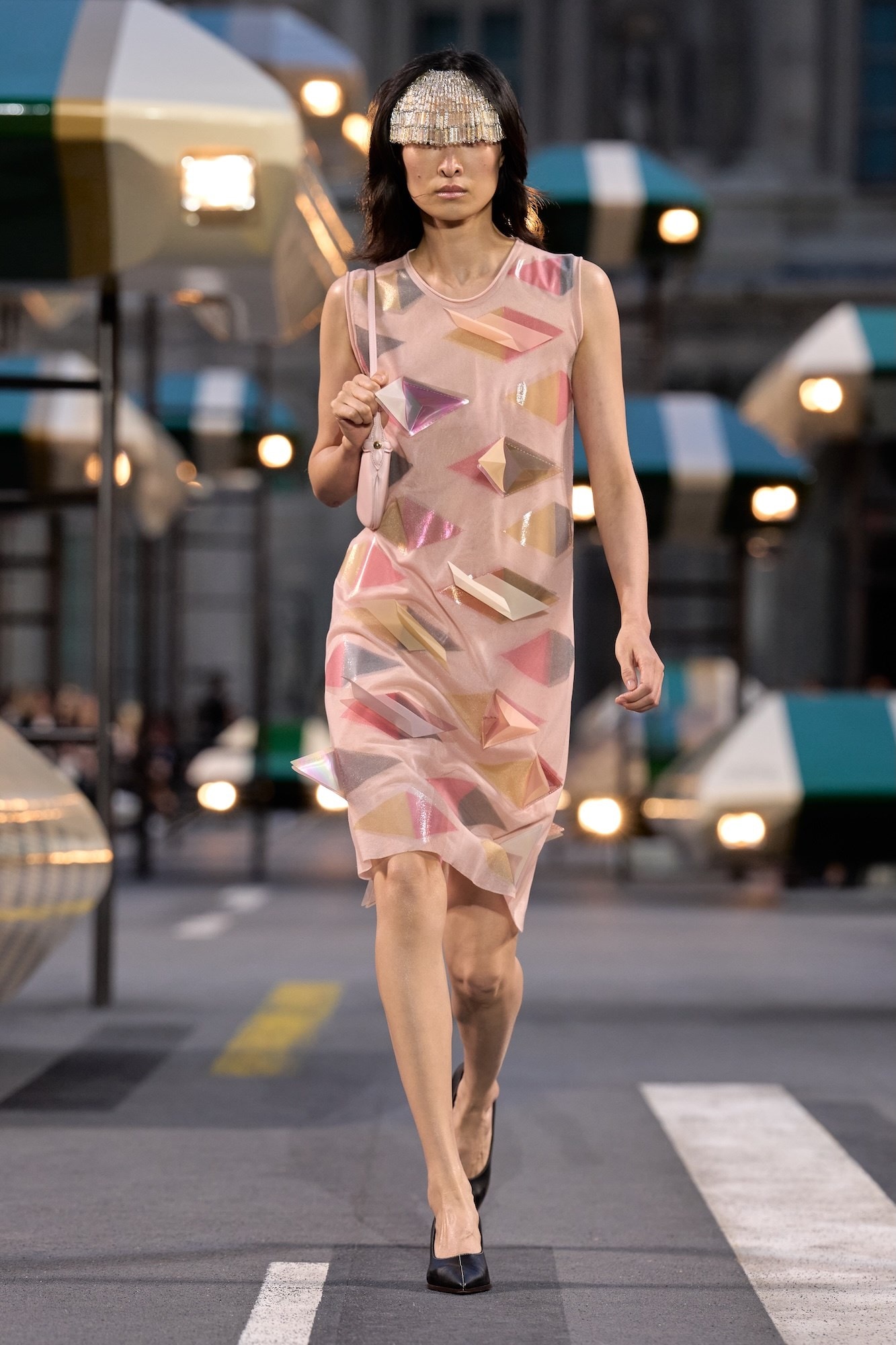
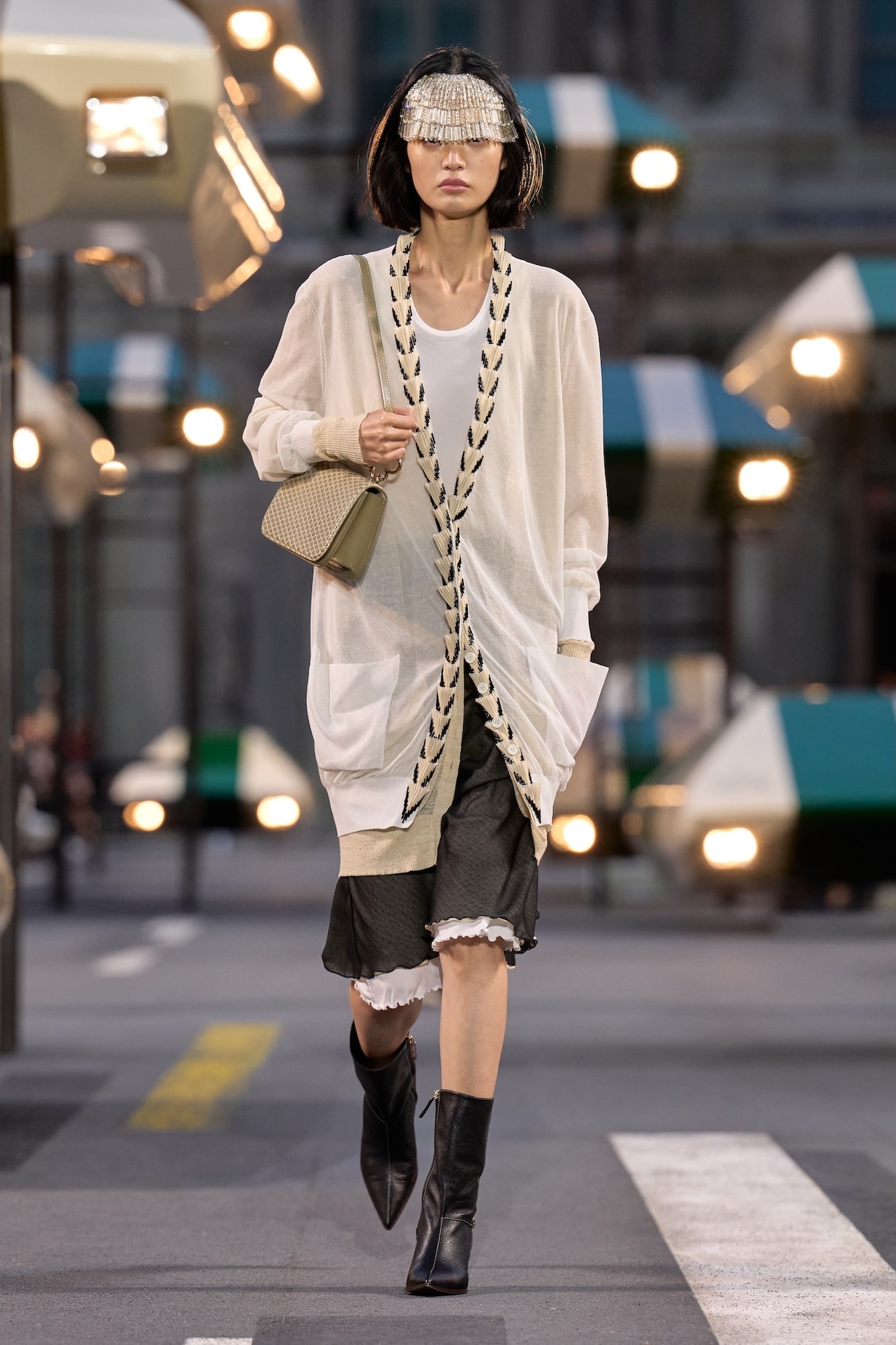
- Scarf-Weight Silks and Cashmeres: Much of the tailoring was executed using fabrics typically reserved for accessories. These materials, known for their fluidity and tendency to knot and ripple, were notoriously difficult for the atelier to tame into structured garments.
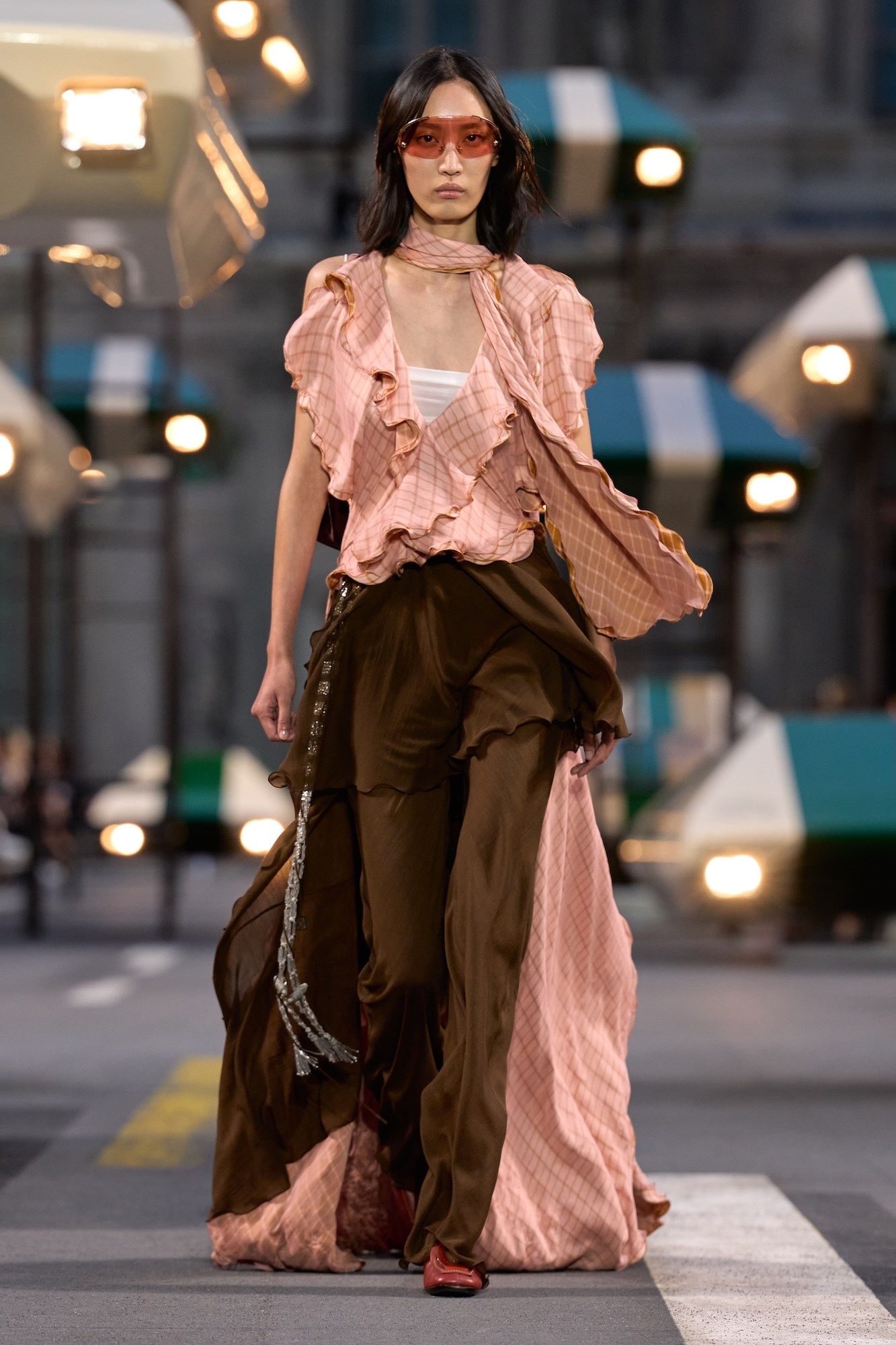
- Composite Chiffons: By layering double and triple "sandwiches" of flyaway chiffon, the design team created a composite material that mimics the strength of engineering materials while maintaining the translucency and weightlessness of a cloud.
- Weightless Tailoring: The traditional jacket and trouser were replaced by fluid, pooling silhouettes. These pieces do not sit on the body; they drape and hover, anchored only by the wearer’s movement.
Accessories as Anchors
While the clothing aimed for total weightlessness, the accessories served as the grounding force. The handbags were curved to hug the body’s natural contours, preventing the clothes from floating away, while the flat brogues—which opened the show—provided a necessary visual and physical anchor, signaling a return to practicality.
Official Perspectives: The Philosophy of "Ergonomie"
Backstage, Ghesquière was candid about the evolution of his vision. "We often associate the ergonomic with hard structure," he remarked, "but I wanted to explore softness."
His philosophy for this collection is clear: the modern wardrobe must be designed for the reality of the 21st-century inhabitant. This means clothes that adapt to the wearer, rather than forcing the wearer to adapt to the clothes. When asked about the "second skin" quality of the garments, he emphasized that this was not intended to be a return to the body-conscious trends of the past. Instead, it was an invitation for the wearer to exist within the fabric without feeling constricted.
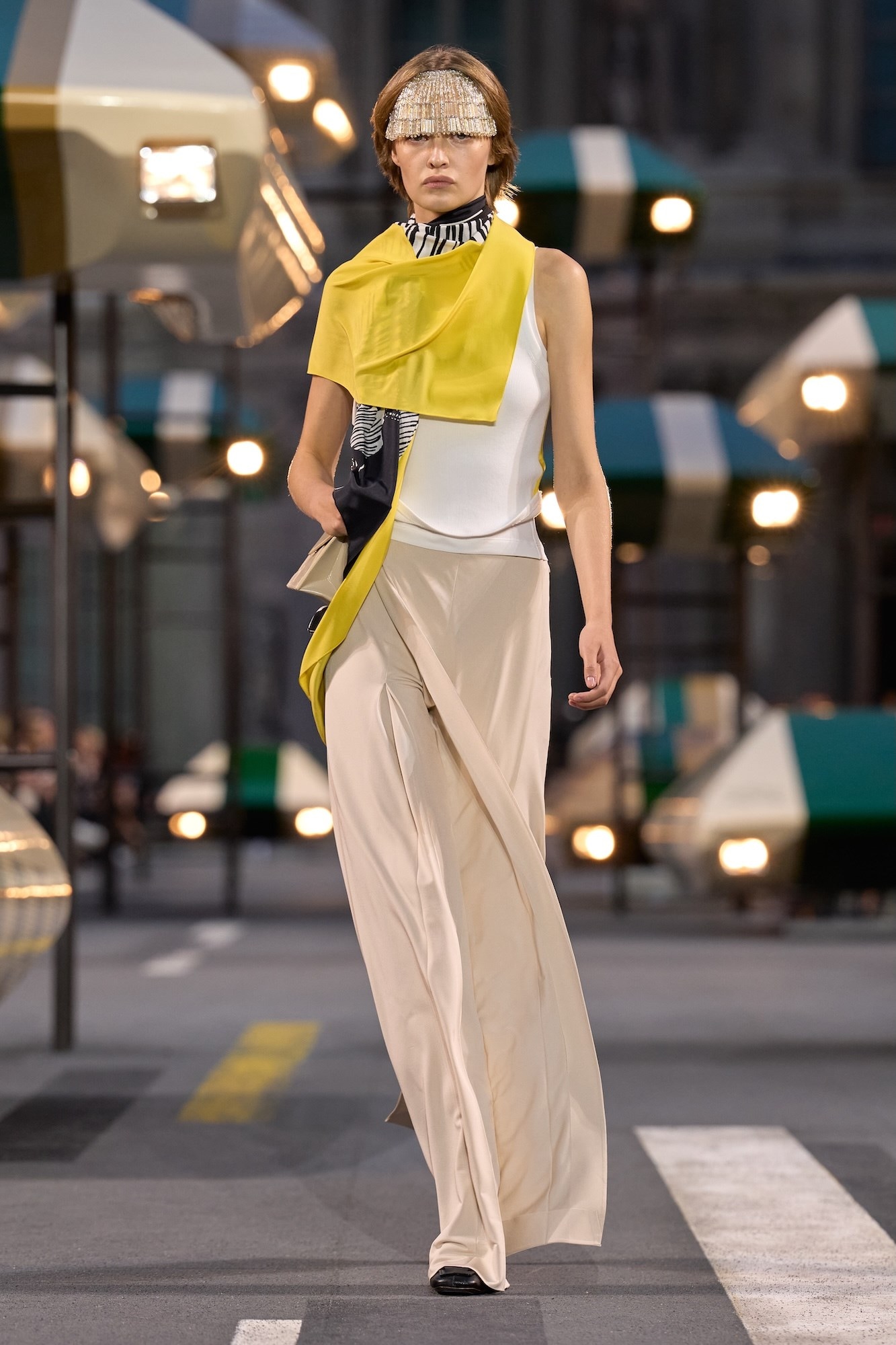
"Lighten up" was the unofficial mantra of the show. After years of exploring complex, protective folklore and futuristic tribalism, Ghesquière’s move toward ease reflects a broader industry trend of returning to the essentials of wearability.
Implications for the Modern Wardrobe
The implications of the Louis Vuitton SS27 collection for the broader fashion industry are significant.
1. The Death of Rigid Tailoring
For several seasons, the industry has flirted with oversized, heavy, and structured tailoring. Ghesquière’s pivot signals a potential industry-wide shift toward "fluid tailoring." Expect to see a surge in bias-cut garments and materials that prioritize drape over form.
2. The Intersection of Utility and Luxury
The collection proves that luxury does not have to be synonymous with weight or structure. By using lightweight performance-adjacent techniques to manipulate high-end silks, Louis Vuitton is bridging the gap between functional sportswear and haute couture. This hybrid approach caters to a generation that values mobility as a luxury commodity.
3. Sustainability through Minimalism
While not explicitly marketed as a "sustainable" collection, the move toward lighter fabrics and less heavy hardware inherently reduces the environmental footprint of the production process. The focus on "less" mirrors a growing consumer desire for minimalist wardrobes that transcend seasonal trends.
4. A New Definition of "Armor"
For years, Ghesquière defined armor as a physical barrier—a hard shell to protect the wearer. In SS27, he redefines armor as adaptability. The clothes are not meant to shield the wearer from the world, but to allow them to move through it with minimal resistance. It is an acknowledgment that in a world defined by constant motion, the most resilient clothing is that which does not fight the environment, but flows with it.
Conclusion: Coming Down to Earth
As the final models walked the makeshift runway, the atmosphere was one of profound relief. There was no theatrical, foreboding narrative—just the simple, elegant truth of fabric in motion. Nicolas Ghesquière has succeeded in creating a collection that feels like a response to the "hottest European summers on record" and the general, collective fatigue of a world in transition.
By stripping away the excess, the weight, and the artifice, Louis Vuitton has produced a collection that feels remarkably human. It is a wardrobe for the "here-and-now," designed for people who need to navigate the gridlocks of their own lives with grace. The SS27 show was a reminder that even at the highest echelons of fashion, the most revolutionary act is often the simplest one: to lighten the load and let the body be free. As the industry looks toward the coming year, the lesson from the Cour Carrée is clear—it is time to stop bracing for impact and start moving with the current.
