

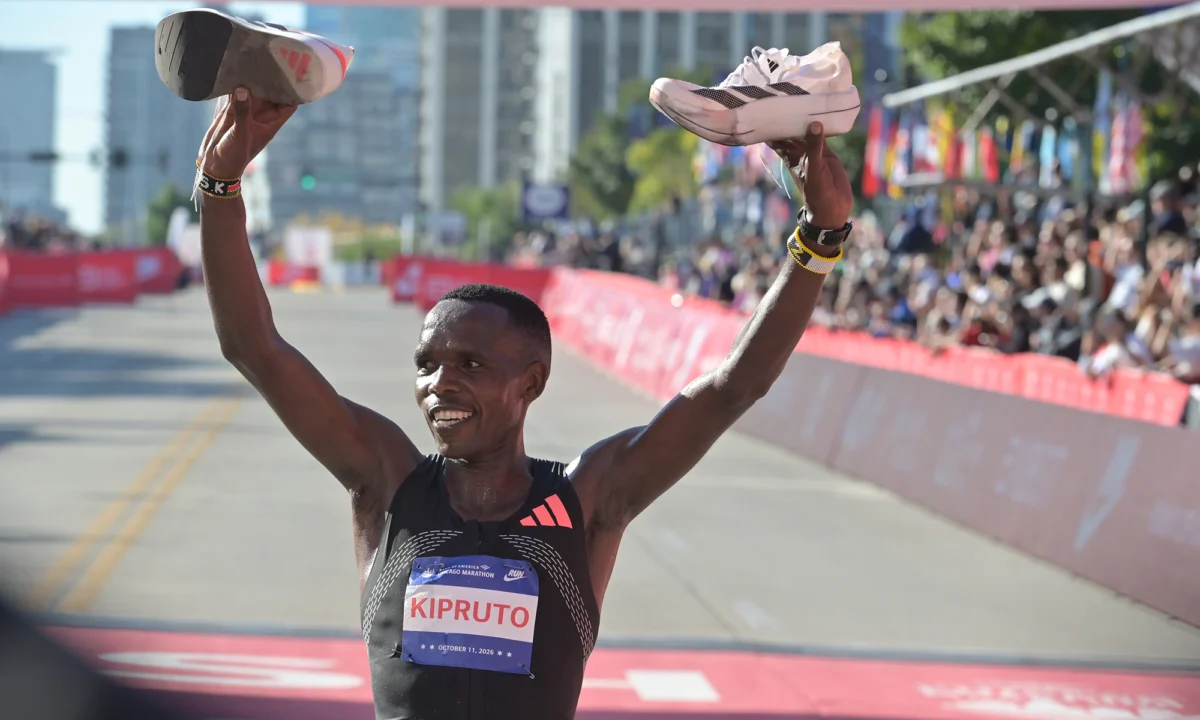
The 48th running of the Bank of America Chicago Marathon concluded this past Sunday, leaving a definitive mark on the history of long-distance running. Against the backdrop of a crisp, autumnal Chicago skyline, over 55,000 athletes descended upon Grant Park to navigate the iconic 26.2-mile course. While the race served as a global celebration of human endurance, it also underscored a profound technological shift within the footwear industry. Kenyan runner Amos Kipruto and Ethiopian sensation Hawi Feysa emerged as the champions of the men’s and women’s professional divisions, respectively, further cementing the dominance of Adidas and its revolutionary Adizero Adios Pro Evo series in the modern era of “super shoe” competition.
A Masterclass in Endurance: The Men’s and Women’s Races
For Amos Kipruto, the victory in Chicago was the culmination of years of persistence. Having stood on the podium in previous editions—securing both second and third-place finishes—Kipruto’s triumphant run was a testament to his tactical evolution. He crossed the finish line in a blistering 2:01:09, shattering his previous personal best of 2:01:29, set in London earlier this April. Kipruto’s performance was not merely a personal milestone; it was a display of calculated pacing and superior energy return, aided significantly by the Adidas Adizero Adios Pro Evo 3.
In the women’s division, Hawi Feysa proved once again why she is considered a titan of the sport. Claiming her second consecutive Chicago Marathon title, Feysa’s performance was clinical. Wearing the Adizero Adios Pro Evo 1—the same model that powered her to victory in 2025—she navigated the city’s streets with a poise that kept her comfortably ahead of competitors representing other major athletic brands, including Under Armour and Nike. Her repeat win places her in an elite category of marathoners capable of maintaining sustained dominance in one of the world’s most competitive “Major” races.

Chronology of a Record-Breaking Season
The success in Chicago is the latest chapter in a staggering year for the German athletic giant. To understand the significance of this win, one must look at the trajectory of the 2026 racing season:
- April 2026: The London Marathon became a testing ground for the then-new Adizero Adios Pro Evo 3. The shoe delivered immediate results, with Sabastian Sawe securing the men’s title and Tigst Assefa setting a jaw-dropping women’s-only world record of 2:15:41.
- September 2026: The Berlin Marathon served as the primary catalyst for the current buzz surrounding the brand. Adidas achieved a rare feat by sweeping both the men’s and women’s podiums. This event marked the first time since 2017 that a single brand occupied all six top spots in a major marathon, signaling a shift in the hierarchy of professional running gear.
- October 2026: The Chicago Marathon solidified this momentum. With Kipruto’s win and the presence of other Adidas-sponsored athletes—such as Tadese Bikila, who secured second place wearing the Pro Evo 3—the brand has effectively cornered the market on podium-topping performance.
The Science of Speed: Engineering the Adizero Series
At the heart of these victories lies an engineering philosophy that pushes the boundaries of what is possible in footwear design. The Adizero Adios Pro Evo 3, which debuted earlier this year, has quickly become the gold standard for long-distance performance.
Technical Specifications
The weight of a shoe is often the deciding factor in the final miles of a marathon, where every gram counts. The Adios Pro Evo 3 weighs in at an astonishing 97 grams for a men’s size 9.5. This reduction in mass is achieved through several proprietary innovations:

- Lightstrike Pro Evo Foam: Designers developed a new foam compound that is 50 percent lighter than previous iterations of Lightstrike technology. This material provides extreme cushioning while maintaining high energy return, ensuring the runner’s legs remain fresh even after 20 miles of high-impact effort.
- Kitesurfing-Inspired Upper: The upper portion of the shoe utilizes a woven, feathery material inspired by the structural integrity and weight distribution of kitesurfing sails. This design provides lockdown support without the restrictive weight of traditional synthetic materials.
- Running Economy: Independent testing and athlete feedback suggest that the Pro Evo 3 improves running economy by 1.6 percent compared to its predecessor, the Pro Evo 2. In a sport where races are decided by seconds, a 1.6 percent efficiency gain is an insurmountable advantage.
Industry Implications and Market Dynamics
The rise of the "super shoe" has fundamentally altered the economics of professional athletics. For years, the marathon circuit was a battleground of various brands, but the current dominance of Adidas suggests that footwear technology has become the primary differentiator in elite performance.
When athletes like Kipruto and Feysa choose their equipment, they are not merely making a fashion statement or a sponsorship decision; they are selecting a piece of performance technology that they believe will allow them to push past the limits of human physiology. The fact that top-tier athletes—who have the autonomy to choose from any manufacturer—are consistently gravitating toward the Adidas Adizero line provides the brand with invaluable marketing leverage.
Furthermore, this success impacts the broader footwear market. The "trickle-down" effect of these professional-grade shoes into the consumer market creates a halo effect. Amateur runners, inspired by the victories in Chicago, London, and Berlin, are increasingly seeking out the same technology used by their heroes, driving demand for premium performance gear.

The View from the Finish Line: Official Perspectives
While brand representatives remain focused on the engineering behind the success, the athletes themselves offer a different perspective. Following his win, Amos Kipruto noted that the mental relief of having complete confidence in his gear allowed him to focus entirely on the race strategy.
"When you are running at this level, you need to know that your equipment will not fail you," a spokesperson for the brand noted in a post-race statement. "Our mission has always been to provide athletes with the lightest, most efficient tools possible. Seeing Amos and Hawi cross the finish line today confirms that our research and development teams are hitting the mark."
However, the competition is not standing still. The presence of other brands on the podium—such as Nike, whose runner Milkesa Mengesha took third in the men’s division, and Under Armour’s Sharon Lodeki, who took second in the women’s—highlights that the race for technological supremacy is far from over.

Looking Ahead: What’s Next for Marathon Running?
As the 2026 season draws to a close, the focus shifts toward the upcoming spring marathons. The question for the industry is no longer "who will win," but "what will they be wearing?" The success of the Adidas Adizero Adios Pro Evo 3 has raised the bar for every other manufacturer. We are witnessing a technological arms race that is resulting in faster times, more consistent performances, and a complete re-evaluation of the limits of human endurance.
For the over 55,000 participants who ran in Chicago this weekend, the day was about personal achievement, community, and the joy of the sport. But for the world of elite athletics, the day was a stark reminder that in the modern era, the road to the podium is paved with innovation. As we look toward 2027, one thing is certain: the era of the super shoe is still in its infancy, and the records of today are destined to be the benchmarks of tomorrow.
