

By Staff Reporter
Beginning November 1, the U.S. Department of Education will implement a sweeping new administrative requirement for all grant recipients, mandating that institutions provide specific, written justifications for the drawdown of pre-approved federal funds. The policy, outlined in a September 28 agency memo, represents a significant shift in how federal education dollars are processed and monitored, sparking a heated debate between the federal government’s drive for fiscal accountability and the concerns of educational administrators regarding operational efficiency.
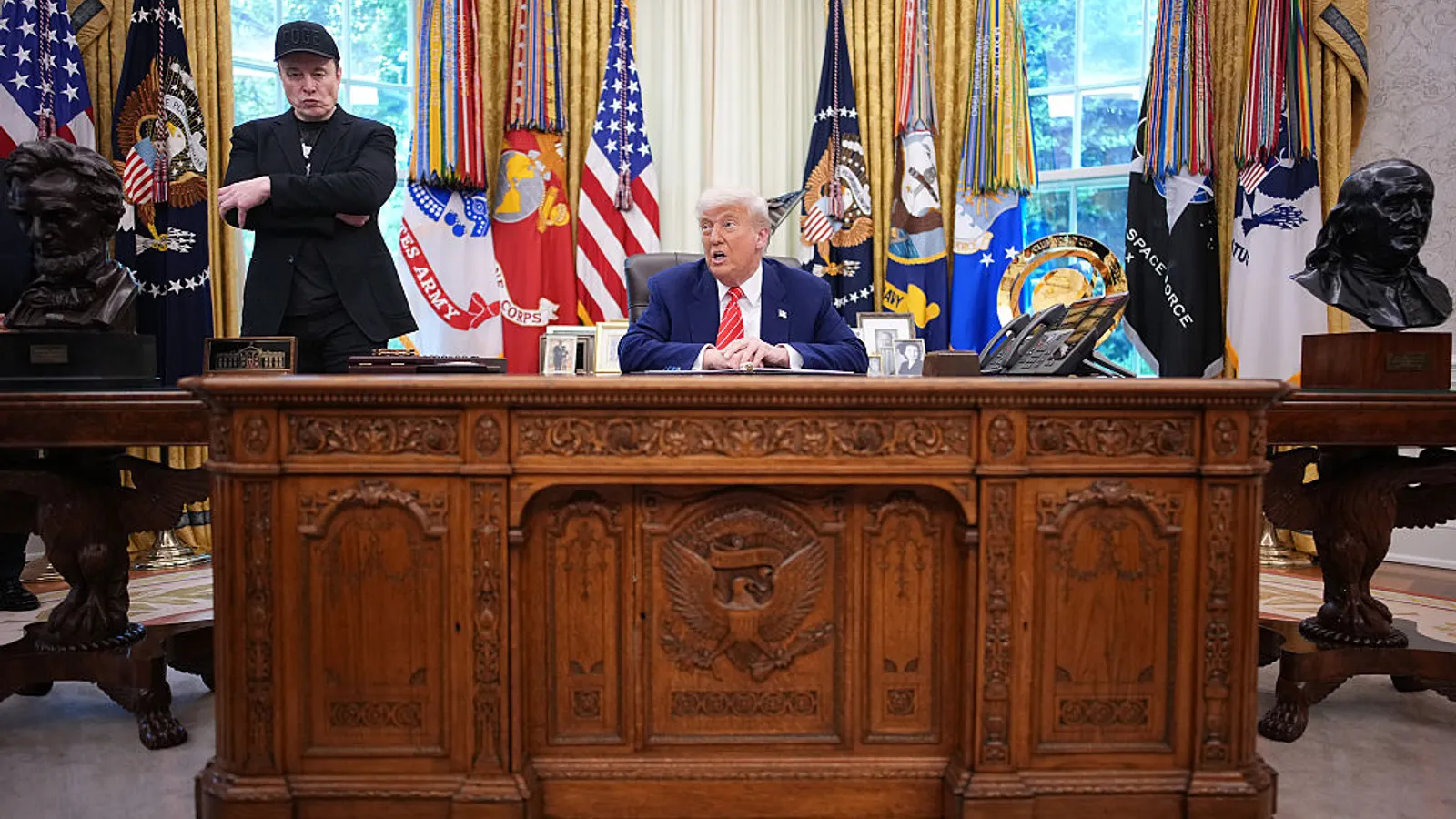
This directive is the latest manifestation of the Trump administration’s broader "Department of Government Efficiency" (DOGE) initiative. Often referred to under the banner of "defend the spend," the program aims to audit, streamline, and tighten the oversight of taxpayer-funded federal expenditures across all government sectors.
The Mechanics of the New Mandate
According to the guidance issued by Murray Bessette, the Education Department’s acting assistant secretary for the Office of Planning, Evaluation and Policy Development, the new protocol is designed to eliminate ambiguity in federal spending. Under the updated rules, every request for payment—regardless of the size of the grant—must be accompanied by a clear, concise justification.
To ensure uniformity, the department has placed strict constraints on these submissions:
- Data Requirements: Each request must explicitly identify the program name, the specific expense categories, the dollar amounts involved, and the precise start and end dates for the associated expenses.
- Character Limits: The written justification must be limited to a maximum of 255 characters. The agency emphasizes that this field should be free of superfluous narrative, favoring direct, factual explanations.
The scope of this mandate is comprehensive, affecting virtually every level of the education spectrum. Whether a recipient operates a specialized early childhood education program, a K-12 district project, a higher education research initiative, or an adult education training facility, the requirement for pre-drawdown justification remains the same.
Chronology of the DOGE Initiative
The path to this policy change began in early 2025, when President Donald Trump signed an executive order establishing the "Department of Government Efficiency" (DOGE). The executive order was built upon a platform of rooting out government waste and modernizing federal financial management.
- February 2025: President Trump issues an executive order formalizing the DOGE initiative, prioritizing fiscal transparency and the elimination of redundant bureaucratic spending.
- September 2025: The Department of Labor, acting under an interagency agreement to manage portions of the Education Department’s Office of Career, Technical and Adult Education grants, establishes a performance baseline, processing $2 billion across 7,600 payments with minimal flags.
- September 28, 2026: The Department of Education issues its official memo to all grantees, setting a firm deadline of November 1 for the implementation of the new drawdown justification process.
- November 1, 2026: The policy officially takes effect, mandating that all new payment requests include the required written justifications.
Supporting Data: The Case for Efficiency
Department officials argue that the new process is a "common sense" measure designed to move the agency toward a more modern, automated oversight model. Bessette, who serves as both acting assistant secretary and principal deputy assistant in the Office of Planning, Evaluation and Policy Development, emphasized in a recent interview that the measure is intended to be minimally invasive while providing maximum oversight.
"This is very much a common sense measure that doesn’t really require much on the part of the grantees, but does provide for better oversight and monitoring, especially going forward," Bessette noted.
Proponents of the policy point to the inefficiencies of the current, ad-hoc system. Historically, when a payment request was unclear, Education Department staff often had to engage in manual, email-based back-and-forth communication with grantees to verify the purpose of the funds. This process not only consumes significant man-hours but also delays the disbursement of funds.
By moving to a structured, data-driven system, the agency hopes to mirror the successes of other federal departments. Data from the U.S. Department of Labor suggests that such systems are highly effective. Of the 7,600 payments processed for career and technical education programs since September 2025, only six required further explanation. The agency believes that by codifying the justification process, they can significantly reduce the need for manual review, ultimately speeding up the payment cycle for the vast majority of compliant grantees.
Official Responses and Industry Pushback
While the Department of Education frames the policy as an administrative upgrade, educational administrative groups have raised significant alarms regarding the potential for systemic delays. The primary concern is that the new requirements represent a redundant layer of bureaucracy that will impede the delivery of critical services.
The Administrative Burden
Sasha Pudelski, director of advocacy for AASA, The School Superintendents Association, has been among the most vocal critics of the new mandate. In a statement released shortly after the announcement, Pudelski argued that the directive fundamentally misunderstands the flow of federal education funding.
"Because federal education funds are drawn down through state agencies, the new justification requirements would create additional administrative work for both states and school districts," Pudelski stated. She highlighted that states will now be forced to develop new guidance, offer technical assistance to districts, and establish a new review layer for submissions—all for funds that have already undergone rigorous budget approval processes.
Pudelski further characterized the new requirement as "duplicative." She pointed out that federal grants are already subject to extensive oversight, including detailed application reviews, budget approvals, ongoing monitoring, and annual audits. "Adding another layer of pre-approval paperwork increases administrative burden without meaningfully improving accountability, redirecting limited administrative capacity away from teaching, learning, and student services," she added.
Risks to Vulnerable Populations
Perhaps the most significant pushback has come from advocates for students with disabilities. The National Association of State Directors of Special Education (NASDSE) issued a formal statement expressing deep concern over the potential for the new requirements to delay funding for programs under the Individuals with Disabilities Education Act (IDEA).
"Any delay in federal disbursement will directly impact services and potentially deprive our most vulnerable students of FAPE [free and appropriate public education]," the NASDSE statement warned. Because IDEA funds are often used to provide immediate, ongoing services—such as speech therapy, specialized instruction, and physical accommodations—even a short-term holdup in payment processing could lead to a breach of a district’s legal obligations to its students.
Implications for Schools and Districts
The practical implications of the November 1 policy are substantial. For school districts, which often operate on thin margins and tight cash-flow schedules, the potential for a "flagged" justification could mean the difference between paying staff on time and facing a liquidity crisis.
The Flagging and Correction Process
The Department of Education has attempted to mitigate these fears by clarifying the correction process. If a submission is flagged as insufficient, the grantee will be notified via email. Once the grantee provides the necessary clarification, the payment will be released. The department has also published step-by-step instructions and is offering support services to help grantees navigate the transition.
However, for a district or state agency dealing with hundreds of grant-funded line items, the "email back-and-forth" process described by the department could still result in cumulative delays. While the agency views this as a streamlined digital workflow, practitioners on the ground see it as an extra hurdle that could disrupt the continuity of services.
The Broader Shift in Federal-Local Relations
The mandate is symbolic of a larger shift in the relationship between the federal government and state/local education agencies. By emphasizing "accountability" and "transparency" through strict, data-centric reporting, the federal government is moving away from a trust-based relationship toward a more transactional, compliance-focused model.
For the Department of Education, this is a necessary evolution to ensure that taxpayer dollars are being utilized effectively in an era of intense scrutiny. For school superintendents and state directors, however, it represents an encroachment of "federal micro-management" that threatens to distract from the core mission of education.
As November 1 approaches, the education community remains in a state of preparation. While the Department of Education continues to advocate for the efficiency gains of the new system, the coming months will likely serve as a test case for whether the agency can balance its "defend the spend" initiative with the practical realities of managing a complex, nationwide education system. For now, the directive stands: all grantees must be ready to justify every dollar, in 255 characters or less, or risk the flow of federal support.
