

The following article reflects the professional perspective of the author and does not necessarily represent the official position of Trellis.
For the first time in nearly 15 years, the regulatory landscape governing how companies communicate recyclability to the American public is undergoing a seismic shift. On October 4, California’s landmark “Truth in Labeling” legislation—formally known as Senate Bill (SB) 343—officially comes into effect. This move marks the most significant intervention in packaging transparency in a generation, forcing a national conversation on what it truly means for a product to be "recyclable."
As the deadline looms, the packaging industry finds itself at a crossroads. For decades, the ubiquitous "chasing arrows" symbol has decorated consumer goods, often conveying a false sense of security about a product’s lifecycle. SB 343 intends to end that ambiguity, setting a rigorous new standard: for a product to be labeled as recyclable in California, it must be collected in 60 percent of the state’s communities and effectively sorted at 60 percent of its recycling facilities.
The Chronology of Change: From Ambiguity to Accountability
The journey toward SB 343 was not a sudden pivot but the culmination of years of frustration regarding the efficacy of U.S. recycling streams.
- Early 2010s: The proliferation of "wish-cycling"—where consumers place non-recyclable items in bins, hoping they will be processed—began to overwhelm municipal recycling facilities, leading to increased costs and reduced quality of recycled materials.
- 2018: The "National Sword" policy enacted by China effectively halted the importation of most foreign plastic waste. This sent shockwaves through the U.S. waste management industry, exposing the fragility of a system that relied on global markets to process materials that were often not actually recyclable.
- 2021: California legislators introduced SB 343, seeking to align consumer-facing labels with the harsh reality of regional infrastructure capabilities.
- 2022–2023: As the implementation date approached, the debate intensified. Packaging trade groups filed lawsuits, arguing that the legislation imposed unconstitutional constraints on commercial speech and created an impossible regulatory burden for companies operating across state lines.
- October 4, 2024: The legislation officially takes effect, mandating that products sold in California meet strict infrastructure-based criteria to use recyclability claims.
The Data Gap: Why Consumers Struggle at the Bin
To understand why this legislation is necessary, one must look at the disconnect between consumer intent and material reality. According to recent research conducted by the Sustainable Packaging Coalition (SPC), nearly two-thirds of Americans claim to recycle "often" or "always." However, the efficacy of this participation is undermined by a lack of granular knowledge.
The SPC’s research identified two primary barriers to effective recycling. The first is a lack of physical access; despite the prevalence of blue bins, not all communities have the infrastructure to process specific types of plastics or composite materials. The second barrier is cognitive: even when access exists, consumers often do not know what to recycle.
Data from the SPC’s consumer surveys highlights a startling reality: more than 50 percent of Americans rely on their "best judgment" when disposing of packaging. They are not looking for complex codes; they are making split-second decisions at the bin. When labels are vague or misleading, the result is contamination—the bane of the recycling industry.
Official Responses: Industry vs. Advocacy
The regulatory shift has created a stark divide in the business community. Advocacy groups, including environmental watchdogs and sustainability nonprofits, argue that SB 343 is a long-overdue correction. They maintain that the "chasing arrows" symbol has become a marketing tool rather than a functional instruction, often applied to packaging that ends up in landfills regardless of the consumer’s intent.
Conversely, industry groups representing major consumer packaged goods (CPG) companies have voiced significant concerns. The primary argument from the opposition is that the law restricts free speech by prohibiting manufacturers from using accurate, albeit nuanced, claims about their packaging. Furthermore, they cite the logistical nightmare of managing "California-only" labeling in a national supply chain.
The result is a period of profound uncertainty. While the law is active, enforcement protocols remain in flux. Companies are currently balancing the risk of non-compliance with the exorbitant cost of redesigning packaging for a single state market.
Designing for Compliance and Consumer Clarity
For brands attempting to navigate this landscape, the challenge is twofold: achieving technical compliance with SB 343 while simultaneously providing instructions that actually change consumer behavior.

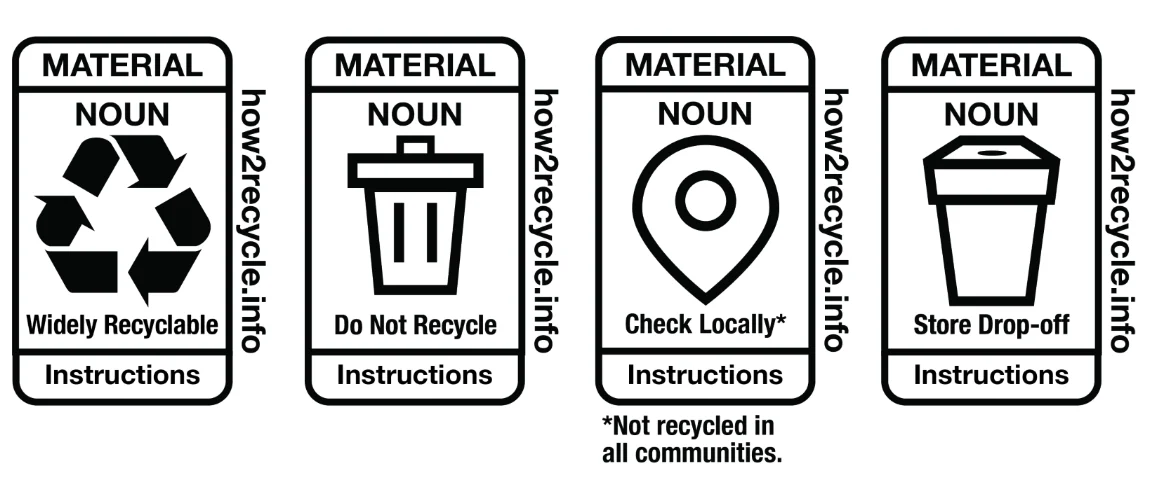
The solution lies in shifting from generic symbols to explicit, actionable instructions. Research indicates that consumers are more likely to recycle correctly when they are provided with simple, text-based instructions rather than ambiguous icons. Programs like "How2Recycle"—a project managed by GreenBlue—have become the gold standard in this arena. By reserving the "Widely Recyclable" designation exclusively for materials that meet the 60 percent threshold, these programs align naturally with the spirit and letter of California’s new law.
The data supports this approach: 84 percent of consumers already recognize at least one label within the How2Recycle suite, suggesting that consumer-friendly labeling is not just a regulatory hurdle—it is a brand asset.
Addressing the Nuance: Beyond the Blue Bin
One of the most complex areas of the new legislation involves materials that are not "widely recyclable" but are still recoverable through specialized programs, such as store drop-offs for plastic films.
The SPC’s research reveals that while consumers generally comprehend these labels, they struggle with the logistics of execution. They understand that a plastic bag shouldn’t go in their home bin, but they are often unsure where the nearest collection site is or whether the store in their specific neighborhood participates.
To bridge this gap, brands have an opportunity to move beyond the label itself. By investing in digital educational resources—such as QR codes on packaging that lead to store locators—brands can turn a passive label into an active participant in the circular economy.
Implications for the Future of Sustainable Packaging
The implementation of SB 343 is likely the first of many such state-level interventions. As California sets the pace, other states are observing the results closely. The long-term implication for the industry is clear: the era of "green-washing" packaging claims is ending.
Companies that prioritize transparency and invest in verifiable, infrastructure-aligned labeling will likely gain a competitive advantage. Today’s consumers are increasingly skeptical of sustainability claims. By providing honest, clear instructions, brands can build trust—a commodity that is becoming as valuable as the recycled material itself.
The Strategic Imperative
- Substantiate Everything: Companies must audit their packaging materials against current infrastructure data. If it doesn’t meet the 60 percent threshold, it shouldn’t claim to be recyclable.
- Prioritize Clarity: Replace confusing symbols with clear, imperative text. "Empty before recycling" or "Store drop-off" provides the specific guidance consumers need.
- Invest in Education: A label is only as effective as the consumer’s ability to act on it. Use digital tools to guide the consumer from the point of disposal to the point of recovery.
Conclusion: A Path Forward
Regulatory uncertainty is an uncomfortable reality, but it is not an excuse for inaction. The divide between industry trade groups and environmental advocates has historically ignored the most important stakeholder: the consumer.
The evidence is overwhelming—consumers want to do the right thing, but they are currently set up for failure by a system of confusing labels and inadequate information. The brands that successfully navigate this new legislative environment will be those that view SB 343 not as a regulatory burden, but as a roadmap for authentic engagement. By making recyclability claims that are both compliant and useful, companies can transform the act of disposal into a meaningful contribution to a more circular future.
As we look toward the post-October 4 landscape, the focus must remain on the person standing at the bin. If we can provide them with instructions they recognize, understand, and can realistically act upon, we will have taken the most significant step toward true recycling progress in the 21st century.
