

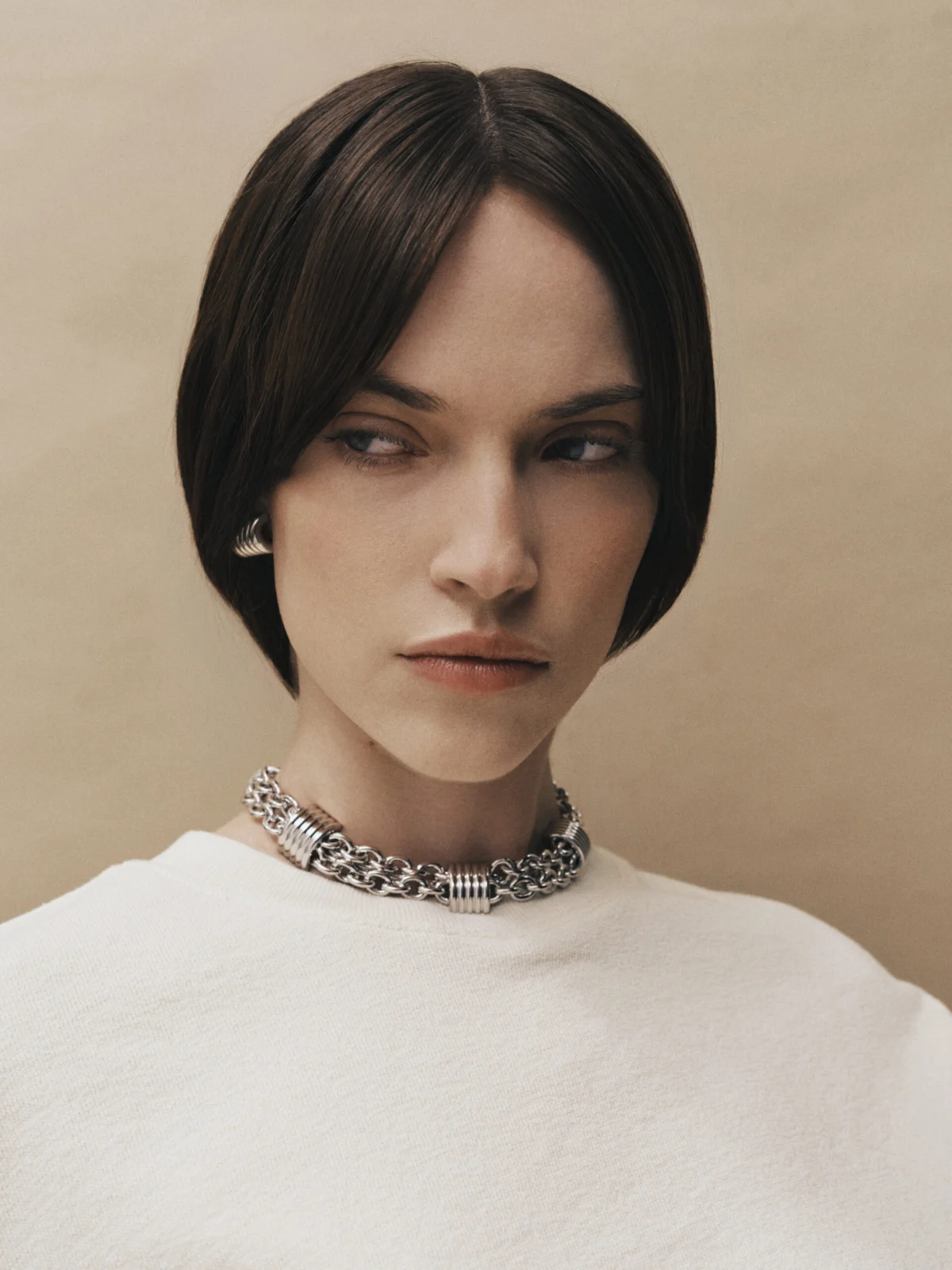
PARIS — As the global fashion circuit converged upon the French capital for the Spring 2027 showcases, the jewelry sector revealed a striking bifurcation in creative direction. Mirroring a dichotomy previously observed in the season’s footwear and leather goods, the jewelry presentations in Paris oscillated between two distinct poles: a celebratory, maximalist embrace of sculptural scale and a refined, minimalist dedication to "everyday" preciousness.
From the whimsical, whipped-cream-inspired silhouettes of Annelise Michelson to the rigorously engineered diamond settings of Shihara, the season was defined by a collective "return to fundamentals." However, this return was not a retreat into the safe or the familiar. Instead, designers utilized the Spring 2027 window to refresh core shapes through the application of unconventional materials, experimental finishes, and a radical rethinking of human proportions.

Main Facts: The Bifurcation of Aesthetics
The overarching narrative of the Paris showcases was the tension between the "collectible" and the "functional." On one side of the spectrum, brands like Bibi van der Velden and Oxblood leaned into the concept of jewelry as a narrative-driven artifact—pieces that serve as conversation starters or personal talismans. On the other, brands like Kinraden and By Pariah prioritized the "stealth luxury" of delicate lines, focusing on how light interacts with skin and how jewelry can be layered for a seamless transition from day to evening.
Key themes identified across the collections included:

- The Scalability of Whimsy: A move toward "frivolous" shapes (curlicues, whipped cream, and organic flourishes) that remain wearable through clever weight distribution and scaling.
- Modular Versatility: An emphasis on pieces that can be expanded or contracted, such as Yutai’s multi-strand pearl systems or Pen Mané’s modular pendants.
- Historical Subversion: Reinterpreting archival codes, such as Eddie Borgo’s Art Deco pyramids or Jacques Marie Mage’s 1970s counter-culture motifs.
- Material Innovation: The use of hand-carved travertine, blackened gold, mossy agate, and "portrait-cut" diamonds to challenge traditional notions of value.
Chronology of the Showcases: From High-Octane Heritage to Modernist Newcomers
The Paris schedule was marked by a rhythmic progression from established architectural masters to a new generation of multidisciplinary designers.
The week began with a focus on heritage and evolution. Eddie Borgo, approaching his 20th anniversary, set the tone by revisiting the industrial hardware and Art Deco silhouettes that defined his early career, but with a "softened" lens for 2027. This was followed by the high-concept world-building of Jacques Marie Mage, who transitioned from eyewear into a full jewelry suite inspired by the 1970s "Bunker 77" aesthetic.

Mid-week, the focus shifted toward organic forms and materiality. Designers like Annelise Michelson and By Pariah presented collections that were deeply rooted in sensory experiences—the "lightness" of French royalty and the "glow" of earth-toned gemstones.
The showcases concluded with a masterclass in technical precision. The Japanese labels Shihara and Yutai, led by Yuta Ishihara, demonstrated how engineering-led design could create "modular masterpieces," while Kinraden closed the circuit by proving that the most significant impact often comes from "all things tiny."

Supporting Data: Brand-by-Brand Analysis
The Sculptural Maximalists: Annelise Michelson and Déhanche
Annelise Michelson drew inspiration from the Victoria & Albert Museum’s Marie-Antoinette exhibition. Her "whipped cream" hoops, initially sculpted in plasticine, translated the decadence of the 18th-century French court into contemporary gold curlicues. While the scale was intentionally provocative, Michelson noted a strategic move toward "scaling down" for commercial viability.
Déhanche, a brand that built its reputation on modernist belts, successfully expanded its "language of adornment" to the neck and ears. The "Hollyhock" necklace, characterized by its chained and polished metal construction, served as a case study in how hardware-inspired jewelry can elevate minimalist apparel.

The Storytellers: Bibi van der Velden and Jacques Marie Mage
Dutch jeweler Bibi van der Velden expanded her "Bestiary" collection, leaning into the trend of high-end collectibles. Her scarab signet rings, inspired by 17th-century Dutch portraiture, bridged the gap between historical symbolism and modern pinky-ring trends.
Meanwhile, Jacques Marie Mage utilized the mythos of "Bunker" Spreckels to launch jewelry that felt like "rebellion in gold." The "Latigo" signet ring, featuring a "Calavera" (skull) cameo, was offered in both sterling silver and 18-karat gold, targeting a consumer looking for "mythology" in their accessories.

The Material Explorers: By Pariah and Eddie Borgo
By Pariah’s "Smoke and Light" collection was an exercise in optical physics. By pairing smoky quartz and champagne diamonds with blackened gold, the brand achieved a "warm earthy shine" that felt grounded yet ethereal.
Eddie Borgo updated his iconic "Pyramid" collection by integrating hand-carved travertine and black obsidian. His "MoonLock" line evolved the brand’s padlock motif into elliptical, cabochon-set pieces that favored "smoothness" over the sharp edges of previous seasons.

The Technical Minimalists: Shihara, Yutai, and Kinraden
Yuta Ishihara’s dual presentations showcased the pinnacle of Japanese engineering. Under Shihara, he focused on "portrait-cut" diamonds—stones that are flat and clear like windows—set in ways that amplified their unique geometry. Under Yutai, he introduced "modular masterpieces," specifically a gold hardware system that allows a single pearl choker to expand into multiple strands.
Kinraden took a counter-intuitive approach with "All Things Tiny." By reducing the proportions of its "Stilos" and "Oxygen" collections, the Danish brand focused on the "neo-Cuban" aesthetic and the stacking potential of delicate silver leaves.

Official Responses: Insights from the Creators
The designers in Paris were unanimous in their belief that jewelry must now offer more than just decoration; it must offer a psychological reprieve or a sense of personal identity.
Annelise Michelson articulated the seasonal mood of escapism: "I felt that we really needed this lightness in our difficult, morose times. What I wanted to explore was that lightness, the joy, a touch of frivolity."

Jérôme Mage, founder of Jacques Marie Mage, spoke to the necessity of character-driven design: "To truly understand [the collection], you have to wrestle with your own relationship to freedom, to rebellion, and to the roles we’re all expected to play. Bunker Spreckels became a kind of symbol for me—a muse, but also a mirror."
Sarah Emilie Müllertz, the architect-turned-jeweler behind Kinraden, emphasized the strategic shift in her company’s leadership, noting that the new focus on "tiny" proportions was a direct response to a consumer desire for "layering and modularity."

Implications: The Future of the Jewelry Market
The Spring 2027 Paris showcases suggest several long-term shifts in the luxury jewelry market:
- The Rise of the "Jewelry Wardrobe": The emphasis on modularity (Yutai, Pen Mané) and scaling (Michelson, Kinraden) suggests that consumers are no longer looking for "hero" pieces in isolation. Instead, they are building "wardrobes" of jewelry that can be customized daily.
- The Integration of Lifestyle and Adornment: The success of Oxblood, which presented jewelry alongside home linens and porcelain at the Hotel Costes, indicates that jewelry is increasingly being marketed as part of a holistic "aesthetic universe" rather than a standalone category.
- The Value of "Perfect Imperfection": Brands like Pen Mané and Shihara are moving away from the standardized perfection of the "classic brilliant cut." By favoring mossy agate, portrait-cut diamonds, and "rocky outlines," the industry is redefining "preciousness" through the lens of uniqueness and natural irregularity.
- Strategic Brand Extensions: The entry of eyewear giants (Jacques Marie Mage) and belt specialists (Déhanche) into the jewelry space suggests that the barriers between accessory categories are dissolving. High-end brands are now leveraging their "hardware language" to capture a larger share of the luxury consumer’s wallet.
In conclusion, the Spring 2027 showcases in Paris proved that the jewelry industry is in a state of vibrant transformation. By balancing the "morose times" with "frivolous" creativity and rigorous engineering, designers have ensured that jewelry remains the most intimate and expressive frontier of fashion.
