

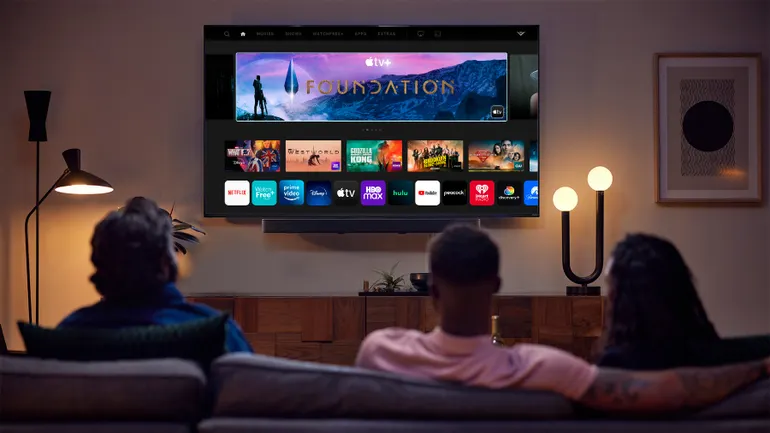
The landscape of Connected TV (CTV) is undergoing a seismic shift, and at the heart of this transformation lies a strategic synergy between retail giant Walmart and its recent $2.3 billion acquisition, Vizio. As consumer viewing habits migrate away from traditional linear television toward ad-supported streaming platforms, Vizio is aggressively positioning itself as a central pillar in the modern advertiser’s toolkit. By integrating high-octane creator content into its FAST (Free Ad-Supported Streaming TV) service, WatchFree+, Vizio is not merely competing for eyeballs; it is building a sophisticated, data-driven ecosystem designed to bridge the gap between entertainment and retail conversion.
The Core Strategic Shift: Creators as the New Prime Time
In an era where "influencer marketing" has matured into a core media channel, Vizio’s latest expansion marks a departure from standard syndication. The platform is debuting over 40 new creator-led channels, effectively turning the smart TV home screen into a destination for the internet’s most prominent personalities.
This move acknowledges a fundamental truth in today’s attention economy: audiences are increasingly loyal to individual creators over legacy studio brands. By tapping into the massive, pre-existing fanbases of figures like MrBeast, Celine Dept, Ryan Trahan, and the "Hot Ones" franchise by First We Feast, Vizio is betting that familiar faces will keep viewers on the WatchFree+ interface longer, thereby increasing the inventory available for high-value advertising.
Beyond simple channel aggregation, Vizio is leaning into original, branded entertainment. The upcoming "Holiday Chocolate Workshop," featuring renowned chocolatier Amaury Guichon, represents a hybrid model of content and commerce. By producing exclusive, high-production-value series that allow for natural brand integration, Vizio is creating "shoppable" moments that feel less like intrusive commercials and more like part of the viewing experience.
A Chronology of Growth: From Acquisition to Integration
The current strategy is the result of a deliberate, multi-year progression toward full-funnel dominance:
- February 2024: Walmart officially announces its acquisition of Vizio for $2.3 billion. The move is widely interpreted as a bid to bolster Walmart Connect, the retailer’s advertising arm, by leveraging Vizio’s proprietary operating system and massive device footprint.
- Late 2025 – Early 2026: Vizio begins refining its OS interface, placing a greater emphasis on WatchFree+ discoverability and integrating retail-media data to allow advertisers to track the path from a CTV impression to a physical or digital Walmart purchase.
- First Half of 2026: The ecosystem hits a critical mass, reaching 32 million yearly active devices, a 20% year-over-year increase.
- Q2 Fiscal Year 2027: WatchFree+ engagement metrics skyrocket, with viewing hours climbing 58% compared to the same period in the previous year.
- Late 2026: Vizio rolls out the creator-led channel expansion and announces high-profile exclusive films, such as "Jingle Bells Wedding Bells," featuring national brand partners like GEICO.
Supporting Data: The CTV Market Momentum
The aggressive expansion by Vizio occurs against a backdrop of explosive growth in the CTV sector. According to data from the Interactive Advertising Bureau (IAB), U.S. CTV ad spend is projected to climb 11% in 2026, reaching a staggering $29.3 billion.
Vizio’s performance metrics underscore why this sector is so attractive to advertisers. The 58% growth in WatchFree+ viewing hours suggests that the "freemium" model is gaining significant traction among cost-conscious consumers who are experiencing "subscription fatigue." For Walmart, the logic is sound: if they can capture the consumer’s attention on the screen and pair it with the transactional data from the Walmart ecosystem, they can offer advertisers a level of closed-loop attribution that is nearly impossible for competitors to replicate.
Furthermore, Walmart Connect’s financial performance reinforces this trajectory. Excluding the Vizio integration, Walmart Connect saw a 43% year-over-year revenue increase in Q2 of fiscal year 2027, proving that the retailer’s advertising arm is a robust engine in its own right.
Official Responses and Strategic Vision
The industry has taken note of these developments, with both brand partners and corporate leadership signaling strong approval of the new direction.
"Where people spend their time watching entertainment matters, and we want GEICO to be part of those moments," said Arianna Orpello, Chief Marketing Officer at GEICO, in a statement regarding the brand’s sponsorship of the exclusive Vizio film "Jingle Bells Wedding Bells." Orpello’s comment encapsulates the shift in advertiser sentiment: it is no longer enough to buy 30-second spots in high-rated shows; brands must now embed themselves into the content that consumers actively choose to watch.
From the Walmart side, the strategy is about utility and scale. By partnering with heavyweights like Warner Bros. Discovery and Spotify, Walmart Connect is moving beyond its own "walled garden." The integration of Vizio inventory via Magnite—moving from a proof-of-concept to alpha testing—signals that Walmart is intent on becoming a primary media buyer and seller in the broader CTV landscape, not just for their own products, but for the entire retail industry.
Implications for the Advertising Industry
The implications of Vizio’s pivot are profound for both the media and retail sectors.
1. The Death of the "Passive" TV Experience
By curating content from YouTube stars and digital-first creators, Vizio is breaking the traditional broadcast model. Viewers who once watched cable news or syndicated reruns are now migrating to content that matches their social media consumption habits. Advertisers must adapt their creative assets to match the faster-paced, more authentic style of creator content, or risk being ignored by a generation of viewers who have developed a high tolerance for—and filter for—traditional advertising.
2. The Rise of Closed-Loop Attribution
The true value proposition for Walmart is the ability to connect a CTV ad impression to a purchase at a Walmart register or on Walmart.com. As privacy regulations continue to tighten around third-party cookies, "first-party data" becomes the gold standard. Vizio’s OS provides a direct line to millions of households, and when combined with Walmart’s massive transactional database, it offers an attribution model that provides clear ROI. This "full-funnel" capability is the ultimate differentiator that will allow Walmart to capture a larger share of national brand marketing budgets.
3. Consolidation of the FAST Space
The rapid growth of WatchFree+ highlights an ongoing consolidation in the streaming market. With over 45,000 movies and shows and 400+ live channels, Vizio is becoming a "super-aggregator." Smaller, niche streaming services will likely find it increasingly difficult to compete with platforms that offer both hardware distribution and deep retail integration. For the viewer, this means a more unified experience; for the industry, it means the playing field is narrowing to those who own the hardware, the data, and the content.
Conclusion: The Road Ahead
Vizio’s evolution from a hardware manufacturer to a media powerhouse is a textbook example of modern corporate strategy. By leveraging the immense scale of Walmart, the platform is successfully bridging the gap between passive viewership and active consumption.
As we look toward 2027 and beyond, the success of the creator-led model will likely determine the next phase of CTV advertising. If Vizio can maintain the balance between high-quality entertainment and non-disruptive, data-rich advertising, it will secure its position as an indispensable partner for brands. The era of the "smart TV" is officially over; we have entered the era of the "retail-media-entertainment hybrid," and Vizio is currently leading the charge.
