

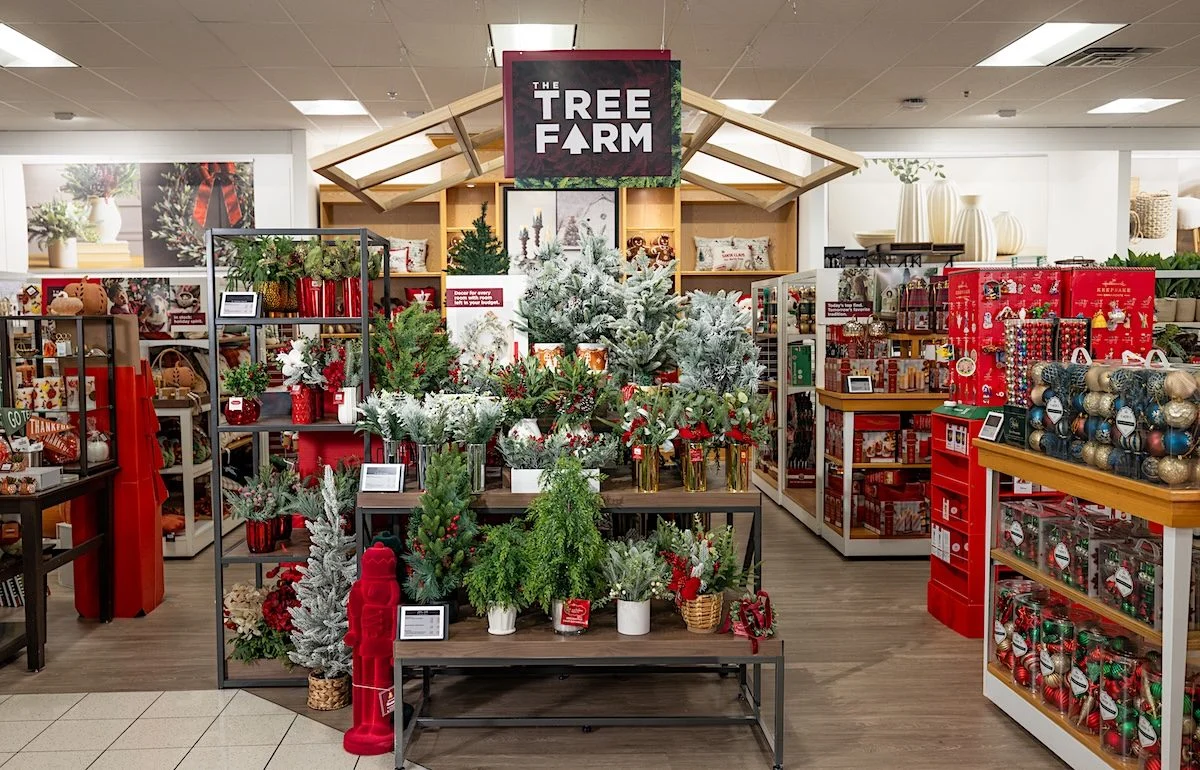
As the retail industry gears up for the critical final quarter of the fiscal year, Kohl’s is embarking on a decisive, high-stakes turnaround effort. Facing a challenging macroeconomic landscape characterized by persistent inflation, energy cost fluctuations, and tariff-driven pricing pressures, the department store giant is fundamentally recalibrating its holiday playbook. Under the guidance of CEO Michael Bender, who assumed the helm in 2025, the company is doubling down on value, convenience, and radical price transparency to capture the attention of a increasingly cost-conscious consumer base.
The Core Strategy: Clarity as a Competitive Edge
For many retailers, the holiday season is a time for elaborate displays and emotive storytelling. While Kohl’s is not abandoning its "North Kohl’s" marketing campaign—which features actress Ellie Kemper as "Kohl’s Mom"—the company is shifting its primary focus toward functional, data-driven utility.
Executives have acknowledged a historical disconnect between the retailer’s intended value proposition and the customer’s perception. In response, the company is implementing a more aggressive and intuitive pricing structure. This year, shoppers will encounter prominent, simplified signage that clearly states "X percent off," a move designed to alleviate the mental load of holiday shopping. By establishing standardized pricing tiers—specifically at the $5, $10, $15, and $20 price points—Kohl’s aims to make it effortless for customers to manage their budgets without sacrificing the joy of gifting.
"The data that we’ve seen is that we haven’t always been as clear about our prices and as clear about value," said Ryan Waymire, Kohl’s Chief Merchandising Officer. "Signs like ‘50% off’ make it easy to do that calculation in your head and stick to a budget."
Chronology: A Season of Transformation
The current holiday push is the culmination of a broader strategic reset that has unfolded over the past year.
- Early 2025: Michael Bender takes over as CEO, inheriting a company that has faced significant volatility, including a nearly 70% decline in stock value over the preceding five-year period.
- August 2026: Kohl’s releases second-quarter fiscal results, revealing a 0.9% year-over-year decline in net sales. However, the company offers a signal of optimism by raising its full-year financial outlook, buoyed by early successes in private label expansion and fragrance category investments.
- October 21, 2026: In a media briefing, leadership outlines the "North Kohl’s" strategy, emphasizing a "responsibility to cut through with value" given the current macroeconomic pinch on consumers.
- Late October/November 2026: The retailer initiates a heavy rollout of delivery partnerships and in-store inventory optimization, ensuring that its massive footprint—where 80% of Americans live within 15 miles of a store—is fully leveraged.
- December 2026 (Upcoming): Kohl’s is scheduled to complete its integration with Uber Eats, finalizing a robust multi-platform delivery ecosystem that includes DoorDash and Instacart.
Supporting Data: Why Value Matters Now
The urgency of this strategy is rooted in hard data. A recent survey conducted by the National Retail Federation (NRF) underscores the severity of the consumer sentiment: more than half (56%) of all holiday shoppers indicate that the state of the economy is directly influencing their spending plans.
Kohl’s has already seen evidence that its shoppers are hunting for deals earlier than in previous years. Data from Placer.ai revealed that foot traffic at Kohl’s locations during its October sales event outperformed the recent same-weekday average by 9.6%. This "deal rush" confirms that the consumer base is highly sensitive to promotions and is actively seeking out value-oriented retailers before the traditional peak of the holiday shopping season.
Furthermore, the company is betting heavily on bundling as a primary lever for value. By offering more than 400 curated gift sets—including 40 items exclusive to the Sephora at Kohl’s partnership—the retailer is successfully lowering the price-per-unit for the consumer. Whether it is premium beauty sets or Advent calendars across toy categories, the goal is to make the "math" of holiday gifting work in the favor of the shopper.
Official Responses and Internal Perspectives
Arianne Parisi, Kohl’s Chief Customer Officer, has been the primary architect of the brand’s customer-facing shift. During the October media event, she emphasized that the company’s internal focus is currently on the "pinched consumer."
"We’re thinking about serving our core, as well as resonating with the broader market and competing in what is a very competitive moment," Parisi noted. She highlighted that the company’s inventory capabilities have been specifically optimized for the holiday rush, with more than 50% of digital orders now being "touched by a store." This creates a synergistic relationship between online demand and physical storefronts, allowing for faster fulfillment and reduced shipping costs.
The company is also leaning into modern financial flexibility. By introducing Klarna’s "buy-now, pay-later" services both in-store and online, Kohl’s is providing a financial bridge for shoppers who want to spread out the cost of their holiday purchases. This inclusion, coupled with the expansion of high-growth categories like fragrance and the introduction of trending toy brands like NeeDoh and Lego, represents a holistic effort to modernize the Kohl’s experience.
Implications: Can the Turnaround Hold?
The implications of this holiday season for Kohl’s cannot be overstated. As the fourth quarter historically accounts for the majority of the company’s annual sales, the success or failure of these initiatives will likely define the trajectory of the Bender administration.
The Competitive Landscape
Kohl’s is not operating in a vacuum. Its efforts to highlight both owned brands (such as Sonoma Goods for Life and LC Lauren Conrad) and national powerhouses (Nike, Under Armour, Adidas) mirrors the strategy of rivals like Target. However, Kohl’s possesses a unique advantage in its "store-first" digital fulfillment model. By transforming its brick-and-mortar footprint into a hub for digital logistics, the company is attempting to out-maneuver pure-play e-commerce competitors on speed and cost.
Future-Proofing the Brand
Beyond the immediate holiday period, Kohl’s is focused on long-term relevance. The company is actively scaling its creator efforts, attempting to capture a younger, more social-media-savvy demographic. While the company’s own AI-powered shopping assistant is gaining traction, management has observed that traditional search remains the primary engine of product discovery for the average shopper. This realization has grounded their marketing in a practical, "back-to-basics" approach.
The Road Ahead
The path forward involves a delicate balancing act. Kohl’s must continue to lower its cost structure and improve operational efficiency while simultaneously investing in the brand image. The decision to raise the full-year outlook in August, despite a slight decline in net sales, suggests that the market is beginning to buy into the turnaround narrative.
As the retail industry enters the final stretch of 2026, the success of Kohl’s will depend on whether its new, transparent approach to pricing can effectively convert the "deal-seeking" visitor into a long-term, loyal customer. If the 9.6% surge in October traffic is any indication, the message of value is resonating. Now, the challenge for Kohl’s is to prove that it can maintain that momentum through the cold, competitive months of November and December. By prioritizing the immediate needs of the consumer—price clarity, product availability, and flexible payment options—Kohl’s is positioning itself to not just survive the current economic climate, but to potentially emerge as a more streamlined and responsive retail leader in the year ahead.
