

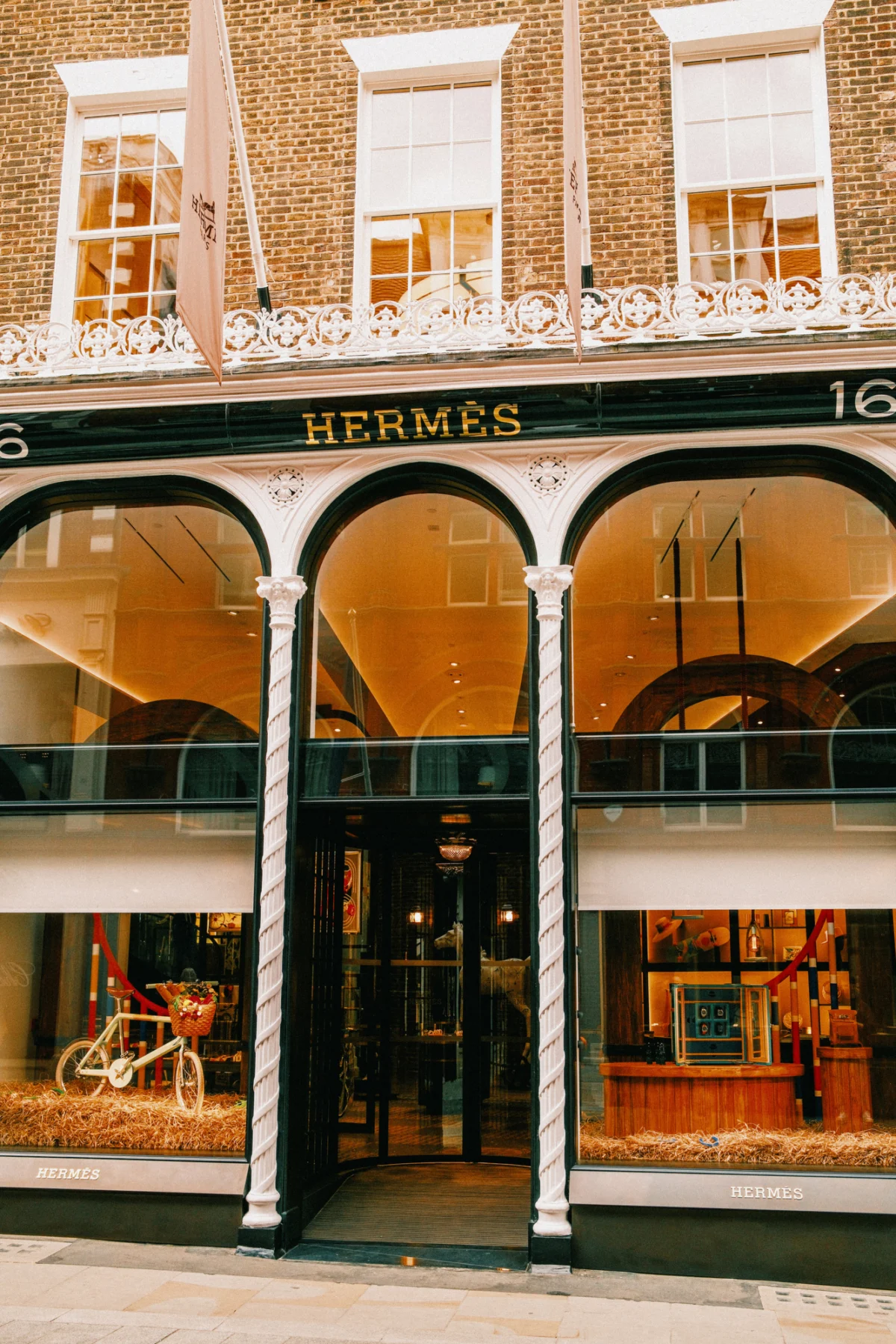
PARIS – Hermès International, the venerable French purveyor of silk scarves and the iconic Birkin bag, has released its third-quarter financial results, revealing a landscape of moderated growth that reflects the broader cooling of the global luxury sector. While the house remains one of the most resilient players in the high-end market, its latest figures suggest that even the most insulated brands are not entirely immune to the macroeconomic headwinds currently buffeting the industry, particularly the stagnation of the Chinese economy.
Main Facts: A Story of Resilient Growth and Missed Expectations
For the three months ending September 30, Hermès reported a consolidated revenue of 4.1 billion euros. This represents a 4.3 percent increase at constant exchange rates, a figure that signals continued expansion but falls short of the stratospheric growth rates the brand enjoyed in the immediate post-pandemic era.
The performance did not quite meet the benchmarks set by financial analysts. Market consensus had anticipated a more robust 5.2 percent growth rate for the third quarter. The slight miss reflects a significant deceleration compared to the same period in the previous year, when the group recorded a 9.6 percent surge in sales. This narrowing of growth margins highlights a pivotal shift in the luxury landscape: the era of effortless double-digit gains appears to be transitioning into a phase of cautious, selective consumption.
Despite the cooling atmosphere, Hermès’ core business—leather goods—remains its primary engine of growth. While other categories showed signs of fatigue, the demand for the brand’s most exclusive items, such as the Kelly and Birkin handbags, continued to outpace supply. However, the geographic distribution of this growth tells a tale of two worlds, with robust momentum in the West and Japan contrasting sharply with a stalled recovery in Greater China.
Chronology: From Post-Pandemic Boom to Strategic Moderation
To understand the current position of Hermès, one must look at the trajectory of the luxury market over the past twenty-four months. In 2022 and much of 2023, the sector benefited from "revenge spending"—a phenomenon where affluent consumers, flush with savings accumulated during lockdowns, spent lavishly on hard luxury goods. During this period, Hermès consistently outperformed its peers, often posting growth rates near 20 percent.
By late 2023, the narrative began to shift. High interest rates, persistent inflation in the West, and a deepening real estate crisis in China began to erode the confidence of "aspirational" luxury buyers—those who might purchase a belt or a wallet but cannot necessarily afford the five-figure price tag of a top-tier leather bag.
As 2024 progressed, the divide between the "ultra-high-net-worth" (UHNW) segment and the middle-class luxury consumer widened. Hermès, by virtue of its high entry price points and waitlist-driven model, remained protected longer than competitors like LVMH or Kering. However, the Q3 results indicate that the "trickle-down" effect of the global slowdown has finally reached the gates of the Rue du Faubourg Saint-Honoré. The 4.3 percent growth recorded this quarter is the latest data point in a downward trend of growth percentages, moving from the high teens to the mid-single digits over the past four quarters.
Supporting Data: A Granular Look at Regions and Categories
The third-quarter report provides a detailed map of where the luxury consumer is still spending and where they have retreated.
Geographic Performance: The Rise of Japan and the Silence of China
- Europe: The region remained a pillar of strength, delivering a 7.2 percent increase in sales at constant currency. Interestingly, the performance was driven more by the broader continent (+9.5 percent) than by France itself, which saw a more modest 3.6 percent rise. Analysts suggest that while domestic French consumption was steady, the influx of international tourists across Europe bolstered regional sales.
- Japan: Continuing its streak as a "powerhouse," Japan saw sales climb by 9.6 percent. This growth has been fueled by a combination of a weak yen, which makes luxury goods significantly cheaper for tourists, and a loyal domestic base that views Hermès as a stable store of value.
- The Americas: Despite fears of a US recession, the American market proved resilient with an 8.8 percent increase. This suggests that the top-tier American consumer remains active, even as mid-level department stores report declining foot traffic.
- Asia (Excluding Japan): This is the area of greatest concern. Sales were essentially flat (0 percent growth), bringing the wider Asian region’s growth to a meager 1.9 percent. The stagnation in China is the primary culprit, as economic uncertainty has led to "luxury shame" and a shift in consumer behavior toward more discreet or localized spending.
- Middle East: The region saw a decline of 4.5 percent. This contraction is attributed to the ongoing geopolitical tensions and the resulting economic instability, which has dampened both local consumer confidence and regional tourism.
Product Category Breakdown: Leather Goods vs. Lifestyle
- Leather Goods and Saddlery: As the heart of the Hermès brand, this category grew by 10.8 percent. The enduring appeal of the Birkin, Kelly, and Constance bags, combined with the successful launch of new models like the Maximors, has kept this segment in double-digit territory.
- Perfume and Beauty: A relatively newer focus for the house, this sector grew by 7.5 percent, benefiting from the "lipstick effect," where consumers opt for smaller luxury items during economic downturns.
- Ready-to-Wear and Accessories: This category experienced a 2 percent decline. As these items are often more trend-dependent and accessible than leather goods, they are more susceptible to the whims of the aspirational buyer.
- Watches: The most significant laggard, the watch division plummeted by 6 percent. This follows a broader industry trend where the secondary market for luxury watches has cooled, and primary sales are suffering from a glut of inventory and a lack of "must-have" novelty.
- Silk and Textiles: Growth was a marginal 1.4 percent, suggesting that even the iconic Hermès scarf is facing a saturated market.
Official Responses: Long-Term Vision over Short-Term Volatility
Despite the miss on analyst expectations, the leadership at Hermès maintains a posture of "calm confidence." This philosophy is rooted in the company’s history as a family-controlled entity that prioritizes multi-generational stability over quarterly stock performance.
Chief Executive Officer Axel Dumas addressed the results with a focus on the brand’s unique "artisanal model." In a statement, Dumas remarked:
“Despite a complex environment, Hermès continues its profitable growth and maintains its course. Convinced of the strength and relevance of our artisanal model, we see our vision as firmly rooted in the long term, and we look to the future with confidence.”
Dumas’s comments underscore a strategic refusal to engage in the heavy discounting or aggressive marketing tactics that some of its competitors have turned to in order to shore up sales. By maintaining high prices and limited availability, Hermès preserves the "desirability" that is the cornerstone of its valuation.
Looking toward the future, the group is placing significant chips on creative evolution. Dumas highlighted two major upcoming milestones: the first men’s ready-to-wear collection by the critically acclaimed designer Grace Wales Bonner and the introduction of a dedicated haute couture line by Nadège Vanhée. While both are not slated for debut until January 2027, the mention of these projects serves to reassure investors that the brand is actively investing in its creative capital to drive future demand.
Implications: What This Means for the Future of Luxury
The Hermès Q3 report is a bellwether for the entire luxury industry, offering several critical takeaways for the coming years.
The End of the "Rising Tide"
For the past decade, the luxury industry operated under the assumption that a rising global tide of wealth—particularly in China—would lift all boats. The current stagnation in Asia suggests that this era is over. Moving forward, brands will have to fight for market share in a "zero-sum" environment. Hermès’ ability to maintain positive growth while others contract suggests that the "K-shaped" recovery is intensifying: brands at the very top of the pyramid will survive, while those in the "accessible luxury" tier may face an existential crisis.
The China Problem
China’s transition from a high-growth engine to a mature, volatile market is the single biggest challenge for European luxury houses. The 0 percent growth in Asia (ex-Japan) indicates that the Chinese consumer is no longer buying for the sake of status alone. They are becoming more discerning, more price-sensitive (often traveling to Japan or Europe to buy), and more influenced by local economic sentiment.
The Resilience of Hard Luxury
The 10.8 percent growth in leather goods compared to the 6 percent drop in watches and the 2 percent drop in ready-to-wear highlights a shift toward "investment pieces." In times of economic uncertainty, consumers view a Birkin bag not just as a fashion statement, but as a tangible asset that retains or increases its value. This "investment-grade luxury" is the moat that protects Hermès.
The Long Game
By citing 2027 as a key date for new collections, Hermès is signaling to the market that it does not manage by the quarter. This long-termism is a luxury in itself. While analysts like Bernstein’s Luca Solca note that Hermès "continues to suffer a difficult trading environment," the company’s refusal to pivot its strategy suggests they believe the current downturn is a cyclical correction rather than a structural failure of their business model.
In conclusion, while the 4.3 percent growth is a far cry from the double-digit euphoria of yesteryear, it confirms Hermès’ status as the "gold standard" of the industry. The brand is navigating a storm that has capsized smaller vessels, and while it has been forced to trim its sails, its destination remains unchanged. The focus now shifts to the holiday season, where the resilience of the Western consumer will be put to its final test of the year.
