

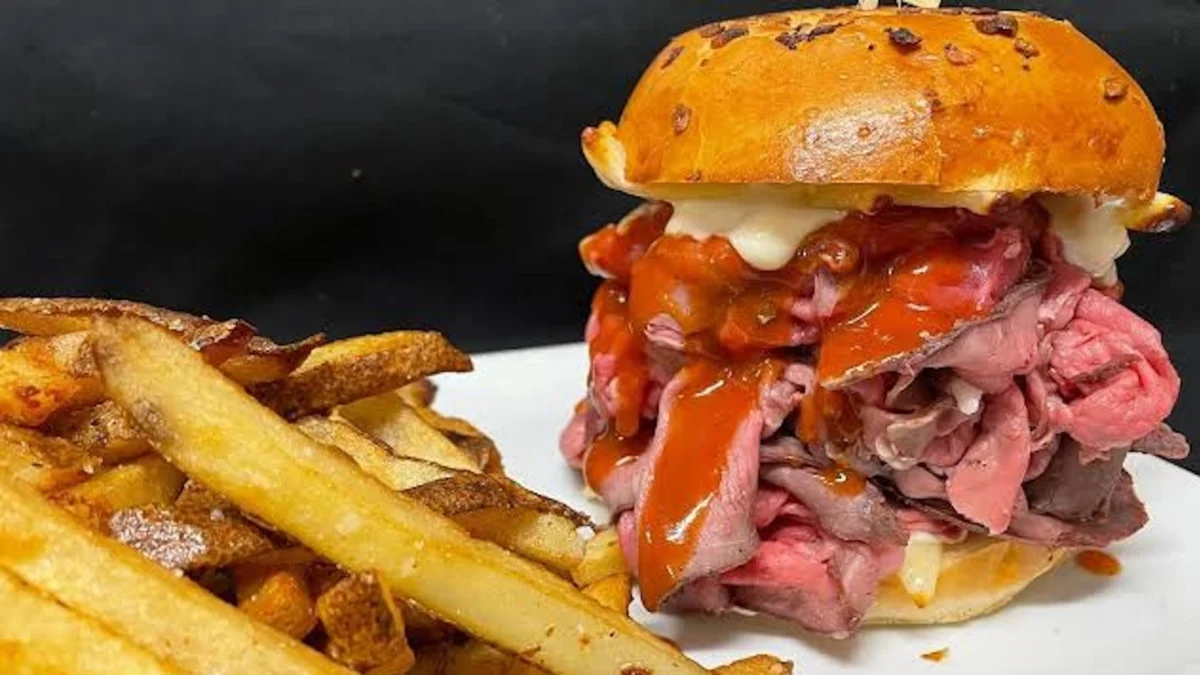
When the average traveler envisions the culinary landscape of Boston, their mind inevitably drifts toward the staples: the buttery, flake-crusted Boston cream pie, the legendary status of local seafood, or the omnipresent, pop-culture-infused branding of Dunkin’. Yet, tucked away along the coastal arteries of Massachusetts lies a gastronomic tradition that defies the city’s broader reputation for fine dining and chowders. It is a sandwich that commands a near-religious devotion, a regional obsession known simply as the "North Shore 3-Way."
To the uninitiated, it is merely a roast beef sandwich. To the locals, it is a cultural institution—a delicate balance of meat, bun, and sauce that has fueled the North Shore of Massachusetts for over seven decades.
The Anatomy of an Icon: Main Facts
The North Shore 3-Way is not just about stacking meat on bread; it is an engineered experience. At its core, the sandwich consists of thinly shaved, rare roast beef—typically sourced from the top or bottom round—piled high on a soft, toasted onion roll. The "3-Way" designation refers to the mandatory trinity of condiments that defines the experience: mayonnaise, white American cheese, and the specific, non-negotiable James River BBQ sauce.
This is not a smoky, hickory-infused barbecue sauce common in the American South. The James River sauce is distinctively sweet, tangy, and viscous, providing a necessary brightness to the rich, savory depth of the roast beef. The mayonnaise acts as a structural lubricant, binding the shaved meat to the cheese and the bun, ensuring that every bite is a cohesive unit of flavor rather than a loose collection of ingredients.
The "B2B" ratio—the beef-to-bun ratio—is the subject of constant debate among enthusiasts. A properly constructed 3-Way is expected to have enough beef to justify the price, yet not so much that the structural integrity of the onion roll is compromised. It is served warm, usually wrapped in paper that traps the steam, allowing the onion roll to become slightly compressed and infused with the juices of the beef.
A Chronological History: From Revere Beach to Regional Legend
The origins of the North Shore 3-Way are rooted in the post-war boom of the 1950s. While historical records for fast-food inventions are often shrouded in myth, the consensus points to a singular moment of serendipity at Kelly’s Roast Beef on Revere Beach in 1951.
The 1951 Origin Myth
Legend has it that the sandwich was born out of a culinary "accident." A large catering order—a wedding reception—was suddenly canceled, leaving the kitchen at Kelly’s with a massive surplus of roasted beef. To mitigate the loss, the staff began slicing the meat thin and offering it as a sandwich. The public response was immediate and overwhelming. What started as a way to avoid food waste quickly evolved into a signature menu item that would anchor the establishment for generations.
The Evolution of the "3-Way"
While Kelly’s provided the foundation, the identity of the sandwich was further refined in the years that followed. As roast beef shops proliferated across the North Shore, competition drove innovation. It was at Bill and Bob’s in Salem that the final piece of the puzzle—the inclusion of the specific James River BBQ sauce—cemented the "3-Way" as the standard. By the late 1960s and 1970s, the "3-Way" had become the linguistic shorthand for this specific combination, distinguishing it from the "plain" roast beef sandwiches found elsewhere in the country.
Supporting Data: The Cult of the North Shore
The prevalence of these shops is not merely a reflection of local preference, but a testament to a robust, hyper-local economy that thrives on tradition.
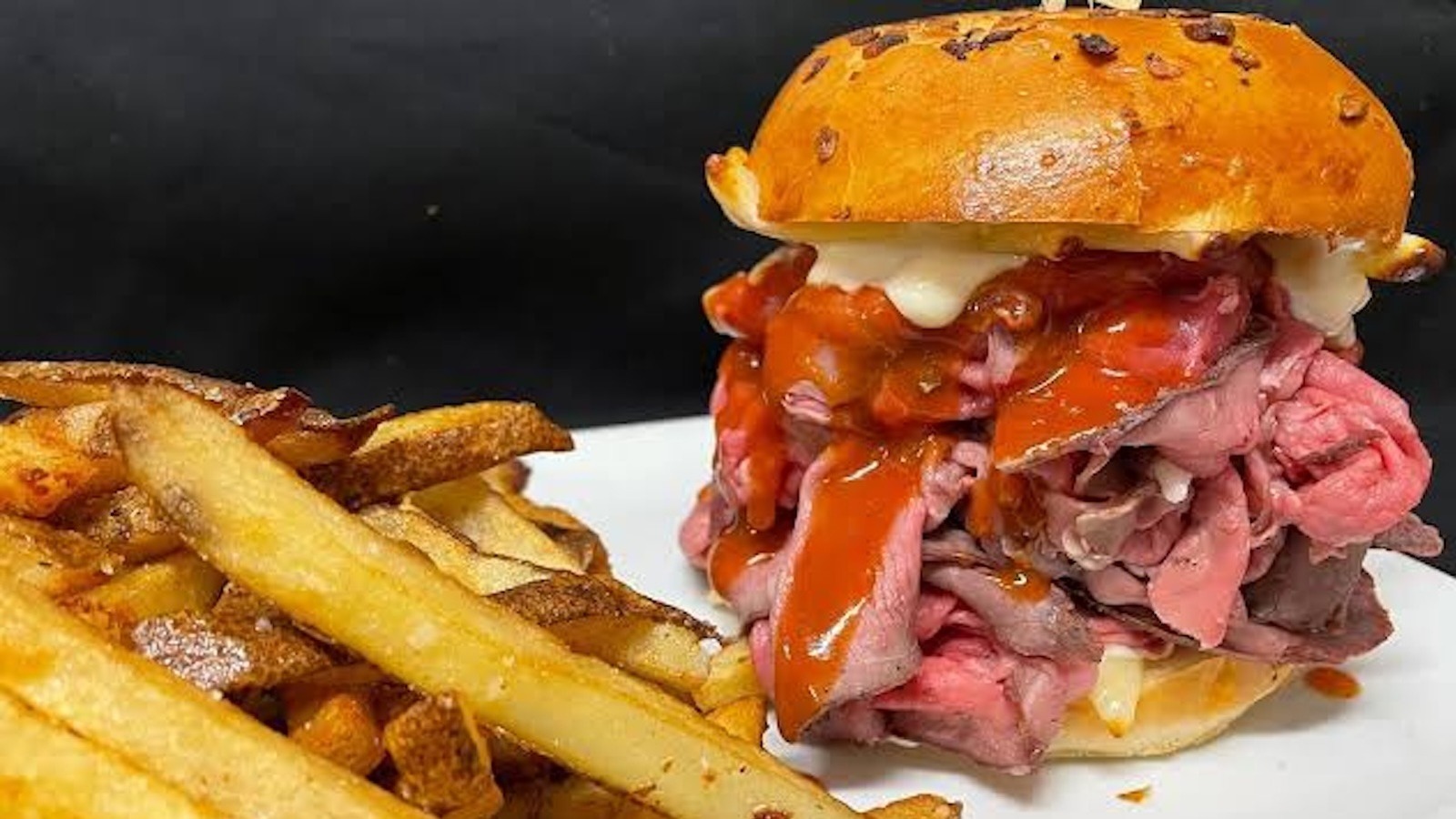
- Size Tiers: Most establishments offer the sandwich in three standardized sizes: the Junior, the Regular, and the Super Beef. The Super Beef is an exercise in excess, often featuring a half-pound of meat or more, designed for those who view the sandwich not as a snack, but as an event.
- The Mayonnaise Standard: Purists argue that the brand of mayonnaise is as important as the meat. Cain’s Extra Heavy Mayonnaise is the gold standard for many, prized for its high viscosity and ability to stay emulsified even when applied to hot, juicy meat.
- The Bread Factor: While the onion roll is the industry standard for its ability to hold moisture and provide a mild, savory aromatic, there are regional variations. Some shops offer sesame buns or even standard kaiser rolls, though the "onion roll" remains the defining mark of an authentic North Shore experience.
Official Perspectives and The "Old Guard"
The endurance of the North Shore 3-Way is a result of a tight-knit network of shops that have resisted the urge to modernize or "gourmet-ize" their offerings.
In interviews, owners of historic shops—such as Nick’s in Beverly or Zeno’s in Ipswich—frequently emphasize that the sandwich’s popularity lies in its resistance to change. "People come here because they know exactly what they’re getting," one shop manager noted. "They don’t want a brioche bun. They don’t want artisanal aioli. They want the 3-Way exactly how their parents bought it in 1985."
Even as Kelly’s Roast Beef has expanded its footprint to nine locations, including an outpost in New Hampshire, the quality control remains focused on the original, simple formula. This adherence to a rigid, decades-old recipe serves as a form of cultural preservation. In an era where regional cuisines are often diluted by global trends, the North Shore 3-Way remains stubbornly, proudly local.
Cultural Implications: Why the Sandwich Matters
The significance of the North Shore 3-Way extends beyond the plate; it is a marker of identity for residents of the region. To order a "Regular 3-Way" is to signal one’s belonging to the community. It is a shared language.
The Barrier to Entry
Despite its popularity, the sandwich remains a "hidden" delicacy. It is rarely found in the tourist-heavy districts of downtown Boston, such as Faneuil Hall or the Seaport. This geographic isolation is key to its appeal. To eat a 3-Way, one must travel to the suburbs—to Danvers, to Peabody, to Salem. This creates an implicit "insider" status for those who seek out these shops.
The Future of the 3-Way
As food media continues to highlight regional specialties, the North Shore 3-Way has seen a recent uptick in interest from national publications. However, the owners of these establishments remain cautious. The fear is not of popularity, but of dilution. The integrity of the sandwich depends on high-volume, low-margin, quick-service operations that value speed and consistency over prestige.
The implication for the future is clear: the 3-Way will likely remain a fixture of the North Shore, sustained by a new generation of locals who treat these shops as their "third place"—a site of community, history, and comfort.
Conclusion
The North Shore 3-Way is more than a caloric indulgence; it is a living artifact of 1950s New England. It represents a time when convenience food was prepared with local ingredients and a sense of pride, rather than mass-produced in a central kitchen. While the world of gastronomy chases the next big food trend, the roast beef shops of the North Shore will continue to slice, toast, and slather, secure in the knowledge that they have perfected a formula that needs no improvement.
For the visitor, the 3-Way is an invitation to explore the coastal suburbs of Boston, to step away from the polished tourist trails, and to engage with a slice of local life that is as rich, messy, and satisfying as the sandwich itself. Whether you opt for the modest Junior or the daunting Super Beef, the experience is a necessary rite of passage for any serious student of American regional cuisine.
