

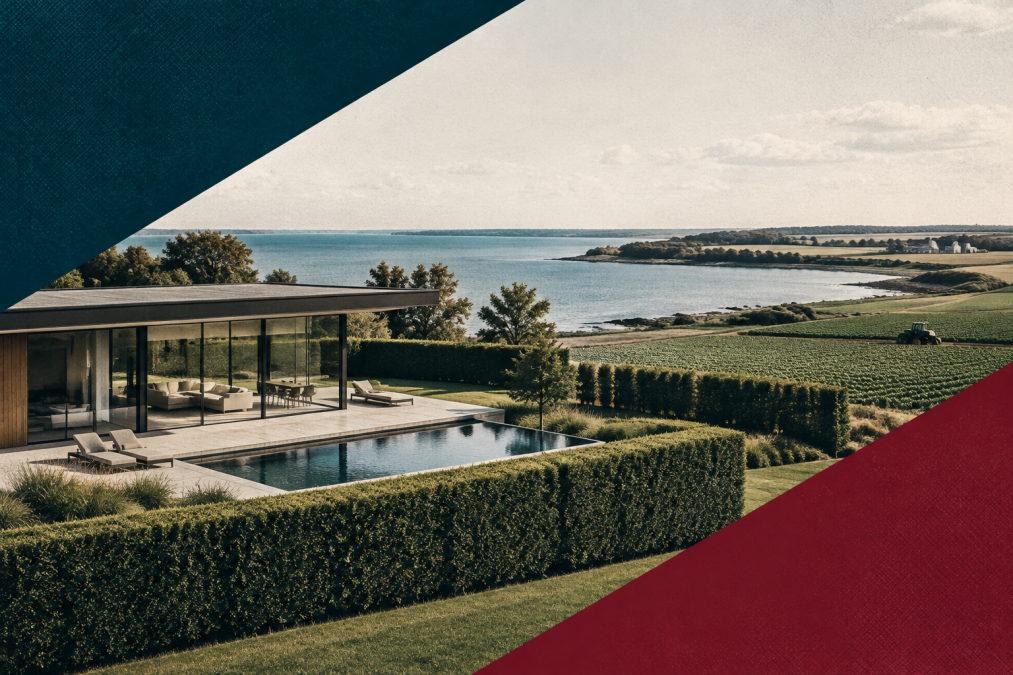
For decades, the definition of luxury real estate in America was written in the language of excess. It was a metric-driven pursuit: more bedrooms, higher ceilings, grander foyers, and a ZIP code that served as a loud, public declaration of status. If you could see the house from the highway, it was working as intended.
However, a fundamental shift is rippling through the high-end property market. As industry veteran and top-producing California agent Lindsey Harn notes, the era of the "scaled-up ordinary house" is drawing to a close. Today’s luxury buyers—a cohort increasingly composed of digital-native entrepreneurs and younger wealth creators—are rejecting the traditional mansion in favor of something far more elusive: autonomy, land-based utility, and generational continuity.
The Paradigm Shift: From Display to Disappearance
The evolution of luxury can be traced back to the onset of the remote work revolution, which acted as a catalyst for a broader psychological change in how we perceive "home."
For the better part of the 20th century, luxury was tethered to proximity—specifically, proximity to the city centers, corporate headquarters, and high-status social hubs. The house was a hub for professional signaling. But as remote work became a permanent fixture for the ultra-wealthy, the mandate for professional convenience evaporated.
"The buyers I work with today don’t need the house to announce anything, because their bank account already did that work years ago," says Harn. "What they’re after now is control over their time and over who gets access to them."
This has birthed a new aesthetic of "disappearance." The modern luxury client is no longer looking for a property that impresses a dinner party; they are looking for a property that allows them to vanish for a weekend without seeing a neighbor or hearing the hum of traffic. The driveway has become a more important architectural feature than the wine cellar; if the house isn’t visible from the road, it is deemed a success.
Chronology of a Market Transformation
- Pre-2010s (The Era of Consumption): Real estate was viewed through the lens of standard appreciation. Larger homes were synonymous with higher value. The focus was on architectural uniformity—communities where homes mirrored one another, reinforcing a sense of collective wealth.
- 2010–2019 (The Tech-Wealth Inflection): As the digital economy matured, a new class of buyer emerged. These individuals were accustomed to "stealth wealth." They began prioritizing unique, non-fungible lifestyle assets—equestrian facilities, private hiking trails, and properties with sustainable, self-contained infrastructure.
- 2020–Present (The Acceleration): The pandemic served as the final tipping point. The demand for "containment"—the ability to live, work, and recreate within a private, self-sufficient ecosystem—became the gold standard. The focus shifted from the interior footprint to the exterior acreage.
The New Pillars of High-End Value
When evaluating today’s premium acquisitions, industry professionals are finding that traditional valuation metrics—price-per-square-foot, bedroom counts, and recent comparable sales—are increasingly irrelevant. Instead, value is being driven by factors that are difficult to quantify on an appraisal form.
1. Land-Based Utility
Luxury is no longer about decorative landscaping. It is about "usable land." Buyers are seeking properties that function as productive ecosystems: vineyards, orchards, cattle operations, or large-scale gardens. The allure lies in the land’s ability to produce, providing a sense of self-reliance that a concrete-heavy estate cannot offer.
2. Generational Infrastructure
We are witnessing a decline in the traditional "downsizing" trend among Boomers. Instead, the market is seeing a surge in multi-generational compounds. These properties, often featuring a main residence paired with an Accessory Dwelling Unit (ADU) or a converted barn, are designed to keep families in close proximity. This is not driven by nostalgia, but by a pragmatic response to the high cost of living and the desire to maintain a family "base" that adapts as children grow and parents age.
3. Scarcity of the Irreplaceable
Perhaps the most significant factor driving current premiums is the inability of the market to manufacture supply. An 8,000-square-foot mansion can be constructed in 18 months, but one cannot manufacture a 40-year-old olive grove, a mature vineyard, or an unobstructed ocean bluff. In a regulatory climate that makes new development increasingly difficult, these "legacy" features represent a form of scarcity that is immune to construction trends.
The Appraisal Gap: An Industry at Odds
One of the most pressing challenges for the luxury sector is the widening gap between market reality and institutional valuation. Conventional appraisal methods remain rooted in the past, relying heavily on historical data and comparable sales of homes that lack the unique features—like, for instance, a producing organic farm—that today’s buyers value.
This has created significant friction. When a buyer is willing to pay a massive premium for a property that offers absolute privacy and land utility, but the lender’s appraisal comes in low because it only accounts for the structure’s square footage, the entire transaction is jeopardized. The industry is currently struggling to build a framework for "pricing rarity."
The implication for the real estate industry is clear: if brokers, lenders, and appraisers continue to rely on antiquated metrics, they risk alienating the most sophisticated segment of the market. The value of a property today is found in what happens inside the container—the privacy, the connection to the land, and the freedom—not the container itself.
Implications for the Future of Real Estate
The trend toward privacy-focused, land-rich luxury is not merely a passing fad. It is supported by structural shifts in the economy and society.
- Wealth Transfer: The Great Wealth Transfer, which will see trillions of dollars pass to younger generations over the next two decades, is bringing a new set of values to the market. These heirs are more interested in experiential wealth than the performative wealth of their predecessors.
- Environmental and Regulatory Constraints: As coastal and rural land becomes more protected by environmental regulations, the supply of prime, undeveloped acreage will continue to shrink, further insulating it from market volatility.
- The Rejection of Conformity: The era of the "cookie-cutter mansion" is fading. Buyers are increasingly sophisticated, preferring properties that reflect their specific, often eccentric, requirements for living, rather than a blueprint designed for the masses.
Conclusion: The New Definition of "Elite"
In the current market, the biggest house on the block is no longer the ultimate goal. The new benchmark for luxury is the possession of something your neighbor simply cannot buy. It is the locked gate, the long, winding driveway that obscures the home from the public eye, and the mature landscape that took a century to cultivate.
For those in the business of selling, the lesson is simple: Stop selling the square footage. Stop selling the marble countertops and the imported fixtures. Start selling the silence. Start selling the capacity for a family to live on their own terms.
Luxury has officially moved beyond the house. It has moved into the land, the time it buys, and the legacy it preserves. For the modern buyer, the true luxury is the ability to walk out of their front door and into a world they own, completely undisturbed. That is a commodity no builder can replicate, and it is the only market that truly matters today.
