

By Jeremy Rellosa
The rhythmic thrum of the powwow drum—a sound that has resonated across the North American continent for millennia—reverberated through the leafy expanse of Brooklyn’s Prospect Park this past weekend. In a vivid display of cultural endurance, Indigenous dancers, artists, and musicians gathered for a powwow, transforming the urban landscape into a vibrant hub of community, competition, and ancestral connection.
For many New Yorkers, the event served as a stark, beautiful reminder that the land upon which the city stands remains deeply tethered to its original inhabitants: the Lenape people. Amidst the backdrop of modern Brooklyn, the powwow provided a space for participants from across North America to engage in what attendees described as an "active revitalization" of Indigenous traditions.
A Gathering of Nations in the Heart of Brooklyn
The atmosphere inside the circle was electric, filled with the scent of sage and the sight of intricately beaded regalia. Howard Crouse, a tenth-grader from Salamanca, captured the essence of the event: "It’s like a big ol’ gathering. Almost like a concert, but for us."
For Crouse, who is Seneca, the powwow is an opportunity to engage with the broader Indigenous community, even when the specific dances differ from his own tribal traditions. He highlighted the "smoke dance"—a high-energy, fast-paced contest dance rooted in history. "It was used to clear our longhouses of smoke," Crouse explained. "Our feet would make the smoke rise and push it out. To win, you just have to have the best moves, the fastest footwork."
The event was not merely a performance; it was an intergenerational exchange. Children like Calista Hare from South Dakota stood alongside veterans of the powwow circuit, each contributing to the continuity of the circle.
Chronology of Resilience: From Suppression to Celebration
To understand the significance of a powwow in Prospect Park in 2026, one must look at the historical trajectory of Indigenous expression in the United States.
For much of the 19th and early 20th centuries, Indigenous cultural practices were not only discouraged but systematically criminalized by the U.S. and Canadian governments. The "Civilization Regulations" of the 1880s, for instance, prohibited traditional dances and ceremonies, labeling them as "savage" and detrimental to the assimilationist goals of the era.
"This is an active revitalization for our communities," says Kiara Tanta-Quidgeon, an Indigenous-health researcher based in Boston. "For a long time, there was a legal prohibition of our dances by the colonial government. The fact that we’re still out here and doing this despite hundreds of years of that suppression is a really beautiful thing."
The mid-20th century saw the beginnings of the "Red Power" movement, which reclaimed these spaces. Over the last few decades, powwows have evolved from quiet, private family gatherings into public-facing events that serve as educational tools and platforms for political and cultural advocacy. The presence of such an event in a major public park in New York City signals a shift in the urban consciousness—a movement toward acknowledging the Lenape presence on "Lenapehoking," the traditional homelands of the Lenape people.
The Art of the Regalia: Weaving Tradition and Contemporary Design
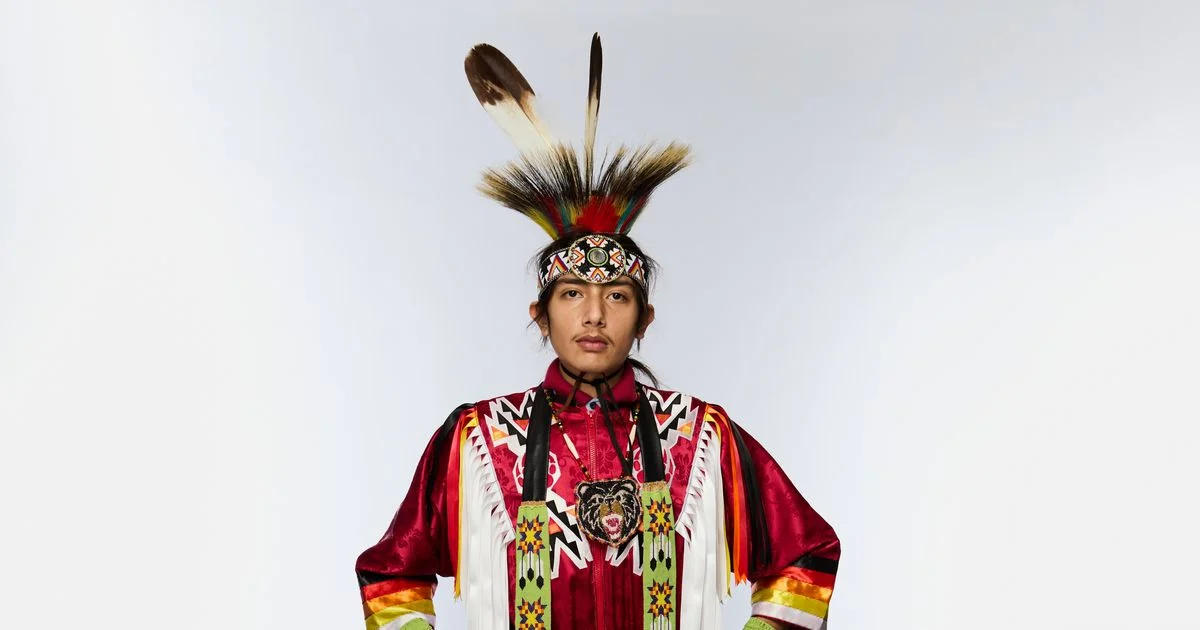
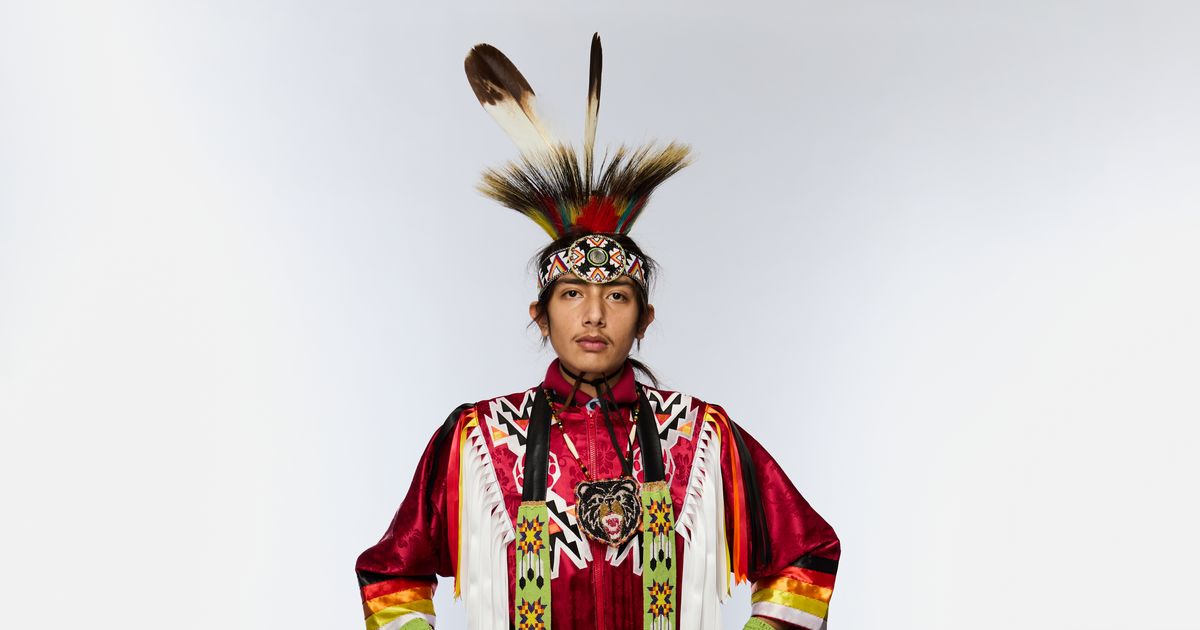
The visual language of the powwow is found in the regalia, where history is literally worn on the body. Cory Ridgeway, a program specialist from Cedarville, New Jersey, took a moment to explain the intricate details of his attire.
"You’ll see a lot of different floral work on mine, which usually means the person wearing it comes from a woodland area," Ridgeway noted. "There’s ribbon work down the front, which is very traditional for Lenape people. But we also use contemporary fabrics and designs."
This synthesis of the traditional and the modern is a hallmark of contemporary Indigenous identity. The regalia is not a costume; it is a living garment that tracks the history of the wearer and their people. Mathyias “Kèkèlsit Tème” Ellis, a high-school senior, described his regalia with pride: "I’m a prairie chicken. The dance I’m doing is supposed to resemble a rooster during mating season trying to get the girls’ attention. It’s all flashy moves."
Breaking Cycles: The Weight of Generational Trauma
While the day was defined by joy and athleticism, it was also underscored by the heavy reality of historical trauma. Janiyakuha Webster, a cultural keeper from Bowler, Wisconsin, spoke candidly about the challenges of keeping these traditions alive.
"For many years, my family wasn’t able to speak our language," Webster said. "My great-grandparents would go into the basement to talk, and they wouldn’t let the kids down there. So there are a lot of cycles that people have to break now because of our generational trauma."
The act of dancing, drumming, and speaking Indigenous languages in a public park is, in itself, a form of healing. It is a defiant act of breaking the silence that colonial policy attempted to enforce for generations.
George Stonefish, a consultant based in East New York, reflected on his upbringing in the city and his connection to his roots. "On 82nd Street, Joe Namath lived around the corner," he recalled. "In the summer, I’d stay with my grandmother in Canada. I’d learn about the powwows and ceremonies. It taught me to be versatile. I can deal with rich white people and I don’t get intimidated. And then I go to a reservation and I fit right the fuck in."
Implications for Urban Cultural Spaces
The success of the Prospect Park powwow suggests a growing appetite for authentic Indigenous representation in public cultural life. It challenges the "erasure" that has historically characterized New York City’s narrative of its own origins.
When organizers bring these events into the heart of the city, they provide a necessary bridge between the public and the Indigenous communities that have lived here long before the city grid was laid. It turns a recreational space into a site of historical inquiry and celebration.
Key Takeaways:
- Cultural Revitalization: The event marks a significant pushback against historical suppression of Indigenous dance and language.
- Intergenerational Connection: The presence of youth participants ensures that these traditions continue to evolve rather than becoming static relics.
- Urban Visibility: By occupying public spaces like Prospect Park, Indigenous communities are asserting their presence in contemporary urban life.
Conclusion: The Drum Continues
As the sun began to dip behind the Brooklyn skyline, the beat of the drum continued, steady and relentless. The dancers, adorned in their vibrant, floral-stitched regalia, moved with a grace that felt both ancient and urgent.
For the attendees, the powwow was more than just a cultural showcase; it was a testament to the resilience of the human spirit. Despite the long, dark shadow of colonial suppression, the music has not been silenced. Instead, it has grown louder, finding new homes in the heart of our most bustling cities.
In Prospect Park, for one weekend in October, the history of this land was not just remembered—it was lived. And as the dancers took their final steps, the message was clear: the Lenape, and the myriad Indigenous nations represented there, are not just a part of the past. They are a vital, thriving part of the present.
Photographs by Frankie Alduino.
