

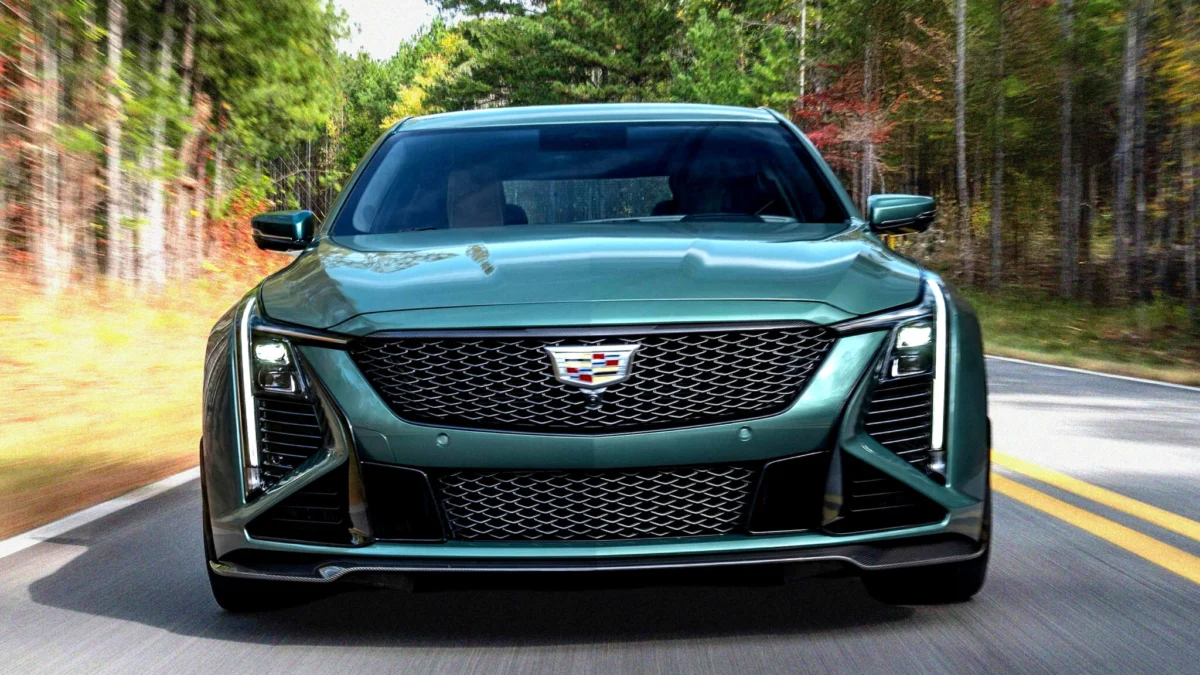
For enthusiasts who feared the impending death of the internal combustion engine’s most exhilarating applications, a glimmer of hope has emerged from the halls of General Motors. While the automotive industry pivots toward electrification with relentless velocity, whispers from within the General Motors hierarchy suggest that Cadillac is not yet ready to abandon its most potent halo car. Reports indicate that a successor to the vaunted CT5-V Blackwing is currently in the pipeline, potentially securing the future of the American super-sedan for another generation.
The Main Facts: A Reprieve for the Super-Sedan
For months, speculation regarding the CT5-V Blackwing’s longevity had skewed toward the pessimistic. With General Motors confirming that the current iteration of the CT5 is slated for retirement following the 2026 model year, the assumption among industry analysts was that the "Blackwing" moniker would be consigned to the history books, likely to be replaced by a high-performance electric variant.
However, recent reports—most notably from GM Authority—suggest that Cadillac is actively developing a successor to the current CT5-V Blackwing as part of its next-generation CT5 portfolio. This news is significant, not merely because it promises a new car, but because it confirms that Cadillac intends to maintain a footprint in the high-performance internal combustion segment even as the broader market shifts. While Cadillac has yet to offer an official confirmation, the internal development of a new gas-powered CT5 platform provides the necessary architecture for the high-performance variant to materialize.
Chronology: From Rumor to Reality
The timeline of the CT5-V Blackwing’s evolution has been defined by a constant battle against the tide of industry trends.
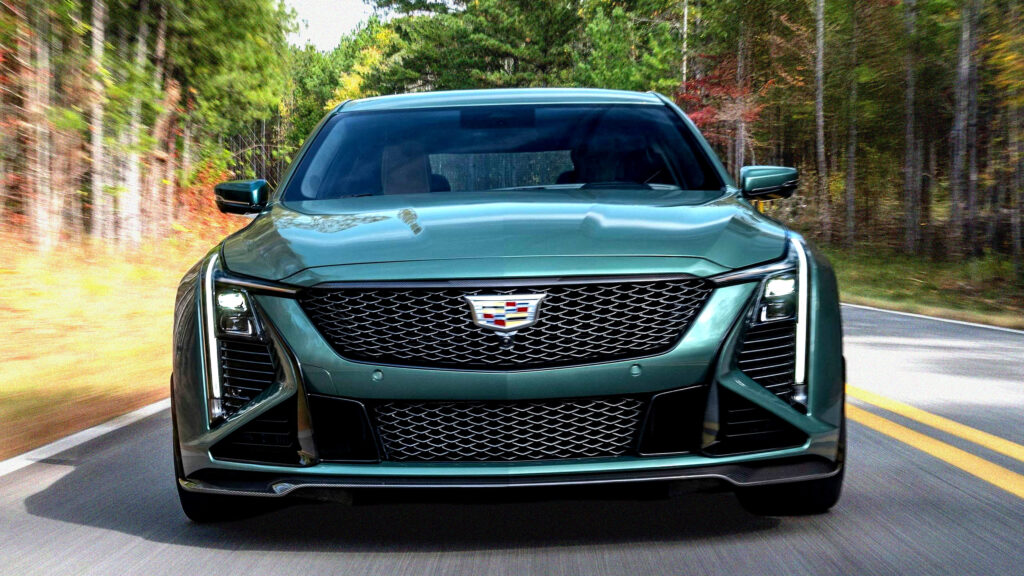
- 2021: The CT5-V Blackwing debuts to universal acclaim, effectively serving as the swan song for GM’s high-displacement, manual-transmission performance heritage. It immediately establishes itself as a benchmark for driver engagement, outperforming significantly more expensive European rivals in track-day scenarios.
- 2024: As GM accelerates its "Ultium" electrification strategy, market analysts begin to project the sunset of the Alpha platform, which underpins the CT5 and its performance variants.
- Early 2026: Cadillac confirms that the current generation of the CT5 is entering its final production cycle, leading to widespread speculation about whether the V-Series performance brand will be exclusively electrified in the next generation.
- Mid-2026: A wave of industry intelligence surfaces, suggesting that the development of a next-generation CT5 platform will include provisions for high-performance internal combustion engines, directly contradicting previous assumptions that the next "V" would be battery-electric only.
Supporting Data: Why the Blackwing is a Niche Icon
To understand why the potential continuation of the Blackwing is so monumental, one must look at the technical specifications of the current model. The 2025/2026 CT5-V Blackwing is a masterclass in brute-force engineering: a 6.2-liter supercharged V8 engine that produces a staggering 668 horsepower and 659 lb-ft of torque.
Crucially, the Blackwing remains one of the last bastions of the "three-pedal" performance experience, offering an available six-speed manual transmission alongside a high-performance 10-speed automatic. In an era where even high-performance titans like BMW M and Mercedes-AMG have moved entirely to dual-clutch or automatic transmissions—and have largely moved away from naturally aspirated or supercharged V8s in favor of hybridized smaller-displacement units—the Blackwing offers a visceral, analog experience that no competitor can replicate.
Furthermore, market data reveals that the CT5, despite its age, remains a robust performer for Cadillac. Recent sales figures from the second quarter of 2026 indicate that the CT5 sedan has consistently outperformed many of the brand’s newer, more trendy crossover offerings. This proves that there is still a discerning, affluent demographic that demands a traditional sedan form factor, provided it is executed with enough character and capability.
The Strategic Implications: Platform Sharing and Future Tech
The development of a new CT5-V Blackwing is not just about one car; it is about the broader strategy of General Motors’ internal combustion survival. The upcoming CT5 is expected to utilize an evolution of the "Alpha 2" platform. This architecture is the "Swiss Army Knife" of GM’s rear-wheel-drive performance cars.

Industry observers have noted that if this platform continues to evolve, it could serve as a host for other long-awaited projects. For example, there has been consistent chatter regarding a potential "Camaro Sedan"—a spiritual successor to the beloved Chevrolet SS. By leveraging the engineering work done for the next-generation CT5-V Blackwing, GM could effectively spread the development costs across multiple models, making the business case for a niche, high-performance gas car much more palatable to shareholders.
Additionally, reports from earlier this year suggested that Buick is evaluating a return to the sedan market in North America. Utilizing the outgoing CT5’s architecture or the platform evolution of the new model could provide Buick with a sophisticated, rear-wheel-drive foundation without the need for a multi-billion dollar "clean sheet" investment.
Official Responses and the "Silent" Strategy
Cadillac has maintained a "no comment" stance on the specifics of the next-generation performance lineup. This is standard corporate procedure for a project that is likely in the late-development or pre-production phase. However, the lack of a denial is telling. When asked about the future of the V-Series, Cadillac executives have consistently emphasized that the "V" brand will continue to represent the pinnacle of performance, regardless of the powertrain technology used.
By remaining silent on whether the manual transmission will survive or whether the 6.2-liter V8 will be retained, Cadillac is successfully maintaining the "halo" status of the current car. As long as the next-gen Blackwing remains a "what if," it keeps the current model relevant, highly desirable, and sought after by collectors who fear the end of the V8 era.

The Path Forward: What Enthusiasts Should Expect
While we can be cautiously optimistic about the return of a high-performance CT5, we must temper our expectations regarding the powertrain. Even if the Blackwing returns, it is unlikely to remain completely unchanged. Emissions regulations and fuel economy mandates will put immense pressure on the 6.2-liter supercharged V8.
There are three likely scenarios for the powertrain of the next-generation Blackwing:
- The Evolution: A refined, perhaps twin-turbocharged version of the current V8, designed to meet tighter emissions standards while retaining the characteristic power delivery.
- The Hybridization: The addition of an electric motor system to supplement the V8, a path similar to what we have seen with the new Chevrolet Corvette E-Ray, which would provide increased power and low-end torque while marginally improving efficiency.
- The High-Output Turbo: A move to a high-displacement turbocharged V6 or a new, smaller-displacement V8, which would represent a shift in the "feel" of the car but would be more sustainable for long-term production.
As for the manual transmission, its survival is the biggest question mark. The six-speed manual in the current CT5-V Blackwing is a marvel of engineering, but it is also an outlier in modern manufacturing. If it survives, it will likely be as a premium, low-volume option—a final love letter to the purist driver before the inevitable transition to an all-electric future.
Conclusion
The report that a new Cadillac CT5-V Blackwing is on the horizon serves as a reminder that the "Detroit Soul" of the automotive industry is not yet extinguished. In a world of sterile, software-defined EVs, the prospect of a new, loud, rear-wheel-drive, and potentially manual-equipped American super-sedan is enough to keep the pulse of the enthusiast community racing.
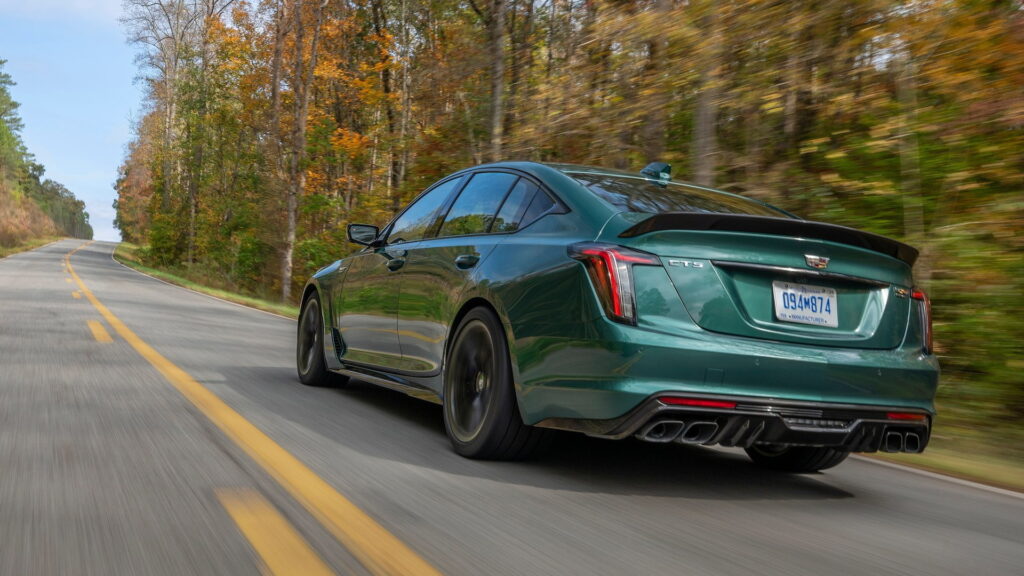
Whether it arrives with a supercharged roar or a hybridized surge, the next CT5-V Blackwing will likely represent the final, glorious chapter of the internal combustion era at Cadillac. For now, the automotive world waits with bated breath, hoping that the rumors are not just wishful thinking, but a concrete roadmap for the future of performance. If Cadillac does indeed follow through, they will have secured their legacy as the last champion of the driver’s car, proving that even in the age of the algorithm, there is still room for the soul of the machine.
