

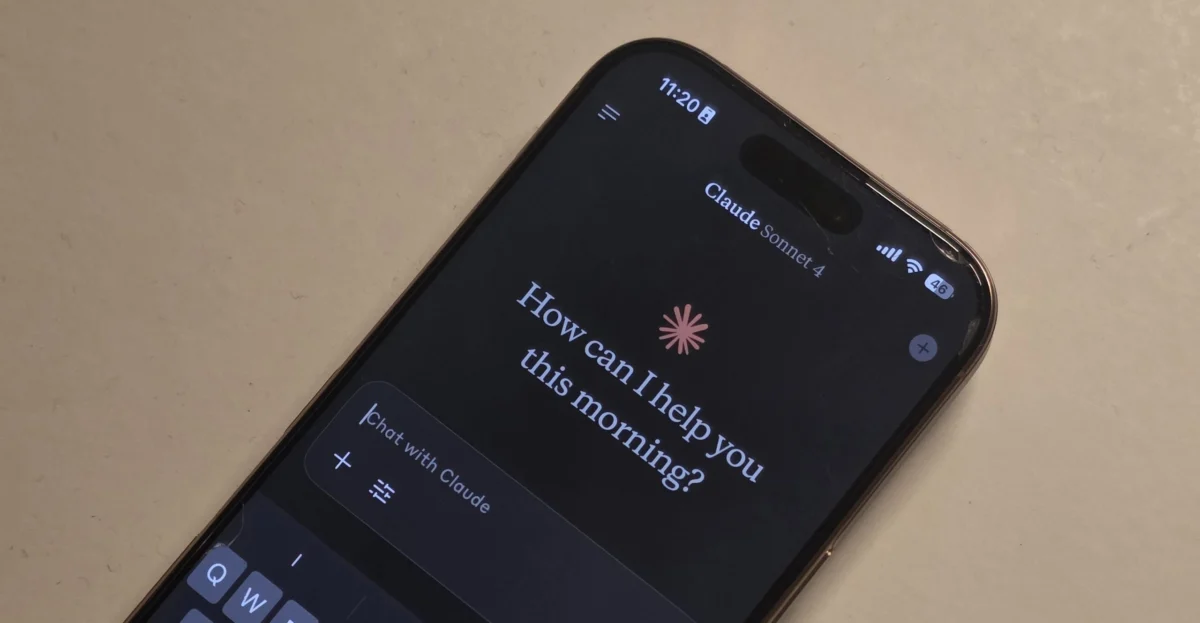
For millions of smartphone users, the "Delete" button has long provided a sense of digital security. Whether it’s a sensitive work brainstorming session, a personal health inquiry, or a candid conversation with an AI companion, the assumption is that once the trash icon is tapped, the data is purged. However, a groundbreaking discovery by researchers at the Georgia Institute of Technology has shattered this illusion, revealing that our AI-driven interactions are leaving behind far more than just digital footprints.
The researchers have unveiled a specialized forensic tool dubbed ORISA (On-device Retrieval and Inference of Session Artifacts), which can effectively reconstruct deleted conversations from local AI applications. This advancement marks a critical turning point in both digital forensics and consumer privacy, forcing a re-evaluation of how on-device AI handles sensitive user data.
The Mechanics of Persistence: How ORISA Functions
To understand the threat posed by ORISA, one must first understand how on-device AI operates. Unlike cloud-based LLMs that process information on remote servers, local AI apps run entirely on a user’s mobile hardware. This approach is marketed heavily as a privacy feature, ensuring that data never leaves the device.

However, the very architecture that makes these apps fast and private is their undoing in the eyes of forensics experts. These applications rely on "working memory"—a temporary, volatile space where the AI processes tokens and maintains the context of a conversation. When a user deletes a chat, the application’s interface sends a command to remove the reference to that session. Crucially, in many of the apps tested by the Georgia Tech team, this command does not trigger a secure "wipe" of the device’s physical storage or volatile memory.
ORISA acts as a forensic vacuum. It scans the residual fragments left behind in the application’s memory heap and cache. By identifying the specific structures used by various AI models to store conversation state, the tool can stitch these fragmented data points back together. The result is not just a text log, but a reconstructed, functional chat session that can be re-imported into an AI interface to continue the dialogue exactly where it was "left off."
A Chronology of Discovery
The development of ORISA was not an overnight success but the result of a multi-phase investigative process:

- Initial Hypothesis (Q1 2026): Researchers identified a lack of standardized data sanitization protocols across popular Android-based AI applications. They hypothesized that the speed required for real-time AI interaction prevented these apps from performing "zero-fill" operations on memory upon deletion.
- Controlled Testing (Q2 2026): The team created "Project Note Keeper," a sandbox AI assistant. They fed the model a controlled dataset of 100 unique, verifiable facts. After engaging in a session, they triggered the app’s native delete function.
- Development of ORISA (Q3 2026): Using the findings from the sandbox tests, the researchers built the ORISA framework. They refined the algorithm to prioritize the reconstruction of context-heavy tokens over generic system data.
- Validation (Q4 2026): The tool was put through 60 rigorous test configurations, covering 10 distinct Android AI applications and three major open-source large language models. The results were consistent: in every case, ORISA was able to recover fragments of the deleted history.
Supporting Data: Quantifying the Recovery
The efficacy of ORISA is perhaps best illustrated by the "Project Note Keeper" experiment. In the original, live session, the model’s "context window"—the amount of information it could "see" at once—was restricted, meaning the AI could only actively reference 14 of the 100 facts provided during the conversation.
When ORISA performed its recovery on the deleted data, it successfully retrieved 26 facts. This paradoxical result—where the forensic tool recovered more information than the AI was actually using at the time of deletion—highlights a major security oversight: the application was caching far more data than it needed for active processing.
In broader testing across the 60 configurations, the recovery rate varied based on the app’s specific memory management, but the success rate remained consistently high. Even in cases where the conversation had been deleted for several hours, ORISA was able to pull enough metadata and text tokens to recreate a meaningful transcript.

The Forensic and Ethical Implications
The existence of a tool like ORISA presents a double-edged sword for society, creating a tension between the need for justice and the right to privacy.
The Forensic Value
For digital investigators, ORISA is a game-changer. Historically, law enforcement and private investigators have struggled to extract meaningful evidence from AI apps. As users increasingly migrate their thoughts and plans to AI assistants, these platforms are becoming the new repositories of "digital consciousness."
Consider a case involving medical malpractice: if a patient uses an AI chatbot to interpret symptoms and receives harmful or incorrect advice, they might delete the conversation out of shame or frustration. If that patient later suffers a health crisis, their medical team would have no record of the AI’s guidance. ORISA could potentially retrieve that conversation, providing the missing link in diagnosing the cause of the injury.

The Privacy Nightmare
Conversely, the implications for the average user are troubling. If a forensic tool can bypass the "Delete" button, it suggests that the current generation of on-device AI apps is failing to meet basic data protection standards. Users who trust their phones to keep their secrets—such as mental health journaling or private professional negotiations—are, in effect, leaving a permanent record that could be accessed by anyone with forensic access to their device.
"The expectation of privacy is a cornerstone of the user experience," says one industry security analyst. "When a developer tells you that your data is safe because it’s local, they are making an implicit promise that the data is also erasable. ORISA proves that this promise is currently being broken by design."
Official Responses and Industry Outlook
While the Georgia Tech researchers have presented their findings to the IEEE (Institute of Electrical and Electronics Engineers), the response from the broader tech industry has been a mixture of silence and defensive posturing.

Major developers of on-device AI apps have generally argued that their "delete" functions are sufficient for standard users and that forensic-level recovery requires physical access to a device, which is an outlier scenario. However, the researchers behind ORISA argue that the vulnerability is systemic. They suggest that developers must implement "cryptographic erasure," where the keys used to encrypt conversation data are destroyed upon deletion, rendering any remaining fragments in memory permanently unreadable.
As of now, ORISA is not available to the public; it remains a tool for academic and forensic investigation. Yet, its existence has already sparked a conversation in the developer community about the necessity of a "Privacy by Design" standard for mobile AI.
Conclusion: The New Reality of Digital Erasure
The research surrounding ORISA serves as a harsh wake-up call. We are entering an era where our interactions with machines are as significant as our interactions with other humans, yet we are treating the data from those interactions with a dangerous level of negligence.

If hitting "delete" is no longer a guarantee of removal, the industry must pivot toward more robust security measures. Until then, users should assume that anything they share with an AI assistant—no matter how private it feels or where it is stored—is a permanent addition to their digital footprint.
The ghost of every conversation remains in the machine, waiting for the right tool to bring it back to life. As ORISA has proven, in the world of artificial intelligence, "gone" is a relative term.
Frequently Asked Questions
Is ORISA available for consumer use?
No. ORISA is a specialized forensic tool developed for research and investigative purposes. It requires a high level of technical expertise to deploy and access to the raw memory of a device.

Are cloud-based AI apps safer?
Not necessarily. While cloud apps might delete data from their servers, they are subject to different risks, including data breaches and provider-side logging. The risk with on-device AI is specifically related to physical access and memory persistence.
How can I protect my data?
Currently, the most effective way to protect your data is to avoid sharing highly sensitive or incriminating information with AI apps, regardless of whether they claim to be "private" or "local-only." Until developers adopt cryptographic erasure, treating these apps as if they have a permanent memory is the safest path forward.
