

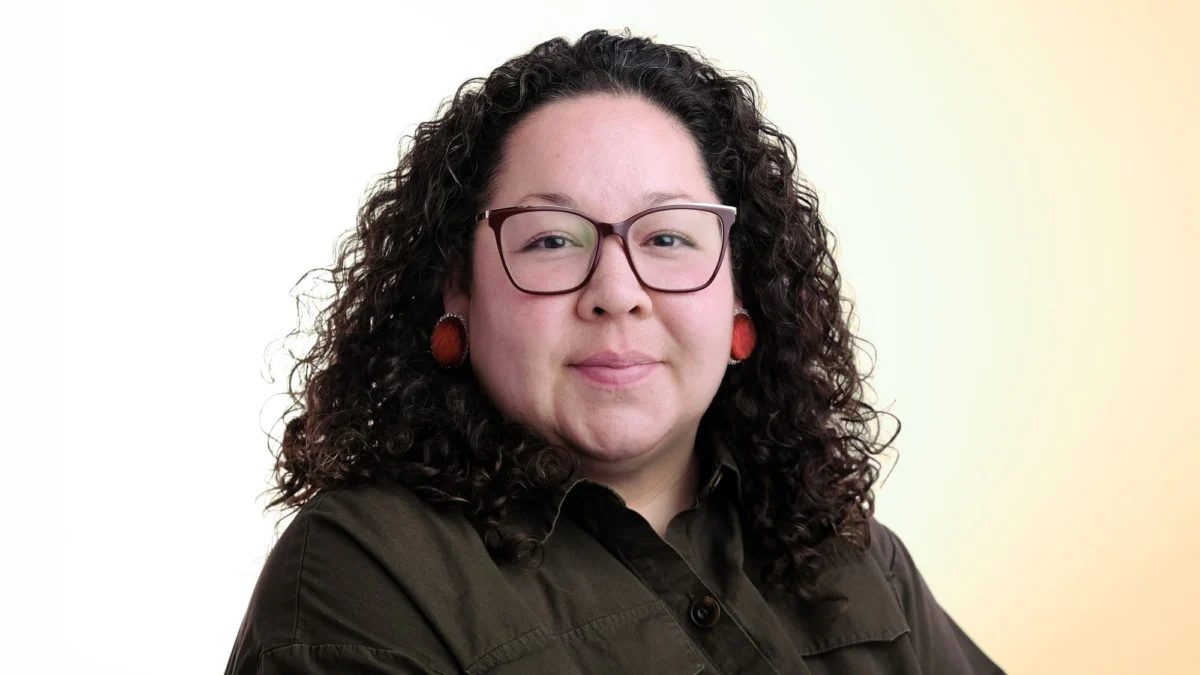
The Institute of American Indian Arts (IAIA) has officially announced the appointment of Dr. Mary Deleary, a distinguished scholar and citizen of the Chippewas of the Thames First Nation, as the new director of the IAIA Museum of Contemporary Native Arts (MoCNA) in Santa Fe, New Mexico. Effective October 19, this appointment marks a pivotal transition for one of the world’s premier institutions dedicated exclusively to contemporary Indigenous art. Dr. Deleary, who currently serves as the director of the IAIA Research Center for Contemporary Native Arts (RCCNA), brings an intimate knowledge of the institution to her new post, having once walked its halls as a student.
In her new capacity, Dr. Deleary will oversee the museum’s comprehensive portfolio, including its expansive exhibitions, vast permanent collections, educational programming, strategic partnerships, and day-to-day operations. Furthermore, she will join the IAIA President’s Cabinet, a move that ensures the museum remains deeply integrated with the academic and cultural mission of the broader institution.
A Legacy of Excellence: The Evolution of MoCNA
To understand the weight of Dr. Deleary’s appointment, one must look at the history of MoCNA. Established in 1972, the museum originated from the IAIA’s internal collection of student artwork, reflecting the burgeoning talent of the institute’s cohorts. Over the decades, it has transformed into a globally recognized epicenter for the study and exhibition of contemporary Indigenous creative practice.
The museum’s current holdings include more than 9,500 individual artworks, ranging from pieces created in the early 1960s to contemporary installations produced this year. By serving as a bridge between historical heritage and modern expression, MoCNA has played an essential role in defining what "contemporary" means within the context of Native American and Indigenous art. The museum does not merely house objects; it functions as a site of living history, where the relationship between the artist, the community, and the ancestral past is constantly renegotiated.
Chronology of Leadership and Institutional Growth
Dr. Deleary’s path to the directorship is defined by a deep-rooted commitment to the IAIA ecosystem. Her trajectory serves as a blueprint for institutional continuity and professional development within the Native American arts sector.
- Academic Foundations: Dr. Deleary’s relationship with the IAIA began long before her administrative tenure. She completed her Bachelor of Fine Arts (BFA) in Museum Studies at the institute, an experience she credits with shaping her professional identity.
- Scholarly Pursuit: Following her time at IAIA, Dr. Deleary pursued a PhD in Native American Art History from the University of Oklahoma. Her research was notably focused on Anishinaabe practices of making, remembering, and the complex process of reconnecting with ancestral belongings held in global museum and archival collections.
- The RCCNA Tenure: As the director of the IAIA Research Center for Contemporary Native Arts (RCCNA), Dr. Deleary led efforts to bridge the gap between academic research and public exhibition. This role required a delicate balance of preservation and innovation, preparing her for the holistic leadership required at MoCNA.
- The Transition (October 19): Upon assuming the directorship, Dr. Deleary succeeds former Director Patsy Phillips (Cherokee Nation), under whose leadership the museum saw significant growth in both its international profile and its educational outreach.
The Intersection of Research and Stewardship
Dr. Deleary’s academic background is particularly relevant to the current discourse in the museum world regarding provenance and decolonization. Her doctoral work focused on the repatriation and re-engagement of ancestral objects, a topic that remains at the forefront of modern museum studies. By centering her practice on the Anishinaabe perspective of "remembering," she brings a specialized lens to MoCNA that moves beyond Western museology.

In her capacity as MoCNA director, she will likely lean into this expertise to manage the collection. The challenge for a museum of MoCNA’s stature is to balance the preservation of 9,500 pieces with the need to remain a dynamic, relevant space for emerging artists. Dr. Deleary’s experience with both the archival side of the RCCNA and the exhibition-based nature of MoCNA makes her uniquely suited to handle this dual responsibility.
Official Responses and Strategic Vision
The appointment has been met with enthusiasm from the highest levels of the IAIA. Dr. Shelly C. Lowe (Navajo), President of the IAIA, highlighted the strategic importance of choosing a leader who is both an insider and a visionary.
"Dr. Deleary brings a deep understanding of IAIA, contemporary Indigenous art, museum practice, archives, and the relationships that connect artists, collections, students, and communities," Dr. Lowe stated in the official press release. "As an IAIA alum and a leader who has already contributed meaningfully to our institution, she understands both the history we carry and the possibilities ahead."
For her part, Dr. Deleary expressed a deep sense of humility and gratitude regarding her return to the museum in this leadership capacity. "MoCNA is a special place that educates, celebrates, and centers the lives, works, and stories of many Indigenous artists," she noted. "My own relationship with MoCNA began when I was a student intern, and that experience greatly shaped my understanding of museum work and the important role museums play in supporting Indigenous artists, students, and communities."
She further emphasized the collaborative nature of her upcoming tenure, stating, "I am honored to return to MoCNA in this new role and to work alongside an incredible team as we build upon the foundation established by former Director Patsy Phillips."
Implications for the Future of Indigenous Art
The appointment of Dr. Deleary signals several broader implications for the field of museum studies and the status of Indigenous institutions in the 21st century:

1. The Power of Internal Leadership
By appointing a graduate of the institute, IAIA is reinforcing a model of "homegrown" leadership. This approach ensures that the person at the helm understands the nuances of the student experience, the cultural protocols of the community, and the specific needs of the artists who pass through the IAIA’s programs.
2. A Focus on Decolonial Practices
Dr. Deleary’s academic specialization in the reconciliation of ancestral belongings and archival practice suggests that MoCNA may see an increased focus on the ethical stewardship of collections. This is a critical area of growth for museums globally, and MoCNA is positioned to serve as a beacon for how other institutions might handle sensitive cultural material.
3. Deepening the Research-Exhibition Nexus
Under Dr. Deleary’s leadership, the lines between the RCCNA and MoCNA will likely become even more porous. This integration is essential for fostering a "research-led" exhibition strategy, where every show is underpinned by rigorous scholarship that honors the origins and the intent of the artists.
4. Strengthening Community Partnerships
The role of the museum in the Santa Fe community and the broader Native American art world cannot be overstated. With Dr. Deleary as a member of the IAIA President’s Cabinet, the museum is poised to leverage its influence to secure greater funding, expand international partnerships, and create more robust career pipelines for Indigenous students.
Conclusion: A New Era
As Dr. Deleary prepares to take the reins on October 19, the mood surrounding the IAIA is one of optimistic continuity. The museum is not merely changing leadership; it is affirming its commitment to a specific, informed, and deeply rooted vision of what contemporary Indigenous art can achieve.
In a landscape where museums are frequently criticized for their detachment from the communities they claim to represent, MoCNA’s choice of Dr. Deleary serves as a reminder of the value of proximity. By choosing a leader who has lived the history of the institution—from student to researcher to director—IAIA is ensuring that its future is built upon the firmest of foundations. Under her guidance, MoCNA is expected to remain a vital, challenging, and profoundly human space, where the "making, remembering, and reconnecting" that defines Dr. Deleary’s scholarship continues to breathe life into the art of the present and the future.
