

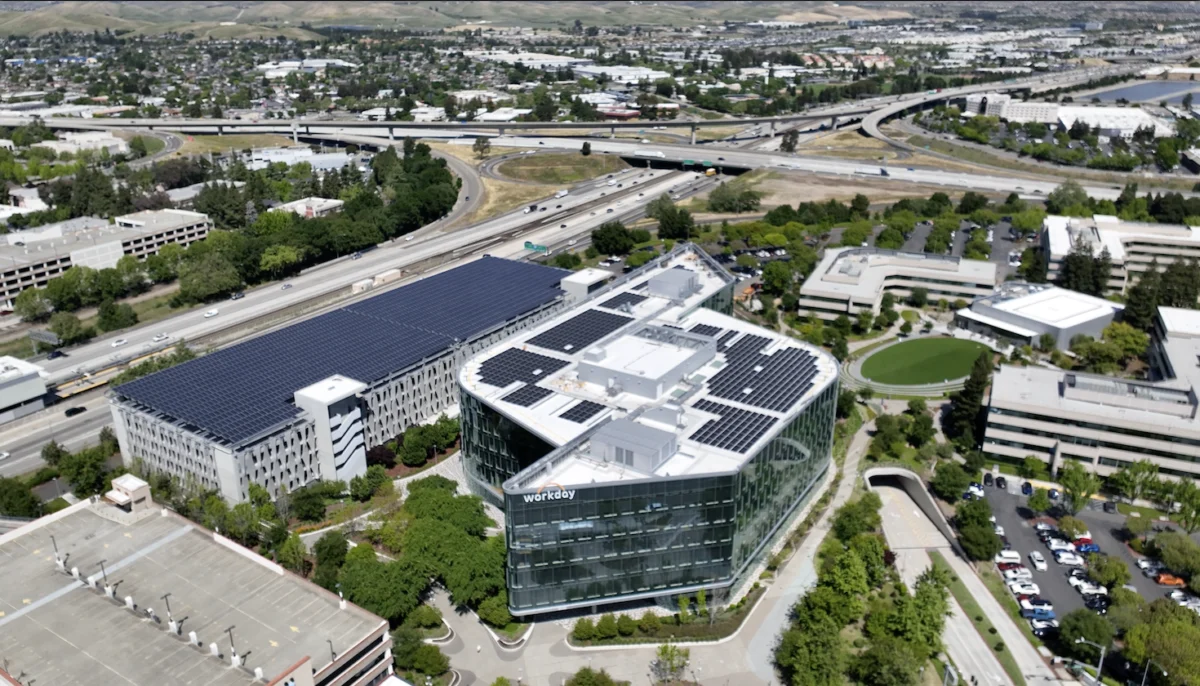
Enterprise software giant Workday has officially unveiled a comprehensive, validated roadmap for its next phase of climate action. Building upon the results of its 2020 sustainability pledges, the company has established ambitious, science-based targets that extend through fiscal year 2031. This new commitment underscores a pivotal shift in corporate sustainability: moving from broad, aspirational goals to hyper-focused, data-driven operational efficiency.
The updated strategy represents a maturation of Workday’s environmental, social, and governance (ESG) efforts, acknowledging both the successes of the past five years and the stark realities of supply chain influence. As the company looks toward 2031, its approach integrates everything from software code optimization to the complex, emerging challenge of managing the carbon footprint of artificial intelligence.
Main Facts: The 2031 Sustainability Framework
Workday’s new climate commitment is characterized by a multi-pronged approach that targets the entirety of its carbon footprint. The centerpiece of this strategy is the validation of its goals by the Science Based Targets initiative (SBTi), ensuring that the company’s internal metrics align with the global effort to limit temperature rise.
Key Targets:
- Operational Decarbonization (Scope 1 & 2): Workday has pledged a 42% absolute reduction in greenhouse gas (GHG) emissions from its operations and electricity consumption by fiscal year 2031, using a 2025 baseline.
- Renewable Energy Continuity: The company will maintain its status of matching 100% of the electricity consumption in its global offices and data centers with renewable energy sources through 2031.
- Supply Chain & Travel Efficiency (Scope 3): Recognizing the difficulty of controlling third-party emissions, Workday has pivoted to intensity-based targets. It aims to reduce the carbon footprint of purchased goods, capital expenditures, and business travel by 52% per dollar spent by 2031.
These targets are not merely theoretical; they are backed by an internal price on carbon, a financial lever Workday uses to allocate investment capital toward mitigation projects. This internal carbon fee is slated to rise steadily over the coming years, further incentivizing departments to reduce emissions as a matter of financial prudence.
Chronology: A Retrospective on the 2020–2026 Cycle
To understand the current strategy, one must look back at the 2020 cycle, which served as a proving ground for the company’s sustainability maturity.
2020: The Initial Commitment
Five years ago, Workday launched a bold trio of goals:
- Match electricity consumption with renewables.
- Reduce business travel emissions by 25%.
- Ensure 70% of suppliers (based on spend) set their own emissions reduction targets.
2021–2025: Operational Gains and Challenges
The mid-cycle period saw significant progress. Workday successfully matched its electricity usage with renewable energy for six consecutive fiscal years. Furthermore, it outperformed its business travel goal, achieving a 31% reduction—surpassing the 25% target. This was accomplished by implementing a "travel only when essential" policy and investing in sustainable aviation fuel (SAF) certificates in collaboration with a consortium of other corporate buyers.
2026: The "Reality Check"
By the end of the 2026 fiscal year, the company faced a sobering outcome regarding its supply chain goal. Only 24% of relevant suppliers had adopted their own science-based targets. This gap highlighted a disconnect between Workday’s expectations and the readiness of its vendor ecosystem.
"Some organizations aren’t ready, and they were clear with us about that," noted Erik Hansen, Workday’s Chief Sustainability Officer. This admission serves as the primary catalyst for the company’s shift toward intensity-based targets in the new 2031 cycle.
Supporting Data: The Mechanics of Efficiency
Workday’s transition from 2026 into 2031 is predicated on a "rightsizing" philosophy. The company is no longer just looking at carbon offsets; it is looking at the fundamental architecture of its software and infrastructure.
Cloud Optimization
In 2025 alone, data-driven efficiency measures resulted in a reduction of 5,000 metric tons of carbon dioxide equivalent (MT CO2e), while simultaneously saving the company millions in operational costs. By analyzing cloud infrastructure usage, Workday identified "over-provisioning"—buying more cloud capacity than was necessary. By "rightsizing" these services and optimizing application code to run faster and with less compute power, the company proved that efficiency is a dual-purpose strategy for finance and the environment.
The AI Imperative
With AI becoming a cornerstone of enterprise software, Workday is proactively addressing the energy intensity of large language models. The company reported total emissions of 335,490 MT CO2e for 2026, with data centers and cloud footprint accounting for approximately one-third of that figure. To prevent this from ballooning, Workday is:
- Selecting Carbon-Conscious Models: Prioritizing foundational models that are trained on green energy.
- Strategic Partnerships: Using Google’s Gemini as the default for its "Sana" AI agent, citing Google’s commitment to 24/7 carbon-free electricity.
- Ecosystem Engagement: Teaming up with other software firms to demand greater emissions transparency from AI model developers.
Official Responses: Sustainability in a Silo-Free Environment
In its 2026 Global Impact Report, Workday emphasized that sustainability is no longer a peripheral function. "True corporate sustainability cannot exist in a silo," the report states. "Achieving ambitious targets requires continuous deep stakeholder buy-in across every department—from global real estate and procurement to product engineering and finance."
Erik Hansen, in his role as CSO, has consistently articulated that these goals are not just "greenwashing" exercises, but are tied to the core identity of the company. "We knew we had to refresh our goals because sustainability is integral to our core values of integrity and customer service," Hansen said. He noted that as customers become more environmentally conscious, they expect their enterprise software partners to lead by example, not just in their own operations, but in their influence over the broader supply chain.
Implications: The Road to 2031
The implications of Workday’s new strategy extend far beyond its own headquarters.
For the Supplier Ecosystem
By moving to intensity-based targets, Workday is acknowledging that it cannot force every supplier to set an absolute emissions reduction target today. However, it is making carbon data reporting a "linchpin" requirement in its contracts. This creates a powerful market incentive: if vendors want to maintain their relationship with a major enterprise client, they must provide transparent data. This, in turn, helps Workday identify the "hot spots" in its Scope 3 footprint where the most significant gains can be made.
For the Software Industry
Workday’s approach to AI is likely to become a blueprint for the wider software sector. As the energy demand for AI training and inference grows, software companies are finding themselves under pressure to account for their "compute-carbon." By focusing on model selection and code optimization, Workday is proving that sustainability is a software engineering challenge as much as it is a corporate policy challenge.
The Financial Nexus
The use of an internal price on carbon is perhaps the most significant structural change. By placing a dollar value on each ton of emissions, Workday is ensuring that climate considerations are integrated into the decision-making process for every capital expenditure. As this price increases toward 2031, the company is effectively future-proofing itself against potential carbon taxes and rising energy costs, turning its climate strategy into a competitive economic advantage.
Conclusion: A New Standard of Accountability
Workday’s journey from 2020 to 2031 represents the evolution of corporate climate responsibility. It is a transition from the "pledge-based" era to the "performance-based" era. By candidly addressing its failure to meet the 70% supplier engagement goal and pivoting toward a more sophisticated model of intensity targets and infrastructure optimization, Workday is setting a standard for how large enterprises must navigate the hard realities of the modern carbon landscape.
As the company moves forward, the success of its 2031 targets will depend on its ability to enforce accountability within the AI ecosystem and its success in convincing its vast supply chain that the path to a lower-carbon future is the only viable path to long-term profitability. For Workday, the next five years will be less about setting the goal and more about the relentless execution of the strategy behind it.
