

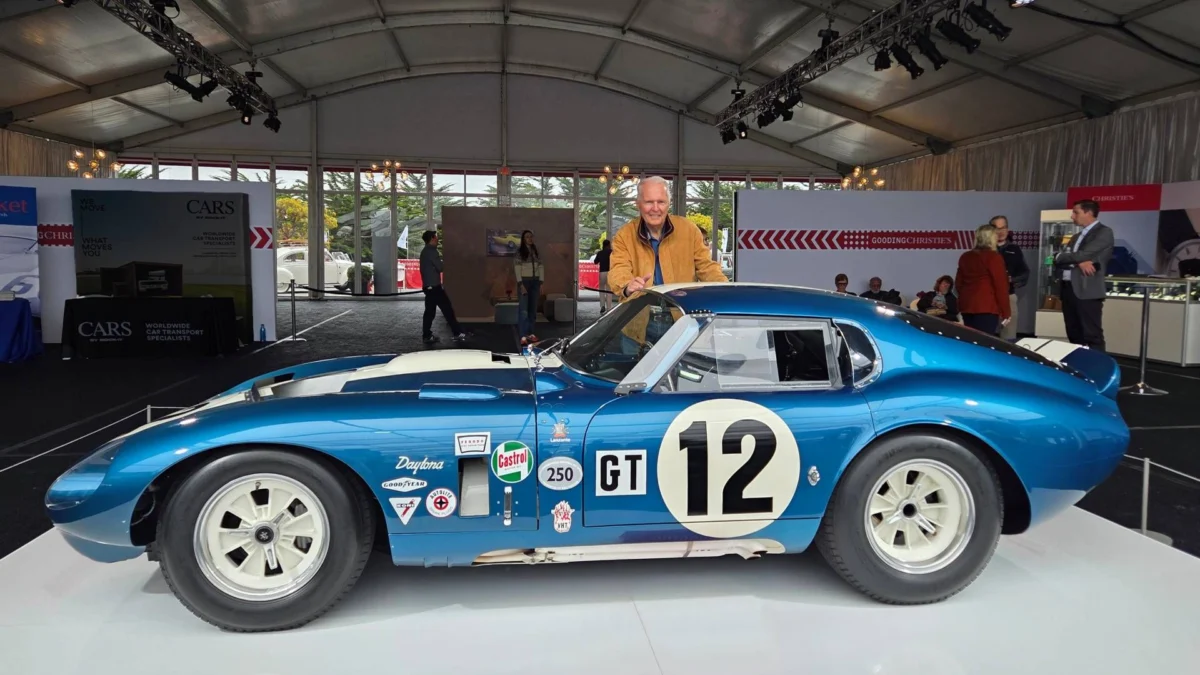
In the high-stakes, gasoline-soaked world of 1960s international motorsport, few names carry the weight of Peter Brock. As an automotive designer, racing team principal, and renaissance man, Brock’s fingerprints are found on some of the most significant vehicles in history, from the second-generation Chevrolet Corvette to the triumphant BRE Datsuns. Yet, among his vast portfolio of achievements, one story stands out—not for its initial glamour, but for its miraculous survival.
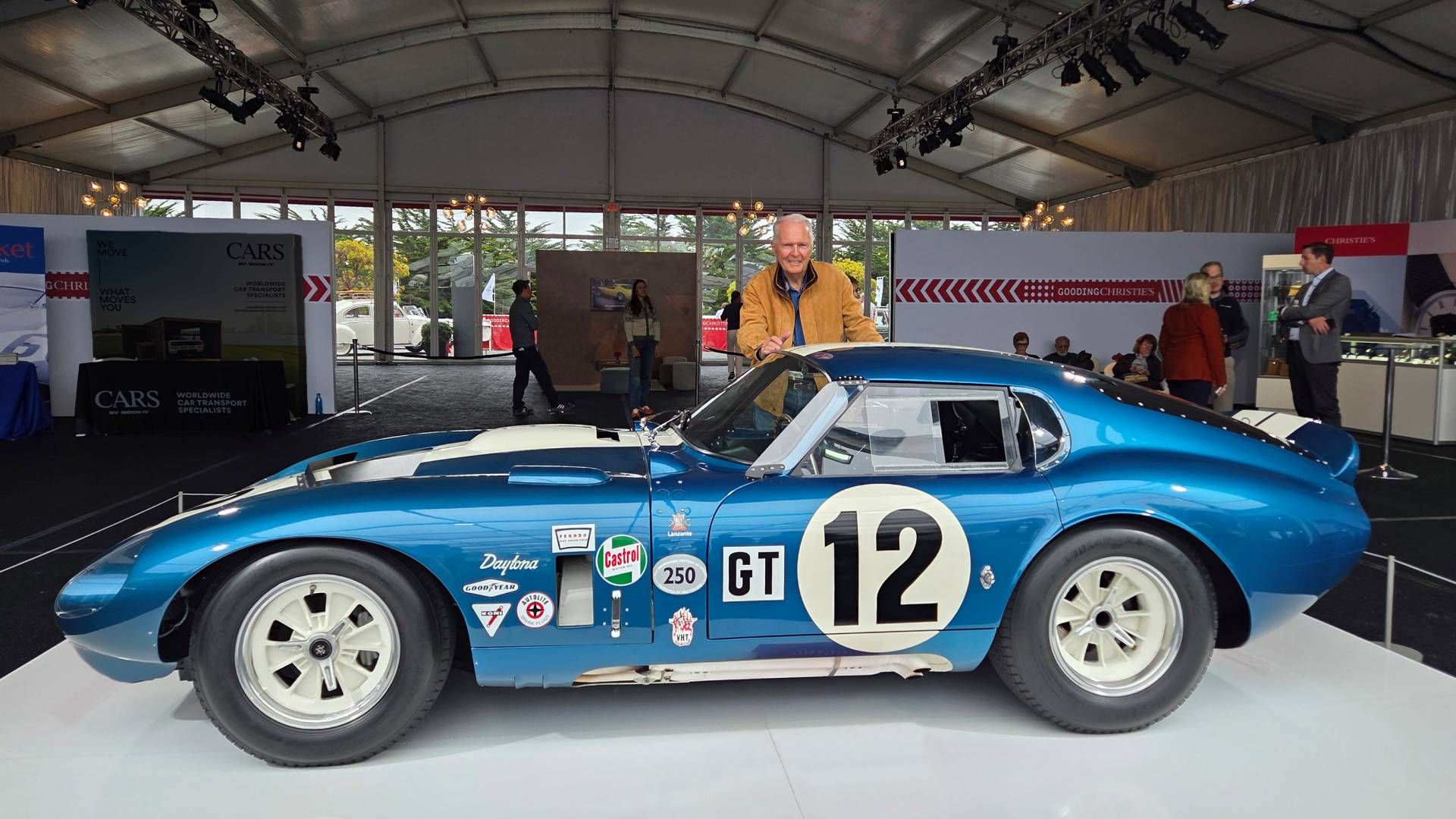
The six 1964 Shelby Cobra Daytona coupes, one of which recently shattered records at a Monterey auction with a hammer price of US$43 million, were once considered little more than "expendable assets." These machines, which collectively represent over $200 million in automotive history, were nearly discarded into the North Sea by a team—and a parent company—that had lost faith in their potential.
The Near-Loss of a Masterpiece
"Shelby said, ‘Lookit, I’m not interested in them at all, just do whatever you want with them,’" Brock recalls, speaking on the precarious existence of the Daytona project. "So they were going to take them out and dump them in the North Sea. If it had not been for Alan Mann paying out of his own pocket to send those cars back to the United States, they all would have disappeared."
This chilling revelation highlights the volatile environment of mid-1960s racing. While films like Ford vs. Ferrari have dramatized the "Wild West" atmosphere of the era, the reality was often more chaotic and far less romantic. The Shelby American team was grappling with the massive, resource-heavy Ford GT40 program, which was suffering from significant "teething troubles." In the shadow of the GT40, the smaller, aerodynamic Daytona coupes—designed specifically to challenge Ferrari on the European stage—were viewed as distractions.
A Chronology of Genius: From GM to BRE
To understand the magnitude of Brock’s contribution, one must look at his trajectory. Born in 1936 near San Francisco, Brock was a prodigy of the post-war hot-rodding culture. His raw talent earned him a spot at the prestigious ArtCenter College of Design, and by age 19, he had become the youngest designer ever hired by General Motors.
Under the mentorship of legendary VP of design Bill Mitchell, Brock penned the initial sketches for the second-generation Corvette. His influence is clearly visible in the 1959 Stingray racer, a prototype that serves as the DNA for the C2 Corvette Sting Ray. While fellow ArtCenter alumnus Larry Shinoda is often credited with the final development of the production C2, it was Brock who first visualized its iconic, aggressive form.
Following his GM tenure, Brock returned to California, joining Carroll Shelby’s team. His role was multifaceted; he acted as a driving instructor but quickly assumed the role of an unofficial design lead, handling everything from team liveries to the revolutionary aero-sculpting of the Daytona.
After his stint with Shelby, Brock founded Brock Racing Enterprises (BRE). It was here that he demonstrated his ability to transform underdogs into titans. His work with Hino—a Japanese manufacturer before its integration into Toyota—resulted in the BRE Samurai, a machine that featured a "hoop" rear spoiler years before such aerodynamic features became standard on supercars like the Ferrari F40.
Most famously, BRE’s dominance in Trans-Am racing with the Datsun 510 and 240Z fundamentally altered the American perception of Japanese performance. The red, white, and blue livery of the BRE Datsuns remains one of the most recognizable color schemes in racing history, a direct precursor to the tuner culture that would later be immortalized in modern pop culture.
The Daytona: Defying the Wind and the Skeptics
The story of the Shelby Cobra Daytona is a masterclass in persistence. At the time of its inception, the concept of a closed-cockpit, aerodynamic Cobra was met with deep skepticism within the Shelby organization.

"The only guys that really had an understanding of what we were doing was myself and Ken Miles," Brock explains. "And of course, Shelby thought I was just this dumb kid. But they did have this respect for Ken Miles, so Miles is the guy that put the story across."
The turning point came at Riverside Raceway. When Ken Miles took the car out and shattered the existing lap record by a staggering three and a half seconds, the shop floor fell silent. Skepticism vanished. The team, previously dismissive, began referring to the project as "The Daytona car," a nickname that stuck.
Brock’s design philosophy relied on the application of 1930s aerodynamic principles, specifically the "Kamm tail"—a chopped-off rear end that reduces drag by managing airflow separation. While the scientific community understood the theory, the racing world was slow to adopt it. Once the Daytona proved its worth, however, it became the spearhead of Shelby’s 1965 FIA World Sportscar Championship victory, soundly defeating the Ferrari 250 GTOs at historic venues like Spa-Francorchamps, Goodwood, and the Nürburgring.
Supporting Data: An Asset Class of Its Own
The $43 million auction price of a single Daytona coupe is not merely a reflection of its scarcity; it is a testament to the endurance of its provenance. Only six original coupes were built. That they survived the near-death experience in the North Sea and the subsequent transition of the automotive world into the era of the GT40 makes them the "Holy Grail" of American muscle.
The value of these cars has tracked alongside the rise of the collector market, where "first-of-kind" or "last-of-kind" historical significance drives prices into the tens of millions. The Daytona sits at the apex of this market because it represents a rare moment where a singular designer’s vision successfully challenged the status quo of the European racing establishment.

A Legacy Celebrated: The Cobble Beach Concours
This month, the history of the Daytona and the career of Peter Brock will be the centerpiece of the 12th annual Cobble Beach Concours d’Elegance in Ontario, Canada. Running from September 18 to 20, the event has become a pilgrimage for automotive royalty. Last year’s exhibition featured such rarities as Bill Gates’ Porsche 959, the complete trio of Chevrolet Engineering Research Vehicles (CERV I, II, and III), and a custom-built Cadillac for King Edward VIII.
This year, the Concours will host a tribute to Brock’s career. The display will include:
- A trio of significant, custom-curated Corvettes.
- A legendary BRE Datsun 240Z.
- An officially sanctioned Shelby Daytona continuation car, allowing spectators to view the design that nearly disappeared into the ocean.
- The original 1959 Stingray racer, providing a direct link to Brock’s early days at GM.
The event’s organizers have also confirmed that the 2023 Pebble Beach "Best in Show" winner, a 1937 Mercedes-Benz 540K Special Roadster, will be in attendance, reinforcing the event’s status as one of the premier automotive gatherings in North America.
Implications for Future Automotive History
The story of the Daytona Coupe is more than just a tale of a fast car; it is a lesson in the importance of maintaining vision in the face of institutional apathy. Had Brock not fought for his design, or had Alan Mann not intervened, a vital piece of the American racing identity would be lost to history.
As Brock prepares to deliver his keynote address in Ontario, the implications of his work remain relevant for modern designers. In an age of wind-tunnel-optimized, computer-generated silhouettes, the Daytona stands as a monument to the power of intuition and the "Wild West" spirit of engineering.

For the collector, the $43 million price tag is a safeguard—a guarantee that these machines will never again face the risk of being treated as expendable. For the enthusiast, the Daytona is a reminder that the most significant innovations often come from those whom the industry initially labels as "dumb kids."
Peter Brock’s career continues to serve as an encyclopedia of design evolution. From the sleek curves of the Stingray to the aerodynamic defiance of the Daytona, his work is a testament to the fact that when you truly understand how to work with the wind, you eventually find yourself at the very front of the pack. As the automotive world looks toward an electrified, autonomous future, the legacy of the Daytona reminds us that the human element—the daring, the stubbornness, and the pure, unadulterated passion for speed—will always be the true engine of innovation.
