

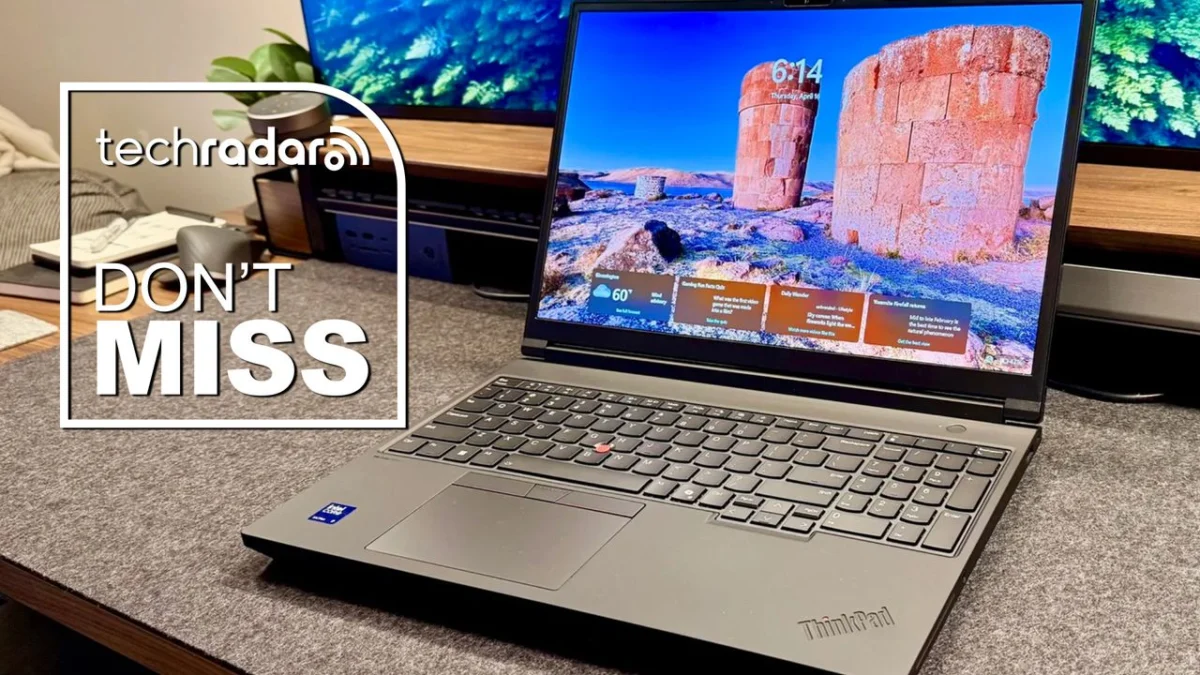
For professionals whose workflows demand the raw computational muscle of a desktop but whose lifestyles require the agility of a mobile device, the search for the "perfect" machine is often an exercise in compromise. Today, Lenovo is alleviating some of that friction by offering a strategic price reduction on its flagship mobile powerhouse, the ThinkPad P16 Gen 3. Now available for $3,859—down from its previous $4,019 price point—this workstation is positioned as the definitive tool for engineers, architects, and high-end creative professionals.
While a $160 discount may seem modest in the context of the broader consumer laptop market, the ThinkPad P16 Gen 3 occupies a different echelon. It is not a machine intended for casual browsing; it is a precision instrument. By trimming the cost of a device that has already shattered industry benchmark tests, Lenovo is effectively lowering the barrier to entry for students and firms looking to upgrade their hardware ecosystem to a standard that can reliably handle CAD, complex 3D modeling, and high-fidelity video rendering.
The Core Specifications: Desktop Performance in a 16-inch Chassis
At the heart of the ThinkPad P16 Gen 3 lies an uncompromising commitment to performance. The unit on sale features the Intel Core Ultra 7 255HX processor, a chip designed for sustained high-intensity tasks rather than fleeting bursts of speed. This processor is paired with the Nvidia RTX PRO 2000 Blackwell Laptop GPU, a professional-grade graphics card that excels in compute-heavy environments where stability and driver certification are as important as raw frame rates.
The machine’s architecture is bolstered by 32GB of high-speed DDR5 memory, ensuring that large-scale datasets and multiple memory-intensive applications can run simultaneously without throttling. Perhaps most impressive is the integration of a 1TB PCIe Gen5 SSD. The transition to Gen5 storage technology marks a significant leap in read/write speeds, drastically reducing load times for massive project files that would cause lesser laptops to stutter.
A Chronology of Excellence: From Concept to Benchmark King
The ThinkPad P series has long been the gold standard for engineering and scientific computing. To understand the significance of the Gen 3, one must look at the lineage of the P16 series.
- Generation 1 (The Foundation): Lenovo introduced the P16 to replace the aging P15 and P17 lines, consolidating its workstation portfolio into a chassis that balanced thermal management with physical portability.
- Generation 2 (The Refinement): The second iteration focused on thermal efficiency, introducing improved vapor chamber cooling that allowed the internal components to push harder for longer periods.
- Generation 3 (The Current Standard): Launched to coincide with the latest silicon from Intel and Nvidia, the Gen 3 model represents the culmination of years of feedback. It was designed specifically to address the thermal limitations that historically plagued mobile workstations.
During our rigorous testing phases, the P16 Gen 3 distinguished itself by maintaining peak performance under sustained, 100% CPU and GPU loads. Unlike many gaming laptops that rely on aggressive fan curves and aggressive thermal throttling, the P16 Gen 3’s cooling solution allows it to operate with a level of consistency that is rare in the mobile form factor.
Unpacking the Hardware: Display and Ergonomics
One of the standout features of this workstation is its 16-inch WQUXGA display. Boasting a native resolution of 3840 x 2400, the panel provides the kind of pixel density required for granular detail in engineering schematics and color-critical creative projects.
With 100% DCI-P3 color coverage and a peak brightness of 800 nits, the display is not just functional—it is an asset. Whether you are performing color grading for a production house or verifying the tolerances in a 3D CAD model, the accuracy provided by this panel ensures that what you see on the screen is an accurate representation of the final output. Furthermore, the inclusion of HDR 400 support ensures that contrast ratios remain deep and vibrant, even in well-lit office environments.
The physical design also leans into the "ThinkPad" heritage. The keyboard is widely considered the best in the industry, offering a tactile, responsive typing experience that remains comfortable during the long hours often associated with professional engineering work. The chassis is robust, meeting military-grade durability standards, ensuring that it can withstand the rigors of travel between job sites and office environments.
Connectivity and the Modern Workflow
In an era defined by hybrid work and complex peripheral ecosystems, connectivity is often the silent bottleneck. The P16 Gen 3 mitigates this by integrating Intel Wi-Fi 7 and Bluetooth 5.4, providing the latest wireless standards for low-latency, high-bandwidth data transfers.
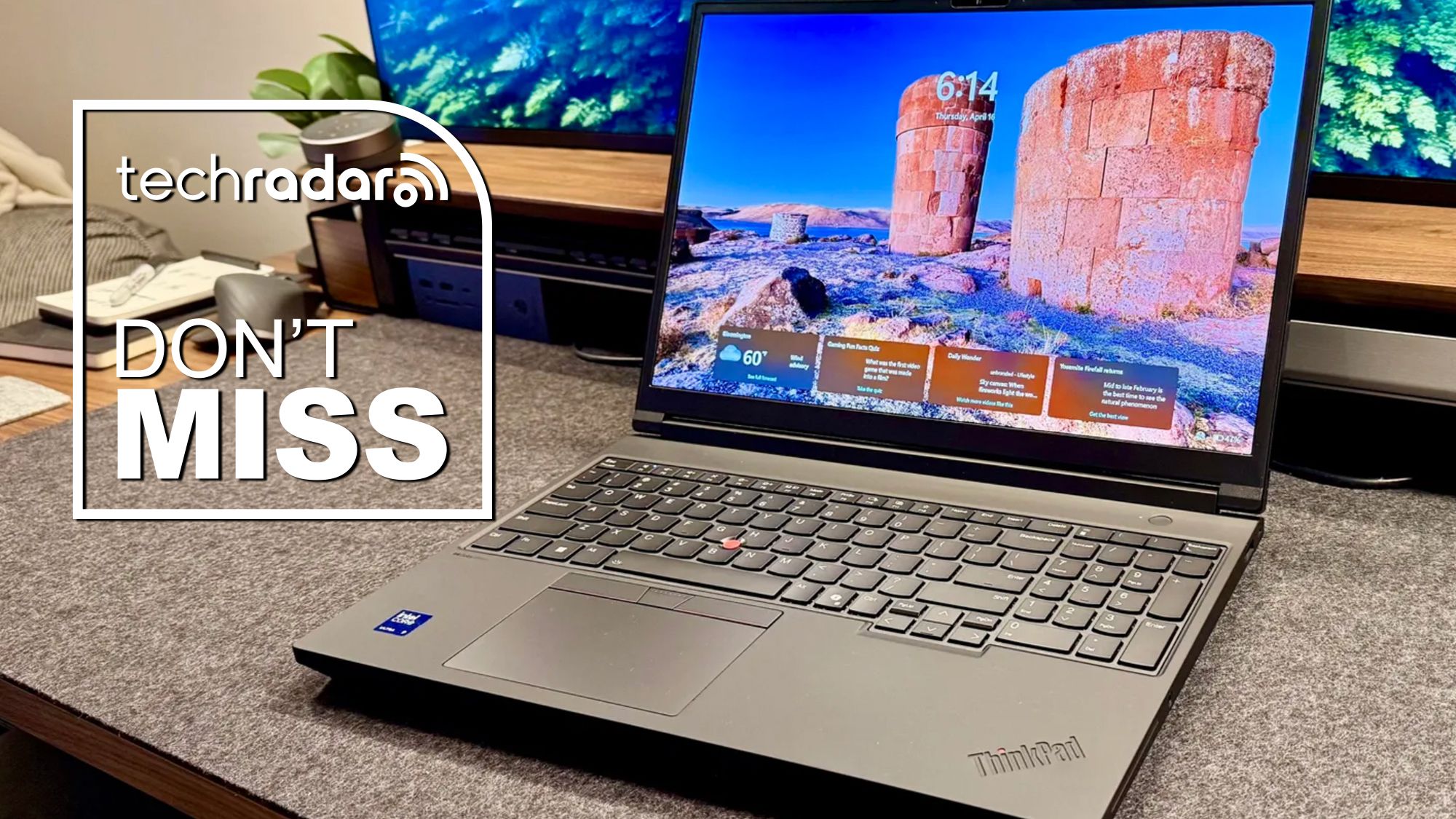
The port selection is equally comprehensive. By offering an array of high-speed USB-C, Thunderbolt, and HDMI ports, Lenovo has effectively eliminated the need for the "dongle life" that plagues many thinner, lighter laptops. For the professional who needs to connect to multiple 4K displays, external storage arrays, and precision input devices simultaneously, the P16 Gen 3 functions as a seamless hub.
Video conferencing, a staple of modern collaborative engineering, is handled by a 5MP RGB/IR camera. The inclusion of dual microphones, a physical privacy shutter, and computer vision support ensures that the user is not only presented in high resolution but also remains secure.
Official Stance and Market Positioning
Lenovo’s strategy with the P16 Gen 3 is clear: they are targeting the professional who views their laptop as a long-term investment rather than a disposable commodity. While the market is currently saturated with consumer-grade laptops marketed toward "creators," the ThinkPad P16 Gen 3 stands apart by virtue of its ISV (Independent Software Vendor) certifications.
These certifications, which guarantee that the machine will run software like AutoCAD, SolidWorks, and Adobe Creative Cloud without crashes or compatibility issues, are the true value proposition of the workstation. When asked about the current discount, industry analysts suggest that Lenovo is aiming to capture the "Back to School" market for engineering students while simultaneously refreshing the fleets of corporate enterprises ahead of the next hardware refresh cycle.
Implications for the Professional Landscape
What does the availability of this hardware mean for the average professional? The primary implication is the blurring of the line between stationary and mobile workstations. As cloud-based computing and remote access tools become more sophisticated, the need for a "desktop-only" workflow is rapidly vanishing.
The P16 Gen 3 enables a "carry-your-workstation" model. An architect can now model a building in the field, render a walkthrough in the office, and present the final result on the same machine without needing to sync files across multiple devices or rely on a remote connection that may be hampered by latency.
Furthermore, the longevity of the Gen 3 cannot be overstated. By utilizing high-end components like the Core Ultra 7 and the RTX PRO 2000, this machine is "future-proofed" for at least the next three to five years. For a professional, the total cost of ownership (TCO) is lower for a machine that remains performant over a long lifecycle, even if the initial purchase price is higher than a standard retail laptop.
Final Verdict: Why the Investment Matters
The ThinkPad P16 Gen 3 is not for everyone. It is heavy, it is built for power, and it carries a price tag that reflects its professional utility. However, for those who push their hardware to the absolute limit, it is arguably the best mobile workstation currently on the market.
By offering a $160 discount, Lenovo is providing an opening for those who have been on the fence about upgrading to a true mobile workstation. Whether you are an engineering student preparing for a rigorous curriculum or a veteran professional looking to replace a machine that is beginning to show its age, the P16 Gen 3 is a reliable, powerful, and remarkably capable choice.
As we look toward the future of mobile computing, the ThinkPad P16 Gen 3 serves as a reminder that there is no substitute for raw power and intelligent design. It is a spectacular piece of engineering in its own right—a machine that respects the user’s time, protects their work, and ensures that when it comes to professional performance, there are no compromises.
