

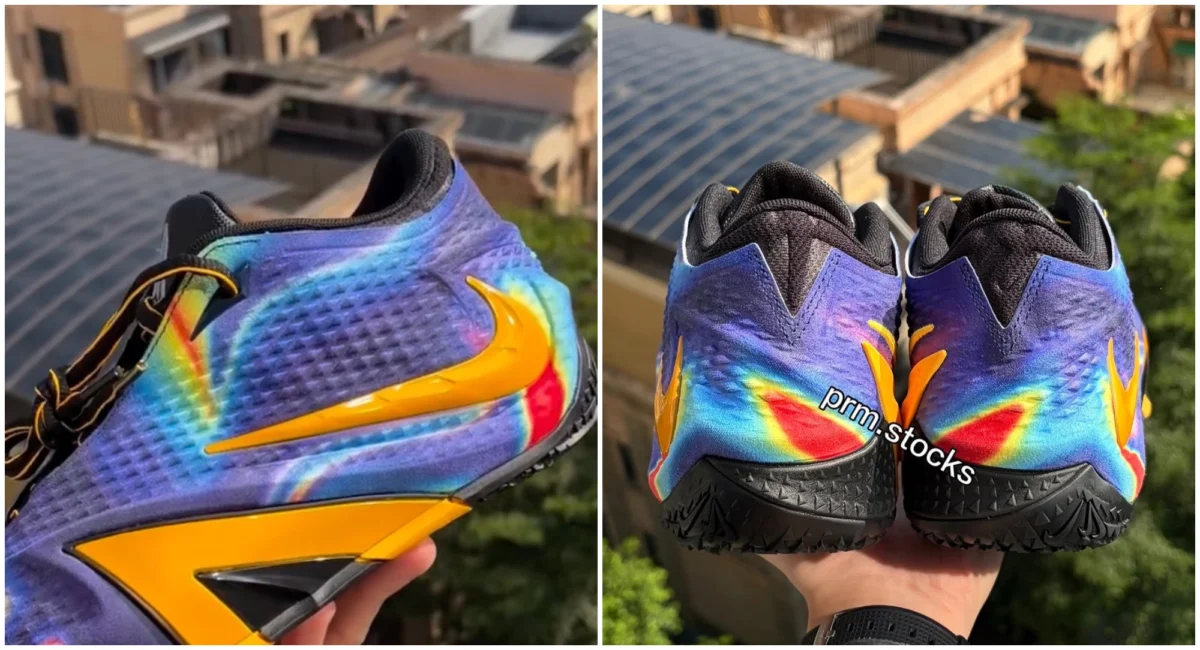
In the high-stakes world of signature basketball footwear, where athlete branding is as much about cultural cachet as it is about performance on the hardwood, Ja Morant’s partnership with Nike has become a standout success story. Now, just four years into the partnership, the Portland Trail Blazers star’s signature line is set to reach a new zenith of aesthetic audacity. Nike has officially pulled back the curtain on the latest iteration of the Ja 4, a colorway dubbed "Radar"—or, as it is colloquially known among sneaker aficionados, "Thermal Imagery."
With a design language that screams for attention, the "Radar" Ja 4 represents a significant departure from the minimalist trends currently dominating the lifestyle sneaker market. By leaning into chaotic, weather-map-inspired graphics and a high-octane color palette, Nike is signaling that the Ja 4 is not just a tool for the court, but a canvas for storytelling.
The Main Facts: Anatomy of the "Radar" Colorway
The "Radar" Ja 4 is a masterclass in visual noise, designed to capture the intensity of a high-pressure storm system. Clad in a complex, multi-color spectrum—officially listed as Obsidian, Total Orange, Laser Orange, Black, Racer Blue, and Cobalt Bliss—the shoe immediately commands the eye.

The standout feature is undoubtedly the upper. Unlike the standard iterations that favor mesh or synthetic overlays, the "Radar" features a diamond-quilted textile base that serves as the backdrop for an intricate weather radar map graphic. The pattern shifts seamlessly across the silhouette, mimicking the erratic movement of a meteorological system.
Beyond the print, the architectural details of the shoe remain faithful to the performance standards of the Ja 4. The vibrant orange Swoosh serves as a focal point, grounding the chaotic upper. Perhaps most striking is the integration of the TPU "Ja-Frame," a functional structural element that doubles as a branding motif; the frame wraps around the heel and side, subtly spelling out Morant’s name in a sculptural, three-dimensional fashion. This design choice carries over from the successful DNA of the Ja 3, ensuring a sense of continuity for loyalists of the line.
Complementing the ensemble are two-tone black-and-orange shoelaces that add a tactical flair, while a stark white logo on the tongue provides a necessary moment of negative space, balancing the otherwise overwhelming saturation of the shoe.

A Chronological Perspective: The Evolution of "Weatherman" Aesthetics
The "Radar" colorway is not a total stylistic outlier; rather, it is the latest chapter in a long-standing Nike tradition of weather-inspired footwear. To understand why this design resonates so deeply with collectors, one must look at the historical trajectory of Nike’s "Weatherman" aesthetic.
The lineage of this theme can be traced back to 2011, when Kevin Durant’s Nike KD 4 "Weatherman" took the sneaker world by storm. At the time, the shoe was revolutionary, utilizing a topographic map graphic that seemed to jump off the synthetic upper. It was an instant classic, effectively blending the persona of an athlete—Durant’s childhood dream of being a meteorologist—with high-fashion sensibilities.
In 2013, Nike revisited this concept with the Air Foamposite One "Thermal Map" and "Weatherman" releases. These models, which utilized the unique, molded construction of the Foamposite, proved that the weather-map motif could be adapted to various silhouettes with varying degrees of success.

Fast forward to the present day, and the Ja 4 "Radar" acts as a modern-day evolution of this concept. It utilizes contemporary printing technologies to ensure the resolution and color vibrancy of the "radar" map are sharper than anything seen in the early 2010s. By bridging the gap between the legacy of the KD 4 and the future-facing design of the Ja line, Nike is positioning Morant’s footwear as a legitimate successor to the brand’s most iconic performance basketball narratives.
Supporting Data: Market Positioning and Retail Strategy
The release of the "Radar" colorway is part of a broader, aggressive expansion strategy for the Ja Morant franchise. Nike has clearly identified Morant as a cornerstone athlete, and the sheer volume of releases planned for the latter half of 2026 underscores this commitment.
The Pricing Hierarchy
The "Radar" colorway is positioned at a slight premium compared to the standard Ja 4, with a retail price point of $140 compared to the $125 baseline. This $15 delta is largely attributed to the complexity of the printed textile upper and the manufacturing costs associated with the diamond-quilted finish.

A Tiered Product Strategy
Nike’s strategy for Morant’s line is remarkably tiered, designed to capture different segments of the consumer base:
- The Entry Level: The "Twelve Time" model, retailing at $90, provides an affordable, entry-level option for fans who want the Morant branding without the higher cost of the flagship model.
- The Flagship: The standard Ja 4 (launching August 15) serves as the performance benchmark, focusing on the core basketball demographic.
- The Experimental: The "Radar" and other limited colorways serve as the "hype" drivers, designed to satisfy the collector market and keep the brand in the news cycle.
- The Innovation: The upcoming launch of the Nike Ja 4 High, the first high-top in the line, represents an expansion into a new form factor, appealing to players who prefer more ankle support and a retro-inspired aesthetic.
Official Responses and Industry Reception
While Nike has yet to issue a formal press release detailing the specific inspiration behind the "Radar" design, the buzz on social media—particularly following the in-hand images provided by industry insiders like @prm.stocks1—has been overwhelmingly positive.
Sneaker analysts suggest that this colorway is a calculated risk. "In a market saturated with neutral, ‘wearable’ colorways, a bold, graphic-heavy sneaker like the ‘Radar’ acts as a pattern interrupt," says footwear retail analyst Jordan Vance. "Nike knows that the Ja 4 is a high-performance shoe, but they also know that it’s being worn in lifestyle settings. This shoe is built for the ‘Gram. It’s loud, it’s polarizing, and it’s undeniably memorable."

The reaction from the professional basketball community has also been supportive. Players are increasingly looking for ways to express their individuality on the court, and the "Radar" colorway—with its association with the unpredictability of weather—mirrors the unpredictable nature of Morant’s own high-flying, explosive style of play.
Implications: What "Radar" Means for the Future of Signature Shoes
The arrival of the "Radar" Ja 4 signals a shift in how signature lines are managed. Traditionally, a player’s signature line would follow a predictable cycle of home/away colorways, followed by a few "themed" drops. With the Ja 4, Nike is moving toward a model of constant, rapid-fire releases that keep the consumer base engaged through a mix of storytelling and FOMO (fear of missing out).
Cultural Impact
By leveraging themes like "Thermal Imagery," Nike is moving away from the athlete-as-spokesperson model and toward the athlete-as-curator. The shoe is no longer just a "Ja Morant shoe"; it is an artifact of pop culture that happens to be a basketball sneaker. This mirrors the broader shift in the fashion industry toward "drops" and limited-edition runs.

The "High" Transition
The impending launch of the Ja 4 High is arguably the most significant implication of the current release schedule. For decades, the "High" silhouette has been the gold standard for basketball purists. By introducing this form factor to the Ja line, Nike is signaling that Morant is being elevated into the pantheon of "all-time" signature athletes, joining the ranks of Michael Jordan, Kobe Bryant, and LeBron James, all of whom have seen their signature lines successfully transition into high-top variations.
Environmental and Manufacturing Considerations
The use of specialized, diamond-quilted textiles and complex dye-sublimation printing for the radar graphic suggests that Nike is investing heavily in its manufacturing supply chain for the Ja line. If these techniques prove successful and durable under the rigors of professional play, we can expect to see more of these "graphic-heavy" executions in future Nike Basketball models, perhaps even filtering down to lower-priced tiers.
Conclusion: The Storm is Coming
The Nike Ja 4 "Radar," with its style code JA9745-400, is more than just a shoe; it is a manifestation of a brand at the top of its game. By combining the technical performance required by an elite athlete with a design that is unapologetically bold and culturally relevant, Nike has created a sneaker that demands attention.

As we look toward the October release date, the sneaker community is already bracing for the "Radar" effect. Whether it is being used for its intended purpose on the court or as a centerpiece in a lifestyle collection, the "Radar" Ja 4 is poised to be one of the most talked-about footwear releases of the year. For Ja Morant, it is another step toward cementing his status not just as a star on the Portland Trail Blazers, but as a defining figure in the global sneaker zeitgeist.
As the autumn months approach, the forecast is clear: the "Radar" is coming, and it promises to change the climate of the sneaker industry entirely. Collectors, fans, and performance-seekers alike would do well to keep their eyes on the horizon—and on their favorite retailers—come October.
