

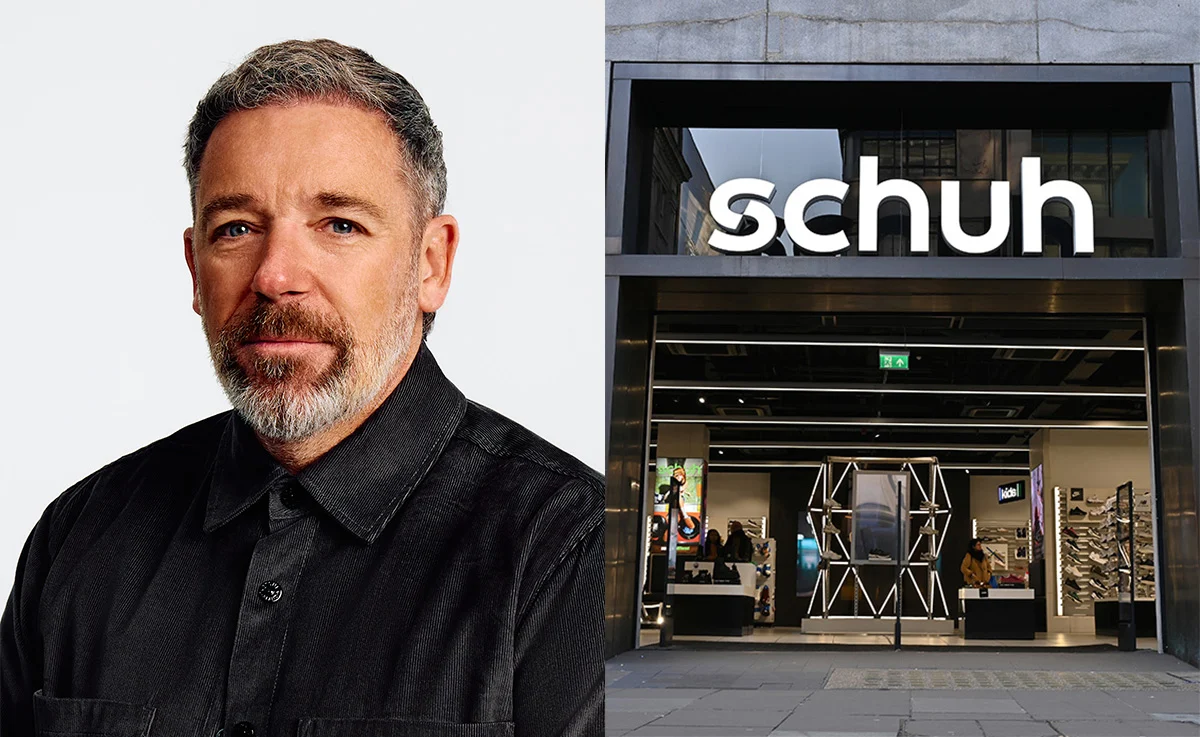
The landscape of British footwear retail is undergoing a significant transformation as Genesco Inc., the Nashville-based parent company of the prominent U.K. retailer Schuh, continues its aggressive management restructuring. In a move that signals a definitive shift in the brand’s fiscal and operational strategy, Schuh has announced the appointment of Nick Scott as its new Chief Financial Officer. Scott, a seasoned retail executive with a proven track record in the sportswear and streetwear sectors, will officially assume his duties on November 2, succeeding David Gillan-Reid, who is departing after nearly three decades of service.
This leadership transition arrives at a critical juncture for both Schuh and its parent company, Genesco. As the retail sector grapples with shifting consumer behaviors, inflationary pressures, and the rapid evolution of digital commerce, the appointment of Scott is viewed as a cornerstone of Schuh’s broader "next chapter." Reporting directly to Tomas Petersson—who was himself appointed President of Schuh in July—Scott is tasked with navigating the brand through a challenging macroeconomic environment while solidifying its status as the premier footwear destination for the youth demographic.
Main Facts: A New Financial Architect for a Fashion Mainstay
The departure of David Gillan-Reid marks the end of an era for Schuh. Having served as CFO for 28 years, Gillan-Reid was a constant presence through the brand’s expansion, its acquisition by Genesco in 2011, and its navigation of the tumultuous post-pandemic retail market. His exit clears the path for Nick Scott, whose arrival is being heralded as a strategic "get" for the company.
Scott joins Schuh from Footasylum, a direct competitor in the U.K. sportswear and streetwear market. During his tenure at Footasylum, Scott was instrumental in driving the retailer to consecutive years of record-breaking revenue and profitability. His achievements there included a comprehensive refinancing program that fueled physical store expansion and a "digital-first" investment strategy that modernized the company’s tech stack. Furthermore, Scott played a pivotal role in establishing landmark international franchise partnerships, a feat that aligns closely with Genesco’s global ambitions.
Prior to his success at Footasylum, Scott served as the Chief Operating Financial Officer at the Baird Group. In that role, he oversaw a diverse portfolio including Suit Direct and the U.K. licenses for heritage brands such as Ben Sherman and Ted Baker formalwear. This breadth of experience—spanning from high-end formalwear to high-energy streetwear—positions Scott as a versatile leader capable of balancing Schuh’s diverse brand partnerships with the rigorous financial discipline required of a publicly traded subsidiary.
Chronology: A Season of Leadership Evolution
The CFO transition is not an isolated event but rather the latest step in a phased leadership overhaul initiated by Genesco. To understand the current trajectory, one must look at the sequence of executive shifts over the past several months:
- July 2024: The Presidential Transition: The restructuring began in earnest this summer when Colin Temple, the longtime President of Schuh, exited the company. He was succeeded by Tomas Petersson, a leader tasked with revitalizing the brand’s image and operational efficiency. Petersson’s appointment signaled Genesco’s desire for fresh perspectives at the top of the Schuh hierarchy.
- September 2024: Financial Transparency: Genesco released its second-quarter fiscal 2027 earnings report, which highlighted the urgency of the turnaround. The report revealed a net loss and a dip in sales, specifically noting a 10% decline in Schuh’s revenue. This financial backdrop served as the catalyst for more decisive personnel changes.
- October 2024: The CFO Announcement: On Monday, Genesco officially confirmed the departure of Gillan-Reid and the hiring of Scott. This move aligns the financial leadership with the new presidential vision established by Petersson in July.
- November 2024: Operational Integration: Nick Scott is scheduled to begin his tenure on November 2. This start date is strategically timed ahead of the critical holiday shopping season, allowing Scott to oversee the final fiscal push of the calendar year and begin planning for the fiscal 2028 strategy.
Supporting Data: Analyzing the Fiscal Headwinds
The necessity for this management shakeup is underscored by Genesco’s recent financial performance. According to the company’s second-quarter fiscal 2027 report (covering the period ending in mid-2024), the organization is currently navigating a period of "controlled contraction" and strategic pivot.
Key Financial Metrics:
- Net Loss: Genesco reported a net loss of $8.8 million (or 83 cents per share) for Q2. While this is an improvement over the $11.7 million loss ($1.14 per share) recorded in the same period the previous year, it indicates that the company is still in the process of returning to consistent profitability.
- Net Sales: Total revenue for the quarter reached $530 million, a 3% decrease from the $546 million earned in Q2 of the prior fiscal year.
- Schuh Performance: The U.K. retail chain was a primary driver of the sales decline, with overall sales dropping by 10%. This was attributed to a combination of factors, including an unfavorable foreign exchange impact and a strategic decision to reduce e-commerce discounting to protect brand equity and margins.
- Segment Breakdown: While Schuh struggled, other Genesco properties showed mixed results. Johnston & Murphy saw a 5% increase in sales, while the Journeys banner remained relatively flat. The "Genesco Brands" segment saw a significant 21% decrease, further emphasizing the need for a retail-centric recovery plan.
The data suggests that Schuh’s decline was not merely a matter of foot traffic but a complex interplay of currency fluctuations and a deliberate shift away from the "race to the bottom" in terms of pricing. By reducing discounts, Schuh saw a 6% drop in e-commerce comparable sales, a trade-off made in hopes of long-term brand health—a strategy Scott will now be responsible for refining.
Official Responses: Aligning Culture and Commerce
The rhetoric from Schuh’s leadership emphasizes a blend of gratitude for the past and aggressive optimism for the future. In his official statement, President Tomas Petersson struck a balance between honoring the legacy of the outgoing CFO and outlining the requirements for the incoming one.
“I’d like to thank David for his incredible contribution as CFO of Schuh over the last 28 years,” Petersson stated. “He leaves behind a business with strong foundations for its next chapter.” This acknowledgment of "strong foundations" suggests that the current issues are perceived as ones of strategy and execution rather than fundamental structural failure.
Regarding the appointment of Nick Scott, Petersson highlighted the specific qualities required for Schuh’s next phase: “Nick is an accomplished finance leader with outstanding experience, combining strategic financial expertise, strong commercial acumen, and proven leadership skills. Just as importantly, he shares our belief in the importance of culture, collaboration, and strong teams in driving performance.”
For his part, Nick Scott expressed a readiness to tackle the complexities of the modern retail environment. “This is a fascinating moment for our industry, with trends evolving rapidly and customers shopping across more channels,” Scott noted. He pointed to Schuh’s "carefully curated brand partnerships" and "strong store estate" as the primary tools for value creation. His focus, he added, would be to "sharpen our commercial focus" and support the delivery of a strategy that targets the "unrivaled" fashion footwear destination status.
Implications: The Road Ahead for Schuh and Genesco
The appointment of Nick Scott carries several long-term implications for Schuh and the broader U.K. footwear market.
1. The Battle for the Youth Market
Schuh’s stated ambition to be the "unrivaled" destination for youth audiences is a direct challenge to major players like JD Sports and Foot Locker. By hiring a CFO from Footasylum—a brand that lives and breathes youth culture—Schuh is signaling that it intends to compete not just on price, but on cultural relevance. Scott’s experience in managing "digital-first" investments will be crucial here, as Gen Z and Gen Alpha consumers demand seamless integration between social media discovery and physical store fulfillment.
2. Margin Protection vs. Market Share
The Q2 report highlighted a decrease in sales due to "reduced discounting." This is a classic retail dilemma: do you slash prices to drive volume, or do you maintain prices to protect the brand? Scott’s history at Footasylum suggests he favors a high-growth model, but within the framework of a publicly traded company like Genesco, he will need to balance that growth with the margin requirements of American investors.
3. Store Concept 4.0 and Physical Retail
Despite the digital push, Schuh remains committed to its physical footprint. References to the "Store Concept 4.0" in recent Genesco communications suggest a move toward experiential retail—stores that serve as hubs for brand community rather than just warehouses for shoes. Scott will be responsible for the capital allocation required to modernize the "store estate" Petersson mentioned, ensuring that physical locations provide a return on investment in an era of high commercial rents.
4. Navigating Macroeconomic Volatility
The "unfavorable foreign exchange impact" mentioned in the earnings report remains a persistent threat. As a U.K. business owned by a U.S. entity, Schuh is at the mercy of the GBP/USD exchange rate. Scott’s strategic financial expertise will be tested as he seeks to hedge against these fluctuations while managing the supply chain costs associated with global footwear brands.
In conclusion, the arrival of Nick Scott at Schuh represents more than just a change in personnel; it is a declaration of intent. With a new President and a new CFO both hailing from high-performance retail backgrounds, Schuh is positioning itself to emerge from its current slump as a leaner, more digitally-savvy, and commercially aggressive competitor. The success of this transition will likely determine Genesco’s long-term viability in the international market.
