

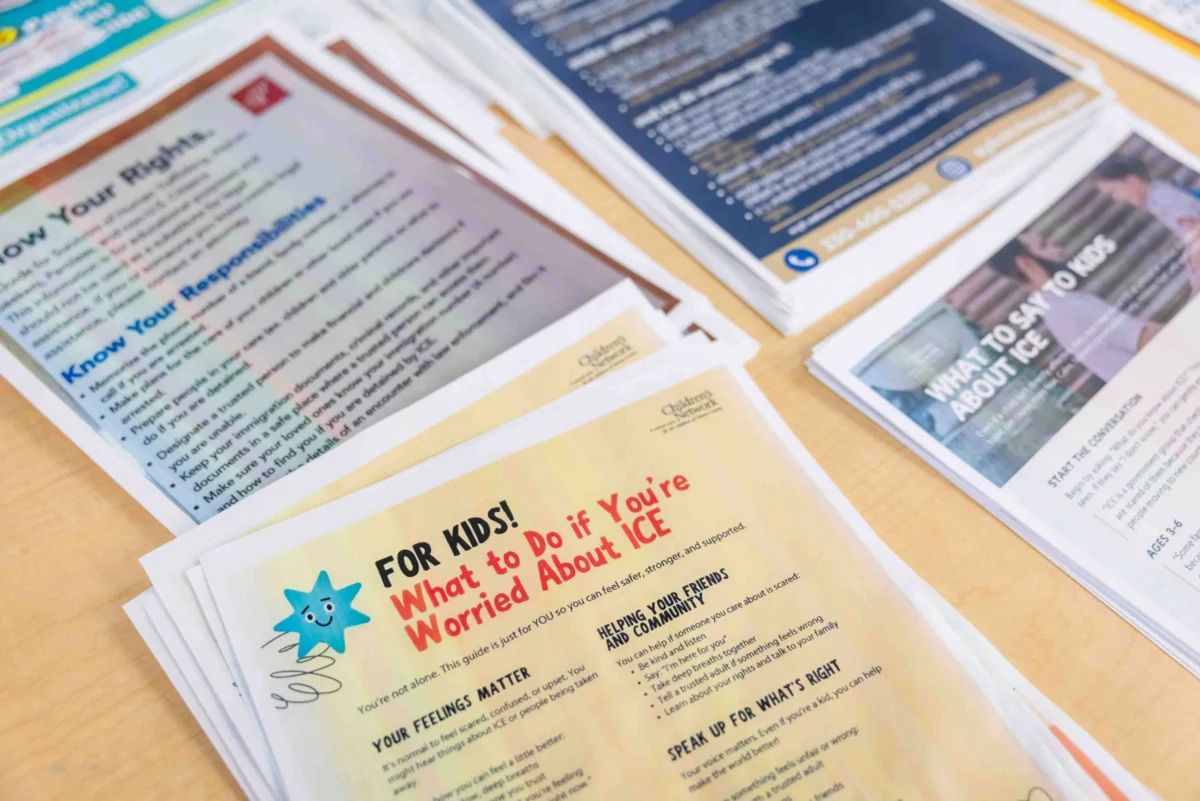
For most nine-year-olds, the greatest tragedy of the school day is a disputed call on the foursquare court. For Emma (a pseudonym), a third-grader in a San Diego classroom, the tears shed over a playground game are never just about a ball going out of bounds. They are an overflow of a reservoir of anxiety that she carries into school every single morning.
As an educator, I often find myself in the difficult position of enforcing the rules of the playground. "You’re out, Emma," I say, my voice steady and firm. "You have to get back in line." She wails, her face flushed with frustration. "But it’s not fair!" she cries. I tell her that rules matter—that the structure of the game is what makes it possible to play together.
But as the words leave my lips, I am struck by the profound dissonance of my position. I am teaching a child that rules provide safety and predictability, even as she and her family navigate a national landscape where the rules for immigrants are not only opaque but actively shifting to facilitate their removal. In the current political climate, the concept of "fairness" has become a cruel abstraction for children whose very existence is treated as a political inconvenience.
The Playground as a Microcosm of National Policy
The anti-immigrant movement in the United States often treats children as constitutional hypotheticals or data points in a demographic report. However, the ripple effects of these policies are not confined to the sterile pages of government ledgers. They manifest in the chaotic, high-stakes environment of the schoolyard.
When national rhetoric shifts toward the demonization of immigrant families, that hostility does not stay outside the school gates. It permeates the classroom culture. Teachers are tasked with being the "steady adults" in the room—the reliable bedrock of a child’s world. Yet, it is increasingly difficult to hold that space when the child knows, with the intuitive brilliance of the young, that the society they are being asked to integrate into is actively debating their right to exist.
A Chronology of Escalation: From Rhetoric to Policy
The degradation of the immigrant experience in America is not a sudden phenomenon but the result of decades of organized political messaging. For years, immigrants have been systematically positioned as convenient scapegoats for the nation’s most complex domestic issues, including inflation, wage stagnation, the burden on healthcare systems, and rising crime rates.
- The Political Framing: Throughout the early 21st century, political rhetoric began to shift from debates over administrative reform to the framing of immigration as an existential threat.
- The Trump Administration: Under the Trump administration, this rhetoric was operationalized. The administration expanded deportation efforts, tightened enforcement priorities, and systematically dismantled legal pathways for asylum seekers.
- The Shift to Targeting: Most alarmingly, the strategy has moved beyond broad enforcement. We have seen a shift toward the active targeting of minors. The practice of separating families at the border, a policy that drew international condemnation, left an indelible mark on the psyche of thousands of children.
- Legislative Defiance: Currently, we are witnessing a new wave of state-level efforts to challenge Plyler v. Doe, the 1982 Supreme Court ruling that guarantees all children—regardless of immigration status—the right to a public K-12 education. By proposing laws designed to force a Supreme Court confrontation, these legislators hope to erode the fundamental rights of children who have no say in their legal status.
Supporting Data and the Erosion of Education Rights
The legal landscape is becoming increasingly hostile. Several states are actively crafting legislation that would require schools to track the immigration status of their students. This is a direct assault on the spirit of Plyler v. Doe, which recognized that denying education to children would create a permanent underclass, detrimental to the stability of the entire nation.
The rhetoric has reached a fever pitch in some legislative chambers. For instance, in Oklahoma, State Representative Mike Ritze once famously suggested that schools should identify English language learners and report them to Immigration and Customs Enforcement (ICE). "Turn them over to ICE to see if they truly are citizens," he suggested, while questioning the necessity of educating noncitizens at taxpayer expense.
This perspective ignores the long-term economic and social benefits of an educated populace. When schools become sites of surveillance rather than sanctuaries of learning, the damage is twofold: it destroys the trust between the community and public institutions, and it stunts the development of children who are, regardless of their documentation, future contributors to the American economy.
Implications: The Psychological Toll on Students
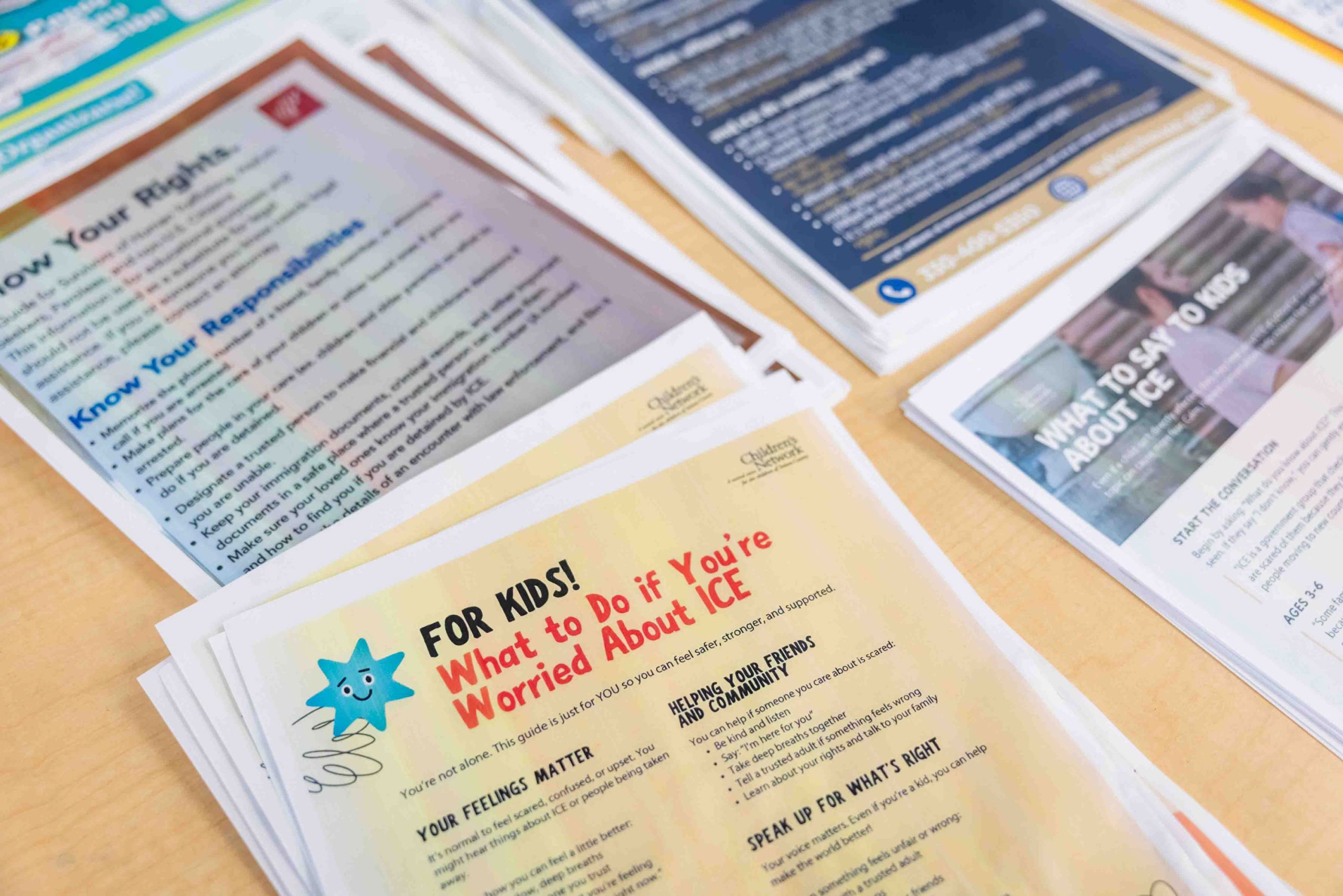
The psychological impact of living in a "legally blurry" state is profound. For a child like Emma, the fear of deportation is not a distant political concern; it is a daily, visceral reality. Research consistently shows that the threat of family separation causes deep psychological trauma, often manifesting as developmental delays, declining academic performance, and severe anxiety.
When we consider the role of the educator, we must recognize that we are not just teaching curriculum; we are providing emotional security. If a child cannot trust that the state—and by extension, the school—will protect them, their capacity for learning is severely diminished.
Furthermore, the "political football" strategy of using immigrant children to score points with a specific voter base has created a climate of desensitization. When pundits and politicians discuss children as "illegals" or "threats," they strip away the humanity that is the foundation of our moral and educational systems.
The Mandate for Educators: Standing in the Gap
If the United States claims to be a nation that protects its children, then that protection must be universal. Educators, who occupy the front lines of this conflict, have a moral imperative to serve as a buffer against the cruelty of current immigration policies.
To support children like Emma, schools must:
- Maintain Sanctuary Principles: Schools should remain safe zones where the focus is solely on education, free from the interference of immigration enforcement.
- Foster Resilience through Consistency: While we must maintain high expectations, we must also offer a degree of grace. Understanding that a child’s "behavioral" issues may be rooted in trauma is essential for effective teaching.
- Advocate for Policy Protection: Educators must advocate for the preservation of Plyler v. Doe and other legal safeguards that ensure the rights of immigrant students are not subject to the whims of the current political cycle.
Conclusion: Reclaiming the Playground
The playground is more than just a place to play; it is where children learn the rules of social engagement. When we allow those rules to be subverted by hatred and fear, we are failing the next generation.
Emma will continue to go to recess, despite the weight of the uncertainty that hangs over her family. She will continue to argue over the rules of the game because she, like all children, desires a world that makes sense—a world where the rules are applied fairly and where she is afforded the same dignity as her peers.
It is our duty as educators and as a society to ensure that the "rules" of our nation do not exclude the very children who are its future. We must choose to be the steady adults in the room, even when the world outside seems to be losing its grip on the basic, fundamental truth that children are, first and foremost, children. Until we do, the game remains broken, and the cost of our failure will be borne by the most vulnerable among us.
Hannah Harshe is an English Language Development educator in San Diego, California. She is also the founder of Yoga for Immigrant Justice, a fundraising initiative that supports immigrants in the border regions of California and Baja California.
