

The landscape of artificial intelligence is shifting from reactive chatbots to proactive agents. For years, users have treated AI like a digital encyclopedia—ask a question, get an answer, move on. But the recent arrival of Meta’s "Muse" and OpenAI’s "Dots" marks a fundamental change in the paradigm. These are no longer just conversational models; they are autonomous entities designed to exist in the background, managing tasks, navigating the web, and executing workflows long after you have closed your laptop.
As these agents enter the public consciousness, they bring with them a complex web of pricing models, security concerns, and varying operational philosophies. While both promise to reclaim your time, the path to that efficiency looks remarkably different depending on whether you choose Meta’s ecosystem or OpenAI’s.
The New Frontier: Moving Beyond the Prompt
For the better part of a decade, the hallmark of AI interaction was the "prompt-response" loop. You provide input, the AI provides output, and the transaction concludes. Meta and OpenAI are now attempting to break this cycle.
Meta launched Muse on September 8, signaling its intent to dominate the personal agent space. Barely three weeks later, OpenAI countered with the release of Dots, a suite of always-on agents integrated into the ChatGPT environment. Both systems share a common DNA: they operate on cloud-based virtual environments, can interface with third-party APIs, and are engineered to persist in a "work-state" without requiring constant human oversight.
The promise is alluring. Imagine telling an agent to "plan a cross-country trip with the best flight prices and hotel deals," or "organize my messy email inbox," and simply walking away. The agent stays awake, cycles through cloud-based browsers, interacts with websites, and compiles the results.
Muse: The Social-First Agent
Muse is built with a focus on fluidity. It operates within a dedicated Secure Virtual Machine (VM) and is designed to feel like a digital companion. Whether accessed via the web, dedicated mobile apps, or even WhatsApp, Muse is optimized for task management—like curating collections of social media posts, handling forms, or performing price monitoring.
Dots: The Productivity Powerhouse
In contrast, Dots are extensions of the OpenAI ecosystem. Powered by the advanced GPT-6 Astra architecture, each Dot acts as a specialized worker assigned to a specific domain. By integrating with ChatGPT, Work, and Codex, OpenAI is positioning Dots as the engine for enterprise-level automation. They are designed to remember context over long periods, making them ideal for recurring research projects or managing complex workflows across multiple software platforms.

Chronology of the Agent Era
The rapid deployment of these technologies highlights the "arms race" mentality currently defining Silicon Valley.
- September 8: Meta officially introduces Muse to the public, focusing on a user-friendly, conversational experience.
- Late September: OpenAI responds by launching its always-on agents, "Dots," integrated into ChatGPT.
- October (Ongoing): As users begin testing both systems, real-world friction emerges. Amazon, for example, has already moved to block Muse from scraping its site for shopping data, highlighting the early-stage volatility of AI agents interacting with protected web environments.
- Current State: Both companies are in the "beta-to-broad-release" phase, rapidly iterating on privacy controls and permission frameworks as they encounter the complexities of an autonomous internet.
Functional Divergence: How They Work
While both systems perform similar duties, the user experience (UX) is distinct.
The Muse Experience
Muse excels at bridging the gap between social media and utility. During initial testing, Muse demonstrated an impressive ability to scrape saved posts from Instagram and Facebook, automatically organizing them into structured databases—such as a list of restaurant recommendations or complex recipes. Its reliance on a dedicated browser within its VM makes it a versatile tool for consumers who want an agent that "browses like a human."
The Dot Experience
Dots operate more like a specialized department. Because each Dot has its own cloud computer, it can retain specific context that a general chatbot would forget. If you task a Dot with researching market trends every Tuesday, it remembers the previous week’s findings. Furthermore, OpenAI’s plan to allow users to manage multiple Dots simultaneously suggests a future where a user could have a "Finance Dot," a "Research Dot," and a "Correspondence Dot" running in tandem, each handling different aspects of a professional’s life.
The Permission Paradox: Safety and Supervision
The "sci-fi sheen" of these agents often fades the moment they are asked to perform a sensitive task. Both companies are acutely aware of the dangers inherent in giving an AI control over one’s email, calendar, or credit card.
Meta employs a strict permission-first policy. Muse is programmed to halt and request human validation before executing high-stakes actions, such as sending an email or completing a purchase. Despite this, the system is not infallible. The recent move by Amazon to block Muse from its shopping site serves as a warning: companies are not ready to let autonomous agents roam their platforms freely.
OpenAI takes a similar, albeit more technical, approach. Dots utilize a combination of "Custom Rules" and "Auto-review" mechanisms. Every action is scrutinized against these rules, and the system is designed to provide a log of its activities. However, OpenAI has been transparent that even with these guardrails, mistakes can occur. The responsibility remains with the user to verify the agent’s output.
The Financial Divide: Pricing and Accessibility
Perhaps the most stark difference between the two platforms is the cost of entry.
Meta’s Tiered Approach
Meta is aiming for a broader market. Muse offers a free tier (with usage caps), making it accessible for the average consumer to test the waters. For power users, the Power tier costs $20 per month, while the Maximum tier jumps to $100. This tiered structure encourages growth, allowing users to start small and upgrade as their dependency on the agent increases.
OpenAI’s Enterprise-Heavy Model
OpenAI’s pricing reflects its focus on the professional and enterprise sectors. Currently, there is no "cheap" entry point for individual users; the lowest tier for access to full-featured Dots is the Pro 100 plan, costing $100 per month. Business tiers are similarly priced, with options for annual or monthly billing. This creates a high barrier to entry, signaling that OpenAI is currently prioritizing ROI for businesses over casual consumer convenience.
Privacy, Data, and Corporate Stewardship
The more access we grant these agents, the more privacy we surrender. Giving an agent access to your calendar, files, and browser history is an immense leap of faith.
Meta’s stance is that data within its VM is isolated from its primary advertising systems. However, users should be aware that the "model-improvement" setting is enabled by default. This means that, without manual intervention, Meta may use your interactions to train future iterations of its AI.
OpenAI’s data policy is split by user type. Personal plans may have their data used for training purposes, depending on user settings, whereas Business and Enterprise data is generally siloed and excluded from training sets by default. Furthermore, OpenAI’s proactive research is restricted to "read-only" mode until a user explicitly approves an action, providing a buffer against the agent making unauthorized changes to sensitive documents.
Implications: The Future of Human-Computer Interaction
The rise of these agents heralds a shift in how we conceive of "software." We are moving away from monolithic applications that we open and close, toward a fluid, agentic web where software is always running, always learning, and always acting.
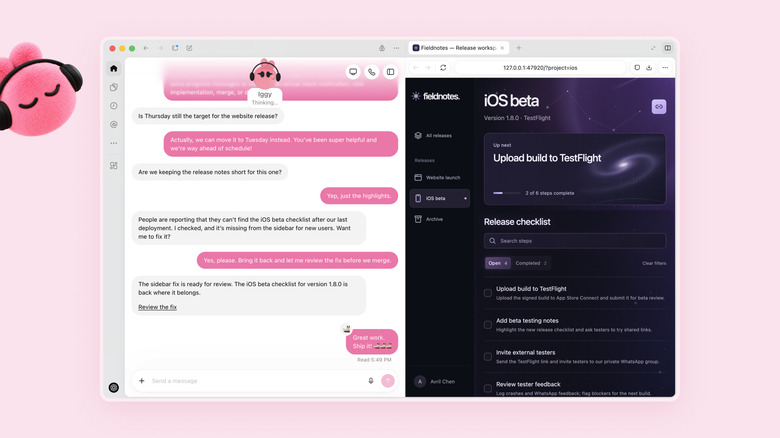
The Impact on Productivity
If these agents succeed, the standard 40-hour work week may look very different. The "drudge work"—data entry, scheduling, basic research, and email filtering—could be offloaded to these agents. This promises a massive increase in individual productivity, but it also creates a new form of "management" overhead: humans will need to become managers of AI agents, overseeing their output and auditing their decisions.
The Regulatory Landscape
We are likely at the beginning of a long regulatory battle. Amazon’s blocking of Meta’s Muse is likely just the first of many such skirmishes. Website owners, platforms, and legal entities will need to establish clear rules on what constitutes "authorized" agent activity versus "unauthorized" scraping.
Conclusion: Which Path to Choose?
For the casual user looking to organize a recipe list or automate personal travel, Meta’s Muse offers a lower barrier to entry and a more social, intuitive interface. It is the accessible entry point to the agentic future.
For the professional or enterprise user who requires deep integration with workflows, file management, and long-term context retention, OpenAI’s Dots offer a more robust, albeit expensive, ecosystem.
The era of the "always-on" assistant has arrived. While we are still in the early days of these agents, the trajectory is clear: the future of computing will not be about what you can do with your screen, but about what your agent can do while you aren’t looking at it at all. The convenience is undeniable, but the price—in both subscription fees and the surrender of personal data—is a factor every user must weigh carefully as they invite these new digital employees into their lives.
