

The Financial Independence, Retire Early (FIRE) movement, once a niche subculture of spreadsheet enthusiasts, has spent the last decade evolving into a mainstream pursuit. However, as the post-pandemic economic landscape shifts, the movement is facing a fundamental challenge: is the "Mustachian" playbook—high savings rates, aggressive investing, and strategic frugality—still viable for those entering the market today?
Recent discourse, sparked by a pointed critique from a reader, suggests that the barriers to entry have never been higher. For many, the dream of early retirement feels like an artifact of a bygone era, rendered obsolete by skyrocketing home prices, stagnant wage growth relative to inflation, and a restrictive regulatory environment for alternative housing.
The Core Conflict: A Changing Landscape
The modern critic’s argument is straightforward: the pioneers of the FIRE movement were often beneficiaries of a specific "Goldilocks" economy. Many worked in high-paying tech sectors twenty years ago, benefited from relatively modest cost-of-living increases, and purchased real estate well before the massive price surges that defined the 2019–2024 period.
"It seems like every FI blogger out there worked in tech 20 years ago, pulled down a six-figure salary, and bought a house for a bag of potatoes before 2019," one reader wrote. This sentiment highlights a growing disconnect between the established FIRE community and younger generations. For those without high-tech salaries or existing home equity, "house hacking"—the practice of buying a property and renting out units to cover costs—has become increasingly difficult. Zoning laws in many municipalities now actively prevent the creation of accessory dwelling units (ADUs), and restrictive housing policies have effectively locked out potential investors from entering the market at a reasonable entry point.

Chronology of a Financial Paradigm Shift
To understand where the movement stands, it is necessary to contextualize its evolution:
- 2010–2015: The Formative Years. FIRE began as a response to the 2008 financial crisis. The focus was on "radical frugality," cycling to work, and cutting cable bills. Housing was still largely affordable in many secondary markets, allowing for rapid equity building.
- 2016–2019: The Expansion. The movement hit the mainstream. High-income earners, particularly in tech and finance, began applying "lean" principles to their already significant salaries. The "house hack" became a standard piece of advice.
- 2020–2022: The Pandemic Disruption. The global pandemic shifted remote work patterns, driving a massive surge in demand for housing in suburban and "zoom-town" areas. Interest rates hit historic lows, then spiked, creating a "double-whammy" of high prices and high borrowing costs.
- 2023–Present: The Reality Check. As of 2024, the FIRE community is grappling with a market that no longer rewards the traditional "wait and save" strategy in the same way. The conversation has shifted from "how to save" to "where to exist."
Supporting Data: The Housing Price Reality
Does the current data support the claim that the FIRE dream is extinguished? While housing affordability is undeniably at a multi-decade low, the numbers require nuance.
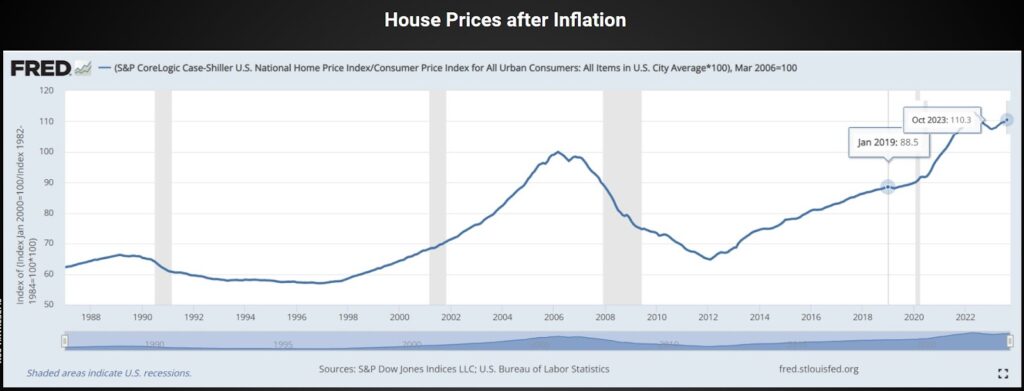
According to inflation-adjusted data from the St. Louis Federal Reserve (FRED), real estate prices are currently approximately 25% higher than they were at the start of 2019. While this is a significant hurdle, it is not a total death knell for the movement. Interestingly, when viewed against the long-term peak of the 2006 housing bubble, prices have only seen a modest real-term increase of about 10% over the last eighteen years.
However, the "national average" masks extreme local volatility. In markets like Longmont, Colorado, or major tech hubs, prices have tripled since 2011. This disparity is the crux of the problem: the FIRE movement’s reliance on location-dependent equity building is clashing with a geographic reality where staying in one’s "hometown" may now be a mathematical impossibility for the average earner.
Strategic Realignment: The "Mustachian" Response
In response to these criticisms, proponents of the FIRE philosophy argue that the core principles remain valid, even if the application must change. The focus is shifting from "how to buy in my city" to "where can I thrive globally?"
1. Eliminating "Excuse-itis"
A central tenet of the movement is the rejection of victimhood. Critics argue that many aspiring FIRE adherents suffer from "Excuse-itis"—a psychological block that prevents them from considering radical life changes, such as moving to a more affordable city or country. The argument is that if a specific geography is overpriced, the market is signaling that you should look elsewhere.
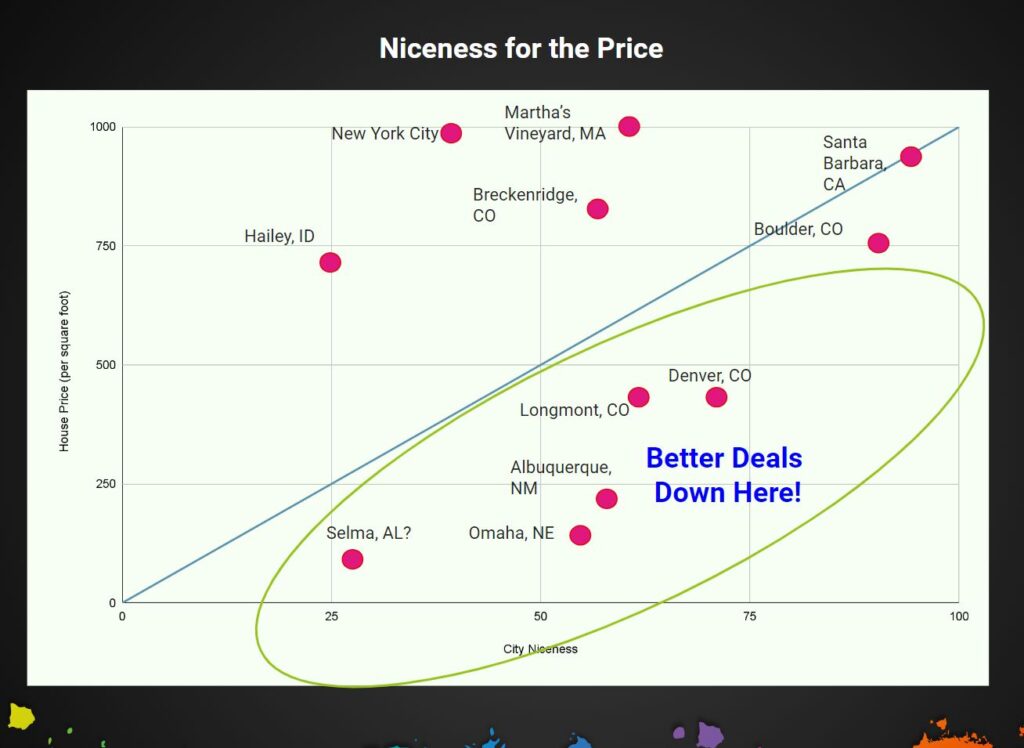
2. The "Nice for the Price" Metric
Instead of focusing solely on the sticker price of a home, proponents now emphasize the "Nice for the Price" ratio. By using tools like the FRED database to compare the cost per square foot against quality-of-life metrics, individuals can identify regions that offer high livability at a fraction of the cost of their current location. For instance, cities like Chattanooga, Tennessee, or Albuquerque, New Mexico, offer vastly different financial outcomes compared to Denver or San Francisco, often with comparable or superior access to outdoor recreation and amenities.
3. The Global Perspective
The "Earth Awaits" approach encourages users to stop viewing their local city as the only option. By inputting variables like family size, desired climate, and budget, individuals can discover global hubs that allow for a lower cost of living while maintaining a high standard of life. This requires navigating "Adulting Puzzles"—the administrative and cultural hurdles of moving—but the long-term payoff is often decades of financial freedom.
Official Responses and Philosophical Implications
The response from leading figures in the FIRE movement has been to lean into the concept of "geographic arbitrage." If the cost of living in one’s current location creates a life of perpetual labor, then the environment itself is the primary financial problem, not the budget.
The implication is a fundamental shift in the definition of "home." In the 20th century, homeownership was a fixed goal, often tied to a single career in a single location. In the 21st century, particularly in the FIRE context, home is becoming a dynamic variable. If your salary does not allow for a home in your current region, you have three options:
- Increase income: High-leverage career shifts.
- Decrease consumption: Radical austerity.
- Relocate: Move to a more favorable economic climate.
Most critics focus on the first two, but the third option—relocation—is where the most significant potential for financial liberation lies.
The Future of Financial Independence
The FIRE movement is not dead, but it is undergoing a transition. The "easy" phase—where rising asset prices and low interest rates acted as a tailwind—has ended. We have entered the "active" phase, where financial independence requires a more aggressive, data-driven approach to location and lifestyle.
Moving to a new state or country to save money is not a sign of failure; it is a tactical decision. The "hassle" of updating one’s life to fit a new geography is a minor cost compared to the "hassle" of working an extra fifteen years to maintain a lifestyle in an unaffordable city.
As we look toward the next generation of FIRE, the leaders will be those who master the art of the transition. Whether it is moving within one’s own city to a more efficient living space or moving across borders to unlock a better "Nice for the Price" ratio, the goal remains the same: to stop letting the environment dictate the length of your career. The tools exist—data-driven analysis, global mobility, and a rejection of status-based living—but they require a level of courage and adaptability that many are still hesitant to embrace.
Ultimately, the market doesn’t care about your attachment to your current zip code. If you want the freedom of FIRE, you must be willing to treat your location as a choice, not a constraint.
