

In the wake of the generative AI explosion that began in late 2022, the American workforce is undergoing a quiet but profound transformation. For years, the promise of a university degree was the gold standard for career stability. Today, that narrative is fraying. As artificial intelligence automates tasks ranging from data analysis and coding to routine marketing and customer service, a growing cohort of young professionals and recent graduates is abandoning the office in favor of the workshop, the classroom, and the job site.
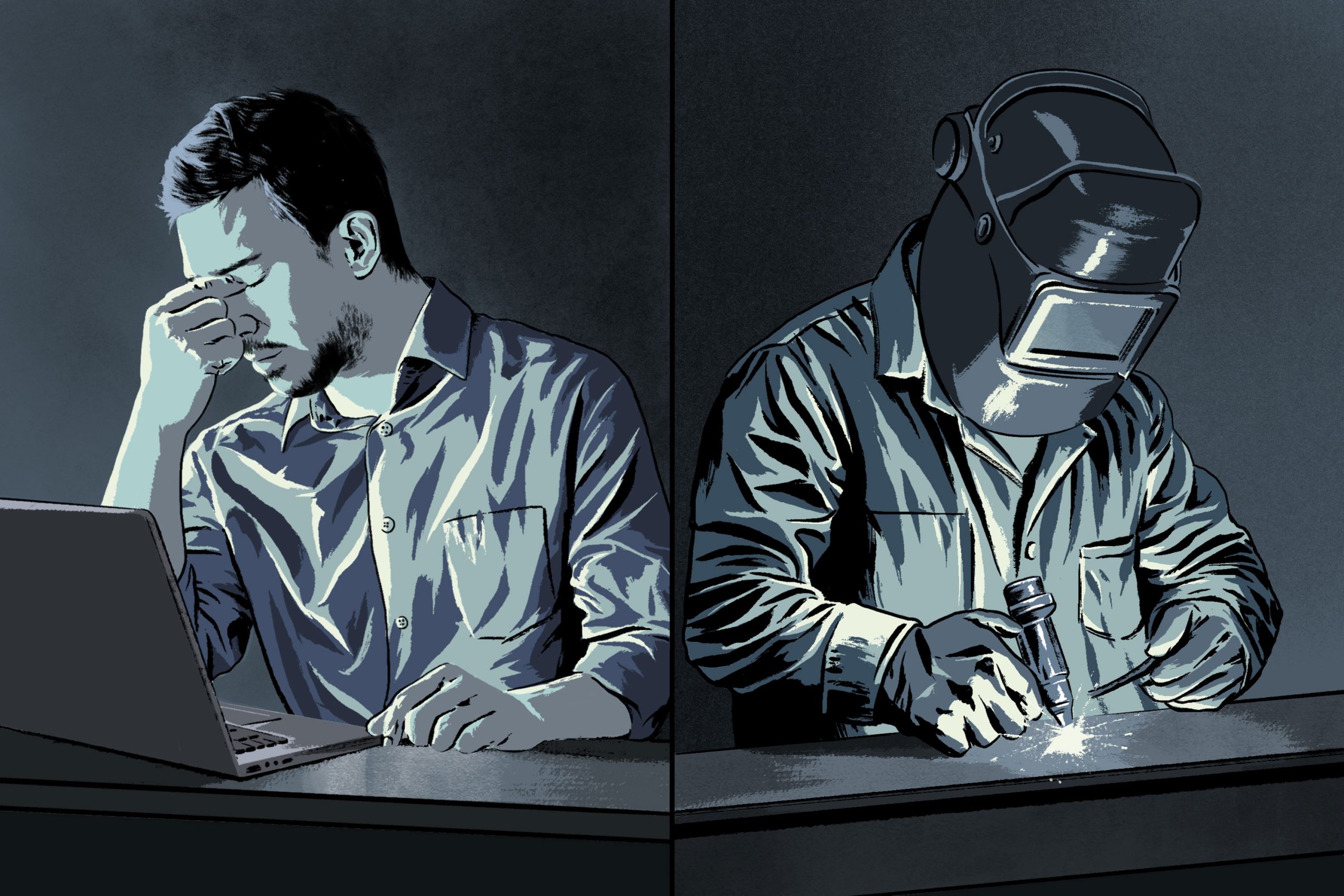
From marketing majors becoming elementary school teachers to software engineers retraining as automotive technicians, the trend is clear: workers are seeking "AI-proof" careers—vocations that require human empathy, complex physical dexterity, and on-site problem-solving.
The Trigger: A Crisis of Automation
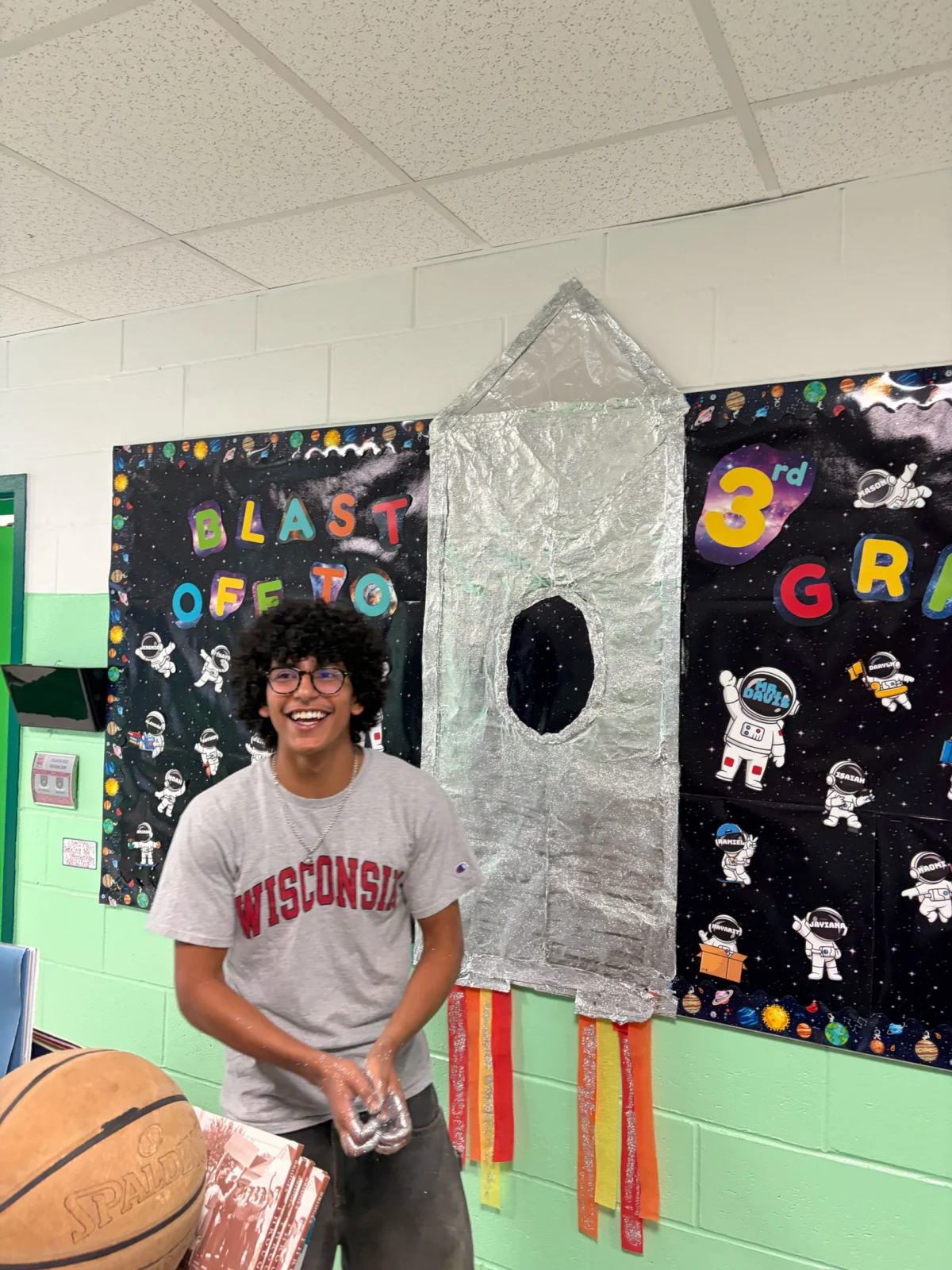
For Keon Davis, the realization arrived during a summer internship while he was still a marketing student at the University of Wisconsin-Madison. As he watched ChatGPT effortlessly generate outreach emails and synthesize consumer research—tasks he had spent hours perfecting—the existential threat hit home.
"Seeing how easily I might be replaced was one reason I changed direction," Davis explains. Months before his May 2024 graduation, he pivoted away from corporate marketing. He joined Teach for America and now leads a third-grade classroom in New York City. For Davis, the shift was about finding work that machines cannot replicate: building trust with children, reading emotional cues, and fostering human potential. "Stuff like that cannot be automated," he asserts.
Davis is not alone. This sentiment is sweeping through the under-30 demographic. According to a Pew Research Center poll released in August 2026, 73% of adults under 30 believe AI will lead to fewer jobs, a significant jump from 61% just two years prior.
A Chronology of the Shift
The migration away from AI-exposed sectors has been accelerating since the public release of advanced large language models.
- Late 2022 – Early 2023: The "ChatGPT Shock." Students and entry-level workers begin to experience anxiety as AI tools demonstrate the ability to perform white-collar tasks.
- 2024: A measurable divide emerges. Stanford Digital Economy Lab data shows that between November 2022 and June 2026, workers aged 22–25 in high-exposure fields like software development and customer service saw a 19% decline in employment compared to their counterparts in manual, human-facing roles.
- 2025: Enrollment trends shift. The National Student Clearinghouse reports a decline in computer science enrollment, coupled with a surge in health professions and vocational programs.
- 2026: The trend reaches a fever pitch. Programs like "Teachers of Tomorrow" see a 30% increase in applications, with many applicants explicitly citing a desire to escape the instability of the digital economy.
Data-Driven Disruption: The Vulnerability Gap
The economic data supports the anxieties felt by workers like Davis. While some economists argue that recent layoffs are a correction following the over-hiring of the pandemic era, the disparity between job sectors is undeniable.
The Stanford Digital Economy Lab findings highlight that even when controlling for external economic factors like interest rates, the "AI-exposure" factor remains a primary driver of employment instability. Conversely, sectors like electrical work, HVAC maintenance, and skilled construction are seeing record demand. According to the U.S. Bureau of Labor Statistics, job growth for electricians, HVAC technicians, and roofers is projected to be double or triple the average for all other professions.
This demand is driven by two factors: a massive wave of retirements among older, blue-collar tradespeople and the physical infrastructure boom required for the AI era itself—such as building data centers, solar arrays, and new housing.
Case Study: From Code to Calipers
Kevin Brough, 34, represents the changing face of the American worker. A college graduate with a degree in computer engineering, Brough spent nearly a decade in software development. In May 2024, he was laid off.

"I don’t know if it was purely AI," Brough admits, "but I saw the tools getting better at writing code every day." Rather than doubling down on a declining skill set, Brough enrolled in the automotive technology program at Rosedale Technical College in Pittsburgh. Today, he spends his days performing complex mechanical repairs that require a level of tactile, spatial, and mechanical nuance that robotics cannot currently replicate.
"I never thought I’d be changing from software development," Brough says, "but here I am." He expects to graduate with a stable, high-demand skill set that he estimates is safe from automation for at least two decades.
The Trade-Offs: Physicality and Persistence
However, the path to an "AI-proof" career is not without its hardships. Meagan Acevedo, 33, left a career in retail management after being repeatedly displaced by self-checkout kiosks and AI-powered chatbots. She is now in her second year of a five-year apprenticeship to become an industrial construction electrician.
The transition has been physically grueling. "I’ll be honest, all of it was kind of rough," she says, noting the 3:00 a.m. wake-up calls and the daily challenge of lifting 75-pound spools of wire. Yet, for Acevedo, the physical toll is a fair trade for the security of a pension, health insurance, and a career trajectory that won’t be replaced by a software update.
The transition also comes with risks. Cassie, a 31-year-old in Florida, attempted to "AI-proof" her career by pivoting from PR and journalism to criminal forensics. Despite earning an associate degree, she found that the labor market for government jobs is far more rigid than she anticipated, favoring veterans over career-switchers. Her story serves as a warning that retraining is not a guaranteed silver bullet; it requires navigating complex, slow-moving institutional bureaucracies.

Official Responses and Policy Proposals
As the workforce realigns, the political and educational sectors are struggling to keep pace.
Educational Institutions
Colleges are beginning to acknowledge that the traditional four-year degree may no longer suffice. Purdue University has implemented an "AI working competency" mandate, requiring students to demonstrate mastery of AI tools in their respective fields. MIT and the University at Buffalo are restructuring degrees to treat AI as a foundational literacy rather than a specialized skill.
Government and Labor
The policy landscape remains in flux. There is growing pressure for the federal government to step in with a "New Deal" for the AI age.
- The Proponents: Figures like former Biden official Jacob Leibenluft and organizations like the AFL-CIO are calling for federally funded retraining programs and wage insurance, drawing parallels to the economic displacement caused by free trade in the late 20th century.
- Industry Voices: Surprisingly, major AI players are also calling for safety nets. OpenAI and Anthropic have both suggested that the federal government should provide training grants, portable benefits, and wage insurance to mitigate the social fallout of AI-driven layoffs.
- Legislative Action: Proposals from Senators Mark Kelly (a federal trust fund for reskilling) and Bernie Sanders (an excise tax on companies that replace workers with AI) have been introduced, but none have yet made it to the floor as binding legislation. The current approach remains largely reactive, with $50 million in federal grants allocated for general worker displacement—a figure many experts argue is insufficient for the scale of the transition.
Implications for the Future
The trend toward "hands-on" and "human-centered" work suggests a fundamental reassessment of what we value as a society. For decades, the "knowledge worker" was the aspirational ideal. Today, that ideal is being challenged by the reality of digital fragility.
The shift we are witnessing is not just about individuals changing jobs; it is a signal that the economy is bifurcating. On one side, we have the high-velocity, automated digital sphere; on the other, we have the resilient, physical sphere of the trades and human services.

As Keon Davis, Meagan Acevedo, and Kevin Brough prove, the modern worker is becoming more pragmatic. They are looking past the "AI hype" and placing their bets on skills that rely on human touch, physical presence, and interpersonal connection. While policymakers debate the merits of taxes and safety nets, the workforce is voting with its feet—walking away from the keyboard and toward a future that, while physically demanding, feels infinitely more secure.
The era of the "AI-proof" career has arrived, and it is being built by a generation that refuses to be rendered obsolete.
