

By Adriane Quinlan
For decades, the end of Jasmine Lane in Southold, Long Island, served as a quiet terminus to suburban life. The cul-de-sac, lined with two-story colonials and manicured lawns, bordered a dense, reforested expanse of farmland. For the residents who moved there in the 1990s—many through middle-income housing programs that turned modest $100,000 investments into substantial equity—the view was a permanent green curtain. It was protected, they were told, from development.
But in January 2026, the silence of that cul-de-sac was shattered by the sound of chainsaws. A new owner, having purchased the 16-acre parcel for $650,000, had arrived with a vision that stood in stark contrast to the quiet residential neighborhood: "Rejuvenate Farms," an industrial-scale organic poultry operation designed to house 6,000 pasture-raised hens.
The resulting conflict has spiraled into a bitter, multi-front battle that pits the sanctity of suburban property values against the hallowed "Right to Farm" laws of New York State. As the dust settles on initial skirmishes, the story has evolved into something far more complex—a narrative involving a 21-year-old college student, a notorious history of local financial scandal, and the shifting identity of the North Fork.
A Chronology of Conflict
The Arrival of "Rejuvenate Farms"
When the plans for the poultry farm first surfaced, they were presented with a polished, modern veneer. The proposal outlined six "mobile shelters" for 6,000 hens and a central barn to house supplies and processing equipment. To the applicant, the plan was an exercise in sustainable agriculture. To the residents of Jasmine Lane, it was an immediate existential threat.
"I can’t use my backyard if I’m going to smell chicken manure all day long," said John Reichert, a local resident, during the project’s first public hearing. The fear was visceral: concerns over groundwater contamination, ammonia-heavy air quality, and the impact on a child in the neighborhood with asthma dominated the early discourse.
The Legislative Impasse
The town’s planning board found itself in a precarious position. Southold, like many rural-turned-suburban regions in New York, operates under the state’s "Right to Farm" law. This legal framework is designed to prevent "undue interference" from neighbors who might find the sights, sounds, and smells of agricultural life distasteful.
"We do not have the authority to simply deny an application because it is controversial," the planning board chairman explained in January. The town’s regulatory reach was strictly limited to two variables: the location of the structures and the potential impact on traffic flow. The struggle narrowed to the placement of the barn, which residents argued was situated far too close to the cul-de-sac.
The Stop-Work Skirmish
Tensions boiled over in June when residents spotted temporary coops being erected before the necessary permits had been finalized. A video posted online by a neighbor’s visiting daughter caught the construction in progress, prompting the town to issue an immediate stop-work order. This victory for the neighbors, however, was merely a delay, not a resolution.
The Face of the Operation: Grant Callahan
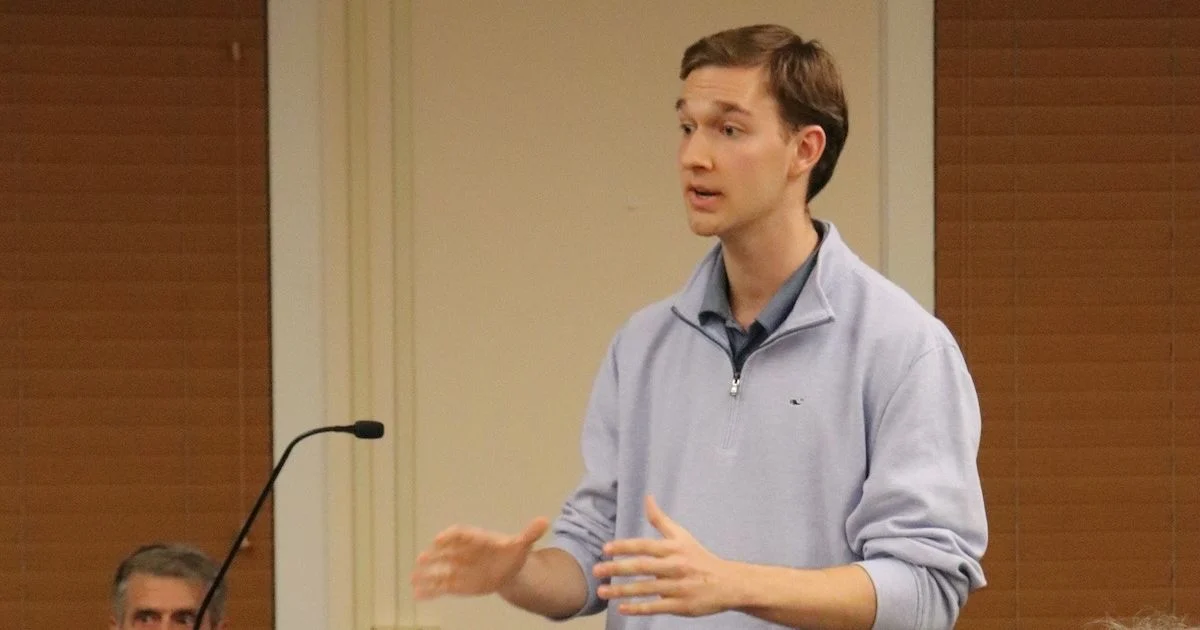
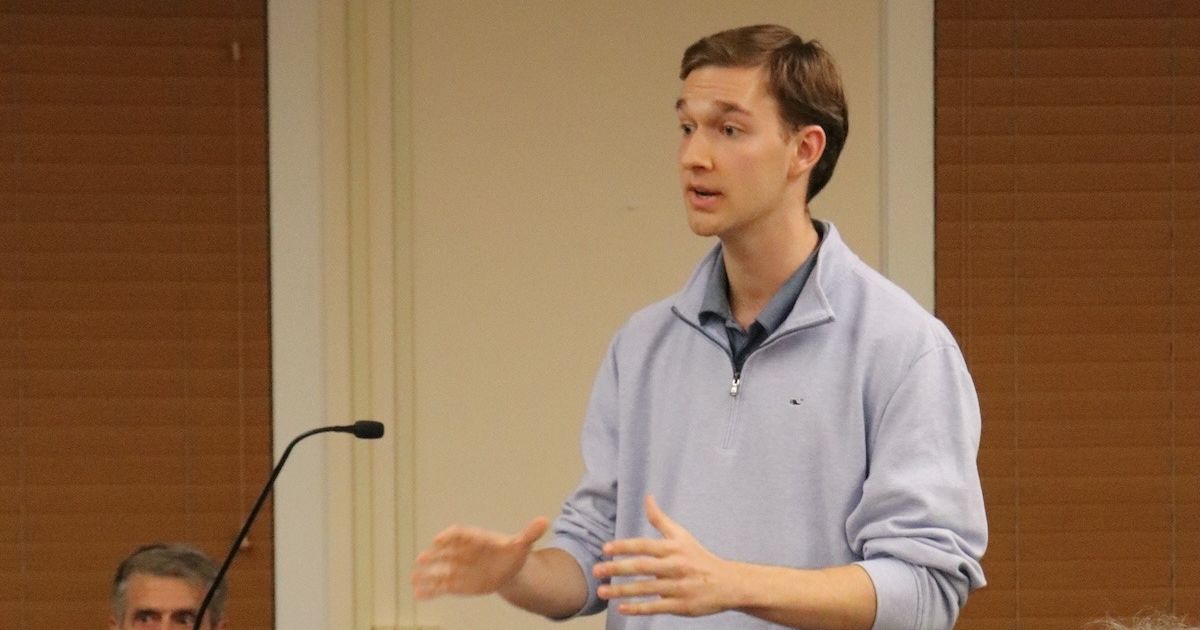
The central figure in this drama is 21-year-old NYU student Grant Callahan. At the initial town meetings, Callahan presented himself as an earnest, clean-cut advocate for organic farming. His background—growing up in the affluent enclave of Old Westbury and his involvement in student organizations like the "Human Connection Club"—seemed miles away from the grit of poultry management.
However, investigators and concerned locals soon began to peel back the layers of the operation. The farm was registered to an LLC with a P.O. Box, and when the legal and financial details were scrutinized, the shadow of a much older, more dangerous entity emerged.
The Ghost of a Ponzi Scheme
It was discovered that the farm’s development might be tied to the father of the project’s face: Brian Callahan. In 2013, Brian Callahan and his business partner, Adam Manson, were arrested for orchestrating one of the most devastating Ponzi schemes in Long Island history.
The $118 million operation had targeted retirement funds and the savings of local fire department members. The proceeds had funded a life of luxury—golf memberships, high-end real estate, and a failed attempt to convert a Montauk motel into a co-op. When the scheme collapsed, hundreds of lives were ruined. Brian Callahan was sentenced to 12 years in prison, only to be pardoned by President Biden in 2024.
The discovery that the "father and son" operation might be linked to the man responsible for such widespread financial ruin transformed a zoning dispute into a matter of community trust. "I don’t trust the man," one neighbor told the Suffolk Times in October, echoing the sentiments of a community that fears the "farm" is merely a front for further real estate speculation or a return to the high-stakes schemes of the past.
Supporting Data and Stakeholder Perspectives
The "Right to Farm" Debate
The conflict has divided the community along ideological lines. Supporters of the farm, such as Bill Zalakar of the Long Island Farm Bureau, argue that the backlash is a textbook example of NIMBYism (Not In My Backyard).
"There is an underlying strand between the two—namely, the public’s failure to recognize that bona fide farm operations have the right to undertake certain practices and activities," Zalakar wrote. Proponents of this view argue that if the North Fork is to remain a viable agricultural region, residents must accept the realities of farming, which occasionally involve smells, noise, and structures.
The Neighbors’ Defense
Conversely, the residents of Jasmine Lane maintain that their opposition is not against farming, but against the misuse of the land. They argue that the parcel is too small for a 6,000-hen operation and that the placement of the barn is a deliberate affront to their quality of life. They view the "organic" label as a green-washing tactic used to bypass common-sense zoning protections.
The Current Status: A Trojan Horse?
In late 2026, the narrative took a sudden, suspicious turn. Grant Callahan’s legal team announced that the chicken operation was being abandoned in favor of a "fruit and vegetable" farm.
While on the surface this appears to be a concession to the neighbors, the community remains deeply skeptical. The town attorney has signaled an intent to force the disclosure of the individuals behind the LLC, hoping to pierce the corporate veil and identify who is actually calling the shots.
To John Reichert and his fellow residents, the pivot to vegetables is a tactical retreat. "I think he’s just letting things cool down," Reichert told the press. "Then he’s going to zap us with a chicken farm."
Implications for Long Island Real Estate
The North Fork chicken-farm fight serves as a microcosm of a larger tension defining the East End of Long Island. As urbanites flee city centers and real estate prices reach record highs, the land-use conflicts between "weekend" or "new" residents and traditional agricultural industries are intensifying.
- The Erosion of Trust: When developers use opaque legal structures (LLCs) and family members with criminal histories to front projects, it erodes the ability of town boards to negotiate in good faith.
- The Weaponization of Agriculture: The "Right to Farm" law, while essential for protecting legitimate family farms, is increasingly being tested by developers who utilize it to bypass municipal planning oversight.
- The Future of Zoning: Southold’s struggle highlights a need for clearer distinctions between hobby farming, commercial agricultural production, and industrial-scale operations in suburban residential zones.
As of October 2026, the saga remains unresolved. The town is moving to compel disclosure, the residents are maintaining their watch on the cul-de-sac, and the 16-acre plot sits in a state of suspended animation—a field of broken promises, uncertain futures, and a community standing guard against what they fear is a wolf in sheep’s (or rather, chicken’s) clothing.
