

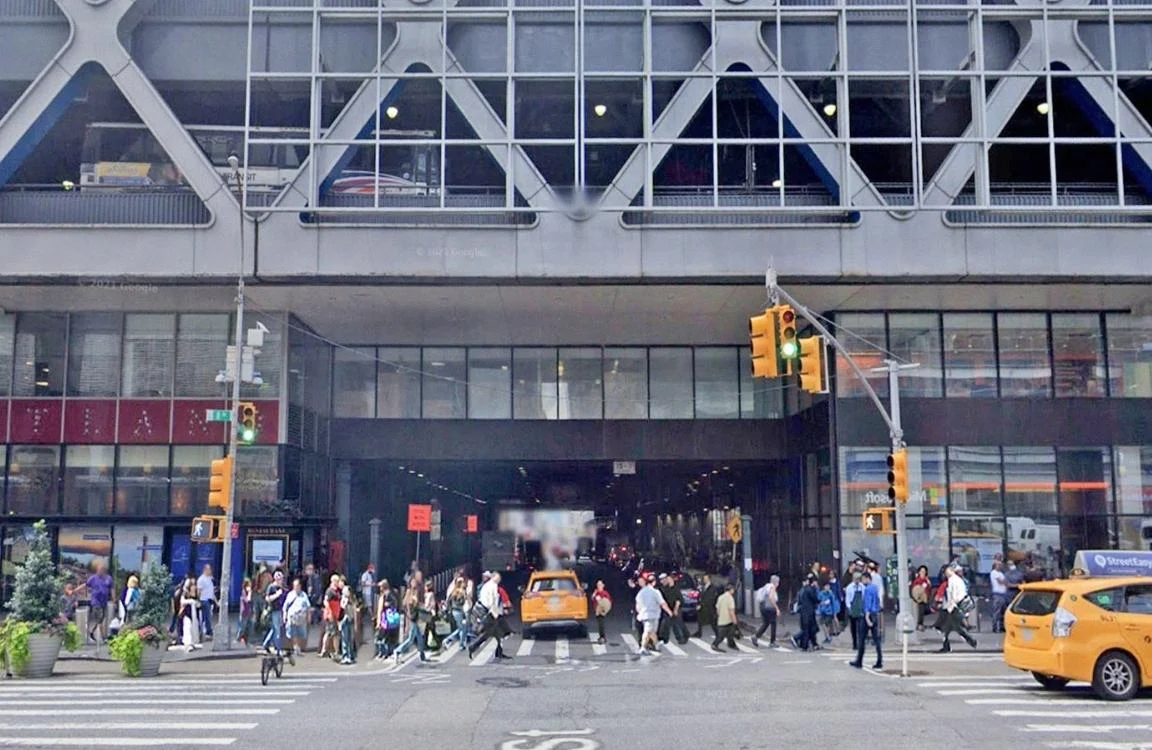
New York, NY & Newark, NJ – October 26, 2023 – A monumental undertaking to reimagine the Port Authority Bus Terminal, the bustling nexus for millions of commuters, has entered a critical new phase. The Port Authority of New York and New Jersey announced on October 23rd that preparatory work has commenced for a sophisticated temporary bus storage and staging facility. This interim hub is poised to become the operational heart of cross-Hudson bus travel during the eventual demolition and complete rebuilding of the existing, aging main terminal.
The ambitious $11 billion project, a transformative vision for urban mobility, aims to replace the current, often criticized, structure with a state-of-the-art, modern terminal. This new facility is meticulously designed to not only accommodate the demands of contemporary bus operations but also to proactively address projected commuter growth for decades to come. This latest development marks a tangible step forward in a complex, multi-year endeavor that promises to reshape the commuting experience for hundreds of thousands daily.
The Genesis of a Modern Commuting Hub: A Project of Unprecedented Scale
The current Port Authority Bus Terminal, a relic of mid-20th-century urban planning, has long struggled to keep pace with the exponential growth in regional population and the evolution of transportation needs. Opened in 1950 with the primary objective of consolidating eight disparate bus terminals to alleviate Midtown Manhattan’s severe street congestion, the terminal has undergone several expansions. However, these retrofits, including the 1963 conversion of parking space to a fourth level of bus operations and the addition of public parking, have proven insufficient to meet the demands of a region that has grown and spread geographically. By 1966, the terminal was already handling close to 69 million passengers annually, necessitating further capacity enhancements. The subsequent creation of a two-mile exclusive bus lane (XBL) on the New Jersey Route 495 approach to the Lincoln Tunnel in 1970 was a testament to the continuous need for improved bus access, offering commuters significant time savings.
Today, the Port Authority Bus Terminal serves as a critical artery, handling approximately 200,000 daily riders. Prior to the COVID-19 pandemic, this figure soared to an estimated 260,000 passenger trips on an average weekday, underscoring its indispensable role in the regional transportation network. The need for a modern, efficient, and sustainable facility is not merely an upgrade; it is a necessity to support the economic vitality and daily lives of millions.
A Phased Approach: Building the Future, One Step at a Time
The current phase of the project focuses on the critical infrastructure required to maintain seamless operations during the terminal’s reconstruction. This fall, the Port Authority initiated the demolition of an existing ramp that facilitates the flow of buses from the Lincoln Tunnel to the current terminal for evening commutes. This strategic demolition is clearing the path for the construction of the aforementioned bus storage and staging facility.
This interim facility is designed to serve as the operational nerve center for bus traffic while the existing main terminal is systematically demolished and the new one is erected. Upon the completion of the new main terminal, projected for 2035, the interim facility will transition into a dedicated bus storage and staging area, capable of accommodating between 300 and 350 buses. A forward-thinking addition to this facility will be the integration of electric charging stations, ensuring that buses can recharge during their midday layovers, a crucial step towards a greener transportation future.
Navigating Disruption: Rerouting and Reimagining Access
The demolition of the ramp used for evening commuter pick-ups has necessitated a temporary rerouting of bus traffic. Buses are now being directed to a newly constructed connection on 39th Street, situated between 9th and 10th Avenues. This rerouting, however, is carefully managed to avoid impacting travel during morning peak hours. This is primarily due to the continued operation of the Exclusive Bus Lane (XBL) on the Lincoln Tunnel, which utilizes a separate, direct ramp for access into the bus terminal.
The long-term solution to efficient bus ingress and egress is being meticulously engineered. Once the construction of the bus storage and staging facility is finalized in 2030, new, purpose-built ramps will establish a direct connection from the Lincoln Tunnel to this facility. This direct link is anticipated to significantly minimize any impact on overall bus travel times, a critical factor for commuter satisfaction.
A New Gateway: The Modernized Ramp Structure
The overarching vision for improved connectivity culminates in a new, modernized ramp structure that will encompass the block bounded by 10th and 11th Avenues and 39th and 40th Streets. This sophisticated structure will provide a direct and seamless connection between the new main terminal and the Lincoln Tunnel. Its design incorporates several key advancements: wider lanes to enhance maneuverability and efficiency, and extended vertical clearances designed to accommodate double-decker buses. This foresight in design ensures the facility’s adaptability to future fleet changes and increased capacity.
Perhaps one of the most significant operational improvements offered by this new ramp structure is its ability to facilitate floor or gate changes for buses without requiring them to enter city streets. This feature is a direct response to perennial concerns about bus circulation on local thoroughfares, promising to alleviate congestion and improve safety for both pedestrians and motorists. Furthermore, the structure will include a bypass lane specifically designed to maintain traffic flow around any stalled or disabled buses, a critical feature that is notably absent in the current configuration.
Collectively, the advanced ramp structure and the integrated bus storage and staging facility are projected to yield substantial benefits: enhanced reliability of bus services, a marked reduction in traffic congestion, diminished bus parking and idling on local streets, and ultimately, a more seamless and predictable commuting experience for all users.
Laying the Foundation: Early Construction Milestones
The project’s momentum is further evidenced by the commencement of work on the Dyer Avenue deck-overs in May 2025. This crucial construction phase involves the creation of platforms over Dyer Avenue and the Lincoln Tunnel Expressway, spanning sections between West 37th and West 38th Streets, and between West 38th and West 39th Streets. These deck-overs are strategically designed to function as a bus staging and operations area during the intricate construction of the main terminal, ensuring that the project progresses without undue disruption to existing services.
Beyond Infrastructure: Community Benefits and a Sustainable Future
The Port Authority has emphasized that this transformative project extends beyond the physical infrastructure, incorporating a range of community benefits. While specific details of these benefits were not elaborated in the provided text, the overarching goal is to minimize the project’s impact on the local community and to foster positive integration. This includes a commitment to improving the reliability and efficiency of bus operations while simultaneously reducing the facility’s environmental footprint.
The integration of electric charging stations within the temporary facility is a clear indicator of the project’s commitment to sustainability. As the region moves towards electrification of its public transportation fleet, this infrastructure will be vital in supporting cleaner, quieter bus operations. The reduction in bus idling on local streets, a direct consequence of improved staging and operational design, will also contribute to improved air quality in the surrounding neighborhoods.
A Glimpse into the Future: A Modernized Commuting Landscape
The $11 billion overhaul of the Port Authority Bus Terminal represents a significant investment in the future of regional transportation. The vision is clear: a modern, airy, and efficient main terminal building that not only meets the needs of today’s commuters but is also poised to accommodate the projected growth of the region for generations to come. The project’s phased approach, meticulous planning for interim operations, and focus on enhanced connectivity and sustainability signal a commitment to creating a world-class transportation hub.
As construction progresses, commuters and residents alike can anticipate a journey of transformation. While the path to completion, slated for 2035, will involve temporary adjustments and construction impacts, the ultimate outcome promises a vastly improved, more reliable, and more efficient commuting experience, solidifying the Port Authority Bus Terminal’s position as a cornerstone of the New York-New Jersey metropolitan area’s transportation network. The ongoing work signifies a commitment to modernizing infrastructure, embracing technological advancements, and prioritizing the needs of the millions who rely on this vital hub every day.
