

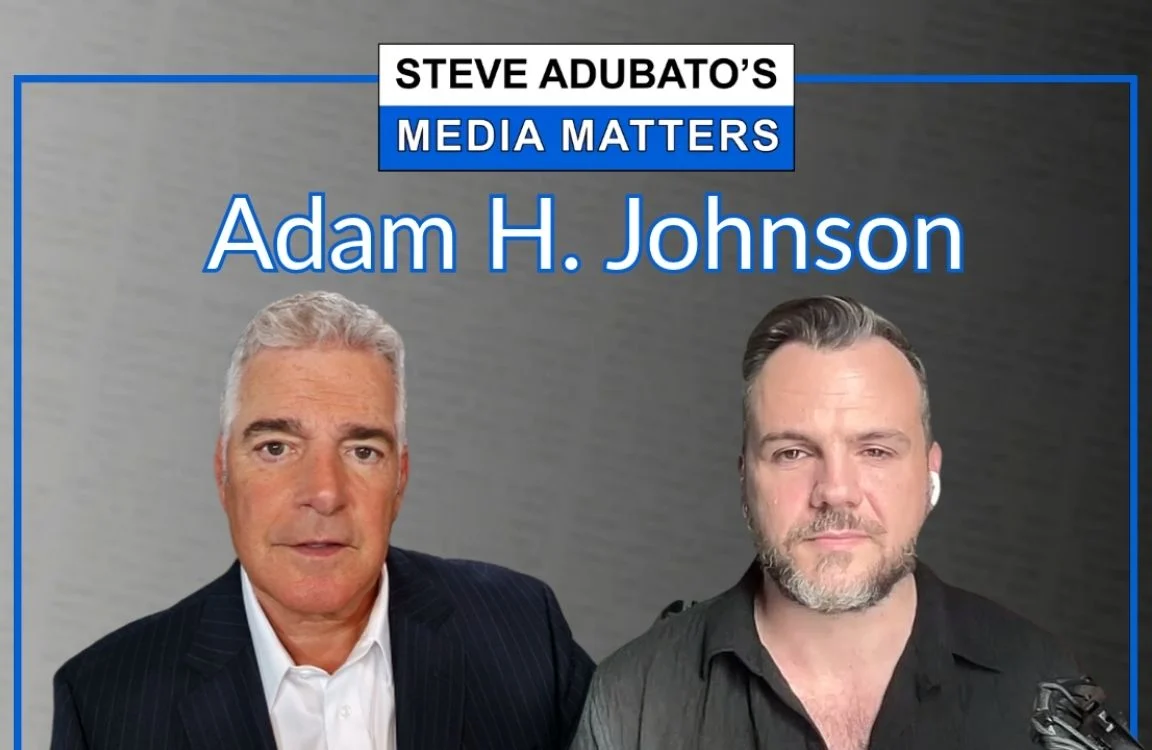
Media’s Narrative Scrutiny: Adam H. Johnson Examines Coverage of the Gaza Conflict
New Book Alleges Systemic Biases in How U.S. Media Frames the Palestinian Experience
By ROI-NJ Sponsored Content
October 26, 2026
The ongoing conflict in Gaza has been a focal point of international attention, but the narrative surrounding it, particularly within U.S. media, is under intense scrutiny. Adam H. Johnson, author of the provocative new book, How to Sell a Genocide: The Media’s Complicity in the Destruction of Gaza, argues that mainstream media outlets have, through a combination of omission, framing, and selective sourcing, significantly distorted public understanding of the realities on the ground. Johnson, a scholar and media critic, contends that this coverage has actively contributed to a desensitization and normalization of violence against Palestinians, ultimately serving to shape public opinion in ways that align with certain geopolitical agendas.
In a recent discussion with host Steve Adubato, Johnson articulated the core thesis of his book: that the way U.S. media outlets choose to report on the Gaza conflict is not merely a matter of journalistic standards but a deliberate process of narrative construction. He posits that this construction often prioritizes certain perspectives while marginalizing or entirely excluding others, leading to a skewed and incomplete picture for American audiences. His work delves into the critical questions of whose stories are amplified, whose suffering is overlooked, and the profound impact of news coverage on shaping public perception and, by extension, policy.
The Architecture of Omission: Whose Stories Are Told?
Johnson’s analysis hinges on what he identifies as a pervasive pattern of omission within U.S. media coverage of Gaza. He argues that while reporting on events in the region, a significant amount of context and critical information is systematically left out. This absence, he contends, is not accidental but a feature of how news organizations operate within a specific media ecosystem.
"We see a consistent pattern where the human cost of Israeli military actions is either downplayed or framed in a way that minimizes responsibility," Johnson stated in his discussion with Adubato. "This often involves focusing on the immediate security concerns of Israel while neglecting the long-term, devastating impact on the civilian population of Gaza. The sheer scale of displacement, the destruction of infrastructure, and the psychological toll on children are often relegated to brief mentions or entirely absent from front-page narratives."
He elaborates on how this omission creates a deficit in understanding for the average news consumer. Without the full spectrum of information, it becomes difficult for the public to grasp the protracted nature of the conflict, the underlying political and historical factors, and the systemic inequalities that contribute to the ongoing crisis. Johnson suggests that this deliberate withholding of crucial details allows for a more palatable narrative to be presented, one that often aligns with established political talking points and avoids challenging deeply entrenched foreign policy stances.
Framing the Narrative: The Power of Language and Imagery
Beyond what is omitted, Johnson dedicates significant attention to the art of framing – how stories are presented and the language and imagery used to convey them. He argues that U.S. media often employs a set of linguistic and visual cues that subtly but powerfully influence how audiences perceive the conflict.
"The choice of words is paramount," Johnson explained. "When referring to Palestinian actions, terms like ‘terrorist’ or ‘militant’ are often used with little qualification, while Israeli actions are frequently described as ‘self-defense’ or ‘counter-terrorism operations.’ This asymmetry in language immediately creates a moral hierarchy, framing one side as inherently aggressive and the other as perpetually reactive and justified."
He also points to the visual aspect of news coverage. Johnson suggests that images of Palestinian suffering are often presented in a way that is desensitizing or sensationalized, while images of Israeli victims are frequently imbued with greater pathos. This selective use of visuals, he argues, contributes to an emotional disconnect, making it harder for audiences to empathize with the plight of Palestinians. The book delves into how this framing can effectively "sell" a particular narrative, making it easier for the public to accept or even support actions that might otherwise be viewed as controversial or inhumane.
The Unseen Suffering: Marginalization of Palestinian Voices
A critical element of Johnson’s critique is the systematic marginalization of Palestinian voices and perspectives in mainstream U.S. media. He argues that the sources consulted and the individuals interviewed disproportionately represent Israeli officials and pro-Israel advocacy groups, while Palestinian voices are either absent, misrepresented, or presented through the lens of Western intermediaries.
"When Palestinian voices are heard, they are often filtered through a Western lens, or they are the voices of individuals whose narratives have been pre-approved or curated," Johnson observed. "This means that the raw, unfiltered experiences of those living under occupation, those who have lost loved ones, those who are struggling for basic necessities, are rarely given direct and sustained platform."
This lack of direct representation, Johnson asserts, allows for a narrative to be constructed that is detached from the lived realities of the Palestinian people. It creates an information vacuum where the complexities of their experiences – their resilience, their aspirations, their deep-seated grievances – are lost. The book provides examples of how this has led to a public perception that is often devoid of nuance, reducing a complex political and humanitarian crisis to a simplistic dichotomy of victim and aggressor, where the aggressor’s narrative is often dominant.
The Media’s Complicity: A Systemic Issue
Johnson’s central argument, encapsulated in his book’s title, is that the U.S. media’s coverage of the Gaza conflict is not merely flawed journalism but an act of "complicity." He defines this complicity not necessarily as a malicious intent to deceive, but as a consequence of systemic pressures, ingrained biases, and a failure to uphold journalistic ideals in the face of complex geopolitical narratives.
"Complicity, in this context, refers to the media’s role in enabling and perpetuating a particular narrative that can, in effect, ‘sell’ a form of violence or dispossession," Johnson elaborated. "This isn’t about individual journalists being inherently biased, but about the structures within which they operate. These structures include newsroom economics, the influence of powerful lobbying groups, the reliance on official sources, and the pressure to conform to dominant narratives that are deemed ‘safe’ or ‘balanced’ by editors and publishers."
He highlights how this systemic issue can lead to a self-censorship or a "going along to get along" mentality within news organizations, where challenging prevailing narratives is seen as too risky or disruptive. The result, he argues, is a media landscape that, by its very design, can obscure the truth and normalize suffering.
The Ramifications: Shaping Public Opinion and Policy
The implications of this media coverage, according to Johnson, are profound and far-reaching. He contends that the narrative constructed by U.S. media has a direct impact on public opinion, which in turn influences political discourse and policy decisions.
"When the public is fed a consistently skewed narrative about the conflict in Gaza, it shapes their understanding of who the victims are, who the perpetrators are, and what constitutes a just resolution," Johnson stated. "This can lead to a public that is less inclined to question government policies, less sympathetic to humanitarian appeals, and less likely to advocate for a more equitable and just approach to resolving the conflict."
He further suggests that this media-driven narrative can create a climate where human rights abuses are overlooked or excused, and where the cycle of violence is perpetuated. The book serves as a call to action for both media consumers and producers, urging for a more critical engagement with news coverage and a commitment to more responsible and ethical journalism, particularly when reporting on conflicts with significant human consequences. Johnson’s work aims to provoke a necessary conversation about the media’s role in shaping our understanding of the world and its responsibility to present a more complete and unvarnished truth.
