

Introduction: A West Coast Bastion of Artistic Experimentation
In the pantheon of 20th-century art production, few institutions have held as much sway over the evolution of the print medium as Gemini G.E.L. (Graphic Editions Limited). Established in 1966 in the heart of Los Angeles by visionaries Sydney B. Felsen and Stanley Grinstein, the workshop was never merely a factory for reproducing images. Instead, it functioned as a laboratory—a sanctuary where the rigid boundaries between painting, sculpture, and printmaking were systematically dismantled.
To commemorate its 60th anniversary, Gemini has unveiled “(Almost) Every Year: Sixty Years of Printmaking at Gemini G.E.L.,” a monumental exhibition curated by the esteemed Susan Dackerman and Helen Molesworth. By mining the workshop’s vast, storied archives, the curators have constructed a narrative that goes beyond simple chronology. Instead, they present Gemini as a site of intellectual communion, where visiting artists were encouraged to abandon their signature styles and "tinker" in the fertile unknown.
A Chronology of Collaboration
Gemini’s history is a testament to the cultural magnetism of Los Angeles in the late 1960s. The workshop opened its doors with a deliberate, high-stakes ambition, successfully courting the titans of the New York School. The early years saw an extraordinary convergence of minds: Josef Albers, Man Ray, Robert Rauschenberg, Jasper Johns, Claes Oldenburg, Frank Stella, and Ellsworth Kelly all passed through the studio.
These East Coast masters did not work in isolation. Gemini acted as a bridge, fostering a dialogue with the burgeoning Los Angeles scene. The workshop became a meeting ground for native or adopted Angeleno legends like David Hockney, Ed Ruscha, Ron Davis, and Bruce Nauman. This cross-pollination of sensibilities—the rigorous intellectualism of New York meeting the sun-drenched, finish-fetish materiality of Southern California—defined the workshop’s initial decade.
By the 1980s, the demographic of the workshop began to shift, reflecting a broader movement toward inclusivity. The inclusion of Dorothea Rockburne and Vija Celmins marked a significant pivot, followed by the formidable contributions of Susan Rothenberg and Elizabeth Murray. Today, as Dackerman and Molesworth noted during the exhibition’s opening, Gemini’s roster stands as a beacon of gender equity, a reality that has fundamentally reshaped the workshop’s output over the last three decades.
The Workshop as a Crucible: Supporting Data and Observations
The genius of the exhibition lies in how it categorizes these disparate artists not by era, but by thematic resonance. The curators have curated clever juxtapositions that highlight the "mutual interests" that drove the artists’ output:
- Form and Hue: Frank Stella and Ellsworth Kelly are presented in conversation, both dissecting the relationship between geometric shape and chromatic intensity.
- The Found Object: Rauschenberg and Johns are paired, showcasing their shared fascination with recontextualizing the mundane—transforming everyday debris into profound semiotic puzzles.
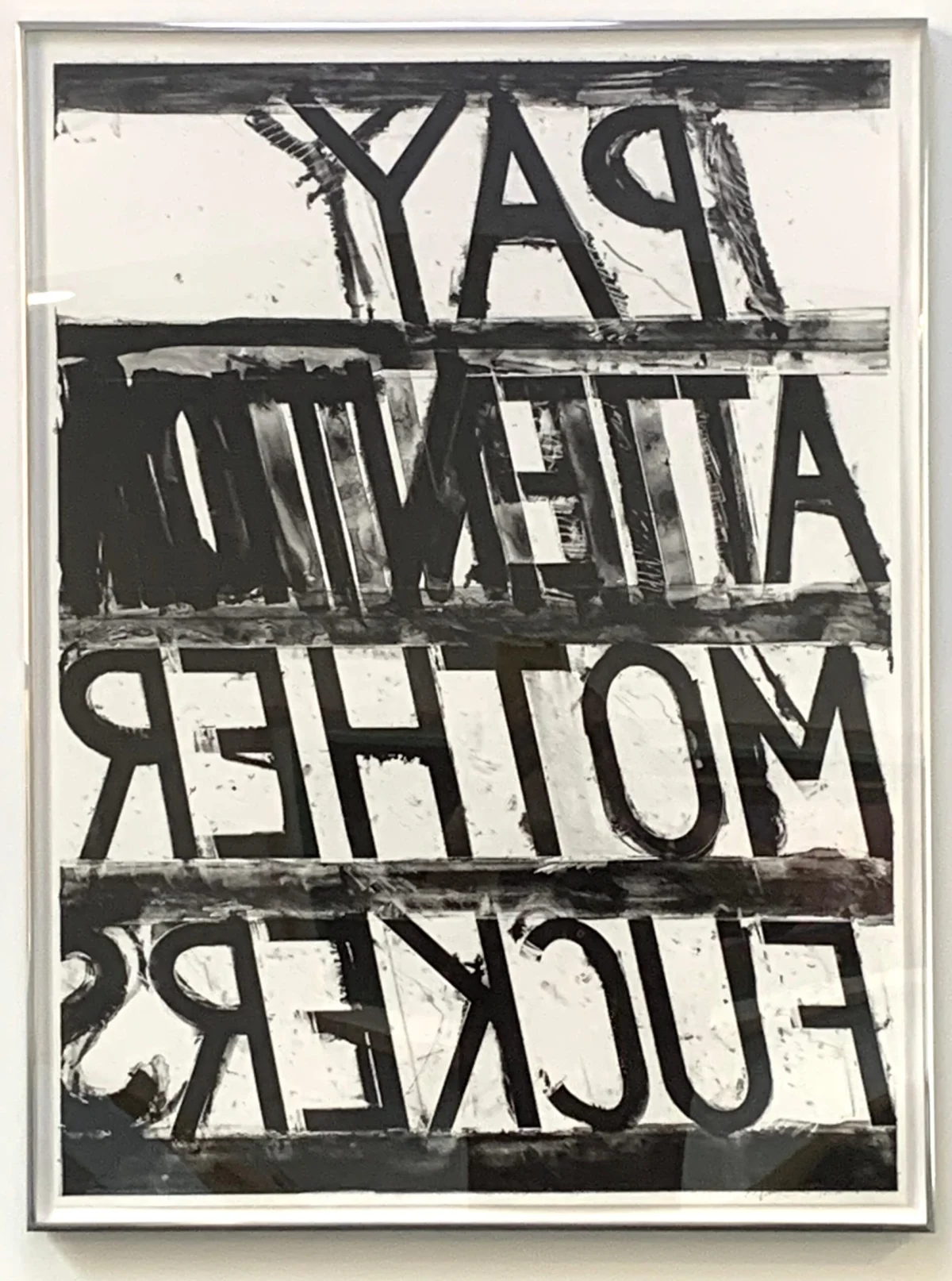
- The Power of Darkness: The works of Susan Rothenberg and Richard Serra offer a masterclass in the versatility of the color black, pushing the hue to its absolute limits of depth and texture.
- Linear Matrices: A more contemporary grouping, featuring Toba Khedoori, Julie Mehretu, and Analia Saban, explores the complexity of architectural and abstract grids.
Perhaps most surprising are the moments where artists pivoted away from their established archetypes. Joel Shapiro and Richard Tuttle, both celebrated for their spare, minimalist sculptural practices, utilized the Gemini workshops to explode into a riot of polychromatic screenprints. Their geometric abstractions, marked by exuberant palettes, serve as a reminder that the print medium allows for a playful exploration that larger, more "serious" sculptural commissions might prohibit.
Official Perspectives: The Philosophy of the Archive
During a recent gallery talk, curators Susan Dackerman and Helen Molesworth emphasized that the primary goal of “(Almost) Every Year” was to demystify the collaborative process. They posit that the workshop served as a refuge for artists—a place where the pressure of the gallery market was temporarily suspended in favor of technical inquiry.

"Gemini G.E.L. was never a place where artists simply came to sign papers," one representative of the archive noted. "It was a place where they came to learn how to think differently about their own materials." This philosophy is evident in the technical audacity on display. The curators argue that by providing artists with expert printers and unlimited material access, Gemini forced them to confront their own limitations, often resulting in breakthroughs that informed their paintings and sculptures for years to come.
Pushing the Boundaries: Beyond the Paper
The true hallmark of Gemini G.E.L. is its ongoing rebellion against the traditional definition of a "print." The workshop has consistently treated the flat surface as a suggestion rather than a requirement.
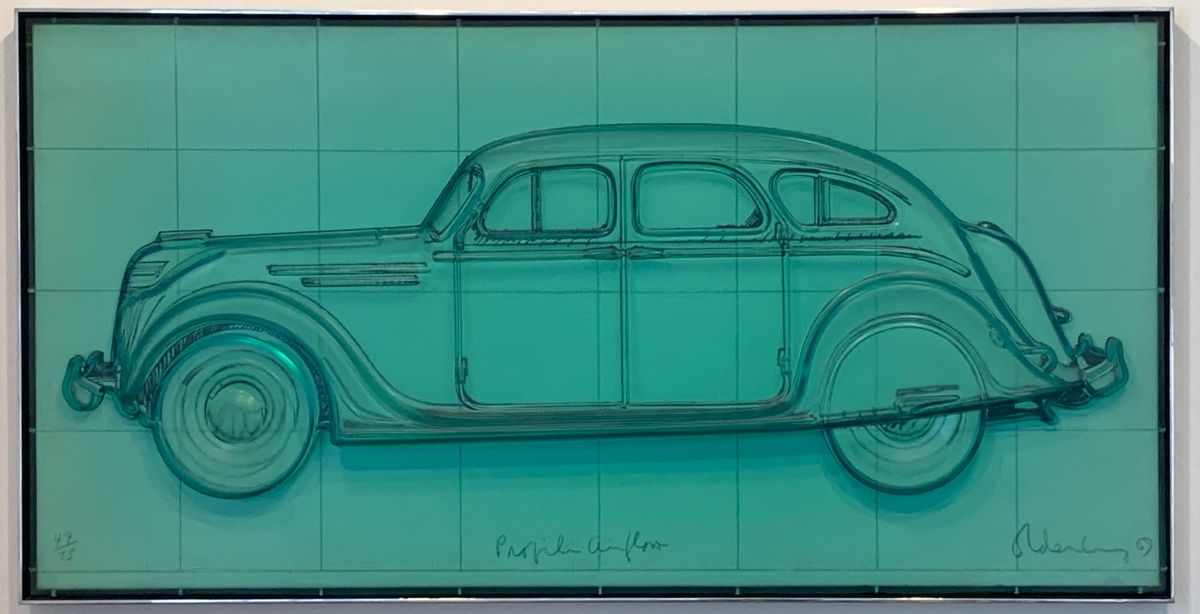
In 1969, Claes Oldenburg produced his iconic Profile Airflow, a molded polyurethane relief that mimics the aerodynamic curves of an automobile. It is a work that captures the essence of Southern California’s "Finish Fetish" culture—a movement obsessed with the sleek, industrial surfaces of car culture and surfing. Similarly, Jasper Johns, in his quest to bridge the gap between image and object, famously printed a lightbulb onto lead. By using a metal associated with heavy industry and radiation shielding, he transformed a fragile, flickering filament into a durable, permanent, and tactile presence.
The exhibition also highlights more recent experiments that defy easy categorization:
- The Kienholz Assemblages: Edward and Nancy Kienholz’s The Econo-Can (1977) pushes the print medium into the realm of the sculptural object, utilizing metal and Fresnel lenses to create a work that feels more like a broadcast device than a lithograph.
- The Cinematic Narrative: Allen Ruppersberg’s 2013 work, Great Speckled Bird, is perhaps the most audacious piece in the collection. Spanning 20 feet of a perforated piano-player roll, the work is a collage of Americana. By transcribing Southern gospel lyrics onto vintage motel stationery and printing them on a format usually reserved for mechanical music, Ruppersberg creates a temporal, nostalgic, and deeply human experience that feels like a film strip of the American soul.
Implications: The Legacy of Innovation
The 60th anniversary of Gemini G.E.L. serves as more than just a celebratory milestone; it is a critical intervention in the history of contemporary art. At a time when digital production and AI-generated imagery threaten to dilute the physicality of art, the exhibition acts as a grounding force.
The implication is clear: the physical struggle with material—the ink, the press, the polyurethane, the lead—is not an antiquated necessity, but a vital engine for creativity. The artists who have walked through the doors of Gemini G.E.L. did not just leave behind prints; they left behind a map of their own intellectual evolution.
As the art world looks toward the future, the lessons learned at Gemini remain as relevant as ever. The institution proves that when you provide an artist with the right environment and the right technical support, the resulting dialogue can fundamentally change the trajectory of their career. “(Almost) Every Year” is not merely an exhibition of prints; it is an exhibition of possibilities, a celebration of the human impulse to tinker, to fail, and eventually, to master the unknown.
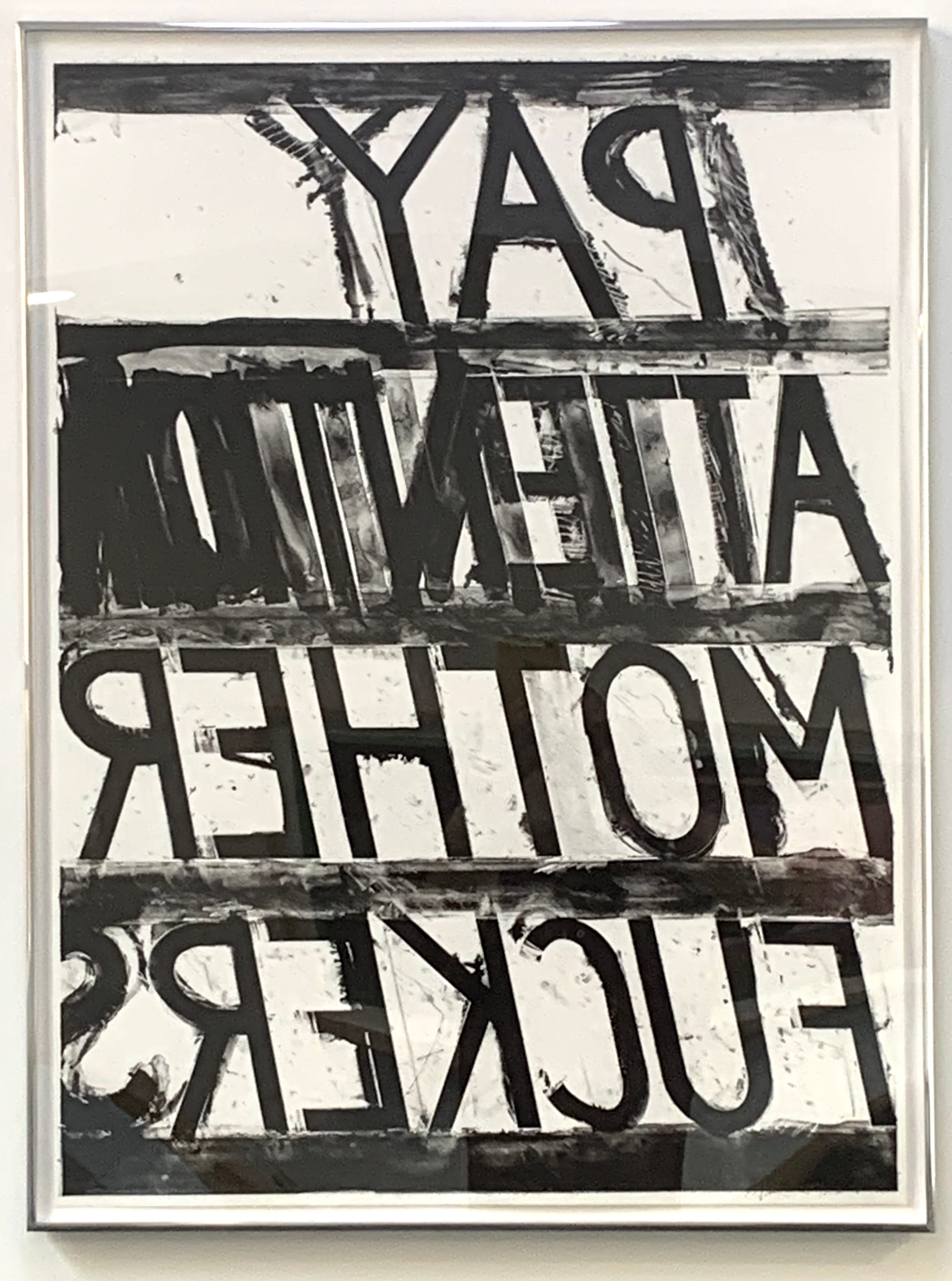
For the contemporary viewer, the exhibition demands that we "pay attention"—not just to the final image, but to the process of becoming. It reminds us that at the heart of every great work of art is a willingness to step outside one’s comfort zone and engage with the material world in a way that is raw, experimental, and perpetually curious. As Gemini G.E.L. looks toward its next decade, its legacy as a cradle of innovation is not only secure; it is arguably more essential than it has ever been.
