

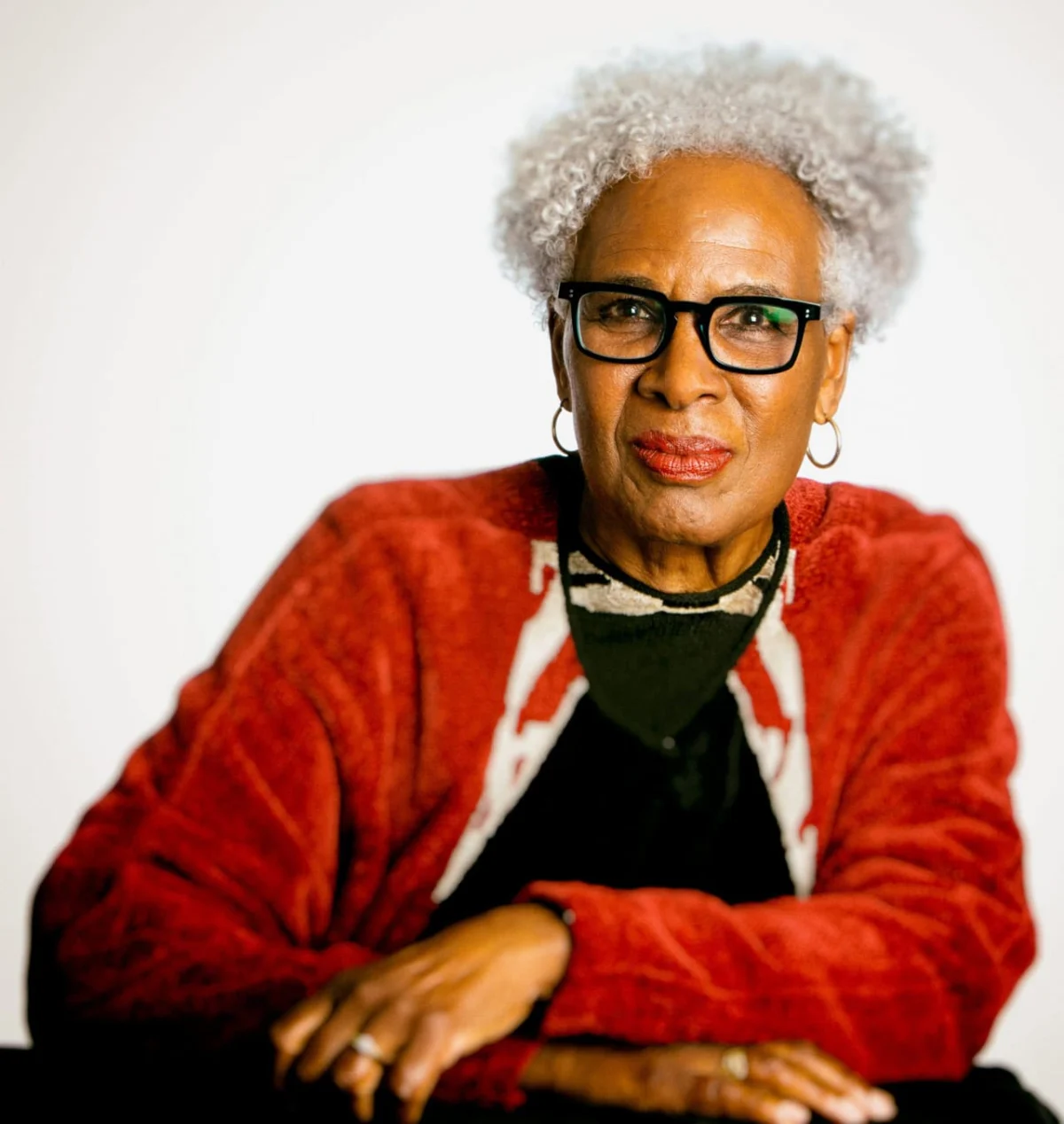
In the vibrant, evolving landscape of the Newark contemporary art scene, few figures bridge the chasm between academic rigor and visual expression as effectively as Nell Irvin Painter. A renowned historian, educator, and, more recently, a compelling visual artist, Painter represents a unique intersection of intellectual inquiry and creative practice. The Newark Museum of Art’s "Studio Snapshot" series has spotlighted her work, offering a rare glimpse into the mind of a woman who has spent her life documenting history and is now actively reconstructing it through art.
The Intersection of Fact and Form: Main Facts
Nell Irvin Painter is widely celebrated for her distinguished career as an American historian, having served as the Edwards Professor of American History, Emerita, at Princeton University. Her academic contributions—most notably her seminal work, The History of White People (2010)—challenged conventional narratives of race and identity in the United States.
However, following her retirement from academia, Painter underwent a profound professional metamorphosis. She transitioned from the textual analysis of history to the tactile, visual medium of fine arts. Today, she works primarily with paper and digital collage, creating complex visual tapestries that interrogate the same themes she spent decades researching: the construction of identity, the fallacies of racial hierarchy, and the persistence of historical trauma. Her residency in Newark has placed her at the heart of a burgeoning cultural hub, where her practice serves as both a critique of historical erasure and an exploration of personal liberation.
From the Archive to the Easel: A Chronology of Evolution
To understand the current output of Nell Painter, one must map the trajectory of her intellectual life.
1942–1974: Foundations of Inquiry
Born in Houston, Texas, and raised in Oakland, California, Painter’s early life was marked by an acute awareness of the racial climate of the mid-20th century. Her academic path took her through the University of California, Berkeley, and eventually to Harvard University, where she earned her Ph.D. in 1974. During this period, she established herself as a formidable voice in African American history.
1974–2010: The Academic Zenith
For decades, Painter was a fixture in the ivory tower. She authored landmark texts including Exodusters: Black Migration to Kansas After Reconstruction and Sojourner Truth: A Life, A Symbol. Her research was characterized by a meticulous attention to the voices of those marginalized by traditional historical records. The History of White People served as her magnum opus in this era, dismantling the notion of "whiteness" as a monolithic, biological reality and exposing it as a social construct designed for political and economic leverage.

2010–Present: The Artistic Rebirth
Upon her retirement from Princeton, Painter did not retreat into quietude. Instead, she enrolled in the Rhode Island School of Design (RISD), earning a BFA in painting in 2011. This pivot was not an abandonment of her history but a continuation of it through different means. Her work began appearing in galleries and museums, including the Newark Museum of Art, where her piece The History of White People (2019)—a paper and digital collage on foam core—serves as a physical manifestation of her theoretical research.
The Mechanics of Memory: Supporting Data and Artistic Methodology
The Newark Museum of Art’s "Studio Snapshot" series provides a critical look at the "how" behind Painter’s work. Her pieces often rely on a process of deconstruction and reassembly. By taking historical photographs, government documents, and snippets of archival text, she creates collages that are both aesthetically striking and historically dense.
Data from the art world indicates that the shift toward "intellectual art"—work created by individuals who have spent a lifetime in specialized fields—is gaining significant traction. Painter’s work functions as a primary source document in its own right. When she presents a collage, she is not merely arranging shapes and colors; she is organizing fragments of historical truth.
- Medium: Paper and digital collage.
- Dimensions: Her 2019 work, The History of White People, spans 37 1/2" by 60", a scale that demands the viewer physically engage with the fragmented narratives presented on the surface.
- Methodology: Painter utilizes digital manipulation to adjust the scale and juxtaposition of historical figures, forcing the viewer to confront the gaps and inconsistencies in the American historical canon.
The Newark Connection: Official Perspectives and the Cultural Scene
The inclusion of Nell Painter in the Newark Museum of Art’s programming is a testament to the city’s commitment to nurturing interdisciplinary talent. Newark has long served as a sanctuary for artists seeking to escape the commercial pressures of New York City, providing instead a space for genuine conceptual development.
"Studio Snapshot" is designed to demystify the creative process. For an artist like Painter, the museum acts as an institutional validator, bridging the gap between the university lecture hall and the gallery wall. According to curators at the Newark Museum of Art, featuring artists who have deep ties to the city’s history is essential for fostering a sense of community ownership over the institution’s collections. By presenting Painter not just as an artist, but as a historian, the museum invites audiences to view art as a form of active research.
Implications: The Future of Historical Narrative
The implications of Nell Painter’s work extend far beyond the walls of the museum. Her transition suggests a changing definition of "the expert." In an era where historical truth is increasingly contested, artists like Painter offer a way to process information that is more visceral and immediate than a textbook.

1. The Democratization of History
By using collage, Painter makes complex sociological theories accessible. Her work strips away the barriers of academic jargon, allowing the visual impact of the composition to communicate the severity of historical displacement or racial bias.
2. The Power of "Unlearning"
A central theme in her work is the necessity of "unlearning" false histories. As she has noted in various interviews, the history of the United States has been curated to serve specific political narratives. Her art is a visual act of editing that curated history, pulling threads from the tapestry of the past to show where the fabric has been torn or intentionally miswoven.
3. A Model for Mid-Life Transition
Painter’s story serves as a profound model for intellectual longevity. She demonstrates that the retirement from one professional chapter does not signify the end of one’s contribution to society, but rather the beginning of a new way of engaging with it. For the Newark art scene, her presence provides a link between the intellectual history of the region and its creative future.
Conclusion: The Persistence of the Artist-Historian
As we look at the trajectory of Nell Irvin Painter, we see a life defined by the relentless pursuit of truth. Whether through the written word or the composed image, her objective remains the same: to shine a light on the mechanisms of power and the marginalized people who have been pushed to the periphery of the American story.
The Newark Museum of Art, through its "Studio Snapshot" series, has captured a pivotal moment in this journey. In viewing her work, visitors are not just looking at a collage; they are witnessing the culmination of a lifetime of study. Nell Painter reminds us that art is not a departure from reality, but a deeper, more refined way of seeing it. As she continues to produce work that challenges and enlightens, she secures her place not only as a titan of American history but as a vital contributor to the contemporary visual canon.
For the city of Newark, having an artist of Painter’s stature in its midst is more than a point of pride—it is a call to action. It serves as a reminder that the stories we tell about ourselves, and the images we create to represent those stories, carry the weight of our collective future. Through the careful, meticulous, and brilliant hands of Nell Painter, that future looks both more complex and, perhaps, more honest.
