

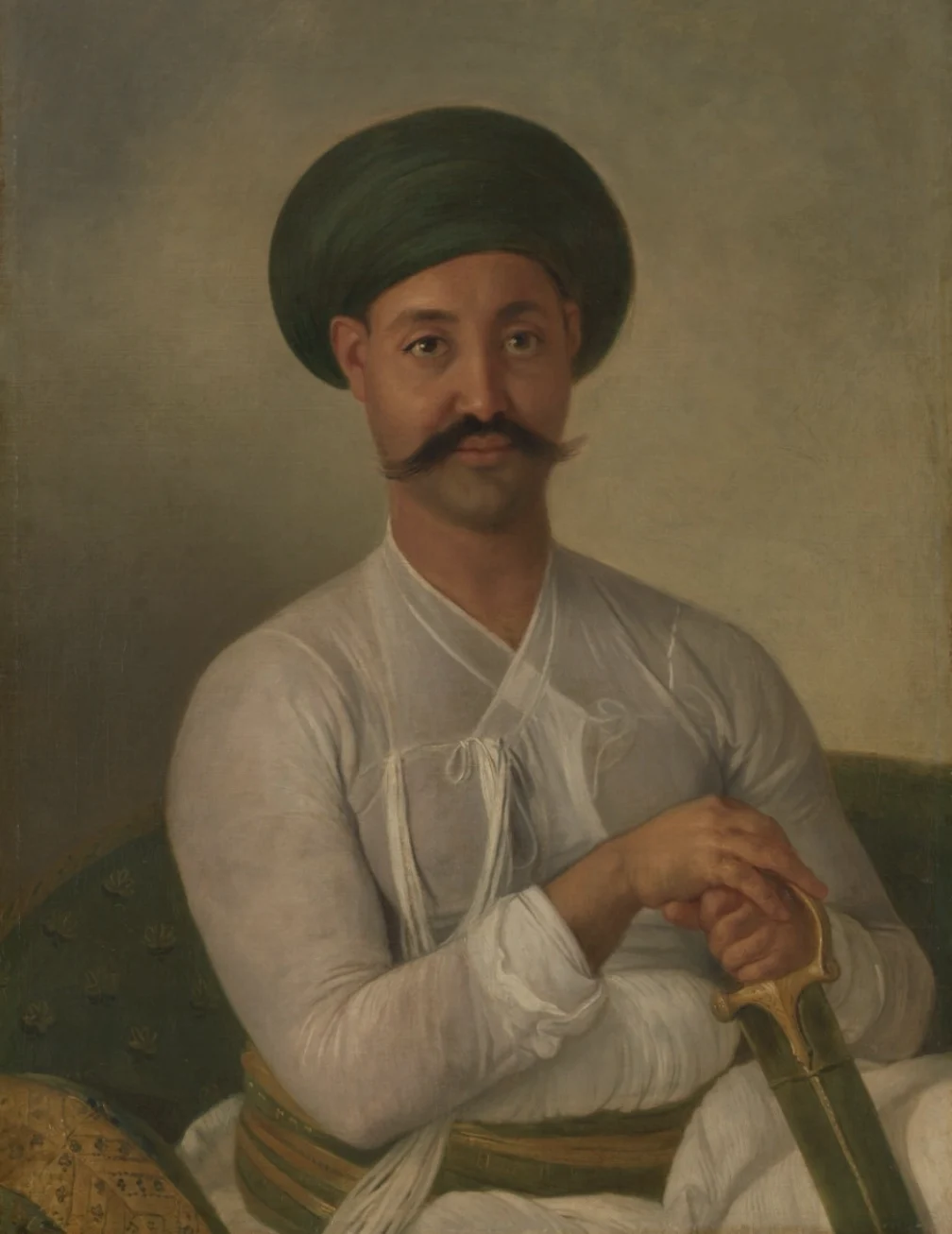
In a significant move for the British national art collection, esteemed art historian and collector Charles Greig has donated 50 masterworks from his private collection to Tate Britain. This generous act, which includes a diverse array of oil paintings, delicate watercolors, and intricate miniatures, represents a monumental addition to the museum’s holdings of 18th- and 19th-century South Asian art. Remarkably, the donation was made without the use of tax incentives, underscoring the donor’s purely philanthropic motivation to preserve these artifacts for public study and enjoyment.
The gift acts as a bridge across centuries, offering a nuanced look at the complex, often fraught, and deeply intertwined histories of Britain and South Asia during the colonial era. By integrating these works into the national collection, the Tate is taking a decisive step toward diversifying the narratives it presents, moving beyond a Eurocentric view of art history to embrace a broader, more global perspective on the cultural shifts of the 18th and 19th centuries.
The Collection: A Visual Record of a Vanishing World
The collection, which took Charles Greig four decades to assemble, is a testament to the aesthetic and cultural synthesis that occurred in South Asia during the height of British influence. The works encompass a wide range of styles and origins, featuring prominent Indian masters such as Sita Ram and Ghulam Ali Khan, alongside European artists who traversed the continent, capturing the topography, society, and daily life of the region.
Among the collection’s most significant highlights is the 1784 Portrait of Prince Jawan Bakht (also known as Jahandar Shah) by the German painter Johan Zoffany. A figure of immense historical significance, the prince is captured with a level of detail and character that defined Zoffany’s career, yet the painting remains a rarity in British public collections. Another milestone in the donation is the acquisition of Austrian artist Rudolf Swoboda’s 1886 portrait, Sepoy in HH Maharaja Srinagar’s Indian Regiment, 23 Years Old. This piece is historic in its own right, as it marks the very first time an original work by Swoboda has entered a public museum collection in the United Kingdom.
The Phenomenon of "Company Paintings"
Central to the collection are the "Company paintings"—a unique genre of watercolors that emerged from the encounter between Indian artistic traditions and British colonial patronage. Produced primarily for officials of the British East India Company, these works are characterized by their fusion of indigenous techniques, such as the use of opaque watercolors and fine, precise line work, with Western compositional sensibilities and an interest in documenting flora, fauna, and local customs.
Three specific watercolors by the master artist Sita Ram are included in the gift. These pieces are not merely aesthetic objects; they are historical documents that provide a window into the architecture, landscapes, and social hierarchy of the time. As Greig noted in his public statements, these works provide a "visual record of our rich shared history," capturing a world that was on the cusp of the photographic revolution, and therefore relying on the meticulous hand of the artist to preserve its likeness.

A Chronology of Artistic Exchange
To understand the weight of Greig’s donation, one must look at the timeline of artistic development in South Asia from 1770 to the late 19th century. This period saw a dramatic evolution in how the East and West perceived one another, a shift that is mirrored in the brushstrokes of the artists represented in this collection.
- 1770–1800: The Era of Observation. This phase is marked by the arrival of European portraitists like Zoffany, who sought to capture the grandeur of the Mughal courts and the local nobility. It was a time of mutual curiosity, where artistic styles began to bleed into one another.
- 1800–1850: The Rise of the Company School. As the East India Company consolidated its power, there was a growing demand for visual documentation. Indian artists, previously reliant on royal patronage, adapted their styles to satisfy the tastes of British administrators and travelers. This is the era of the "Company painting," where the precision of Indian miniature painting met the landscape traditions of the West.
- 1850–1900: Documentation and Transition. As the 19th century waned, the influence of photography began to shift the role of the artist. Artists like Rudolf Swoboda moved toward a more ethnographic approach, documenting the individuals who populated the colonial machine, from the infantryman (the Sepoy) to the local Maharaja.
The Motivations of a Collector: An Interview with History
For Charles Greig, the collection was never intended to be a static set of trophies. Throughout his forty-year pursuit of these works, his goal was to build a cohesive narrative of a "vanished world." In a press release issued by the Tate, the motivation for the gift was made clear: "The gift is made with the desire to ensure these masterworks can be accessed and enjoyed by the nation."
Greig’s perspective is rooted in a sense of responsibility. He argues that because the works encompass a "unique cross-cultural discourse," it is a moral imperative that they remain intact. By donating them as a collective unit, he prevents the fragmentation of a history that is often overlooked in traditional British art galleries. He sees the collection as a vital tool for study, one that allows the public to engage with the realities of colonialism not just through text, but through the evocative power of portraiture and landscape.
Official Responses and Institutional Impact
The response from the arts sector has been overwhelmingly positive. Alex Farquharson, the Director of Tate Britain, lauded the donation as a transformative moment for the institution. "Greig’s gift will broaden the range of people and histories represented in the national collection," Farquharson stated. His sentiment reflects the ongoing mission of the Tate to re-evaluate the parameters of "British art." By including the perspectives and talents of South Asian artists like Ghulam Ali Khan and Sita Ram, the museum is acknowledging that the history of Britain cannot be separated from its imperial history in the East.
The Role of Museums in Decolonizing the Narrative
The inclusion of these works is a strategic move in the broader conversation about institutional decolonization. By placing the work of Indian artists on an equal footing with their European contemporaries within the galleries of the Tate, the museum is actively dismantling the hierarchy that once placed colonial art in a separate, often marginalized, category.
Future Implications: The 2028 Exhibition
The significance of this gift will be fully realized in 2028, when the Tate plans to launch a free public display featuring the donated works. This exhibition will likely serve as a focal point for academic research, public education, and a wider discourse on the role of art in the context of empire.

The exhibition is expected to provide a comprehensive look at the cross-cultural exchange that defined the 18th and 19th centuries. It will challenge visitors to look closer at the "Company paintings" and consider the agency of the artists who created them, while also inviting a critical examination of the power dynamics that influenced their production.
Furthermore, the gift sets a precedent for future private donations. By choosing to forego tax incentives, Greig has signaled a shift in the philosophy of high-level philanthropy—one that prioritizes the public good and the integrity of the collection over financial gain. This model may inspire other collectors to consider the long-term legacy of their holdings and the impact they can have on public consciousness when placed in an institutional setting.
Conclusion: A Living History
The 50 works donated by Charles Greig represent far more than a collection of paintings; they are a bridge to a complex past. They remind us that history is not a static set of dates, but a living, breathing tapestry of encounters, exchanges, and influences. As these works make their way from the private sphere into the heart of the national collection, they will serve as a constant reminder of the deep, often uncomfortable, yet always fascinating connections that bind Britain and South Asia.
In the coming years, as scholars, students, and the public stand before these canvases, they will be engaging with the very same scenes that were witnessed by the residents of a changing world over two centuries ago. Through this gift, Charles Greig has ensured that this visual record is not lost to time, but is instead made available to all who wish to learn from the beauty and the complexity of our shared human story. The 2028 exhibition will undoubtedly be a milestone in the history of the Tate, representing a new chapter in how we interpret the visual legacy of the global age.
