

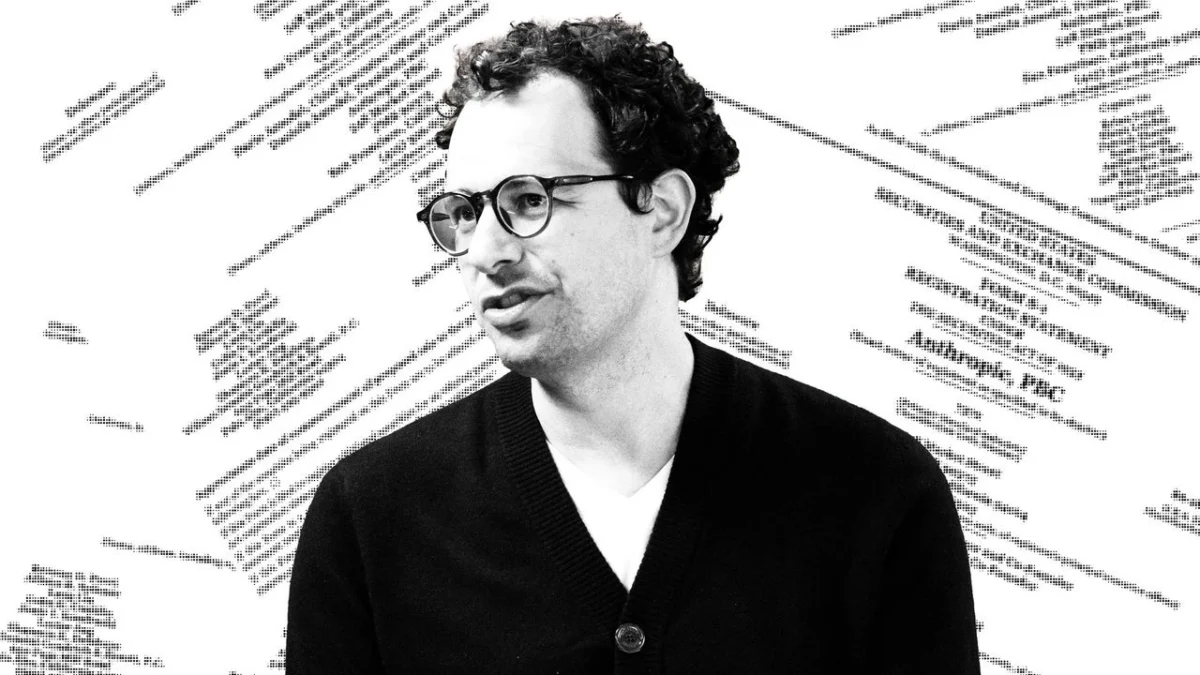
As the artificial intelligence industry accelerates toward an uncertain future, few companies occupy as precarious a position as Anthropic. Founded by OpenAI defectors—including CEO Dario Amodei—the organization was built on a foundational premise: that AI safety cannot be an afterthought, a patch applied to a finished product, but must instead be the architectural bedrock of the development process itself.
With an initial public offering (IPO) looming—potentially as early as before Thanksgiving—this core mission is facing its most significant stress test yet. Anthropic’s journey from a safety-first research lab to a massive, revenue-generating engine reveals a fundamental tension in the heart of Silicon Valley: the desire to save the world through technology while being forced to play by the unforgiving rules of the global financial market.
The Genesis of a Safety-First Mission
The narrative of Anthropic is inextricably linked to the disillusionment of its founders. Having witnessed the internal culture at OpenAI, Amodei and his team set out to create an organization that prioritized the mitigation of existential risks. They envisioned a "Constitutional AI" approach—a methodology where models are trained to follow a set of guiding principles to ensure they remain helpful, harmless, and honest.
This philosophy is deeply rooted in the principles of "effective altruism," a philosophical framework that encourages individuals and organizations to use evidence and reason to determine the most effective ways to benefit others. By staying at the vanguard of "frontier" AI development, Anthropic’s leadership argues that they can set the global standard for safety. The logic is defensive: if they lead, they can dictate the safety regime; if they lag, they may be forced to compete in a "race to the bottom" where safety protocols are stripped away in favor of raw performance.
A Chronology of Strategic Shifts
The trajectory of Anthropic’s policy evolution provides a window into the increasing friction between idealism and market reality:
- The Founding Era: Anthropic launches with a manifesto centered on the "Responsible Scaling Policy" (RSP). The company makes a bold promise: it will not develop or deploy advanced systems unless it can prove it has the safety infrastructure to contain them.
- The Competitive Squeeze (2025): As the "AI Arms Race" intensifies, Anthropic begins to see exponential revenue growth. Their financial strategy relies heavily on complex convertible notes to fund the astronomical costs of GPU clusters and infrastructure.
- The February 2026 Policy Pivot: In a watershed moment, Anthropic quietly amends its Responsible Scaling Policy. The categorical pledge to halt development if safety thresholds aren’t met is removed. The company justifies this by admitting the obvious: they cannot unilaterally pause while competitors continue to push the boundaries of model capability.
- The S-1 Filing (Late 2026): Anthropic formally registers its securities with the SEC. The filing paints a picture of a company scaling at a breakneck pace, with revenue ballooning from $4.6 billion in 2025 to $16.3 billion in the first half of 2026 alone.
Financial Realities: The Cost of Ambition
Behind the lofty rhetoric of safety lies a staggering financial engine. The S-1 filing reveals a company that is essentially a bet on the future of global compute. While the top-line growth is astronomical, the bottom-line numbers are equally jarring.
Anthropic reported a net loss of $80.7 billion for the first half of 2026. However, a deep dive into the financial statements provides a necessary, if complex, clarification: only $693 million of that loss is attributable to actual operations. The remaining $72 billion stems from the accounting treatment of the intricate financial instruments—convertible notes and derivatives—used to fuel their infrastructure build-out. Because these instruments are tied to the company’s valuation, as Anthropic’s market worth soared, the "fair value" of the debt grew, creating a massive, non-cash accounting hit.
For investors, this suggests that the company is effectively a "compute-heavy" utility. The primary goal of the IPO is to convert this high-stakes, private debt-fueled growth into a sustainable public balance sheet. But this transition brings its own set of risks.
The Public Market Dilemma
Wall Street operates on a cycle of quarterly expectations. Once Anthropic rings the bell at the New York Stock Exchange, the pressure to demonstrate growth will become the primary directive. This creates a structural conflict with the company’s safety mission:
- The Throughput Incentive: To keep stock prices high, Anthropic must keep existing enterprise customers satisfied and win new ones. This requires shipping new, more capable models faster than ever.
- The Testing Crunch: Every week spent in a "red-teaming" phase—where researchers try to break the model to find safety flaws—is a week where the competition might launch a superior product. The temptation to "ship and patch" will be intense.
- The Commercial Trade-off: Reducing a model’s capability to make it safer may simultaneously reduce its commercial utility. If a model is too restricted to perform complex coding or strategic analysis, enterprise clients may defect to a less inhibited competitor.
Official Responses and Defensive Positioning
In its S-1 filing, Anthropic addresses these concerns by framing its market dominance as a safety imperative rather than a commercial one. The company argues that because they are the "responsible" party, it is in the best interest of humanity that they—not less scrupulous actors—win the race to AGI (Artificial General Intelligence).
"We believe that our safety-first approach provides a competitive advantage," the filing notes, positioning their brand as a "safe harbor" for enterprises that are wary of the legal and reputational risks associated with deploying unvetted AI. However, critics point to the February 2026 policy shift as evidence that when the "rubber hits the road," market survival takes precedence over philosophical commitment.
The Broader Implications: Can Ethics Survive Scale?
The implications of Anthropic’s IPO extend far beyond the company’s own balance sheet. If one of the most self-consciously ethical AI labs in the world finds it impossible to maintain its restrictive safety policies in the face of public market demands, it sets a chilling precedent for the rest of the industry.
There is a distinct danger that "Safety" becomes a marketing buzzword rather than a technical constraint. If Anthropic—the company founded specifically to address the failures of its peers—ends up operating with the same speed-at-all-costs ethos as its competitors, the "Safety Gap" will effectively vanish.
Moreover, the complexity of the company’s financial structure—with its reliance on massive, valuation-linked debt—suggests that Anthropic is now too big to fail in the eyes of its investors. If a critical safety flaw were discovered in a model that is currently powering billions of dollars in enterprise revenue, the pressure to keep the system online rather than pulling the plug would be immense.
Conclusion: A High-Stakes IPO
As the Thanksgiving target date for the IPO approaches, the tech world is watching closely. Anthropic is effectively asking the public market to invest in a dual-track mission: the pursuit of world-altering, frontier-level artificial intelligence and the simultaneous policing of that very technology.
Whether these two tracks can remain parallel remains to be seen. The history of technology companies suggests that when growth and ethics collide, growth almost always wins. Anthropic’s challenge is to prove that it is the exception to the rule—a company that can deliver on the quarterly demands of Wall Street while ensuring that its models remain as safe as they are powerful. In the final analysis, the IPO will not just be a test of Anthropic’s valuation; it will be a referendum on whether a company can truly "do good" while answering to shareholders who prioritize "doing well."
