

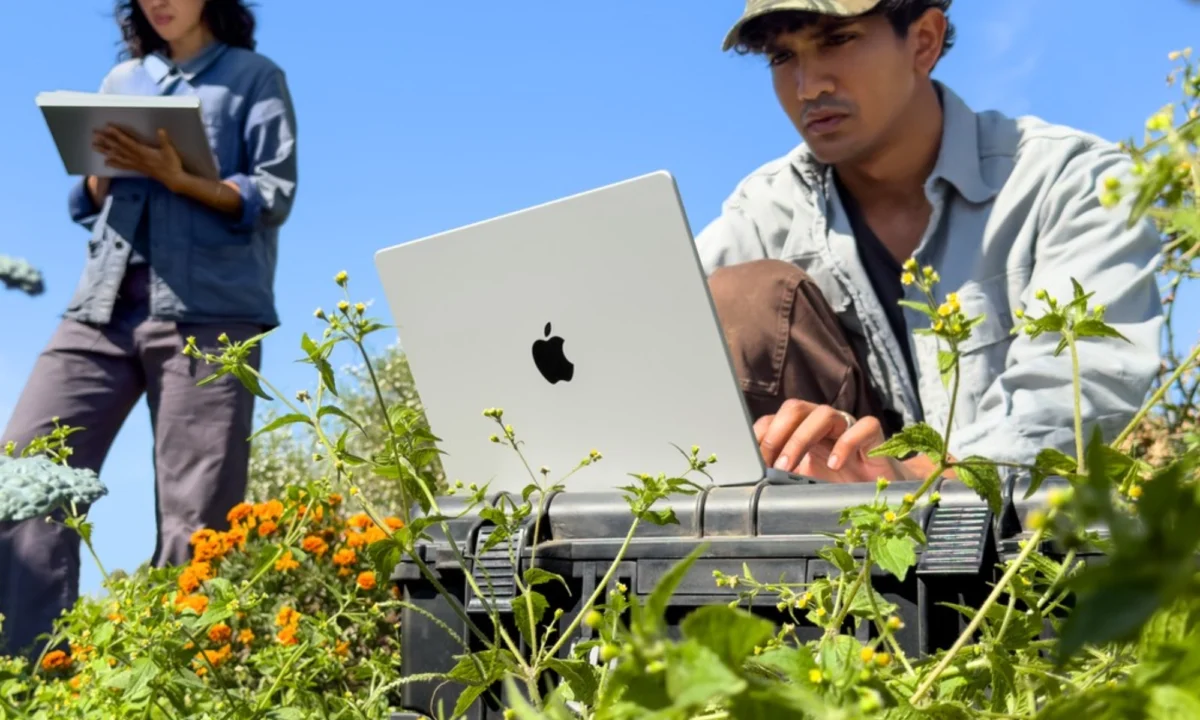
Apple has long mastered the delicate art of the premium experience—a blend of hardware aesthetics, software fluidity, and the subtle, persistent suggestion that their products are not just tools, but essential components of a high-functioning life. Yet, even the most devoted brand loyalists are finding it increasingly difficult to reconcile the company’s recent pricing trajectories with the reality of the current hardware market. The newly unveiled 14-inch MacBook Pro, powered by the cutting-edge M6 silicon, serves as a masterclass in this paradox: it is an objectively superior machine that leaves the consumer questioning whether the price of entry has finally crossed the threshold of reason.
With a starting price of $1,999, the new MacBook Pro enters the market at a significant premium. For the professional, it promises a 2nm M6 chip, a stunning Liquid Retina XDR display, and an industry-leading 24-hour battery life. However, for the average consumer, it represents a $400 increase over the entry-level M5 MacBook Pro launched just one year ago. This isn’t a minor adjustment; it is a structural shift in how Apple positions its "professional" hardware, raising critical questions about accessibility, market saturation, and the sustainability of the company’s pricing strategy.
The Chronology of Cost: How We Arrived Here
The journey to a $2,000 base model was not an overnight decision. Apple’s pricing strategy has been a slow, calculated ascent. To understand the current climate, one must look at the last two years of global component supply chain volatility.
During the "RAMmageddon" crisis—a period defined by extreme scarcity and skyrocketing costs for high-speed unified memory and advanced storage modules—many PC manufacturers were forced to hike prices immediately. Apple, due to its immense leverage with suppliers and strategic stockpiling, was able to insulate its customers from the worst of these fluctuations for a time.
However, the recent launch of the M6 generation indicates that Apple’s ability to absorb these costs has reached its limit. The price creep happened in stages: minor adjustments in mid-cycle refreshes, the phasing out of "value" entry tiers, and the consolidation of base configurations. By the time the M6 was ready for prime time, the $1,999 price tag felt like a fait accompli—the culmination of a year where inflationary pressures and the costs of next-generation fabrication finally hit the bottom line.
Technical Foundations: What $2,000 Buys You
It would be disingenuous to suggest the M6 MacBook Pro is not a technological marvel. The 2nm M6 processor is a testament to the pace of semiconductor advancement. With a 12-core CPU and 12-core GPU, and the integration of dedicated Neural Accelerators in every core, Apple is positioning this machine as the ultimate platform for on-device AI. The company claims a 30% increase in graphics performance and a 25% jump in AI-related workloads compared to the previous generation.

Beyond the silicon, the device retains the hallmark features that have made the MacBook Pro the gold standard for creative professionals:
- Liquid Retina XDR Display: Still widely considered the best laptop display on the market, offering unparalleled contrast and color accuracy.
- Connectivity Upgrades: The inclusion of Wi-Fi 7 and Bluetooth 6 ensures the device is future-proofed for the next half-decade of network standards.
- Build Quality: The chassis remains an industry-leading example of precision-machined aluminum, though it remains largely unchanged in aesthetic design from its M5 predecessor.
Yet, there is a nuance hidden in the technical specifications that savvy buyers have already identified. While the M6 chip is faster, the 170GB/s memory bandwidth—a significant performance boost—is gated behind the 24GB and 32GB memory configurations. The entry-level $1,999 model remains tethered to 16GB of unified memory. For a "Pro" machine in 2026, 16GB is increasingly viewed as the bare minimum, bordering on insufficient for high-end professional creative workflows.
The Strategic Segmentation: Air vs. Pro
Apple’s product lineup has become a complex map of "good, better, best" options, designed to nudge consumers toward more expensive configurations. The 13-inch MacBook Air with the M5 chip starts at $1,299, while the 15-inch model sits at $1,499. For 90% of students, office workers, and casual creators, these machines are more than sufficient.
The MacBook Pro is now being forced into a precarious middle ground. It is too expensive for the casual user who is perfectly satisfied with the Air, but for the true power user, the entry-level M6 is often viewed as a "gateway" machine. Once a user decides they need a Pro, they are faced with the $1,999 price point. If their workload actually requires the extra power of a Pro chip, they are then tempted by the $2,499 M5 Pro/M6 Pro configurations, which offer more memory and superior thermal management.
Apple is essentially banking on a "laddering" effect. By placing the entry-level Pro at $1,999, they create a pricing vacuum that encourages users to look at the next tier up. It is a psychological masterclass in upselling that has served the company well for years, but as the base price continues to climb, the rungs of that ladder are becoming increasingly difficult to reach.
Implications for the Future of Professional Computing
The most significant implication of this pricing strategy is the potential for market alienation. If the price of admission for a "reliable workhorse" laptop continues to rise by hundreds of dollars per generation, the MacBook Pro risks becoming an elitist product, accessible only to enterprise-level buyers or the top percentile of creative professionals.

The Competition and Market Response
While Apple enjoys a high degree of brand loyalty, the Windows ecosystem is responding with aggressive value propositions. As the memory supply crisis stabilizes, high-performance Windows laptops featuring the latest AI-optimized chips are appearing at price points $300 to $500 lower than the MacBook Pro. While these devices may lack the cohesive integration of macOS and Apple Silicon, the delta in price is becoming too large to ignore for many small business owners and freelancers.
The Sustainability of Price Hikes
Can Apple continue this trajectory? The answer likely lies in the rate of innovation. If the jump from M6 to M7 provides marginal gains, consumers will likely revolt against further price hikes. If, however, the M-series chips continue to offer massive leaps in performance and efficiency—particularly in the burgeoning field of on-device AI—Apple may be able to justify the cost as a necessary investment for professional productivity.
Final Verdict: Is it Worth It?
The 14-inch MacBook Pro with M6 is an objectively incredible piece of engineering. It is fast, efficient, and beautifully built. However, the $1,999 price tag serves as a reminder that the "Apple Tax" is no longer just a premium for the brand—it is a reflection of a supply chain in flux and a corporate strategy that prioritizes high-margin professional tiers over entry-level accessibility.
For those who rely on the ecosystem, the purchase is likely justified by the ROI of time saved and stability gained. For everyone else, the M6 MacBook Pro is a cautionary tale: a reminder that as technology reaches new heights of capability, the cost of keeping pace is rising just as fast. The question remains: how much higher can that price climb before the "Pro" label loses its luster, and the market decides that enough is enough?
