

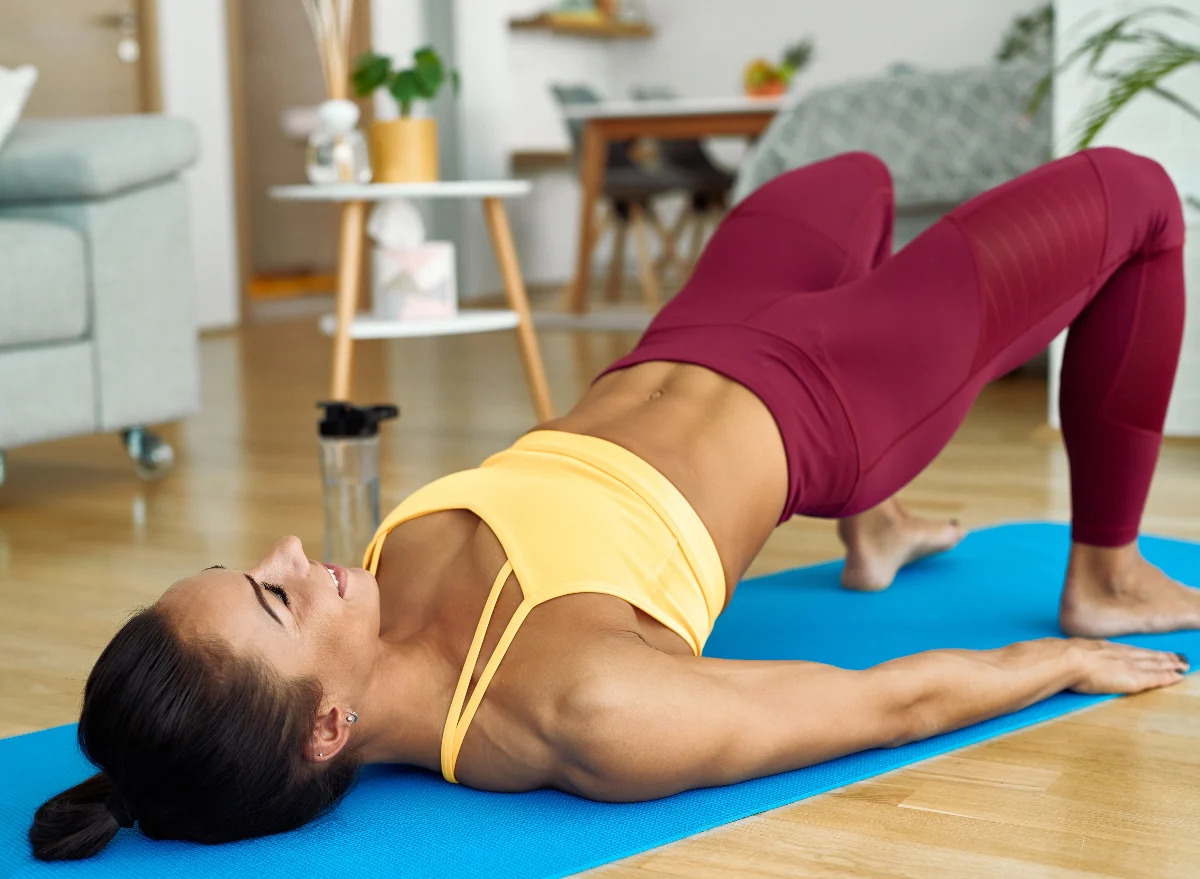
As we navigate the complexities of aging, the metrics by which we measure our health shift. We move away from the high-intensity performance markers of our youth and toward the functional indicators of longevity: balance, mobility, and core integrity. Among the pantheon of corrective exercises, the glute bridge stands out as a deceptively simple yet profoundly revealing diagnostic tool.
According to fitness experts, the ability to maintain a sustained glute bridge for 60 seconds after the age of 60 is not merely a feat of endurance—it is a vital sign of musculoskeletal health. It serves as a comprehensive test of the posterior chain, requiring the harmonious coordination of the glutes, the lower back, and the abdominal wall.
The Main Facts: Why the Glute Bridge Matters
At its core, the glute bridge is a foundational movement pattern that mimics the extension of the hips, a function essential for walking, standing, and climbing stairs. For those over 60, the prevalence of "gluteal amnesia"—a condition where the gluteal muscles become inhibited due to prolonged sitting—is a significant contributor to lower back pain and gait instability.
When you perform a bridge, you are not just targeting the glutes; you are engaging the entire "core canister." This includes the transverse abdominis, the multifidus in the spine, and the pelvic floor. Maintaining this position for a full minute requires neuromuscular endurance. If the glutes are weak, the lower back often compensates, leading to the very pain many seniors seek to avoid. Therefore, the bridge acts as both a test of strength and a corrective intervention to realign the pelvis and offload the lumbar spine.
Chronology: The Evolution of Functional Strength
The decline of physical function in the sixth and seventh decades of life is rarely a sudden event; it is a gradual erosion of muscle mass and neural recruitment, known as sarcopenia.
- The Foundation (Pre-Test Phase): Before attempting the 60-second challenge, individuals must master the mechanics of the movement. Attempting to force a duration goal without proper form is a common path to injury.
- The Assessment (Initial Baseline): Most adults over 60, unless actively training, may struggle to hold a perfect bridge for more than 15–20 seconds. This is the starting point for improvement.
- The Progression (Weeks 1–4): By utilizing shorter, high-quality sets, the central nervous system learns to recruit the gluteal muscles more efficiently.
- The Threshold (Weeks 4–8): As endurance increases, the body adapts to the isometric load. Achieving the 60-second mark signifies that the individual has developed the necessary hip-extensor capacity to support daily activities without relying on spinal strain.
Supporting Data and Clinical Perspective
Research in geriatric kinesiology has long highlighted that hip extensor strength is a primary predictor of fall risk in older adults. A study observing mobility in seniors found that those with lower gluteal engagement were significantly more likely to experience instability during transitional movements—such as moving from a seated position to standing.

The "60-second standard" acts as a functional benchmark. In this context:
- 0–15 seconds: Indicates a potential deficiency in gluteal activation. This suggests that the core is not adequately stabilizing the pelvis.
- 15–30 seconds: Represents a baseline level of functional fitness, but leaves room for significant improvement in posterior chain health.
- 30–50 seconds: Shows good muscular endurance and a high level of core stability.
- 60+ seconds: Indicates an impressive level of physical preparedness, signaling a low risk of gluteal-related lower back issues and strong hip-spine coordination.
Official Guidance: How to Perform the Test Properly
Performing the test requires more than just lifting your hips; it requires precision. To ensure the results are accurate and safe, follow this professional protocol:
Setup
- Positioning: Lie flat on your back with your feet planted firmly on the ground, hip-width apart. Your knees should be bent at approximately a 90-degree angle.
- Engagement: Before initiating the lift, "brace" your abdominals as if preparing for a punch. This ensures the core is active from the start.
- The Lift: Drive through your heels—not your toes—to lift your hips toward the ceiling. Your body should form a straight, diagonal line from your knees to your shoulders.
Execution
- The "Neutral" Rule: Avoid the common error of overarching the lower back. If you feel the strain in your lumbar region rather than your glutes, your hips are likely too high or your abs are disengaged.
- Maintenance: Keep your breathing rhythmic and controlled. Holding your breath (the Valsalva maneuver) can cause spikes in blood pressure, which is counterproductive for sustained holds.
- Termination Criteria: The test must be stopped immediately if:
- The pelvis begins to tilt or twist.
- The lower back begins to arch (hyperextension).
- The hips drop below the optimal line.
- You experience localized pain in the spine or joints.
Implications for Longevity and Mobility
The implications of failing this test are not necessarily a cause for alarm, but rather a clear call to action. The beauty of the glute bridge lies in its accessibility. Because it is a floor-based exercise, it requires no specialized gym equipment, making it an ideal intervention for home-based health routines.
Correcting the Deficit
If you find yourself unable to hit the 60-second mark, do not be discouraged. Use the "progressive overload" principle:
- Beginner: Start with two sets of 10 seconds. Focus entirely on the "squeeze" in the glutes at the top of the movement.
- Intermediate: Once 10-second holds feel effortless, move to three sets of 20 seconds.
- Advanced: Only when you can comfortably hold for 60 seconds should you consider adding external resistance, such as a light dumbbell placed across the hips.
The Single-Leg Variation
For those who have mastered the standard bridge, the single-leg bridge provides a more rigorous test. By lifting one foot off the floor while keeping the hips level, you force the stabilizing muscles of the pelvis to work twice as hard. This variation is the "gold standard" for athletes and seniors alike, as it directly translates to the single-leg balance required for walking.
The Psychological Component of Physical Testing
Beyond the physiology, there is a significant psychological benefit to these functional tests. For many, aging is associated with a loss of agency over their physical form. By setting a measurable, achievable, and repeatable goal—like the 60-second bridge—seniors can track their progress and reclaim a sense of mastery over their bodies.
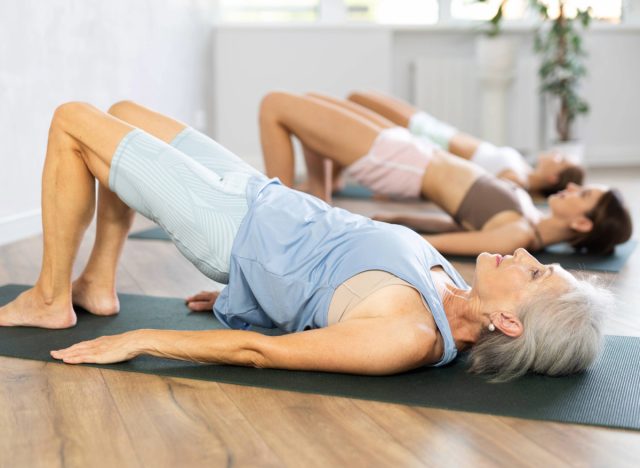
It is important to remember that fitness after 60 is not about competing with your younger self; it is about building a body that is capable of supporting your desired lifestyle. Whether that means playing with grandchildren, traveling, or simply maintaining independence in your own home, the glute bridge provides the muscular foundation necessary to make those activities possible.
Conclusion
The glute bridge is more than an exercise; it is a diagnostic mirror. It reveals exactly where your weaknesses lie and offers a direct pathway to resolving them. By dedicating just a few minutes a day to this simple movement, you are investing in your long-term mobility, protecting your lower back, and ensuring that your core remains a source of strength rather than a point of failure.
If you are over 60, take the test today. Note your time, maintain your form, and use the result as your starting line. With consistency, the 60-second bridge is not just a distant goal—it is a standard of health that is well within your reach.
Disclaimer: Before beginning any new exercise regimen, particularly if you have pre-existing back conditions or chronic pain, consult with a physician or a certified physical therapist. Always prioritize form over duration to prevent injury.
