

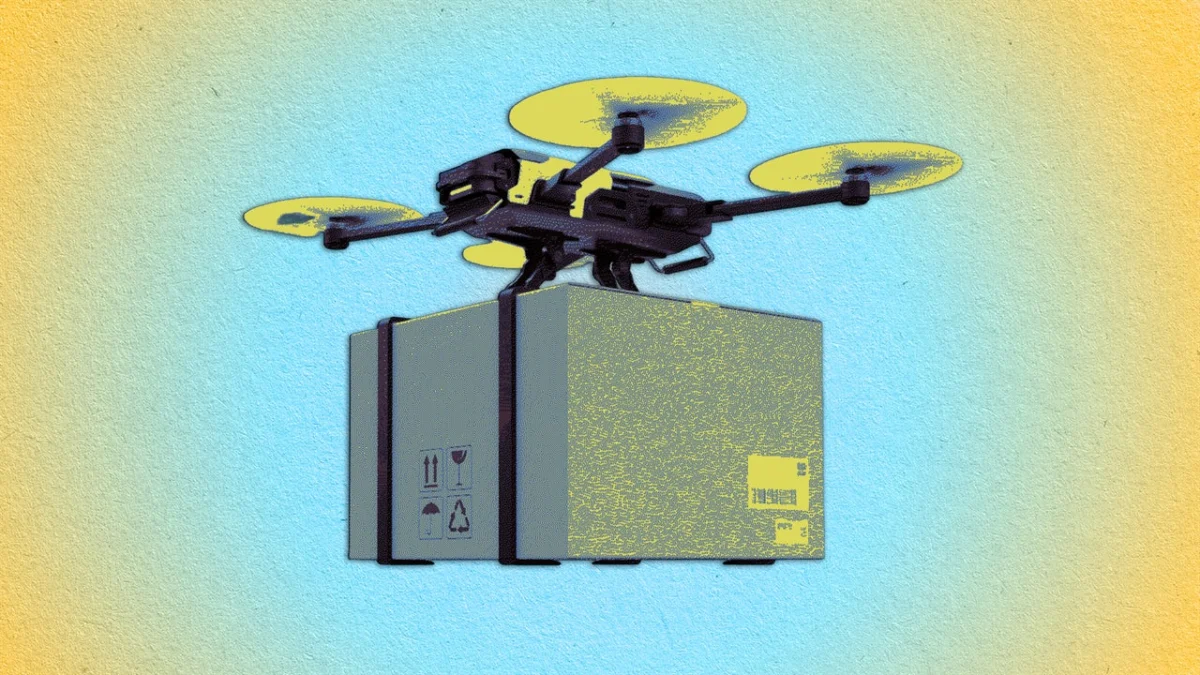
For over a decade, the narrative surrounding drone delivery was one of technological maturation and bureaucratic hurdles. Industry titans and startups alike were locked in a singular mission: convincing the Federal Aviation Administration (FAA) that autonomous delivery was safe, scalable, and inevitable. The industry’s “holy grail” was the ability to fly Beyond Visual Line of Sight (BVLOS) and the permission for a single pilot to supervise a swarm of multiple aircraft. For years, the prevailing sentiment in Silicon Valley and the logistics sector was that once Washington gave the green light, the drone economy would skyrocket, revolutionizing the last-mile delivery landscape.
Today, that “green light” is finally appearing on the horizon. However, as the technology moves from controlled test environments into the complex, noisy reality of suburban neighborhoods, the industry is discovering a sobering truth: regulatory approval is only half the battle. The path to a profitable, widespread drone network is being obstructed by a far more unpredictable force—the human experience on the ground.
A Brief History: From Bezos’s Vision to Reality
When Jeff Bezos first unveiled Amazon’s “Prime Air” on 60 Minutes in 2013, the concept was met with a mixture of wonder and skepticism. It promised a future where a package could be dropped on a customer’s doorstep within 30 minutes of an online order.
- 2013–2018: The Era of R&D. Companies focused on hardware, grappling with battery density, sensor reliability, and flight stability. The focus was purely on Can it fly?
- 2019–2022: The Regulatory Sprint. The focus shifted to the FAA. Companies lobbied for Part 135 certifications and exemptions for BVLOS flights. During this period, testing became concentrated in select markets like College Station, Texas.
- 2023–2025: The Reality Check. As operations scaled, the "drone highway" phenomenon emerged. Residents began reporting constant noise pollution and privacy concerns, leading to the first significant pushback.
- 2026–Present: The Zoning Battleground. With the FAA leaning toward broad national approvals, the theater of conflict has moved from federal airspace to local land-use boards, where cities are using zoning laws to quietly ground the industry.
The Friction of Reality: Living Under a Drone Highway
In Richardson, Texas, a suburb of Dallas, the dream of automated efficiency has met the reality of suburban life. Residents, armed with DIY tracking technology, have logged more than 50 low-altitude flights on a single day. Cruising at roughly 170 feet, these drones are loud enough to penetrate the walls of homes, creating an ambient hum that residents have dubbed a “drone highway.”
This is not a localized grievance. In College Station, where Amazon spent years conducting its most intensive real-world trials, the friction between the company and the community reached a breaking point. While the FAA often dismissed complaints as outside its jurisdiction or technically compliant with existing rules, the reputational damage was done. Amazon eventually scaled back flights, switched to quieter hardware, and quietly let its local leases lapse.
This retreat is a "weak signal" that analysts are ignoring at their peril. The industry assumed that the primary barrier was the FAA. They failed to account for the "social license to operate." If a community views a service as a nuisance rather than a utility, no amount of federal preemption can protect the business model from political and social erosion.
The Economic Mirage: Is Drone Delivery Truly Efficient?
The business case for drones rests on a foundational assumption: that they are inherently cheaper than human-driven vehicles. However, discovery-driven planning—a management method used to test the viability of new business models—reveals significant cracks in this logic.
A 2023 report from McKinsey provided a sobering analysis of the unit economics of drone delivery. At the time, the cost per drone delivery hovered around $13.50. In comparison, a well-optimized delivery van, capable of dropping off 100 packages on a single route, operates at a fraction of that cost per unit.
The industry argues that as technology advances and one operator can oversee a fleet of 20 drones, the cost per delivery could drop to $1.50 or $2.00. While this makes drones competitive with vans, it creates a razor-thin margin for error. If the drone is forced to take a circuitous route to avoid noise-sensitive areas, or if it must return to a hub more frequently due to battery constraints, those margins vanish. There is no room for the “second-order effects” of public opposition in these financial models.
The Regulatory Tug-of-War: Airspace vs. Land Use
The legal landscape of drone delivery is a study in jurisdictional tension. Under federal law, the FAA has near-total control over the nation’s airspace. States and cities are explicitly prohibited from regulating flight paths or altitude. This has led many in the industry to believe they are untouchable once they secure federal permits.
However, a new legal strategy is emerging: the weaponization of local zoning laws. While a city cannot stop a drone from flying over a house, they can dictate where a drone takes off and lands. By restricting the placement of delivery hubs, charging stations, and landing pads through restrictive zoning, municipalities are effectively creating a "regulatory blockade."
For a battery-powered drone with a limited operational radius, a citywide ban on takeoff and landing sites is equivalent to a total ban on operations. As legal experts point out, this creates a paradoxical situation where the FAA governs the "highway," but local towns control the "on-ramps and off-ramps."
Implications for the Future of Last-Mile Logistics
What does this mean for the future of delivery? The industry is currently standing at a crossroads.
1. The Need for "Community-Centric" Design
Companies must stop viewing noise and privacy as "externalities" and start treating them as fundamental product features. Future success will depend on building drones that are near-silent and operating them in ways that minimize the frequency of flights over residential zones.
2. The Limits of Automation
The assumption that "removing the human" is the only way to lower costs may be flawed. The "human in the loop" (the delivery driver) provides a service that a drone cannot: flexibility, the ability to navigate complex drop-off points, and, crucially, a face to whom a resident can complain.
3. The Shift to Hybrid Models
We are likely to see a shift toward hybrid delivery models. Rather than drones replacing the delivery van, drones will likely serve as "last-hundred-yard" assistants. A van could carry a fleet of drones, parking in a centralized, commercial area where it can deploy them for short, unobtrusive bursts of activity, rather than turning suburban neighborhoods into permanent transit corridors.
Conclusion: The Path Forward
The drone industry has spent a decade winning the war for the air. They have successfully navigated the FAA’s complex maze of safety regulations and technical requirements. But in their rush to the finish line, they have overlooked the ground game.
The next decade of drone delivery will not be defined by the sophistication of flight software or the speed of the aircraft. It will be defined by urban planning, noise abatement technology, and the ability of corporations to convince their neighbors that they are welcome additions to the neighborhood. If they fail to secure this "social license," they may find that the FAA’s approval is a hollow victory—a permission slip to fly in a world that has already decided to shut the door.
As we look toward the potential of 500 U.S. cities adopting drone networks, the industry must pivot from a posture of "ask for forgiveness later" to one of "design for the community today." The sky is large, but the neighborhoods beneath them are crowded, and that is where the future of drone delivery will ultimately be decided.
