

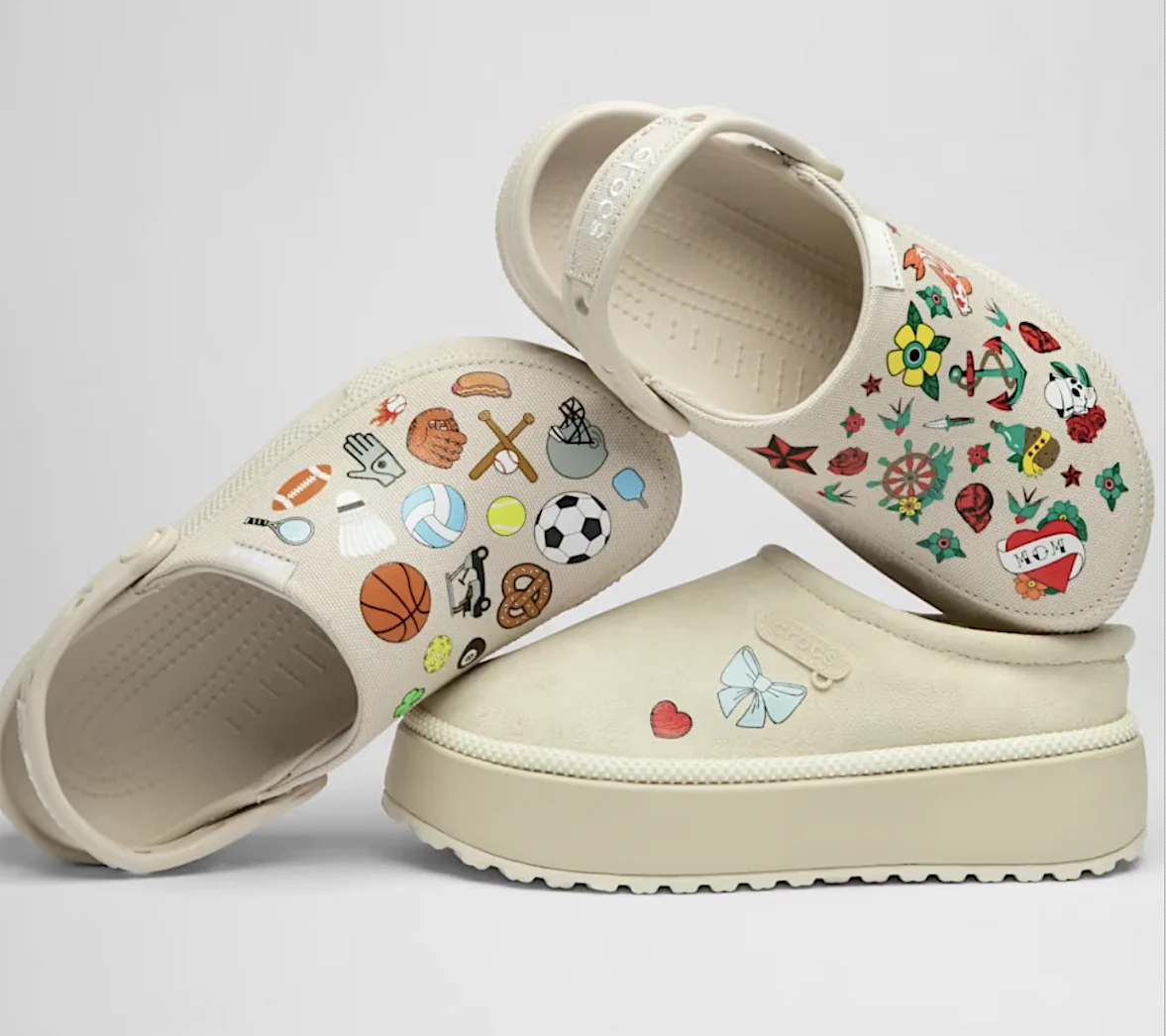
In the early 2000s, Crocs was a niche footwear brand known primarily for its polarizing aesthetic and utilitarian comfort. Today, the company is a global fashion powerhouse, and its most potent weapon isn’t just the foam clog itself—it is the ecosystem of personalization that surrounds it. As the brand eyes its 25th anniversary in 2027, it is pivoting away from simple child-focused charms toward a sophisticated, high-fashion strategy dubbed "shoelry."
By transforming the humble clog into a canvas for individual expression, Crocs has turned personalization from a side-hustle into a core business pillar that now accounts for nearly a tenth of its total revenue.
The Evolution of the Playbook: From Kids’ Charms to "Shoelry"
For years, the "Jibbitz" charm—the small, plastic icons that snap into the holes of a Croc—served as the primary vehicle for brand expression. Initially, these were largely geared toward children, featuring licensed characters from franchises like Disney. However, according to Crocs President Anne Mehlman, the brand is currently witnessing a dramatic shift toward "elevated personalization."
This new trend, which the company calls "shoelry" (shoe jewelry), is moving beyond the plastic charms of the past. Today’s consumers, ranging from Gen Z to older demographics, are increasingly accessorizing their footwear for parties, events, and daily wear. They are seeking out premium materials, including gold chains, metallic hearts, white pearls, and rainbow studs. This is no longer just about utility; it is about aesthetic curation.
"Personalization, when we first started out, was kids-focused," Mehlman explained. "It was more licensed, and now, that’s a big part of the business. But what we’re seeing from a trending perspective is really what we call ‘shoelry.’ It’s about those more elevated Jibbitz and exploring how you actually make your shoe very beautiful."
Chronology of a Customization Empire
The story of Crocs’ obsession with personalization is a multi-decade journey that has fundamentally changed the footwear industry:
- 2006: The Strategic Acquisition: Crocs officially entered the personalization game by acquiring Jibbitz LLC for $10 million in cash. At the time, it was a bold bet on a small company, but it provided the infrastructure for what would become a massive revenue stream.
- 2024: Revenue Milestones: The investment paid off in spectacular fashion. By 2024, Jibbitz sales surpassed $270 million, cementing their place as a vital engine of the company’s financial growth.
- 2025: The Retail Revolution: In July 2025, Crocs opened a flagship store in New York City that doubled down on the "local flavor" strategy. Featuring a fire escape motif and a "bodega" that sold high-end Jibbitz for up to $850, the store proved that personalization could be a destination experience.
- 2026: Record-Breaking Performance: In July 2026, Crocs, Inc. announced that the Crocs brand had crossed the $1 billion threshold in quarterly revenue for the first time in its history.
- Late 2026: The "Crocs by You" Experiment: In September, the brand launched its first dedicated personalization-only store, "Crocs by You," in Wuhan, China. This marked a shift from selling products to selling an immersive, creative service.
Supporting Data: The Economics of Personalization
The financial impact of this strategy is undeniable. Personalization is not merely a creative flourish; it is a retention tool that drives higher customer lifetime value (CLV). According to Mehlman, customers who engage with personalization features—whether through Jibbitz or new sandal charms—consistently exhibit a higher lifetime value than those who purchase standard, unadorned footwear.
Currently, Jibbitz sales represent approximately 8% of the company’s total revenue. This is a staggering figure for what began as an accessory line. The success has emboldened the brand to experiment with new mediums, such as "shoe tattoos"—temporary, press-on icons that can be applied anywhere on the shoe, not just in the designated ventilation holes. These are currently being tested in limited quantities online, with the brand monitoring consumer sentiment to determine if they should become a permanent fixture in the global product catalog.
The new sandal charm line, which clips onto the straps of the popular Miami sandal, has also seen explosive growth. Despite starting with a limited assortment, the charms "blew out" upon release, leading to stock shortages for popular designs like the pearl, the purple heart gem, and the pink flower.
Official Responses: "You Can’t Buy a Shoe Without Personalizing It"
The leadership team at Crocs views the future of retail as inherently collaborative. Lori Foglia, the brand’s Chief Product Officer, has emphasized that the goal is to make personalization an inextricable part of the shopping journey.
"It is putting personalization at the center," Foglia noted. The "Crocs by You" store in China is the ultimate realization of this philosophy. In this space, customers work with student stylists to treat their shoes, add custom Jibbitz, and create one-of-one pieces that cannot be replicated. By turning the retail store into a creative studio, Crocs is moving into the same territory occupied by brands like Nike (with its Nike By You platform) and Tecovas (with its in-store boot branding services).
This philosophy extends beyond the physical store into the digital realm. Feliz Papich, VP of digital technology, experience, and insights, describes the brand’s digital strategy as a mission to "remove friction."
"The No. 1 goal is giving customers exactly what they’re looking for, as fast as possible," Papich said. "We try to personalize our SMS, our emails, and even the content people see on social channels. It comes down to reducing how hard it is to find what you need."
Implications: The Road to 2027
As Crocs approaches its 25th birthday in 2027, the implications of this strategy are clear: the company is no longer just a footwear manufacturer; it is a platform for personal branding.
The Retail Shift
The success of the Wuhan "Crocs by You" concept serves as a laboratory for the brand. The company is actively analyzing the data from this location to decide how to scale the experiential model. Will we see "Crocs by You" studios in major hubs like London, Tokyo, or Los Angeles? The data suggests that if the brand can replicate the community-driven, stylist-led model, it could revolutionize the standard retail experience.
The Product Roadmap
The "massive hit" of the Miami sandal, coupled with the runaway success of new sandal charms, suggests that Crocs is successfully moving beyond the classic clog. By diversifying its footwear base and matching it with a modular accessory system, the brand is insulating itself against the volatility of fashion trends. If the classic clog falls out of favor, the infrastructure of the personalization ecosystem remains.
The Competitive Landscape
Crocs is currently setting a standard for "participatory retail." In an era where consumers are increasingly wary of mass-produced goods, the ability to "own" a product through customization creates a psychological bond between the consumer and the brand. By making the shoe a "blank canvas," Crocs has ensured that its products remain relevant regardless of the season or the prevailing fashion climate.
Ultimately, Crocs is betting that the future of footwear lies in the marriage of utility and individuality. Whether through an $850 gold-plated charm in a New York boutique or a temporary tattoo applied in a living room, the company is proving that when you give customers the tools to tell their own stories, they will keep coming back to buy the next chapter. As the 2027 milestone approaches, Crocs stands not just as a brand, but as a community of creators—one hole, one charm, and one tattoo at a time.
