

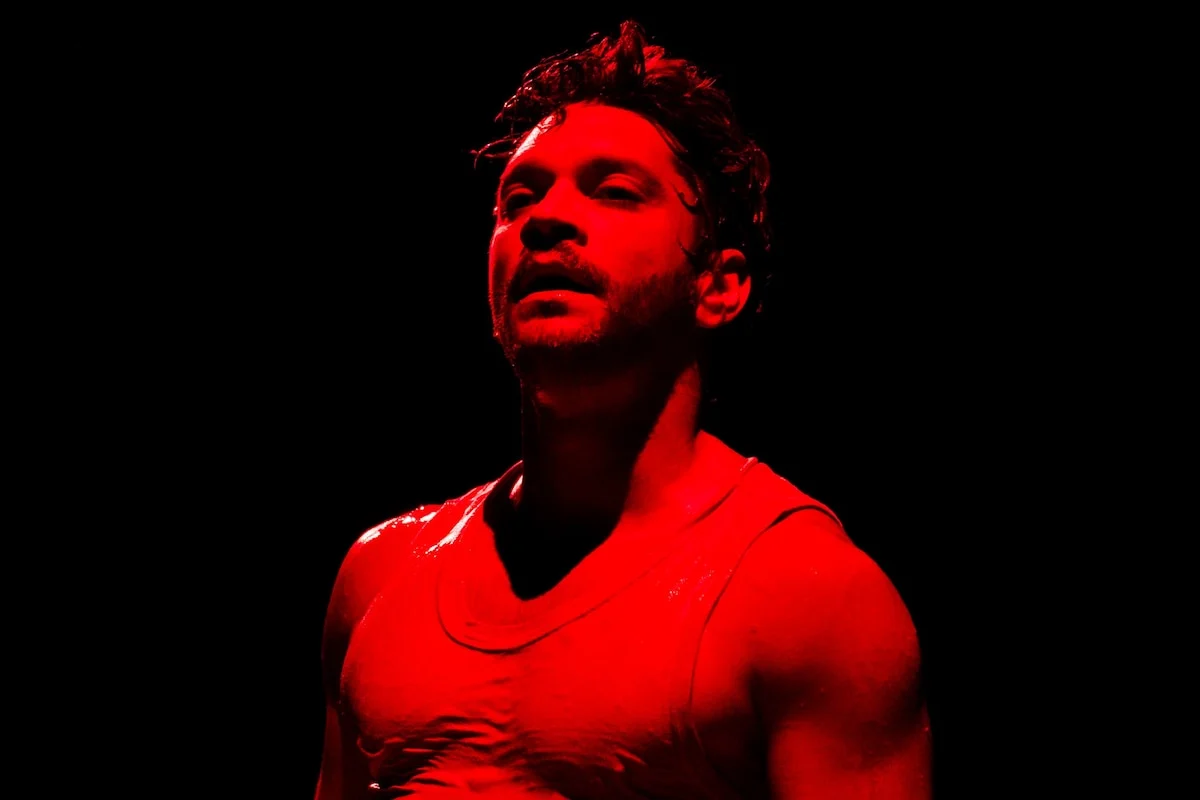
In the landscape of contemporary theatre, few productions have displayed the grit, perseverance, and profound cultural necessity of Tom na Fazenda. For over a decade, Brazilian actor and producer Armando Babaioff has been the singular force driving this visceral, emotionally charged adaptation of Michel Marc Bouchard’s seminal queer thriller. What began as a personal revelation for the actor has transformed into a global phenomenon, culminating this October in a highly anticipated run at London’s Barbican Theatre.
The journey of Tom na Fazenda—which translates from the Portuguese as Tom at the Farm—is not merely a story of artistic achievement; it is a testament to the power of theatre as a conduit for social change, a mirror for marginalized identities, and a defiant act of cultural endurance in the face of political adversity.
The Genesis: A Profound Personal Realization
The origins of this production are rooted in a moment of existential clarity. Michel Marc Bouchard, the Canadian playwright behind the original 2011 work, famously noted: "Homosexuals learn to lie before they learn to love." For Armando Babaioff, a seasoned performer in the Brazilian arts scene, encountering this text in the early 2010s was not just an aesthetic experience—it was an awakening.
Babaioff recalls that reading those words allowed him to "make sense of his existence." The play, which explores the dangerous intersections of grief, deception, and homophobia, follows Tom, a young man who travels from the city to the rural countryside to attend the funeral of his lover, Guillaume. Upon arrival, Tom is thrust into a harrowing psychological power struggle with Guillaume’s older brother, who is intent on keeping the truth of the deceased’s homosexuality hidden from their mourning, traditionalist mother.
The narrative—tense, claustrophobic, and deeply rooted in the trauma of suppressed identity—offered a stark parallel to the realities facing many in Brazil. Recognizing the potential for this story to resonate with his own country’s complex social fabric, Babaioff set out on a mission to adapt the play for a Brazilian audience.
A Chronology of Perseverance: The Three-and-a-Half-Year Battle
The path to the stage was far from linear. In the Brazilian theatrical ecosystem, securing funding for productions that grapple with overt queer themes—particularly in a political climate that grew increasingly hostile toward the LGBTQ+ community throughout the 2010s—proved to be a formidable obstacle.
- 2013: Babaioff reads the play for the first time and begins conceptualizing a Brazilian adaptation.
- 2014–2016: A period of persistent, often fruitless outreach. Despite the critical acclaim of Xavier Dolan’s film adaptation (which brought international attention to the story), potential sponsors and theatre boards in Brazil remained hesitant. The project was frequently dismissed as "too difficult" or "too risky."
- 2017: After three and a half years of relentless effort, the play finally premieres. Funding was precarious, with Babaioff investing a significant portion of his own personal savings to ensure the vision reached the stage.
- 2017–2026: Following its successful premiere, Tom na Fazenda becomes an unstoppable force. It tours extensively across Brazil and eventually transitions into an international production, amassing over 600 performances.
- October 2026: The production arrives at the Barbican in London, cementing its status as a vital piece of global queer theatre.
Artistic Vision: The Aesthetics of the Bare Stage
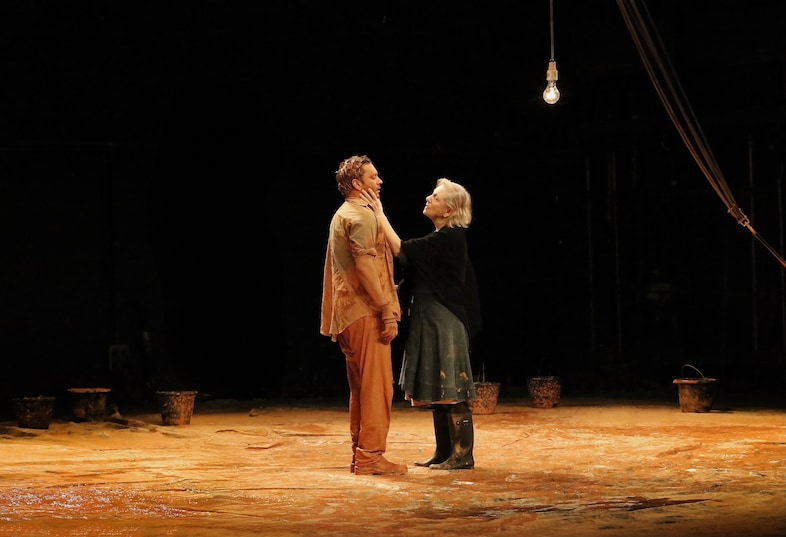
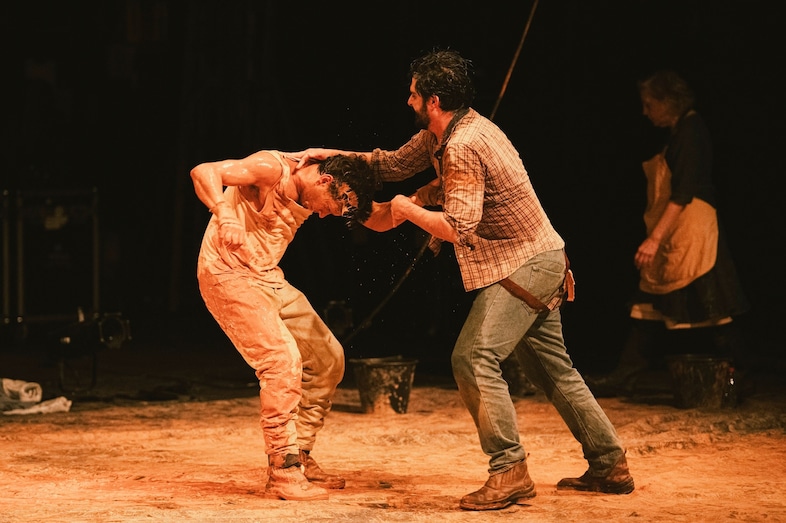
Renamed Tom na Fazenda, the production is a masterclass in minimalism and intensity. Babaioff’s creative team chose to abandon traditional set designs, opting instead for a bare stage covered in a tarpaulin caked in dried, authentic mud.
This decision was not merely budgetary; it was a deliberate choice to strip the narrative to its bone. Without the cushion of elaborate sets or even microphones, the actors are forced into a state of total vulnerability. The physicality required for the performance is immense—a demand that has led the cast to jokingly refer to the production as "CrossFit in the mud."
By relocating the setting from rural Quebec to the Brazilian countryside, the adaptation taps into a specific cultural vein. It transforms the original’s themes into a language that feels urgent and indigenous to the Brazilian experience, bridging the gap between a Canadian script and the lived realities of a country where violence against the LGBTQ+ community remains a pressing concern.
Supporting Data: Theatre as a Catalyst for Change
The impact of Tom na Fazenda extends far beyond the applause of a theatre audience. Statistics regarding the play’s reach are impressive, but its qualitative impact is even more telling. With over 600 performances, the production has reached diverse audiences, ranging from urban elites in São Paulo to residents in the northern, more isolated regions of the country, such as Belém.
The production has frequently acted as a catalyst for difficult, long-overdue conversations within families. One notable instance involved a performance in Belém, where Babaioff facilitated tickets for two local boys. The encounter resulted in a letter from the mother of one of the boys, who revealed that the play provided the vocabulary and courage she needed to finally speak to her son about her own queer identity.
This anecdote encapsulates the broader mission of the production. As Babaioff notes, "The theatres and the churches are the last places where humanity can see how other people live." In a nation where cinema has increasingly retreated into the commercial homogeneity of shopping malls, the municipal theatre remains a bastion of authentic human encounter.
Official Perspectives and the Wider Industry Implications
The success of Tom na Fazenda serves as a pointed critique of the institutional apathy toward challenging art. Babaioff’s struggle to secure institutional backing highlights a systemic issue within the Brazilian arts sector: the hesitation to support projects that challenge heteronormative narratives or address social violence directly.
"The world doesn’t know anything about us," Babaioff remarks regarding the perception of Brazilian theatre. "The world doesn’t know our theatre. The world doesn’t know what we did with Shakespeare. I think it’s a great opportunity to share with the people that Brazilian theatre is powerful. It’s full of our problems, full of our experience. It’s full of violence, full of pain, full of anger."
By taking the play on an international tour, Babaioff is not just promoting his production; he is asserting the legitimacy and power of the Brazilian dramatic tradition. He argues that art should be a direct reflection of a society’s scars and aspirations. The Barbican run is, therefore, a victory for the production’s international appeal and a strategic move to secure the play’s legacy on a global stage.
Implications: The Legacy of a Mission
As Tom na Fazenda prepares for its London premiere, the implications for the future of independent theatre are significant. The production proves that:
- Cultural Diplomacy Matters: Theatre has the unique capacity to export the lived experience of a nation, providing the international community with a nuanced understanding of Brazil that goes beyond headlines.
- Radical Minimalism is Effective: In an era of high-budget spectacles, there remains an insatiable hunger for raw, actor-led, and emotionally honest storytelling.
- The Persistence of the Individual: The project is a reminder that one dedicated individual, armed with a clear vision and an unwavering belief in their work, can alter the cultural landscape of an entire nation.
For Armando Babaioff, the work is far from finished. He continues to view the production as his "mission." When asked why he persists despite the physical and financial tolls of performing such a demanding piece for nearly a decade, his answer is simple: "By keeping this work alive, I am keeping myself alive."
The upcoming performances at the Barbican are more than just a series of shows; they are the culmination of a decade of defiance. They represent the moment when a story about the danger of lying becomes a testament to the power of speaking one’s truth, regardless of the mud, the resistance, or the years of struggle.
Tom at the Farm (Tom na Fazenda) opens on 13 October at the Barbican Theatre and runs until 17 October, 2026.
