

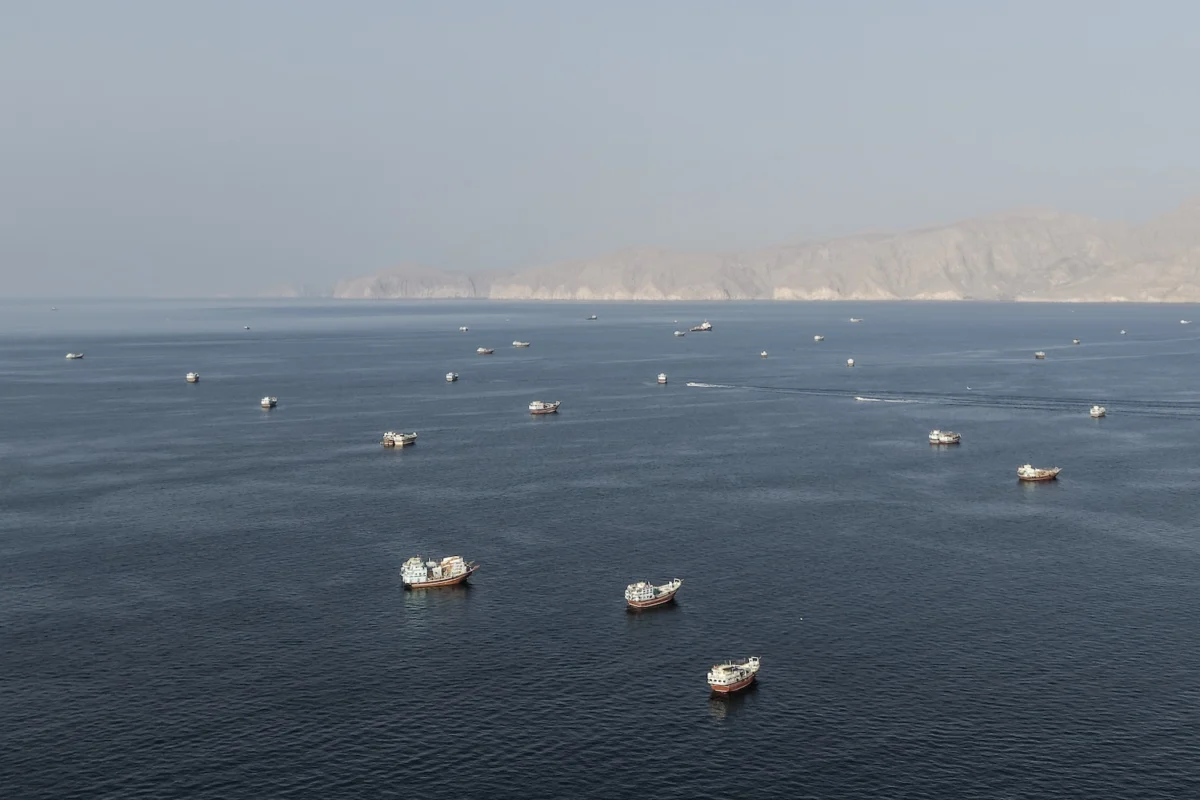
As the geopolitical landscape of the Middle East continues to shift, the global logistics sector is entering a period of uneasy stabilization. After months of extreme volatility triggered by the conflict in the region, the freight industry is beginning to see signs of a plateau. While the Strait of Hormuz remains a flashpoint of military posturing and maritime strikes, the underlying flow of global commodities—specifically oil—is proving more resilient than many analysts initially feared.
The State of Global Freight: A Market Reaching Its Ceiling
For shippers, the last several months have been defined by historic price surges. According to data released by the freight benchmarking platform Xeneta, container prices from China to the U.S. West and East Coasts have spiked by 344 percent and 335 percent, respectively, since late February. However, the period of unchecked escalation appears to be coming to an end.
Peter Sand, chief analyst at Xeneta, noted in a weekly update that the market has likely reached its "post-Hormuz crisis peak." While this provides some relief, it does not signal a return to normalcy. "Demand is not strong and rates have now peaked, but they will not collapse," Sand explained. "Shippers should expect to pay elevated freight costs for the remainder of the year."
The current reality is marked by a significant spread between U.S. coast-bound freight. Containers destined for the East Coast are currently averaging $11,523, while those heading to the West Coast hover around $8,346—a spread of $3,177. Before the crisis, that differential was a mere $772. As the market cools, Sand anticipates this gap will narrow, with projections suggesting East Coast rates may settle between $6,000 and $7,000, and West Coast rates between $4,500 and $5,500 over the next quarter.
Chronology of Crisis: From Volatility to Resilience
The disruption in the Strait of Hormuz has been a slow-burn crisis that redefined maritime security protocols. The conflict initially sent shockwaves through energy markets, causing insurers to hike premiums and shipping lines to reroute or pause transits entirely.
- Mid-2026 Surge: Initial conflict-related tensions saw vessel movements plummet from a pre-war norm of roughly 125 vessels per day to near-record lows.
- Late September/Early October 2026: Attacks intensified to their highest weekly level since the inception of the conflict. Between September 28 and October 5, at least 12 strikes hit oil, LNG, and LPG tankers.
- The October Escalation: On Sunday, October 5, two tankers—including an inbound LPG carrier—were struck. By Monday, the Islamic Revolutionary Guard Corps (IRGC) reportedly ordered a tanker near Oman to turn back. By Tuesday, a Panama-flagged tanker, the On Peace, was hit by an unknown projectile, resulting in 12 crew injuries.
Despite these headline-grabbing incidents, the "death" of the Strait has been greatly exaggerated. While direct transits through the chokepoint have fallen by about a third, the global energy market has adapted through sophisticated workarounds.
Supporting Data: The Oil Must Flow
The resilience of global energy supply is perhaps the most surprising aspect of the current conflict. Kpler, a leading commodity intelligence firm, reports that total Hormuz clearance now averages 11.5 million barrels per day (bpd), down from the pre-war baseline of 17.1 million bpd. However, when accounting for the massive shift in logistics—specifically the increased usage of terminals at the UAE’s Port of Fujairah and ship-to-ship transfers in the Gulf of Oman—the total regional export average reaches 21.7 million bpd.
This total is remarkably only 7 percent below the pre-war baseline. Effectively, the oil is moving; it is simply bypassing the traditional, high-risk chokepoints in favor of more secure, albeit more expensive, regional corridors.
However, the cost of this adaptation is high. The UAE’s National Association of Freight and Logistics reports that moving cargo into the Persian Gulf is currently three to five times more expensive than pre-war levels. These costs are not merely the result of base ocean rates, but the accumulation of war-risk surcharges, extensive rerouting, and complex land-transport logistics that show no signs of subsiding as of early October.
Official Responses: A War of Words
The geopolitical battle over the Strait of Hormuz is being fought as much in the media as it is on the high seas.
U.S. Secretary of State Marco Rubio, speaking in Athens, declared that Iran has "lost complete control" of the strait. "There’s almost as much oil flowing out now as there was before this conflict began," Rubio asserted, highlighting the effectiveness of alternative export routes that circumvent Iranian-influenced waters.
In stark contrast, Iranian officials maintain a narrative of total dominance. General Mohammad Reza Naqdi, an adviser to the IRGC, countered Rubio’s statement, claiming that the "Strait of Hormuz is closed, and the armed forces of the Islamic Republic of Iran have full control over it." Naqdi further threatened that "illegal routes" along the Omani coast would soon be targeted for closure, signaling continued friction in the region.
Meanwhile, diplomatic efforts remain fluid. U.S. Vice President JD Vance recently indicated a potential shift in American strategy, suggesting that Iran must make a "meaningful" reduction in uranium enrichment capacity. Analysts view this as a potential softening of Washington’s previous "all-or-nothing" demand that Tehran cease nuclear enrichment entirely, potentially opening a narrow window for de-escalation.
Implications for the Future: A New Logistical Reality
The implications of this ongoing tension for the global economy are profound. We are witnessing the permanent alteration of maritime trade routes. The reliance on the Strait of Hormuz is being structurally reduced, not just by military necessity, but by a strategic push toward regional infrastructure that provides greater autonomy from chokepoint threats.
For the shipping industry, the "new normal" involves higher baseline costs. The era of cheap, reliable, and uninterrupted transit through the Persian Gulf is, for the time being, over. Businesses must now bake higher insurance premiums, longer transit times, and complex multi-modal logistics into their long-term supply chain planning.
Furthermore, the influence of the IRGC on maritime traffic remains a persistent variable. With the U.S. Navy-led Joint Maritime Information Center reporting continued IRGC drone overflights and surveillance, the threat of escalation is ever-present. Even if total transit volumes remain stable, the potential for a "black swan" event—a major tanker sinking or a prolonged closure of the UAE’s bypass routes—remains the single biggest risk to global energy markets.
As the year draws to a close, Brent crude prices remain volatile, trading near $101 per barrel, supported by regional threats but capped by G7 stock releases and the market’s growing ability to absorb logistical shocks. The takeaway for global industry is clear: the conflict has not broken the global supply chain, but it has forced it into a more expensive, more complex, and perpetually vigilant state of operation. The plateau in freight rates may offer a moment to breathe, but it is a plateau built on the high-cost reality of a region in flux.
