

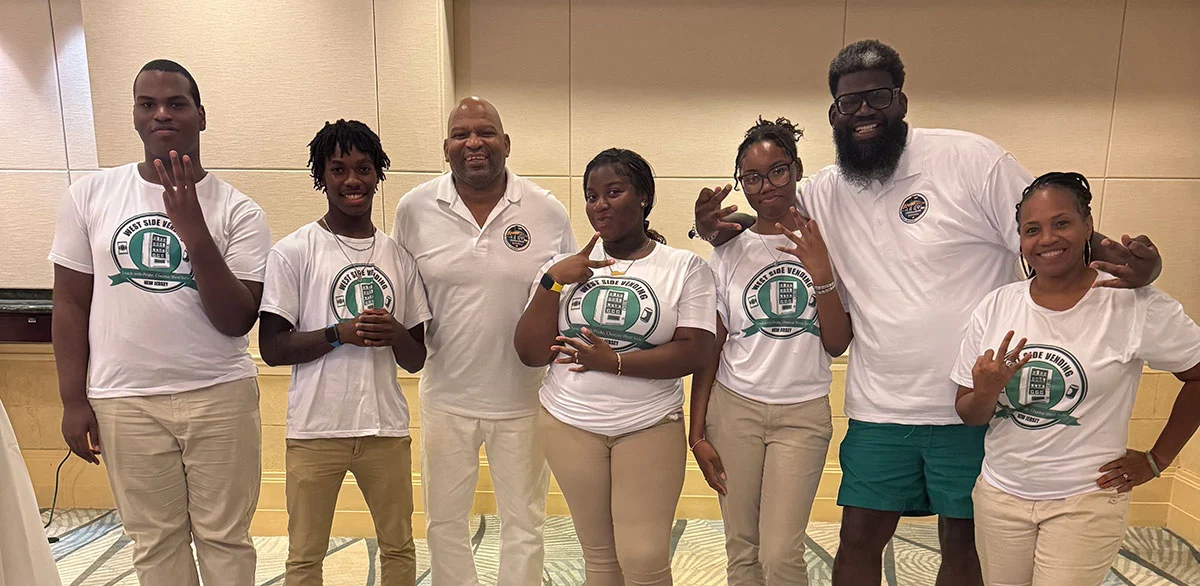
NEWARK, N.J. – In an era where the bridge between academic theory and real-world application is more critical than ever, four seniors from Newark’s West Side High School have proven that the classroom is merely the launchpad for high-stakes enterprise. Competing against the brightest young minds from across the United States, the team behind "West Side Vending" secured first place at the prestigious Young Entrepreneurz Solutions (YES) National Business Plan Challenge, reaffirming Newark’s position as a burgeoning hub for youth entrepreneurship.
The victory, achieved on September 26, marks the second consecutive year that a student team from the school’s Business and Finance Academy has claimed the national title, signaling a transformative shift in how Newark Public Schools are cultivating the next generation of business leaders.
The Main Facts: A Blueprint for Success
The winning team, comprised of seniors Hassan Reed, Kazmir Cray, Nia Jack, and Brailynn George, distinguished themselves through a sophisticated business model that addresses a practical need within their own school environment. West Side Vending is not a theoretical project; it is an active, student-run enterprise that facilitates the leasing of vending machines.
By managing the logistics, inventory, and financial oversight of their fleet, the students have created a tangible mechanism for applying principles of microeconomics, supply chain management, and customer relations. The YES National Business Plan Challenge, which serves as the culmination of months of rigorous planning, requires participants to deliver a comprehensive pitch that includes financial projections, marketing strategies, and operational scalability.
The panel of judges, comprised of industry experts and seasoned entrepreneurs, lauded the Newark team for their poise, the clarity of their financial data, and the scalability of a business model that could be replicated in schools nationwide. For the students, the win represents more than just a trophy; it validates their transition from students to business owners.
Chronology of the Challenge
The journey to the national podium was a process defined by discipline and strategic iteration. The YES competition, founded by entrepreneur and former Rutgers University adjunct professor Ernest Ruffin Jr., is designed to provide a scaffolded experience for students in grades 6 through 12, introducing them to the bedrock of economic development.
Phase 1: Preparation and Local Iteration
Throughout the 2023–2024 academic year, the West Side High School Business and Finance Academy provided the team with the necessary coursework to develop their business plan. Under the guidance of their educators, Reed, Cray, Jack, and George moved through the phases of business development: identifying a target market, calculating overhead, and establishing a sustainable profit margin.
Phase 2: The National Presentations
The final stage of the challenge took place over two days in late September. On September 25, the team presented their pitch, fielding grueling questions from judges regarding their market analysis and risk management strategies. The presentation required the team to articulate not only the "how" of their business but the "why"—explaining how West Side Vending serves the school community by providing accessible products while simultaneously teaching their peers about financial literacy.
Phase 3: The Awards Ceremony
On September 26, the judges convened to announce the winners. Following the announcement, the team was honored for their ability to synthesize complex economic theories into a coherent, actionable, and profitable business strategy.
Supporting Data: The Power of Specialized Education
The success of West Side Vending is not an isolated incident; it is the result of a deliberate, long-term investment by the Newark Public School district into specialized vocational and business-focused curricula.
The Business and Finance Academy at West Side High School has become a benchmark for success. The data speaks for itself: in 2023, a different team from the same school captured the national title with "Rider Heat Hot Sauce." That venture, which involved a strategic partnership with the Newark Beth Israel Farmers Market, saw students manage the entire lifecycle of a product—from sourcing ingredients to branding, marketing, and final sale.
These successes highlight several key performance indicators for the district:
- Retention of Skills: Students who participate in the YES program demonstrate higher engagement levels in core subjects like mathematics and English, as they see the immediate application of these skills in their business plans.
- Community Integration: By partnering with local entities like the Newark Beth Israel Farmers Market, the school has created an "entrepreneurial ecosystem" that allows students to test their ideas in the real market.
- Scalability of Success: The fact that the school has secured back-to-back national championships suggests that the institutional knowledge within the Business and Finance Academy is robust, effectively being passed down from graduating seniors to underclassmen.
Official Responses: A Vision for the Future
The victory has drawn praise from the highest levels of the Newark educational hierarchy, reflecting the district’s commitment to career-readiness.
Superintendent León highlighted the importance of the "theory-to-practice" pipeline. "Our students are learning how to turn ideas into opportunities through planning, teamwork, and the confidence to present their work on a national stage," León stated. "West Side Vending demonstrates the power of connecting classroom instruction with practical experience. We are proud of these students and the educators who are preparing them to become business leaders."
Board of Education President Hasani K. Council echoed these sentiments, emphasizing the character-building aspects of the competition. "These experiences help students see themselves as creators, problem-solvers, and leaders," Council noted. "We congratulate the West Side Vending team for representing Newark and putting their business knowledge into action."
Principal Akbar Cook, who has been instrumental in fostering the environment that allowed this team to flourish, focused on the long-term implications for the students. "Our students have taken ownership of West Side Vending, and this competition gave them an opportunity to share their work with a national audience," Cook said. "The experience of building a business and presenting it to others helps them develop skills they can carry into college, careers, and ventures of their own."
Implications: The Newark Model of Entrepreneurship
The continued success of Newark students on the national stage suggests that the city is refining a model of education that could be a blueprint for urban school districts across the country.
Bridging the Economic Divide
Entrepreneurship education serves as a powerful equalizer. By teaching students the mechanics of business ownership, the district is providing them with the tools to navigate and influence the economy rather than simply participating in it as employees. The focus on business planning forces students to engage with concepts such as capital allocation, risk assessment, and market competition—skills that are traditionally reserved for higher education.
Cultivating a Growth Mindset
The YES competition does more than teach business; it fosters a "growth mindset." In the world of business, failure is often the first step toward success. By forcing students to pitch, defend, and iterate their ideas, the school is training them to be resilient. Whether or not these specific students pursue vending or hot sauce sales as a lifelong career, the cognitive habits they have formed—critical thinking, public speaking, and strategic planning—are universally transferable.
Sustaining the Pipeline
The question now becomes how to sustain this momentum. With two consecutive wins, West Side High School has established a "dynasty" of sorts in the youth entrepreneurship space. The challenge for the administration will be to ensure that the resources and mentorship required to reach this level remain accessible to every student, not just those currently in the Academy.
Economic Impact on the Community
Beyond the school walls, these programs have a subtle but profound effect on the Newark community. As students engage with local businesses for partnerships, they begin to weave themselves into the local economic fabric. When students view their community as a place where they can launch a business, they are more likely to invest their talents in the city long-term.
Conclusion
As Hassan Reed, Kazmir Cray, Nia Jack, and Brailynn George prepare for life after graduation, they carry with them the distinction of being national champions. However, their greatest achievement is not the trophy sitting in the school display case—it is the evidence that they are equipped to navigate a complex, changing global economy.
West Side High School’s success is a testament to the fact that when students are given the right platform, mentorship, and encouragement, they do not just reach the bar—they redefine where the bar is set. As Newark continues to invest in its youth, the "Newark Model" of entrepreneurship is proving that the next generation of CEOs, founders, and innovators may very well be walking the halls of our public schools today.
