

Main Facts: The Strategic Pivot to Cultural Authenticity
In an era where digital saturation often leads to consumer fatigue, the cosmetics brand Eos is charting a different course. Led by Carley Caldas, Senior Vice President of Marketing and Creative, the brand has successfully transitioned from being a viral sensation of the early 2010s to a sophisticated, culturally-attuned powerhouse in the modern beauty landscape. The core of this strategy is a dual-pronged approach: a "scrappy," five-person social team that lives in the trenches of internet subcultures and a robust commitment to in-person activations that bridge the gap between digital content and physical community.
The brand’s current marketing philosophy hinges on the belief that authenticity cannot be manufactured in a boardroom; it must be discovered through rigorous social listening. Eos has moved beyond traditional influencer marketing—where brands pay for reach—toward a model of "organic discovery." By identifying creators who are already using their products, such as the Vanilla Cashmere body lotion, Eos builds partnerships on a foundation of genuine advocacy rather than transactional contracts.
Looking ahead to 2026, Eos has accelerated its experiential marketing calendar, with 12 major activations planned. These range from sponsorships at Historically Black Colleges and Universities (HBCUs), such as Howard University’s Spring Fling, to high-profile brand collaborations surrounding the Coachella Valley Music and Arts Festival. This shift represents a broader movement in the beauty industry: the realization that while the sale happens online or in-aisle, the "brand soul" is forged through shared physical experiences.
Chronology: The Evolution of the Eos Engagement Model
The trajectory of Eos’s marketing strategy can be traced through three distinct phases: the Post-Pandemic Pivot, the Era of Social Immersion, and the Future of Experiential Scale.
The Post-Pandemic Pivot (2021–2023)
Following the isolation of the COVID-19 pandemic, Eos identified a significant shift in consumer psychology. Data suggested that Gen Z and Millennial consumers were no longer satisfied with purely digital interactions; they were "craving in-person connections." During this period, Eos began testing smaller, niche activations to see if their online "hype" would translate into real-world attendance. The success of these early trials laid the groundwork for a more aggressive experiential budget.
The Era of Social Immersion (2023–2024)
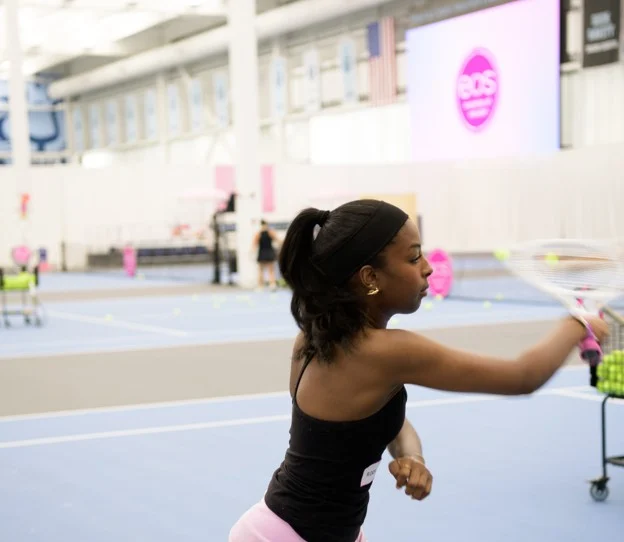
As the brand refined its voice, it empowered a five-person social team to become "chronically online." This period saw the brand move away from broad-stroke advertising toward hyper-niche communities on Reddit, TikTok, and Substack. By 2024, the brand had perfected the art of the "organic catch"—spotting influencer Ayan Broomfield using Eos products in the background of her content and turning that observation into a full-scale partnership during the U.S. Open.
The Future of Experiential Scale (2025–2026)
With a proven playbook in hand, Eos is now scaling its efforts. The 2026 roadmap, featuring 12 major events, indicates that in-person activations have graduated from a "test-and-learn" tactic to a "main marketing pillar." The brand is no longer just attending culture; it is attempting to co-create it through partnerships with diverse organizations and creators like Grant and Ash.
Supporting Data: The Metrics of a "Scrappy" Ecosystem
While Eos emphasizes the "feeling" of a community, the strategy is underpinned by a rigorous operational framework. The brand’s influencer and experiential ecosystem can be quantified through several key performance indicators (KPIs) and structural benchmarks:
- The Social Intelligence Unit: A lean team of five employees manages the entirety of the brand’s social listening. Unlike larger corporations that outsource this to agencies, Eos keeps this "scrappy" team in-house to ensure the brand voice remains authentic and responsive.
- Campaign Frequency: Eos maintains a high-velocity content engine, executing two to four distinct marketing campaigns every month.
- Creator Volume: For every campaign, the brand collaborates with a cohort of six to 15 creators. This provides a diverse range of perspectives and ensures the brand reaches multiple "algorithm pockets" simultaneously.
- The "Brand Besties" Inner Circle: At the top of their creator funnel is a dedicated group of 20 creators known as "Brand Besties." These are long-term partners who receive specialized treatment, including educational "fragrance trips."
- Educational Investment: Eos has invested heavily in creator education, taking subsets of their "Besties" to New York City to meet with fragrance houses and to Grasse, France—the global capital of perfumery—to deepen their technical knowledge of the products they endorse.
Official Responses: Insights from Carley Caldas
Carley Caldas, the architect of this strategy, maintains that the brand’s success is a direct result of its willingness to listen more than it speaks. In discussing the brand’s "chronically online" status, Caldas emphasizes that the team must mirror the behavior of the consumer.
"Our consumer is chronically online, so our team is chronically online," Caldas stated. "We spend a lot of time consuming the same content that our end consumers are, to find those organic moments that make sense for us to activate on."
This philosophy was put into practice with the "Bush on Main" event, a pre-Valentine’s Day activation that focused on pubic hair grooming—a topic traditionally considered taboo in corporate marketing. Caldas noted that the idea came directly from social listening, where creators like Grant and Ash were discussing body hair empowerment.
"We have a lot of amazing ideas, but if the idea isn’t connected to a truth from our consumer, it’s just a beautiful, wonderful, cool idea, we’re not going to do it," Caldas explained.
Regarding the ROI of these events, Caldas is refreshingly transparent about the limitations of traditional data. She argues that the value of an in-person event cannot always be captured in a spreadsheet. "The truth is, with most brand activations… there isn’t a calculation and a metric that you can have an actual ROI. You can’t get a ROAS [Return on Ad Spend]," she said. Instead, Eos looks at "softer" metrics: social sentiment, the tone of DMs, and the depth of conversation in the comments section.
Implications: The Death of Top-Down Marketing
The Eos model provides a blueprint for the future of the beauty and consumer packaged goods (CPG) industries. There are several profound implications for how brands will operate in the coming years:
1. The Decentralization of Brand Authority
Eos has demonstrated that a brand is no longer what the company says it is; it is what the community says it is. By scouring Reddit and Substack, Eos is essentially allowing the consumer to write the marketing brief. This shift from "top-down" messaging to "bottom-up" listening reduces the risk of tone-deaf campaigns and ensures that every activation has a built-in audience.
2. The Rise of the "Micro-Experiential"
While massive sponsorships like Coachella remain important, the success of the Ayan Broomfield tennis clinic—which hosted only 100 women of color—suggests that intimacy is the new scale. Smaller, highly targeted events create a level of brand loyalty that a million-impression digital ad cannot match. These events provide the "social proof" that fuels digital content for weeks after the physical event has ended.
3. The Creator as a Consultant, Not a Billboard
By taking creators to Grasse, France, Eos is moving away from the "pay-to-post" model. They are treating creators as professional consultants and brand ambassadors who need to understand the chemistry of fragrance. This investment in creator education suggests that the next phase of influencer marketing will be defined by expertise and authority rather than just follower counts.
4. Sentiment as the New Currency
As privacy regulations and algorithm changes make traditional digital tracking more difficult, Eos’s focus on "social sentiment" and "positive conversation" may become the industry standard. Brands that prioritize how a consumer feels about an activation over how many times they clicked on it are likely to build more resilient brand equity in the long run.
5. Cultural Agility as a Competitive Advantage
Eos’s ability to pivot from a tennis clinic in New York to a "Bush on Main" party in a matter of months highlights the importance of cultural agility. In a fast-moving social media environment, the brands that win will be those with "scrappy" teams empowered to make decisions based on real-time cultural shifts rather than rigid annual plans.
In conclusion, Eos is proving that even in a high-tech, AI-driven world, the most effective marketing tool remains a human one: the ability to listen, show up in person, and engage in an honest conversation. As they head toward 2026, the cosmetics brand is not just selling lotion and shave cream; they are selling a sense of belonging to a community that is seen, heard, and celebrated.
