

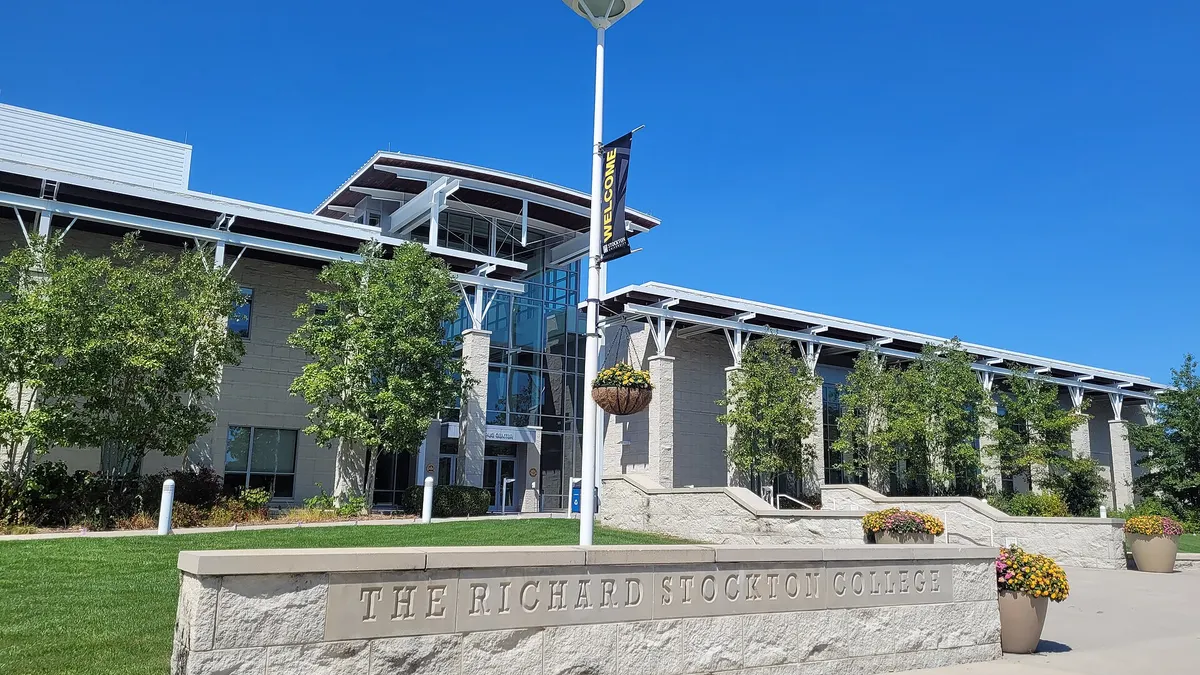
GALLOWAY TOWNSHIP, N.J. — Stockton University, a prominent public institution in New Jersey, has announced a series of difficult workforce reductions, marking a sobering turning point for the university as it grapples with a persistent $20 million structural deficit and a marked decline in student enrollment.
The decision, which includes the layoff of 14 faculty members and 7 staff members, represents a significant escalation in the university’s attempts to recalibrate its financial trajectory. President Joe Bertolino has characterized the measures as “difficult but necessary,” emphasizing that the university must streamline operations to ensure long-term viability in an increasingly hostile higher education landscape.
The Anatomy of the Crisis
The financial instability currently plaguing Stockton is not a sudden occurrence but rather the culmination of several years of mounting pressures. According to data presented by university leadership during a board meeting in May, the institution is currently contending with a structural deficit exceeding $20 million.
This financial shortfall is largely driven by a contraction in the student body. Institutional data indicates that Stockton’s headcount has dipped to 8,101 students as of this fall. This represents a 10.8% decrease from 2022 figures and a 6.1% decline compared to the previous academic year. In an era where enrollment is the primary lifeblood of university budgets, this sustained downward trend has left the administration with limited options.
Before authorizing involuntary layoffs, the university attempted to mitigate the deficit through less drastic measures, most notably a voluntary separation program. However, as the gap between revenue and operating costs remained, leadership concluded that a more targeted reduction in the workforce was unavoidable.
Chronology of Fiscal Deterioration
The path to this moment has been paved with warning signs that have become increasingly difficult to ignore.
- 2022–2023: The university began to observe a consistent erosion of its enrollment base, a trend mirrored by many mid-sized public institutions across the Northeast.
- May 2026: During a formal meeting of the Board of Trustees, President Bertolino publicly disclosed the $20 million structural deficit, signaling to the campus community that significant changes were on the horizon.
- July 2026: Fitch Ratings, a leading credit rating agency, officially revised Stockton’s credit outlook from “stable” to “negative.” While the university maintained its “A” rating, the shift in outlook served as a formal warning to investors and stakeholders that the university’s financial health was under duress.
- October 8, 2026: The university formally announced the layoff of 21 employees, a move that ignited immediate pushback from labor unions and faculty organizations.
Supporting Data and Market Realities
The financial outlook for Stockton is deeply intertwined with the demographic and economic realities of the Garden State. Fitch analysts have highlighted the "highly competitive" nature of the New Jersey higher education market, noting that institutions are fighting over a shrinking pool of college-aged residents.
Beyond the raw numbers of enrollment, the university faces a "triple threat": declining student interest, rising affordability barriers for families, and the administrative burden of maintaining a sprawling campus. Fitch’s report in July noted that while cost-cutting measures and the utilization of reserves may provide temporary relief, the long-term prognosis remains guarded. "Improvement could be slow and execution risk remains elevated," the analysts wrote, pointing to the inherent difficulty of turning around a public university’s fiscal ship.
Despite these struggles, Stockton maintains a reputation for strong student outcomes. Data cited by a coalition of unions—the Stockton Federation of Teachers (SFT), the Council of New Jersey State College Locals, and the American Federation of Teachers New Jersey—suggests that the university continues to outperform many peers in graduation rates. The coalition also highlighted the institution’s success in supporting low-income students, an achievement they argue is directly tied to the labor force now facing the chopping block.
Official Responses and Internal Friction
The tension between the administration and the workforce is palpable. The three-union coalition issued a firm statement following the layoff announcement, underscoring the vital role that faculty and staff play in maintaining the university’s academic prestige.

"These outcomes are driven by hardworking faculty and staff who work directly with students every day to ensure their success," the unions stated. They argue that by cutting the very people responsible for the university’s success, the administration risks damaging the quality of education that has historically kept students enrolled.
In response, the university administration reiterated its commitment to the long-term health of the institution. In an emailed statement, university officials expressed that the decision was reached with the heaviest of hearts.
"We do not make this decision lightly," the statement read. "Our students remain at the center of our decisions, and we will continue working to protect the core academic and student experience while preserving Stockton’s ability to serve students for generations to come."
Implications for the Future
The situation at Stockton serves as a microcosm for the broader challenges facing public higher education in the United States. As the “enrollment cliff” approaches and public funding remains stagnant or declines, institutions are increasingly forced to choose between raising tuition—further hindering affordability—or cutting services and personnel.
The Impact on Academic Quality
The loss of 14 faculty members raises immediate concerns about course availability, class sizes, and the breadth of academic programs. For a university that prides itself on student-centered instruction, the reduction of teaching staff inevitably places a strain on the remaining faculty, who may be asked to cover more ground with fewer resources.

The Reputation Risk
With a “negative” outlook from credit rating agencies, Stockton faces the risk of a potential downgrade. Such a move would increase the cost of borrowing for the university, making future capital projects or debt refinancing more expensive. This, in turn, could limit the university’s ability to invest in the campus facilities that are necessary to attract new students in a competitive market.
A Call for Strategic Transformation
Industry experts suggest that Stockton’s path forward will require more than just personnel cuts. The university will likely need to engage in a comprehensive strategic review to determine which programs are most viable and how it can differentiate itself in a crowded marketplace.
For now, the campus community remains in a state of uncertainty. As the fall semester progresses, the administration must balance the immediate need for fiscal austerity with the long-term necessity of maintaining morale and academic excellence. Whether these 21 layoffs will be the final step in a painful restructuring or merely the first of several, only time will tell.
For the students, faculty, and staff of Stockton University, the coming months will be a test of resilience. The institution is not merely trying to balance a ledger; it is trying to redefine its identity in a future where the traditional models of higher education are being fundamentally challenged. The outcome of this struggle will likely serve as a blueprint—or a cautionary tale—for other public universities facing similar pressures across the country.
