

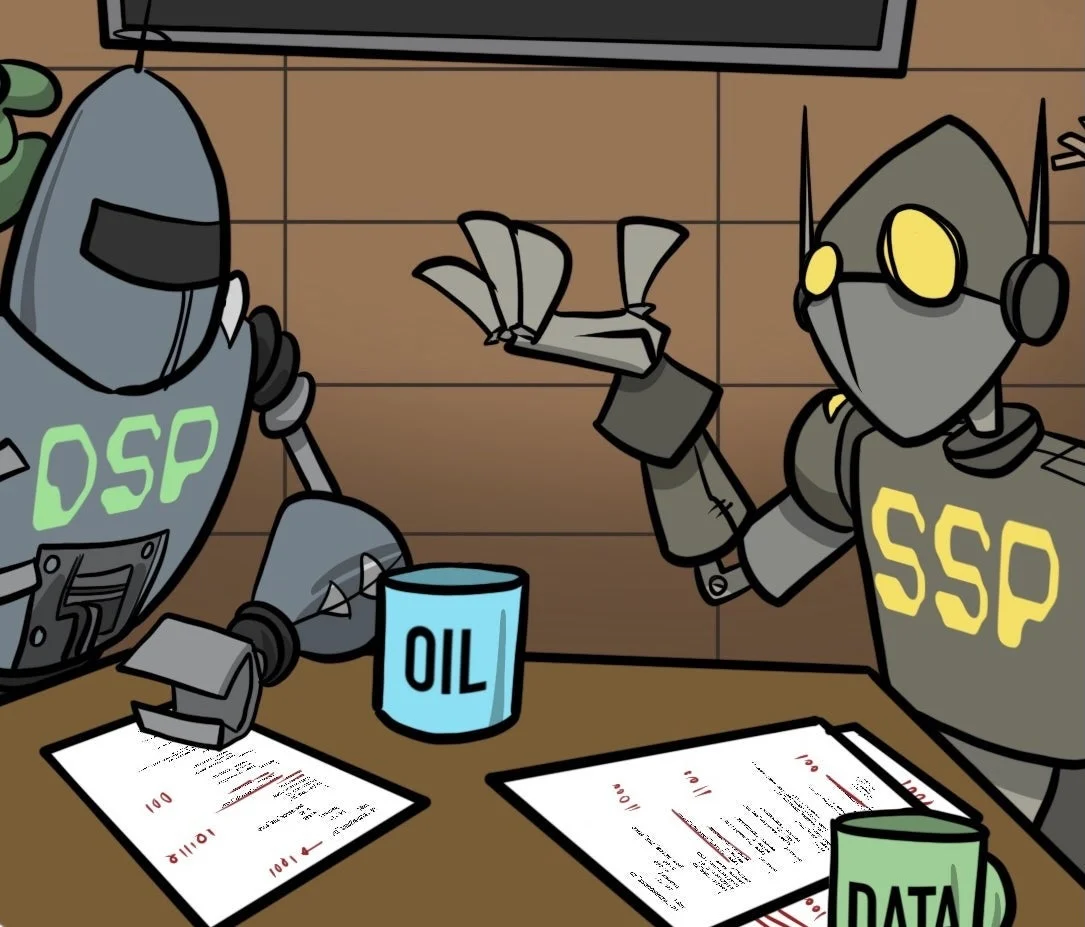
The advertising industry has long been a battleground of automation, from the early days of programmatic real-time bidding to the sophisticated machine-learning algorithms that power today’s demand-side platforms (DSPs). However, a new frontier is emerging that threatens to fundamentally reshape the role of the media buyer: Agentic AI.
While "agentic" has become a buzzword in Silicon Valley, its application in the high-stakes world of Connected TV (CTV) is only just beginning to move from theory to practice. In recent months, the integration of open-source standards like the Model Context Protocol (MCP) with specialized ad-buying platforms has enabled a new workflow where AI agents don’t just suggest actions—they execute them.
As agencies like InterMedia begin to pilot these technologies, the industry is witnessing a shift in the definition of expertise. The "button-pushers" of the programmatic era are being replaced by "judicious pilots" who oversee fleets of AI agents. This evolution marks a pivotal moment in the history of digital marketing, promising unprecedented efficiency while raising complex questions about transparency, ownership, and the future of human labor.
Main Facts: The New Architecture of Agentic Advertising
At its core, agentic ad buying involves the use of AI agents—autonomous or semi-autonomous software entities—to navigate the complexities of the media-buying ecosystem. Unlike traditional automation, which follows "if-then" rules, agentic AI can interpret natural language instructions, analyze multi-dimensional data sets, and interact with various software interfaces to achieve a goal.
The current breakthrough is driven by three primary technological pillars:
- Model Context Protocol (MCP): Introduced by Anthropic in late 2024, MCP is an open-source standard that allows AI models (like Claude) to connect seamlessly to external data sources and tools. It acts as a universal translator, allowing an AI agent to "understand" the functions of a third-party application without bespoke, manual coding for every integration.
- Specialized CTV Platforms: Companies like Vibe.co—recently acquired by Walmart—have built self-serve CTV buying platforms that cater to performance-based brands and small-to-medium businesses (SMBs). By integrating MCP, Vibe allows users to manage CTV campaigns directly through a conversational AI interface.
- Orchestration Layers: Startups like Olyzon are building the "connective tissue" between various advertising channels. Olyzon’s platform uses deterministic APIs to link CTV campaigns with other digital channels, such as display and digital out-of-home (DOOH), ensuring that the AI’s actions are consistent and repeatable across the entire marketing mix.
For agencies like InterMedia, these tools allow campaign managers to view reporting and order specific optimizations—such as shifting budget from underperforming publishers to high-growth inventory—all from within a single AI dashboard.
Chronology: From LLMs to Autonomous Buying
The road to agentic media buying has been remarkably short, characterized by rapid-fire technological releases and industry collaboration.
- Late 2024: The Birth of MCP. Anthropic releases the Model Context Protocol. This provides the foundational framework for AI agents to move beyond simple chat interfaces and start interacting with the "real world" of software applications.
- Early 2025: The Ad Context Protocol. Recognizing the need for industry-specific standards, a consortium of ad tech companies develops the Ad Context Protocol. Built on top of MCP, this protocol aims to standardize how AI agents interpret advertising-specific data, such as impressions, reach, and frequency.
- Mid-2025: Early Adoption and Integration. Vibe.co begins internal testing of a Claude integration. Simultaneously, InterMedia, an independent agency focused on performance CTV, begins looking for ways to streamline its cross-platform workflows.
- September 2025: Public Launch and Scaling. Vibe publicly announces its agent-access integrations. During Advertising Week New York, Olyzon officially launches its agentic orchestration platform. At this stage, over 1,000 brands have already begun using MCP-enabled buying on Vibe’s platform.
- Present Day: Agentic buying moves from a "test-and-learn" phase to a primary workflow for early adopters. Agencies report that the majority of their biddable campaigns are now managed with the assistance of agentic tools.
Supporting Data: Efficiency and the SMB Surge
The data emerging from these early implementations suggests that agentic AI is not just a luxury for large holding companies; it is a necessity for the "long tail" of advertisers.
The SMB Advantage
According to Arthur Querou, Co-Founder and CEO of Vibe.co, the adoption of MCP-enabled buying has been particularly strong among small and medium-sized businesses. These organizations often lack the massive media-buying teams of Fortune 500 companies. For them, an AI agent acts as a "force multiplier." Querou notes that more than 1,000 brands are currently using the integration, and a significant portion of the total ad spend on the Vibe platform is now funneled through agent-assisted workflows.
Deterministic vs. Probabilistic Actions
A critical distinction in the supporting data is the use of APIs versus MCP. While MCP is excellent for "understanding" and conversational analysis, Olyzon CEO Jules Minvielle emphasizes that for the actual execution of trades and reporting of financial data, deterministic APIs are superior. APIs return consistent, repeatable results, which is vital for maintaining the integrity of ad spend. The "agent-to-API" workflow ensures that when a manager asks for a $5,000 budget shift, the system executes exactly that amount without the "hallucinations" sometimes associated with generative AI.
Performance Gains
InterMedia reports that the primary benefit is not necessarily "better" buying in terms of raw CPMs, but a massive increase in "brain power" availability. By automating the manual tasks of navigating multiple DSP dashboards and standardizing terminology, campaign managers can spend 40-50% more time on high-level strategy and client-driven creative thinking.
Official Responses: Voices from the Front Lines
The transition to agentic AI has sparked a variety of reactions from agency leaders and tech founders, highlighting both the optimism and the caution surrounding the technology.
David Nyurenberg, SVP of Digital at InterMedia:
Nyurenberg believes the role of the media buyer is undergoing a fundamental evolution. "Instead of being an expert in how to navigate a platform and push the buttons and knowing where to go, you’re an expert in being judicious about what changes to make," he stated. He predicts that the "agency of the future" must be a hybrid entity: part marketing expert, part AI-orchestration specialist.
Sydney Brower, Director of Digital Media and Strategy at InterMedia:
Brower offers a more pragmatic view on the safety of these systems, using an aviation analogy. "You can trust AI to fly a plane, but I still want a pilot in the cockpit to watch it," she said. She emphasizes that while the AI can generate reports and suggest actions, she still manually verifies changes within the DSP dashboards to ensure no errors occurred during the hand-off between systems.
Arthur Querou, CEO of Vibe.co:
Querou views the integration of AI agents as an organic progression of how his own employees work. He noted that after seeing his team use ChatGPT and Claude to manage other marketing channels, it became clear that providing an "agentic door" into Vibe was the next logical step for the platform’s growth, especially following the Walmart acquisition.
Jules Minvielle, CEO of Olyzon:
Minvielle is perhaps the most bullish on the timeline of adoption. Drawing parallels to the rise of DSPs 15 years ago, he stated, "My conviction here is that, in 18 months, every single media buyer in the world will be equipped with a platform like ours."
Implications: The Future of the Industry
The shift toward agentic AI in CTV buying carries profound implications for the structure of the advertising industry, the nature of labor, and the ethics of data ownership.
1. The Disappearance of the "Button-Pusher"
For decades, entry-level agency roles were defined by manual data entry and campaign setup. Agentic AI effectively eliminates these tasks. While this increases efficiency, it also removes the traditional "training ground" for young media buyers. Agencies will need to find new ways to train the next generation of strategists who may never have manually set up a campaign in a DSP.
2. The Ownership Dilemma
A burgeoning question in the industry is: Who owns the agent? When an agency uses Claude to access Vibe’s data, does the agent belong to the agency, the platform (Vibe), or the AI provider (Anthropic)? This ambiguity mirrors the "digital licensing" issues seen in consumer media. If a platform revokes access to an MCP integration, the agency may lose the "trained" workflows and custom logic they have built into their agentic processes.
3. Standardization and "Manual Troubleshooting"
Despite the promise of MCP, the industry remains fragmented. Different DSPs use different terminology for the same metrics (e.g., "reach" vs. "unique viewers"). Current agentic workflows still require significant human intervention to "standardize" data before the AI can make sense of it. The success of agentic AI will depend heavily on the widespread adoption of the Ad Context Protocol to ensure all parts of the tech stack speak the same language.
4. The Consolidation of Power
As Walmart’s acquisition of Vibe suggests, the infrastructure for agentic buying is becoming a valuable asset for retail giants. If agentic AI makes CTV buying as easy as a conversation, we may see a massive influx of SMB capital into the streaming space, potentially driving up inventory prices but also democratizing access to "premium" television audiences.
5. From Execution to Judiciousness
Ultimately, the value of a human media buyer is shifting from execution to judgment. In a world where an AI can execute a thousand trades in a second, the human’s role is to define the ethical boundaries, the brand safety parameters, and the long-term strategic vision that an AI—no matter how "agentic"—cannot yet replicate.
As the industry moves toward Jules Minvielle’s 18-month "total adoption" window, the race is on for agencies to integrate these tools or risk being left behind in an era where the speed of commerce is dictated by the speed of the agent.
