

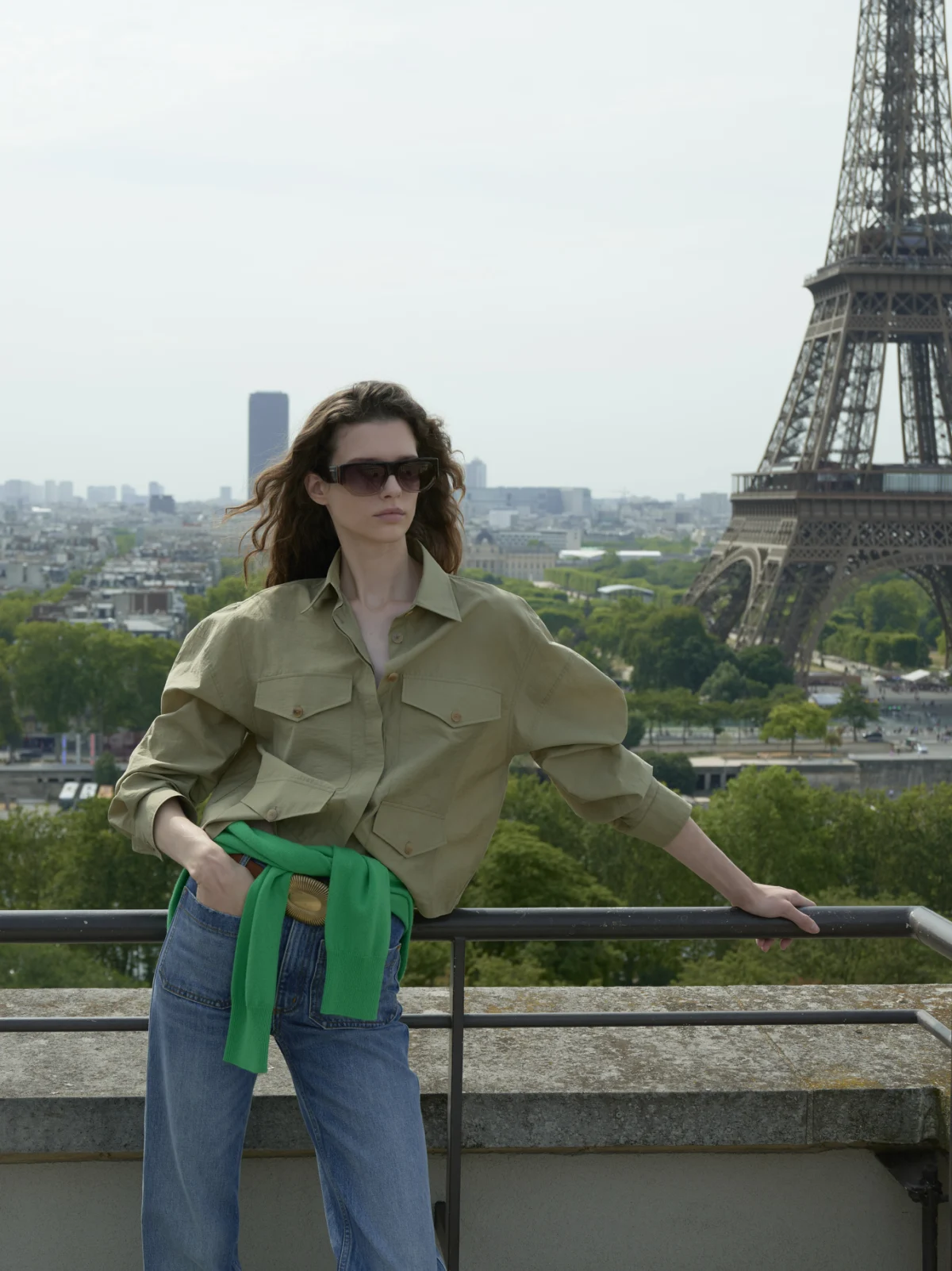
Across the historic arrondissements of Paris during the Spring/Summer 2027 fashion week, a distinct shift in the air was palpable—one that favored calculated risk over avant-garde experimentation. In an era defined by economic volatility and shifting consumer loyalties, the contemporary fashion segment is undergoing a significant recalibration. Rather than chasing fleeting trends, leading brands are leaning into familiar signatures, proven commercial formulas, and a robust expansion into high-margin accessories to fortify their positions in an increasingly challenging global market.
Main Facts: The "Safe Harbor" Strategy
The primary takeaway from the recent Parisian presentations is a collective move toward "commercial safety." As the middle-market—often referred to as "accessible luxury"—faces pressure from both the ultra-luxury houses and the rapid-response cycles of premium fast fashion, brands like Maje, Sandro, and Claudie Pierlot are refining their core identities.
The strategic focus for the season was twofold:

- The Dominance of Accessories: Brands are doubling down on leather goods and footwear. These items offer "accessible luxury" entry points for new customers while providing significantly higher profit margins compared to ready-to-wear.
- Cultural and Heritage Integration: To differentiate themselves in a crowded marketplace, brands are leveraging prestigious locations (such as the Musée Carnavalet and the Cité de l’Architecture) and artistic collaborations to elevate the perceived value of their collections.
While the garments themselves leaned toward wearability and "feminine energy"—characterized by soft textures and floral motifs—the presentations were designed as high-elevation experiences, signaling that the "contemporary" label is no longer just about price, but about a curated lifestyle.
Chronology: A Week of Refined Visions
The week unfolded as a series of strategic unveilings, each brand attempting to solve the puzzle of how to remain relevant without alienating their established customer base.
The Functional Evolution: Aigle by Setchu
The week began with a masterclass in functional innovation. Aigle, the historic French outdoor brand, continued its collaboration with Setchu designer Satoshi Kuwata. This season, Kuwata successfully bridged the gap between technical heritage and high-fashion whimsy. The standout piece—thigh-high rubber boots adorned with oversized bows—encapsulated the "Parisienne at the seaside" aesthetic. Kuwata’s approach is rooted in "charismatic carryover" garments, designed to outlast seasonal trends, a move that aligns with the growing consumer demand for longevity.

The Maturation of Claudie Pierlot
Following Aigle, Claudie Pierlot signaled a definitive end to its "girlish" era. Presenting in a new boutique concept designed to mimic a neoclassical summer house, the brand introduced a more "assertive femininity." The collection focused on structured silhouettes, pleating, and longer hemlines, moving away from the frills of previous years. This shift was mirrored by the introduction of a new flagship bag shape, reinforcing the brand’s pivot toward a more sophisticated, accessory-led business model.
The Nostalgia Trap: Iro
Mid-week, Iro offered a counterpoint to the trend of "elevated basics" with a collection heavily inspired by the late 1990s and early 2000s. However, the reception was mixed. While the brand expanded its successful "Club Night" accessory range, the ready-to-wear—featuring mesh, tie-dye, and "underboob" silhouettes—was critiqued for leaning into a "dated idea of party dressing." It served as a reminder of the risks brands face when nostalgia is not balanced with modern refinement.
The Cinematic Grace of Longchamp
Toward the end of the week, Longchamp’s Sophie Delafontaine drew inspiration from the French New Wave. The presentation was a visual tribute to Parisian architecture, with a set mimicking the city’s iconic zinc rooftops. The collection balanced "polish and practicality," featuring peachy silks and layered "apron" skirts. The focus remained squarely on the brand’s bread and butter: the Roseau and Le Joli bags, which were presented in new, architecturally inspired profiles.

The Strategic Consistency of Loulou de Saison and SMCP Group
The final days saw Loulou de Saison and the SMCP powerhouses (Maje and Sandro) solidify the week’s themes. Chloe Harrouche of Loulou de Saison stayed within her "reliable formula" of draped dresses and cashmere, albeit with a trendy nod to "absinthe green." Meanwhile, Maje and Sandro used grand Parisian landmarks to frame their commercially sharp offerings, emphasizing traceable materials and new iterations of their best-selling "Hobo" and "Light Wave" lines.
Supporting Data: The Business of Accessible Luxury
The emphasis on accessories seen this week is backed by compelling economic logic. In the contemporary segment, leather goods can account for 30% to 50% of total revenue, despite taking up less floor space and requiring fewer seasonal markdowns than apparel.
- Margin Expansion: Accessories typically command gross margins 10% to 15% higher than ready-to-wear. By introducing "new sizes" and "expanded colorways" of existing icons (like Maje’s Miss Hobo or Sandro’s Light Wave sneaker), brands are maximizing the lifecycle of their R&D investments.
- Retail Footprint: The "boutique as an experience" trend is expanding. Claudie Pierlot’s new store concept is slated for a roll-out across Europe, while Loulou de Saison is expanding its physical presence in the U.S. (Bloomingdale’s) and regional France (Galeries Lafayette Bordeaux).
- Sustainability as a Standard: Maje’s use of Nativa traceable wool from Uruguay highlights a shift where sustainability is no longer a "premium add-on" but a baseline requirement for the modern contemporary consumer.
Official Responses: From the C-Suite and the Atelier
The leaders of these houses were vocal about the intentionality behind their "safe" but "elevated" strategies.

Anne Cottin, CEO of Claudie Pierlot, emphasized the need for brand clarity: "We decided to be a little bit more focused on the brand vision… which is more assertive femininity." This indicates a strategic move to capture an older, more affluent demographic within the contemporary space.
Sophie Delafontaine, Artistic Director of Longchamp, highlighted the importance of versatility in the modern woman’s wardrobe: "The pieces can be a base in a wardrobe and then be remixed as you like." This philosophy of "modular luxury" is a direct response to the "Quiet Luxury" movement that has dominated recent fashion cycles.
Satoshi Kuwata of Setchu/Aigle spoke to the rigors of his design process, noting that he personally tested prototypes in the freezing conditions of Greenland: "I am working with restraint to create clothes full of shape and volume… ‘charismatic carryover’ garments, instead of one-season statement pieces."

Elina Kousouma, CEO of Maje, has been credited with sharpening the brand’s identity, steering it away from "Miami party girl" aesthetics toward an "upscale" French heritage look. This recalibration has resulted in Maje becoming the top performer within the SMCP stable.
Implications: The Future of the Contemporary Market
The Parisian presentations suggest that the "contemporary" market is no longer a monolith. Instead, it is bifurcating into two distinct paths:
1. The Heritage-Led Elevation
Brands that successfully link their commercial products to French cultural heritage (Maje, Longchamp, Sandro) are finding a "sweet spot." By hosting shows in museums and historical sites, they are successfully borrowing the prestige of the "Grand Maisons" (like Chanel or Dior) while maintaining a price point that remains within reach of the upper-middle-class consumer. This "prestige-by-association" strategy is likely to intensify.

2. The Functional-Luxe Hybrid
As seen with Aigle by Setchu, there is a significant opportunity for brands that can marry technical performance with high-fashion aesthetics. As consumers become more discerning about quality and utility, the "tested-in-Greenland" narrative becomes a powerful marketing tool that justifies higher price points in the technical sector.
The Accessory-First Model
The industry must prepare for a future where "Contemporary Fashion Week" is essentially "Contemporary Accessories Week." As brands look to stabilize sales numbers in a cooling global economy, the reliance on handbags and shoes as the primary drivers of growth will only increase. This may lead to a homogenization of apparel—as brands "play it safe" with clothing—while putting the creative burden entirely on the shoulders of the leather goods department.
Conclusion
Paris Fashion Week Spring/Summer 2027 revealed a contemporary sector that is maturing. The "play it safe" approach is not a sign of creative bankruptcy, but rather of strategic resilience. By focusing on high-margin accessories, assertive brand identities, and deep cultural storytelling, these labels are building a fortress against economic uncertainty. The message from Paris is clear: in a challenging market, the most "fashionable" thing a brand can do is provide a sense of stability, quality, and timeless French allure.
