

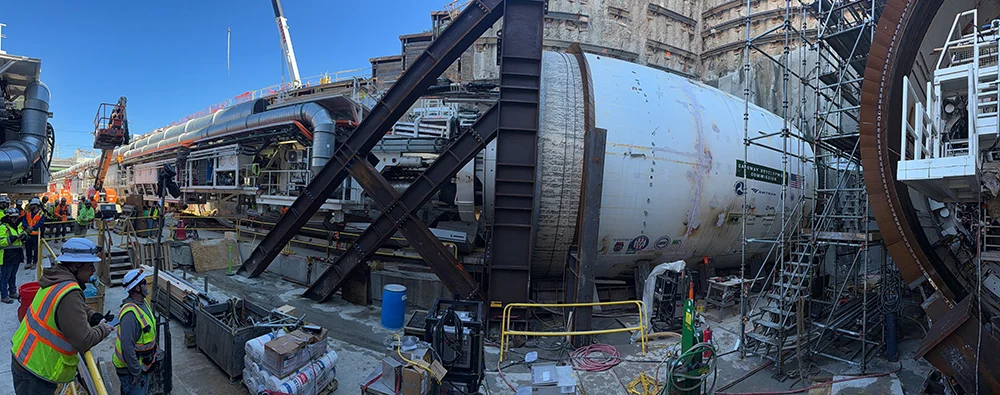
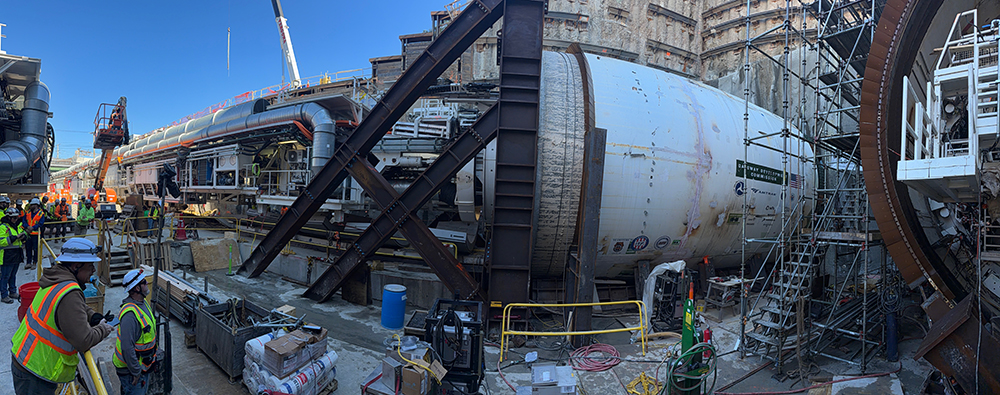
October 8, 2026 – A monumental milestone in critical infrastructure development was achieved today as the Gateway Development Commission (GDC) announced the commencement of tunnel boring operations for the Hudson Tunnel Project. The colossal Tunnel Boring Machine (TBM) has officially begun its arduous journey into the Palisades Cliffs, a pivotal step towards constructing the vital new rail tunnel beneath the Hudson River. This ambitious undertaking, long overdue, signifies a significant leap forward in modernizing the Northeast Corridor and alleviating chronic rail congestion.
The commencement of drilling marks the most substantial delivery milestone to date for the Hudson Tunnel Project, a sentiment echoed by GDC Chief Executive Officer Tom Prendergast. "When the first tunnel boring machine’s cutterhead bit into the rock face in the launch box, GDC reached the most significant Hudson Tunnel Project delivery milestone to date on schedule," Prendergast stated, underscoring the precision and dedication that have propelled this project forward.
The GDC confirmed that a second, identical TBM is slated for deployment in the coming weeks, a strategic move to ensure parallel progress and optimize the excavation timeline. These state-of-the-art machines are engineered for efficiency and precision, capable of boring approximately 30 feet of tunnel per day through the challenging geological formations.
A Glimpse into the Past, A Vision for the Future
The GDC’s announcement also served as a stark reminder of the historical context surrounding this endeavor. In a joint statement, the commission highlighted the profound significance of this development: "Before our tunnel boring machine started digging, it had been nearly 120 years since the last train tunnel under the Hudson River was excavated. We are far overdue for an upgrade, and the hundreds of thousands of riders who deal with the fallout from train delays know it." This sentiment resonates deeply with the daily commuters who endure the consequences of aging infrastructure, including frequent service disruptions and delays attributed to the deteriorating existing tunnels.
The current two-track Hudson River rail tunnel, a vital artery connecting New Jersey and New York, was constructed over a century ago and has suffered significant damage from Superstorm Sandy. Its continued operation under immense strain poses a substantial risk to the region’s economy and the daily lives of millions. The Hudson Tunnel Project, therefore, is not merely an infrastructure upgrade but a critical necessity for ensuring the reliability and capacity of one of the nation’s busiest transportation corridors.
The Unveiling of an Extraordinary Machine: Engineering Marvels at Work
The Tunnel Boring Machines deployed for this project are engineering marvels, specifically designed to tackle the complex geological challenges presented by the Palisades Cliffs and the varied conditions beneath the Hudson River. These TBMs are not your average excavators; they are sophisticated, self-contained underground factories.
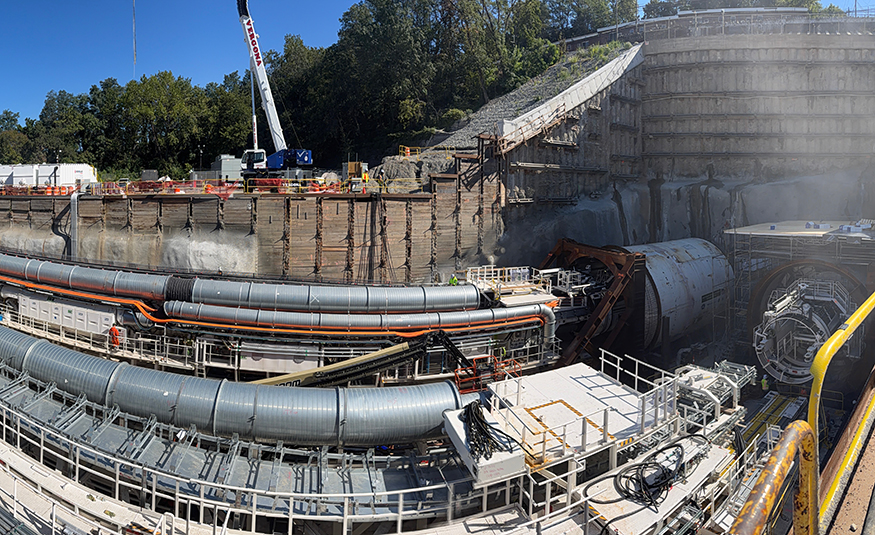
Each TBM boasts an impressive 28-foot, 8-inch-diameter cutterhead, a formidable front capable of grinding through hard, dry rock. This massive cutting head is the vanguard of the operation, initiating the tunnel’s creation. Following closely behind the cutterhead are trailing gantries, extending an astonishing 500 feet and weighing in excess of 1,680 tons. These intricate systems are responsible for a multitude of crucial functions that enable continuous and efficient tunneling.
As the cutterhead pulverizes rock, a sophisticated system of buckets collects the excavated material. This debris is then efficiently transported to the rear of the TBM via a conveyor belt system, a continuous flow of material that is then removed from the tunnel for disposal. Simultaneously, the TBM’s advanced erector arm meticulously places precast concrete segments. These segments are precisely assembled to form the permanent lining of the tunnel, ensuring structural integrity and longevity. The entire forward progress of the TBM is powered by hydraulic thrust jacks, which brace against the newly installed lining, providing the immense force needed to push the colossal machine forward.
Prendergast lauded the engineering prowess behind these machines, stating, "This is a major achievement that would not have been possible without the people who worked on making this ‘incredible machine.’" The successful fabrication and deployment of these TBMs are a testament to the collaborative efforts of engineers, manufacturers, and construction crews who have brought this complex vision to life.
A Phased Approach: From Rock to Riverbed
The initial phase of the TBM operation involves excavating approximately 30 feet of tunnel per day through the solid rock of the Palisades Cliffs. This initial segment is crucial for establishing a stable entry point. Once this milestone is achieved, the TBMs will undergo a critical phase of removal from this initial tunnel section. This strategic pause allows for the necessary preparations for the next stage of the project: transitioning to machines specifically designed to handle the mixed-ground conditions encountered as the tunnel progresses beneath the Hudson River.
This adaptability is key to the project’s success. The geological makeup beneath the riverbed is significantly different from the solid rock of the cliffs, presenting challenges such as varied soil densities, water ingress, and potentially unstable formations. The subsequent TBMs will be equipped with specialized systems to address these complexities, ensuring a safe and efficient bore through this challenging underwater environment.
The project aims to bore approximately 5,100 feet from the tunnel portal in North Bergen, New Jersey, to the Hudson County Access Shaft located on the border of Weehawken and Hoboken. This significant stretch of tunneling is anticipated to take approximately one year to complete, marking a crucial phase in the overall construction timeline.
The Economic and Social Imperative: Beyond the Steel and Concrete
The Hudson Tunnel Project is more than just a construction endeavor; it is an economic and social imperative for the entire Northeast region. The current reliance on the aging, damage-prone rail infrastructure creates a persistent bottleneck that stifles economic growth and directly impacts the daily lives of hundreds of thousands of commuters.
Delays and service disruptions on the Northeast Corridor have tangible economic consequences. Businesses lose productivity, workers face longer and more stressful commutes, and the overall efficiency of a critical economic artery is compromised. The Hudson Tunnel Project, once completed, will not only restore reliability but also increase capacity, allowing for more frequent and dependable train service. This will foster greater economic opportunity, enhance regional connectivity, and improve the quality of life for countless individuals.
The project’s timely execution is also a testament to the growing momentum behind the Gateway Program, an ambitious initiative aimed at transforming the region’s rail infrastructure. The successful deployment of the TBMs signals a tangible progression towards realizing the broader vision of a modernized, resilient, and high-capacity rail network.
A Collaborative Effort: Bridging Decades of Neglect
The journey to this point has been long and arduous, marked by years of planning, advocacy, and overcoming significant logistical and political hurdles. The Gateway Development Commission, a bi-state entity established to oversee this critical project, has played a pivotal role in bringing stakeholders together and driving the project forward.
The successful launch of the TBM is a direct result of the dedication and hard work of numerous individuals and organizations. From the engineers who designed these complex machines to the construction crews who meticulously prepared the launch site, the collective effort has been extraordinary. The GDC’s commitment to transparency and its proactive communication throughout the project have also been instrumental in garnering public support and maintaining momentum.
The Twitter announcement from the Gateway Program News account encapsulated the excitement and historical significance of the moment: "Tunnel boring has started! After years of preparation, our first tunnel boring machine is getting to work, carving through the Palisades to build the first mile of the new rail tunnel’s northern tube. A second machine will start building the southern tunnel tube soon." This concise update, accompanied by a link to further project details, underscores the project’s progress and its importance to the region.
As the TBMs delve deeper into the earth, they are not merely excavating rock and soil; they are carving a path towards a more connected, reliable, and prosperous future for the Northeast Corridor. The sound of the TBMs at work is the sound of progress, a tangible manifestation of overcoming past challenges and building for the generations to come. The Hudson Tunnel Project is a beacon of what can be achieved when vision, innovation, and unwavering commitment converge to address critical infrastructure needs.
