

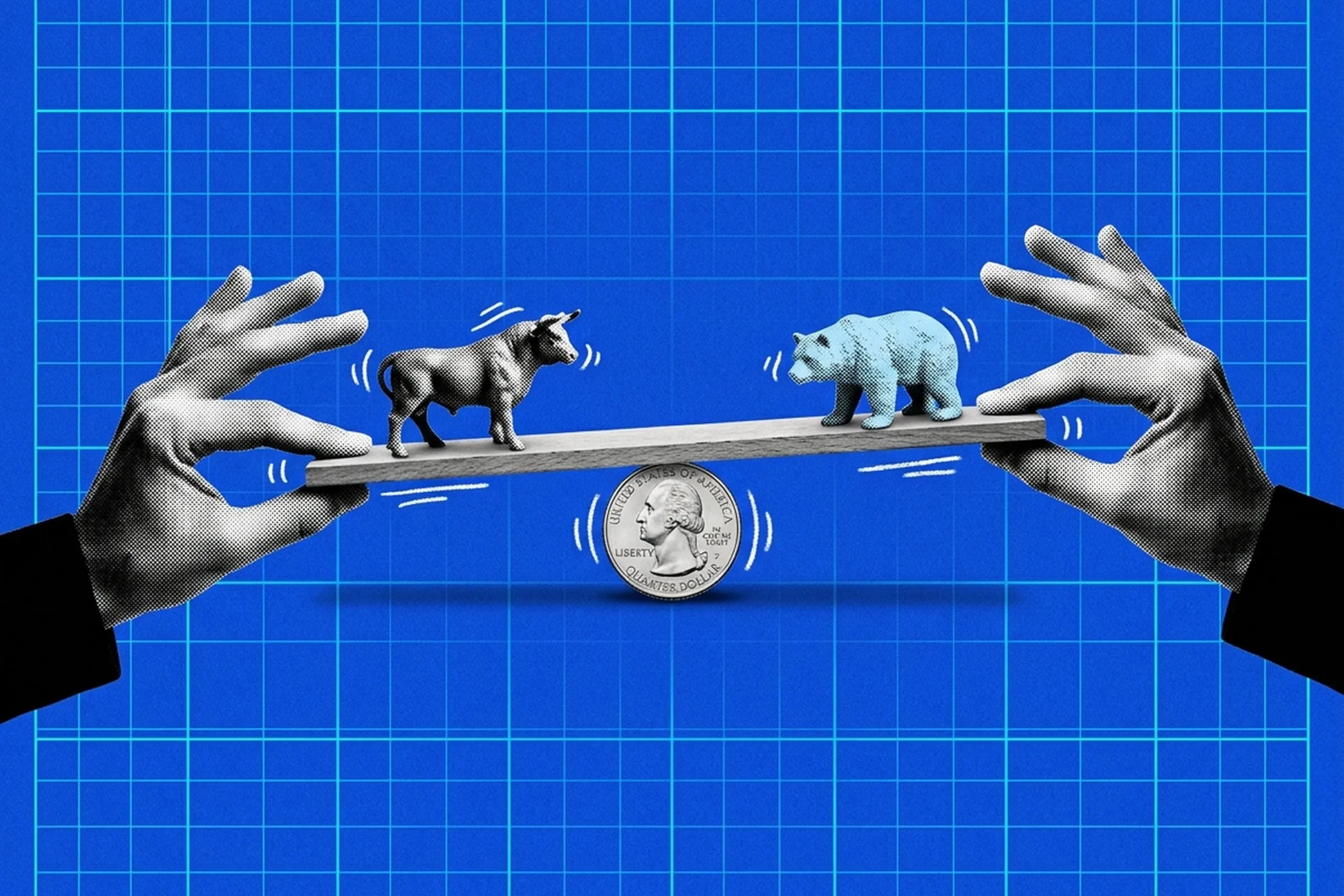
It was the best of times, it was the worst of times. While Charles Dickens penned those words to describe the turbulence of the French Revolution, they serve as a hauntingly accurate descriptor for the American economic landscape of 2026. For the average investor, the current environment feels like a high-stakes tightrope walk. On one hand, equity markets are scaling unprecedented peaks, padding 401(k) statements and fueling optimism among those heavily invested in the bull run. On the other, the foundational pillars of the household budget—gasoline, diesel, and interest rates—are creating a persistent "financial heartburn" that is eroding the buying power of the middle class.
As the U.S. national debt eclipses $40 trillion and questions surrounding the long-term ROI of the Artificial Intelligence (AI) boom intensify, Americans are trapped in a state of paralysis. A recent survey from the Allianz Center for the Future of Retirement suggests that nearly three in four Americans believe current market highs are unsustainable, while two in three have opted to freeze their financial decision-making, citing an economy that is simply too "unpredictable" to navigate.
The Main Facts: A Tale of Two Economies
The current economic dichotomy is rooted in a fundamental disconnect between Wall Street and Main Street. Wall Street, buoyed by the tech-heavy AI rally, continues to hit record highs. Yet, this "frothy" market performance masks deep-seated structural issues.
- The Debt Burden: With the national debt exceeding $40 trillion, borrowing costs have surged. This puts upward pressure on mortgage rates, credit card APRs, and business loans, effectively taxing the economy in ways that traditional monetary policy struggles to mitigate.
- The Diesel Dilemma: While retail gasoline prices have cooled from their 2026 spikes, diesel remains stubbornly high. Because diesel is the lifeblood of the logistics industry, its price creates an inflationary ripple effect that touches everything from grocery prices to shipping costs for consumer goods.
- The AI "Double-Edged Sword": Tech giants have funneled billions into AI infrastructure. While this spending has propped up GDP growth, institutional investors are increasingly wary. If these companies cannot demonstrate a clear path to recouping their massive capital expenditures, the resulting "AI correction" could trigger a wider market sell-off.
A Chronology of the 2026 Volatility
To understand how we arrived at this impasse, one must look at the progression of the last twelve months.
Early 2026: The Energy Shock
The year began with a significant spike in energy prices, driven by geopolitical tensions. These spikes acted as an immediate tax on American consumers, dampening discretionary spending and forcing households to dip into pandemic-era savings.
Mid-2026: The Debt Ceiling and Interest Rate Re-alignment
As the U.S. national debt crossed the $40 trillion threshold, bond markets began to price in higher risk. Interest rates remained higher for longer than anticipated, ending the era of "cheap money" and forcing companies to tighten their belts.
Late 2026: The "Unpredictability" Crisis
By the latter half of the year, the divergence between rising stock market indices and stagnant household purchasing power became impossible to ignore. This period marked the onset of "investor paralysis," where the retail sector, spooked by the CAPE (Cyclically Adjusted Price-to-Earnings) ratio reaching near-dot-com-bubble levels, began to retreat from active trading.
Supporting Data: Why Investors Are Rattled
The numbers paint a picture of a nation on edge. According to the Allianz Center for the Future of Retirement, the current climate of uncertainty is not just a passing mood—it is a measurable shift in consumer behavior.
- Sentiment Data: 75% of Americans now view market highs as unsustainable. This is not merely anecdotal; it reflects a growing awareness that asset prices have decoupled from underlying economic fundamentals.
- Valuation Metrics: The CAPE ratio, a classic valuation measure, is currently at its second-highest level in history, surpassed only by the pre-2000 tech crash. This historical context serves as a warning light for seasoned market observers.
- The "Frozen" Consumer: 65% of Americans report delaying major financial decisions. Whether it is buying a home, reallocating a retirement portfolio, or starting a business, the lack of a clear economic horizon has led to a widespread "wait and see" approach.
Official Perspectives: The Experts Weigh In
Kelly LaVigne, vice president of consumer insights at Allianz Life, characterizes this period as "financial whiplash."
"There’s all the bad news we’re getting on the amount it costs just to keep your standard of living. On the other hand, however, you’ve got the market continuing to hit all these records," LaVigne notes. "It’s these two almost opposite headlines."
Financial professionals, however, urge a shift from emotional reactions to strategic planning. Ron Johnson, a wealth planner at Baird, emphasizes that predicting the exact moment of a market correction is a fool’s errand. "It’s really, really hard to predict a correction. We know it’s coming, but we don’t know when," Johnson says. "And if you over-prepare, meaning move to cash, you could be out of the market during some really nice runs."
Strategic Implications: How to Protect Your Wealth
Despite the macroeconomic gloom, financial planners argue that the current volatility is not a signal to flee the markets, but rather a call to re-evaluate one’s strategy.
1. Avoid "Battening Down the Hatches" Too Early
Moving entirely into cash in anticipation of a crash is a common, yet often fatal, mistake for long-term investors. If you move to cash too early, you risk missing the "melt-up" phase that often precedes a correction. Timing the market consistently is statistically impossible for the vast majority of investors.
2. Diversification as a Hedge Against "Recency Bias"
While the "60/40" portfolio (60% stocks, 40% bonds) has been declared dead by many, experts like Johnson argue it provides essential "powder in the keg." By maintaining some exposure to fixed income, investors are better positioned to rebalance their portfolios—selling overvalued assets and buying undervalued ones—during a downturn.
3. Protecting Short-Term Liquidity
For those approaching retirement, the strategy must be more defensive. Thomas Martin, senior portfolio manager at Globalt Investments, suggests that retirees should keep three to five years of living expenses outside of the volatile equity markets. Utilizing instruments like laddered CDs or Treasury bonds—now offering more competitive yields than in the recent past—can provide a buffer against inflation without exposing one’s primary retirement nest egg to the whims of the market.
4. The Power of "Dollar-Cost Averaging"
For 401(k) participants, the advice remains steadfast: do not pause contributions. When the market dips, your payroll contributions effectively purchase more shares at a lower price. This mechanism of dollar-cost averaging is the single most effective tool for mitigating the impact of market volatility over a career-long investment horizon.
Conclusion: Human Performance vs. Market Performance
The final takeaway from the 2026 economic landscape is that the greatest threat to an investor’s portfolio is rarely the market itself—it is the investor.
"One of the reasons individual investors don’t do as well as the S&P is because of human behavior," LaVigne observes. "It’s not because of market performance, it’s because of human performance."
When we react out of fear, we often crystallize a temporary market drop into a permanent loss. By ignoring the noise, maintaining a disciplined contribution schedule, and ensuring that short-term financial needs are shielded from volatility, investors can survive the "worst of times" and remain in a position to capitalize on the recovery that inevitably follows.
Disclaimer: Money is not a client of any investment adviser featured on this page. The information provided on this page is for educational purposes only and is not intended as investment advice. Money does not offer advisory services. We research all brands listed and may earn a fee from our partners. Research and financial considerations may influence how brands are displayed. Not all brands are included.
