

Ask an AI chatbot a simple question, and its answer consumes roughly the electricity of a microwave running for a single second. It is a trivial expenditure of energy, one that fits neatly into the modern digital lifestyle. However, when you entrust that same AI with a complex, autonomous task—what industry insiders call an agent—the math shifts dramatically. These agents plan their own steps, scour the web, iterate through failures, and persist until the job is done. A single such task can consume as much power as running your laptop for six hours.
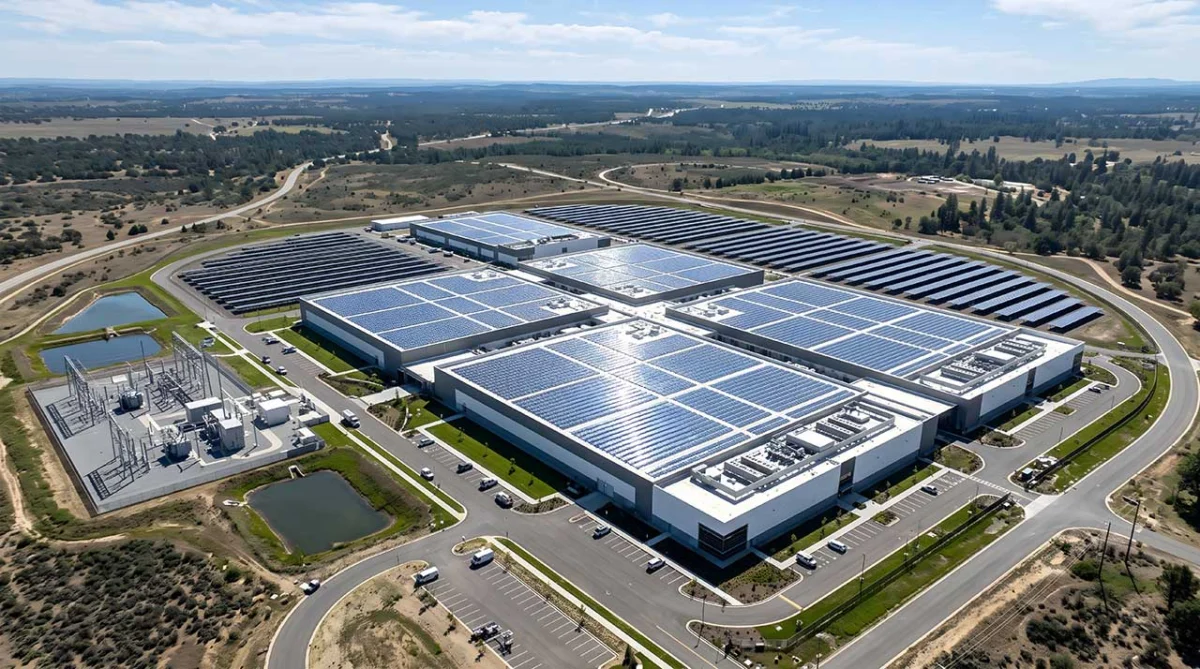
The technology is the same; the utility bill is not. This massive disparity has introduced a critical new variable into the environmental debate surrounding artificial intelligence. As AI technology prepares to transform global commerce, reshape labor markets, and dictate the flow of capital, it has also triggered a quiet but intense war over resources. This is not merely a debate about carbon footprints; it is a struggle over water rights, electrical grid stability, and the democratic process in communities where massive, power-hungry data centers are being built.
A Chronology of Calculation: How We Measure the Invisible
The discourse surrounding AI’s environmental impact has been marked by a series of high-profile, often contentious studies that have struggled to keep pace with the technology’s evolution.
In February 2024, researchers from three universities published a study in Scientific Reports that became a touchstone for AI optimism. They concluded that using AI to write a page of text emitted 130 to 1,500 times less carbon dioxide than a human performing the same task. The logic was seemingly straightforward: an AI query produces about 2 grams of CO2, whereas a human, when factoring in their total annual carbon footprint divided by their working hours, produces roughly 1,400 grams.
The public reaction was swift and skeptical. Critics pointed out a fundamental flaw in the methodology: the "human baseline." A person does not cease to exist—or stop consuming resources—when they sit down to write. They continue to heat their homes, commute, and consume, regardless of whether they are working on a specific document. Once researchers corrected for this, the "efficiency" gap narrowed significantly. The actual difference was not a massive environmental win for AI, but rather a modest reduction in the electricity used by a laptop over a multi-day project.
By November 2025, the same journal published a direct rebuttal by researcher Nolan Woo. Woo argued that the initial comparison ignored the quality of the output. He set up a rigorous test using programming problems from a national high school computing contest, grading the AI’s work on a pass-or-fail basis. He fed errors back into the models, asking them to try again, sometimes up to 100 times. His findings were sobering: the environmental cost was not dictated by the complexity of the model, but by the number of attempts required to reach a correct solution. Furthermore, the AI struggled to solve these problems consistently—a limitation that, while improving, highlights the energy intensity of "trial and error" computing.
The Agentic Shift: Why the Math Changed
The measurement of a single query, or even a single task, is now largely outdated. The AI of 2026 is defined by "agentic" behavior. These systems do not just answer; they reason, revise, and loop for hours.
A team at KAIST, South Korea’s premier engineering school, recently quantified this "hidden energy" cost. Their research revealed that a single-agent task consumed an average of 348 watt-hours—136 times more energy than a simple, one-off query. The culprits are twofold: time and idle hardware. These agentic tasks take up to 154 times longer to complete, and the high-end GPU chips required to run them remain active, drawing significant power even while waiting for web searches or external programs to finish.
While the International Energy Agency (IEA) noted in April 2026 that AI energy efficiency is improving at a "rate unprecedented in energy history," the reality remains that current infrastructure is plagued by inefficiency. Companies are racing to "wring out" this waste, not just for the planet, but because AI remains, for the most part, a costly money-loser.
The Break-Even Point: When AI Costs More
To understand when AI crosses the threshold from "clean tool" to "environmental burden," one must look at the break-even point. Consider a 20-hour research project performed by a human. The carbon footprint of the laptop, monitor, and the worker’s supporting infrastructure is roughly 2 kilograms of CO2.
If we compare this to an AI agent, the "break-even" point depends entirely on the energy mix of the data center. In the cleanest scenario—where companies purchase renewable energy—the AI hits that 2-kilogram limit in about 46 requests. However, big AI data centers are rarely built in regions with high renewable capacity. In areas where power is "dirtier," that limit is reached in as few as 11 requests. Given that serious research projects often involve hundreds of iterations, the "human-versus-AI" environmental trade-off is often heavily skewed against the machine.
The Jevons Paradox: Why Efficiency Isn’t Enough
There is a catch that few policy analysts discuss: the assumption that AI replaces human hours. Evidence suggests the opposite is occurring. According to a study from the National Bureau of Economic Research, employees heavily exposed to AI do not necessarily reclaim time; they work an additional 3.5 hours per week.
This brings us to the Jevons Paradox—an economic principle from 1865. Just as more efficient steam engines led to an explosion in coal consumption rather than a decrease, the increased efficiency of AI is simply leading to an increase in its usage. If AI allows us to produce three times as much work, and we use it three times as often, the net energy demand climbs, offsetting any efficiency gains at the hardware level.
Water and Power: The Local Battlegrounds
Beyond electricity, water consumption has become the flashpoint of local resistance. Data centers require immense amounts of water for cooling, but the primary water cost is actually hidden in the power grid. Power plants are the largest consumers of freshwater in the United States, and every data center—by virtue of its massive electricity demand—owns a "share" of that water footprint.
In 2023, U.S. data centers used 17.4 billion gallons for cooling. Yet, the electricity they consumed required an estimated 211 billion gallons of water at the power plants providing that energy. While industry groups argue that this is less than 1% of the national total, this statistic provides little solace to communities in arid regions like Arizona, where localized water scarcity is a daily reality.
The financial impact is equally tangible. The power grid operator PJM, serving 65 million people, saw its auction prices for electricity capacity skyrocket from $29 to $329 per unit in two years, with data centers identified as the primary driver. This has forced residential electricity bills upward across Ohio, Pennsylvania, and D.C., leading to a surge in public opposition.
The Rise of Community Resistance
The current backlash against data centers is the most significant land-use conflict in recent American memory. In the first three months of 2026 alone, at least 75 projects worth $130 billion were blocked or delayed. The number of grassroots opposition groups has doubled, creating a rare cross-partisan coalition: Republicans focused on fiscal responsibility and grid strain, and Democrats focused on environmental and water conservation.
The stories of Tucson and Saline Township highlight the divergent paths of these conflicts. In Tucson, public pressure successfully scuttled a project, though the developer simply relocated to an area outside the city’s jurisdiction. In Saline, Michigan, a small town was sued into submission by a tech conglomerate, ultimately settling for a $14 million "community benefit" package that many residents felt was a pittance compared to the long-term strain on their local infrastructure.
Implications: A Call for Informed Decisions
The environmental cost of AI is no longer a footnote in a technical manual; it is a matter of public policy. As states like New York implement pauses on large data center construction, the message is clear: the era of unchecked, invisible infrastructure growth is ending.
For the average user, the takeaway is nuanced. For quick, transactional tasks, AI is currently the lower-impact choice. However, for open-ended, agent-driven research that requires extensive processing, the human remains the more environmentally sound option.
Ultimately, the most important decisions regarding AI will not be made by your choice of chatbot, but in the zoning hearings and utility board meetings that govern where these data centers sit, who pays for their power, and how they interact with our finite water supplies. As the technology continues to evolve at a breakneck pace, the public is finally gaining a seat at the table to decide whether the price of this revolution is one we can afford to pay.
