

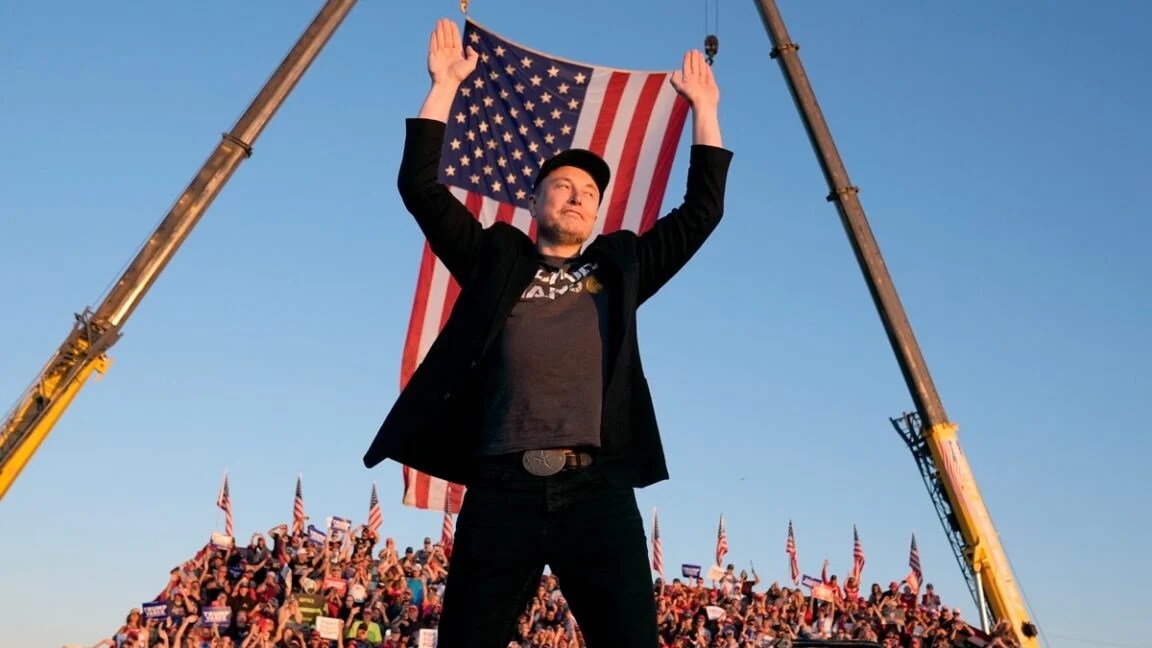
To the modern observer, Elon Musk is less a businessman and more a Rorschach test. To his acolytes, he is the singular visionary accelerating humanity’s transition to sustainable energy and multi-planetary status. To his critics, he is a mercurial provocateur, a purveyor of misinformation, and a dangerous narcissist wielding unprecedented influence over the global technological landscape.
Oscar-winning filmmaker Alex Gibney, a documentarian whose career has been defined by dissecting the mechanics of power, fraud, and institutional failure, has finally turned his lens toward the world’s most polarizing figure. His latest project, Musk, is not merely a biography; it is an autopsy of the “Great Man” theory of history in the 21st century. By framing Musk as a Gilded Age confidence man—an investor masquerading as an inventor—Gibney invites viewers to look past the carefully curated aesthetic of the tech titan and confront the chaotic, often hazardous reality of his empire.
The Gilded Age Reimagined: The Core Thesis
At the heart of Gibney’s narrative is the assertion that Musk’s genius is not rooted in engineering or scientific discovery, but in the art of the “pump.” Gibney posits that Musk is a master of the performative, using grand utopian visions to dazzle retail investors, capture government subsidies, and manipulate market sentiment.
The documentary contrasts Musk’s public image—the hyper-focused engineer sleeping on factory floors—with a more cynical portrait of a man who excels at leveraging the social media-driven economy. In this digital era, the “vision” often becomes more valuable than the product, and Musk has successfully monetized his persona to sustain a series of companies that exist in a perpetual state of “just around the corner” progress.
Chronology of a Controversial Career
Gibney’s film tracks the evolution of Musk from a Silicon Valley upstart to a global hegemon, highlighting key waypoints that have defined his public and private trajectory.
The Tesla Era and the Myth of Innovation
The documentary revisits the early days of Tesla, focusing on the friction between Musk and the company’s actual founders, such as Martin Eberhard. By deconstructing the origins of the electric vehicle giant, Gibney argues that Musk’s contribution was primarily capital and branding, rather than the foundational engineering that made Tesla’s success possible. The film doesn’t shy away from the darker side of this growth, highlighting the persistent safety concerns surrounding Tesla’s driver-assistance systems and the fatalities linked to their deployment.
From SpaceX to Starlink: The Privatization of Space
While acknowledging the technical achievements of SpaceX, the documentary pivots to the ethical implications of a single private individual controlling the world’s most critical satellite internet infrastructure. The inclusion of Starlink in the context of global conflicts raises uncomfortable questions about the power of an unelected billionaire to influence the sovereignty of nations.
The Twitter Pivot: A Turning Point
Perhaps the most significant chapter in the documentary is the acquisition of Twitter (now X). Gibney frames this not as a free-speech crusade, but as an ego-driven power grab that dismantled a global town square. The film captures the subsequent erosion of content moderation, the rise of extremist discourse, and the platform’s shift into a megaphone for Musk’s personal political agenda.
The AI Reversal and Political Alliances
The documentary highlights the dizzying inconsistency of Musk’s stance on Artificial Intelligence. Once a vocal critic of AI’s existential risks, Musk’s pivot to creating Grok serves as a primary example of his opportunism. Furthermore, the film delves into his late-career embrace of Donald Trump and the formation of the Department of Government Efficiency (DOGE), characterizing these moves as a strategic alignment designed to protect his corporate interests from regulatory oversight.
Supporting Data: The Voices Behind the Film
Gibney’s film draws its strength from a wide-ranging list of interviewees, each providing a different facet of the Musk experience.
- Personal Insight: The inclusion of ex-wife Justine Musk provides a rare, humanizing look at the personal toll of life within Musk’s orbit.
- The Industry Perspective: Tech heavyweights like Kara Swisher and Martin Eberhard provide the necessary context to dismantle the “Musk as inventor” myth.
- Ethical and Scientific Concerns: Voices like Geoffrey Hinton (the "Godfather of AI"), Sam Harris, and Cory Doctorow ground the documentary in the real-world risks posed by Musk’s technological and political maneuvers.
- The Political Connection: By interviewing figures like former MAGA influencer Ashley St. Clair, the documentary illustrates the radicalization of Musk’s brand and his integration into the contemporary American political ecosystem.
The soundtrack, featuring an original song by David Byrne titled “Let Me Sell You a Dream,” serves as the film’s thematic anchor, cleverly incorporating Musk’s own rhetoric to highlight the gap between his promises and the reality of his operations.
Official Responses and the Cost of Dissent
Alex Gibney is no stranger to legal pressure. His filmography—including Enron: The Smartest Guys in the Room and Taxi to the Dark Side—has consistently targeted institutions that thrive on secrecy. However, the reaction to Musk has been notably aggressive.
Before the film’s release, reports surfaced regarding Musk’s intense displeasure with the project, including threats of a defamation lawsuit. This pattern of behavior is consistent with Musk’s well-documented tendency to use his legal resources to stifle criticism. Furthermore, rumors circulated—though remained unconfirmed—that major distributors like Universal Pictures faced internal apprehension about the film’s international theatrical release, likely due to the potential for litigation or retaliation in markets where Musk holds significant sway.
The film stands as a testament to the fact that, in the current media landscape, the act of investigating the powerful has become an increasingly high-stakes endeavor.
The Broader Implications: A Societal Reckoning
The existence of Musk is a symptom of a larger societal tension. We live in an era where billionaires have become de facto sovereign actors, and their personal eccentricities have global consequences.
The Erosion of Truth
The documentary explores how Musk’s manipulation of information—from his own social media posts to the algorithm of X—erodes the public’s ability to discern fact from fiction. By blurring the lines between reality and his “high-tech utopian” branding, Musk has successfully created a reality-distortion field that makes traditional accountability nearly impossible.
The Governance Gap
Perhaps the most chilling implication of the film is the “Governance Gap.” As Musk expands his influence into AI, neurotechnology, and national security, the regulatory bodies designed to oversee these fields remain tethered to 20th-century frameworks. The film suggests that the world is currently witnessing a massive power transfer, where democratic institutions are being outpaced by private wealth and ambition.
The Legacy of the Documentarian
For Gibney, Musk is the logical culmination of a career dedicated to exposing the vanity and corruption of the elite. By cataloging the various scandals—from his alleged drug use and complex family life to the questionable safety of his products—Gibney is not just attacking a man; he is challenging the audience to ask why we have allowed a single individual to acquire such unfettered influence.
Conclusion: The Final Verdict
Musk is a film that demands a reaction. Whether one views it as a necessary correction to the Musk-myth or a hit piece designed to capitalize on social media outrage, the film succeeds in forcing a conversation about the nature of power in the 21st century.
As the credits roll on Musk, the viewer is left with a lingering question: Are we being led toward a better future by a visionary, or are we being sold a dream by a master salesman? Gibney’s answer is unequivocal. In the world of Elon Musk, the most important product being sold is the man himself. As he famously tweeted, and as the documentary proves, the brand is the mission, and the mission is the brand—no matter the cost to the truth, the public, or the future of our society.
Ultimately, Musk is a mirror. It forces us to confront our own role in elevating figures who promise to save us, while often ignoring the mechanisms they use to control us. It is a cautionary tale for an era defined by influencers, tech monopolies, and the dangerous intersection of capital and cults of personality.
