

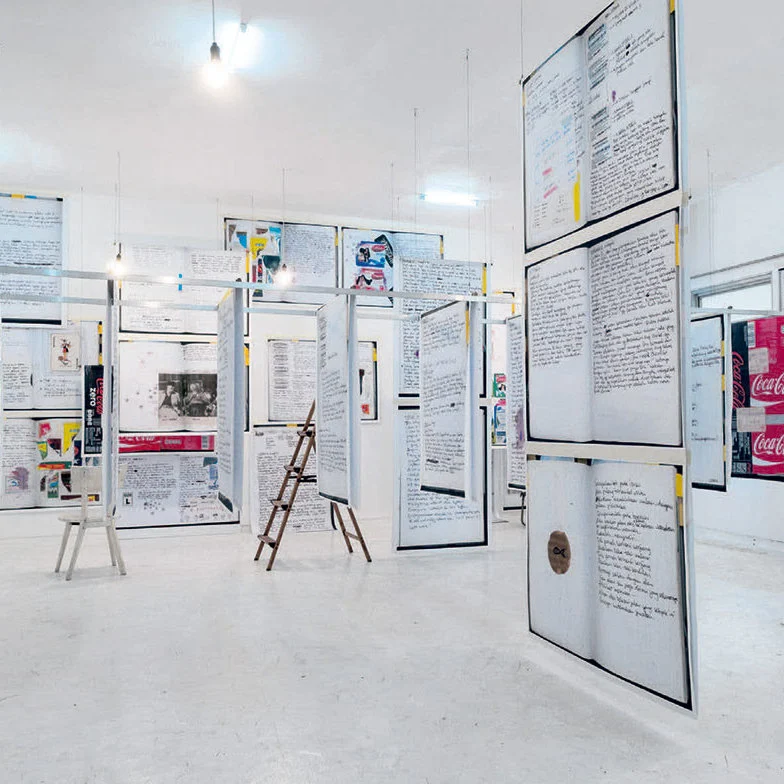
After 16 years of serving as a vital nexus for equatorial contemporary art, the Biennale Jogja Foundation has announced it will cease operations. The foundation, which has functioned as the primary engine for the biennial exhibition, the Khatulistiwa Symposium, and the Asana Bina Seni curator development program, leaves behind a legacy that has fundamentally altered the landscape of Southeast Asian art. The decision marks a somber turning point for Indonesia’s cultural sector, signaling a retreat prompted by the tightening grip of political volatility and the erosion of civic space.
The End of an Era: Main Facts and Context
The Biennale Jogja Foundation has been more than an exhibition organizer; it has been a cornerstone of the artistic community in Yogyakarta, the cultural capital of Indonesia. Over its 16-year tenure, the organization produced eight editions of the biennale, a series of symposiums, and professional development programs that nurtured generations of artists and curators.
The biennial was uniquely defined by its commitment to "Equator" diplomacy—a focus on connecting artists, researchers, and cultural practitioners from countries located along the equator, specifically across the Global South. By shifting the gaze away from Western-centric art hubs and toward the lived experiences of equatorial nations, the Biennale Jogja carved out a niche that prioritized indigenous knowledge and local cosmologies.
The most recent iteration, which now serves as the organization’s final act, centered on the Javanese concept of kawruh. Defined as a form of deep, lived knowledge—a synthesis of habit, ritual, and ancestral wisdom—kawruh was intended to ground contemporary art in the realities of the Indonesian soil. It is a cruel irony that this focus on "lived knowledge" has become the very thing the foundation finds impossible to sustain under the current socio-political pressures in Indonesia.
A Chronological Legacy (2008–2024)
To understand the weight of this closure, one must look back at the trajectory of the foundation since its formal institutionalization in 2008:
- 2008–2010: The Foundation Years. Following the massive 2006 earthquake that devastated Yogyakarta, the local art community underwent a period of reconstruction and self-reflection. The foundation was formalized to provide a more sustainable, independent structure for the biennale.
- 2011–2019: The Equator Series. The foundation launched a decade-long project focusing on the Equator. This included landmark collaborations with India (2011), the Middle East (2013), Nigeria (2015), Brazil (2017), and Southeast Asia (2019). These editions dismantled traditional art-world hierarchies.
- 2021: The Pandemic Pivot. Despite the global health crisis, the foundation managed to navigate lockdowns, maintaining Asana Bina Seni—its curator development program—as a digital and hybrid residency, proving the resilience of its educational mandate.
- 2023: The Final Edition. Centered on kawruh, the 17th edition of the Biennale Jogja explored the intersection of traditional spiritual practices and modern ecological concerns.
- 2024: The Decision to Rest. Following an internal review of the national political climate, the Board of Trustees issued a formal statement announcing the cessation of operations.
The Political Climate: Why "REST" Was the Only Option
The foundation’s decision to shut down is not a story of bankruptcy or lack of interest, but one of deliberate, principled withdrawal. In their final statement, representatives of the foundation articulated a profound sense of exhaustion and disillusionment.
"Reflecting on the political situation in Indonesia today, we have come to the conclusion that we need to REST," the statement read. "Under a political regime that has failed to recognize people’s cultures as the foundation of cultural identity—amid chaotic economic and political policies, increasing censorship, and violence against activists and protesters—we feel an urgency to pause."
This language is telling. The foundation explicitly frames its "rest" as a political act. By stepping away, they are refusing to participate in an environment that demands art to be either sanitized or used as a tool for state-sanctioned branding. The "chaos" mentioned by the foundation refers to the broader erosion of democratic norms in Indonesia, characterized by the weakening of anti-corruption agencies, the intimidation of environmental activists, and the increasing usage of the Electronic Information and Transactions (ITE) Law to silence critics.
Supporting Data: The Shrinking Space for Arts and Expression
The closure of the Biennale Jogja Foundation occurs against a backdrop of declining civic freedom in Southeast Asia. According to the CIVICUS Monitor, Indonesia’s civic space has been downgraded to "obstructed."
- Censorship and Surveillance: Art spaces, particularly those in Yogyakarta, have seen a marked increase in surveillance. Exhibitions that address historical trauma, such as the 1965 anti-communist purges, are frequently subject to police intervention or pressure from vigilante groups.
- Funding and Autonomy: As the state becomes more centralized, funding for the arts has become increasingly tied to nationalistic narratives. The Biennale Jogja Foundation, which prides itself on its independent, grassroots-funded model, found it increasingly difficult to operate without compromising its mandate.
- The Brain Drain: The foundation’s Asana Bina Seni program was vital for keeping young talent in Indonesia. Without this infrastructure, there is a tangible fear that the next generation of Indonesian curators will be forced to migrate to more stable, though less culturally resonant, international hubs.
Official Responses and Internal Reflections
The reaction from the broader Indonesian art community has been one of shock, followed by a somber acceptance. Many prominent figures within the Yogyakarta art scene have pointed out that the foundation was already a "survivor" organization.
"They were the gold standard for how to run an independent art institution in a country that doesn’t prioritize the arts," said a former curator who worked closely with the foundation. "If they cannot survive, it sends a clear message to the rest of us that the space for independent, critical inquiry is being closed off, one institution at a time."
The board members have clarified that this is not an "escape from difficulty," but a strategic retreat. By choosing to "rest" rather than "collapse," the foundation hopes to preserve the integrity of their archives and the history of their collaborations. "We are reclaiming the freedom we need to engage in grassroots solidarities," they stated, implying that their energy may be better spent outside of formal institutional structures, where the pressure of state oversight is less immediate.
Implications for the Future of Southeast Asian Art
The closure of the Biennale Jogja Foundation leaves a significant vacuum in the region’s cultural geography.
1. The Loss of the "Equator" Dialogue
For over a decade, the foundation provided a unique platform for artists from the Global South to speak to one another without needing a Western mediator. The loss of this biennial means that these transnational conversations, which were crucial for challenging colonial art histories, will likely be fractured.
2. The Vulnerability of Grassroots Models
The Biennale Jogja was a pioneer in demonstrating how a biennial could be community-led rather than tourism-led. Its failure suggests that the "bottom-up" model is under immense strain. Future initiatives will likely face higher barriers to entry, as the financial and political risks of starting a new independent institution have just been raised significantly.
3. The Shift Toward Underground/Informal Practices
As formal institutions are shuttered, the art scene is expected to shift further toward informal, clandestine, or decentralized gatherings. While this may offer short-term protection from surveillance, it also limits the ability of the art scene to engage in public discourse on a national scale. The "REST" taken by the foundation may lead to a more fragmented, though perhaps more radical, art scene in the long term.
Conclusion: A Pause, Not a Defeat
The Biennale Jogja Foundation’s departure is a symptom of a deeper malaise in Indonesian civil society. By choosing to step away, the foundation has refused to play a role in a cultural system that they feel no longer respects the dignity of its citizens or the autonomy of its artists.
Their final message serves as both a critique and a challenge to the powers that be. In an era of increasing noise and state-driven propaganda, the silence of a major institution like the Biennale Jogja is perhaps the loudest statement they could have made. Whether this "rest" will lead to a new form of resistance or whether it marks the permanent end of a storied chapter in Indonesian art history remains to be seen. For now, the equator is a little less connected, and the art world is forced to confront the harsh reality of an increasingly inhospitable political landscape.
