

In a sweeping move that the administration characterizes as a cornerstone of its economic legacy, the U.S. Treasury Department announced on October 1 that it has completed the automatic enrollment of nearly every eligible minor in America into the "Trump Account" program. With more than 60 million new accounts created in a single administrative push, the total number of children with a designated investment vehicle has surged to nearly 70 million.
The initiative, designed to provide a financial stake in the American economy for every youth, represents one of the most ambitious federal wealth-building experiments in modern history. However, as the program transitions from its rollout phase to a period of active management, a complex picture is emerging: one defined by grand projections, significant philanthropic involvement, and lingering questions regarding the true efficacy of these accounts in closing the generational wealth gap.
The Mechanics of Universal Enrollment
The transition to automatic enrollment was a tactical pivot necessitated by sluggish participation. Before the Treasury Department intervened with its automated system, only about 5.6 million sign-up forms had been processed—a mere fraction of the 73.4 million children estimated to be eligible.
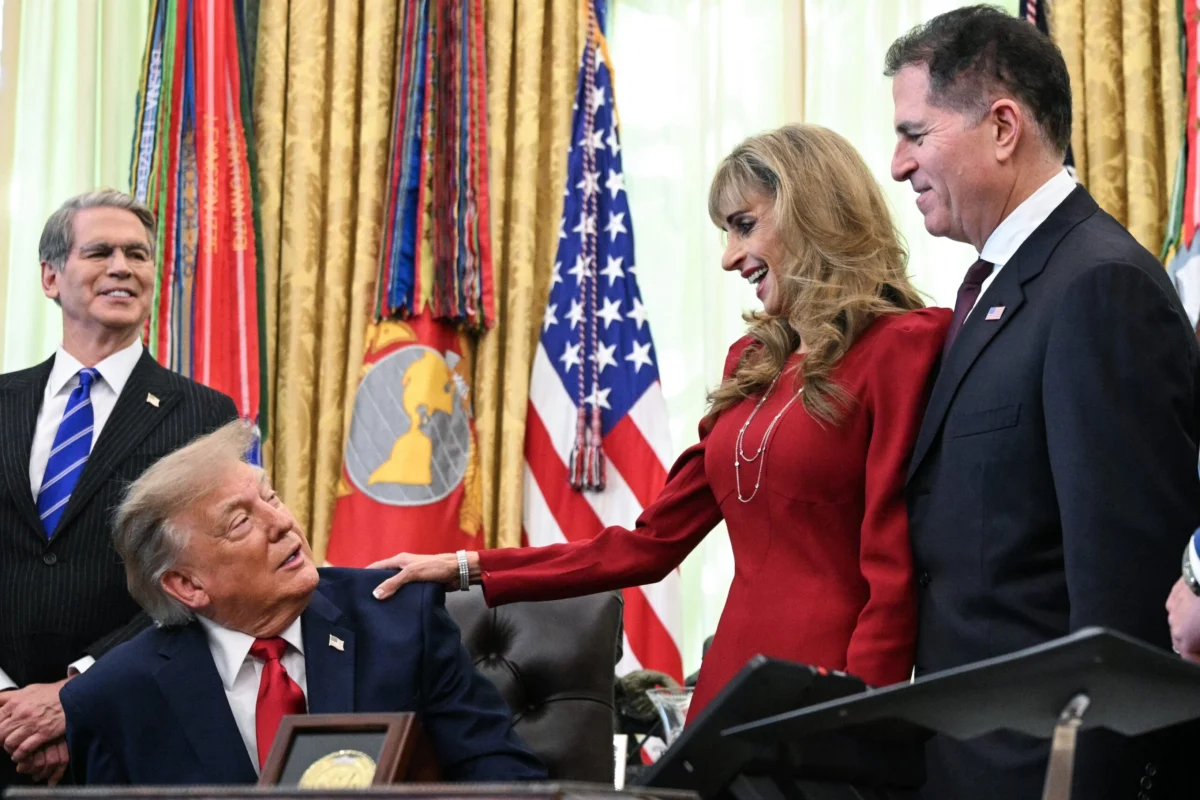
President Donald Trump, speaking from the Oval Office on October 7, touted the milestone as a fulfillment of a promise to ensure no child is left behind in the nation’s prosperity. "Today, I’m pleased to announce that every single eligible minor child in America has now been automatically enrolled in a Trump Account," the President stated.
Despite the technical ease of being "enrolled," the burden of utility still rests with the individual family. An account’s existence does not equate to its activation. For the funds—including the government’s promised $1,000 seed deposit—to be managed or augmented, a parent or legal guardian must formally claim the account via the official Trump Accounts mobile application. This "activation gap" remains the primary hurdle for the administration, as thousands of families who signed up in the program’s infancy have reported delays in receiving their initial seed money.
Chronology of a National Financial Experiment
The evolution of the Trump Account program has been rapid, marked by a constant push to scale while refining regulatory guardrails.
- July 4, 2026: The program officially launches with a mission to foster long-term savings for American youth.
- Late Summer 2026: Early data shows significant interest from corporate partners like JPMorgan Chase and Bank of America, but overall public sign-up rates lag behind projections.
- July 2026: Treasury announces it will accept large-scale philanthropic donations of publicly traded stock, expanding the scope of what can be held in these accounts beyond traditional index funds.
- September 30, 2026: The IRS finalizes the regulatory framework for stock contributions, ensuring that such gifts are transparent and distributed across broad cohorts to mitigate risk.
- October 1, 2026: The Treasury completes the automatic enrollment of 60 million children, effectively reaching near-universal coverage for eligible minors.
- October 7, 2026: The White House celebrates the program as a landmark achievement in national wealth equity.
Financial Architecture: Where the Money Flows
To date, the program has aggregated more than $4.5 billion in assets. The composition of these funds provides a window into the administration’s strategy for funding the program: $1.3 billion originated from government seed contributions, $600 million from personal family and friend contributions, and a staggering $2.6 billion from philanthropic entities.
When averaged across the 70 million accounts, the current balance stands at approximately $64 per child. However, this average is skewed by the targeted nature of philanthropic gifts. For instance, the pledge from Michael and Susan Dell—a $6.25 billion commitment—is specifically earmarked for children living in ZIP codes where the median household income is below $150,000. These children receive a $250 boost, a significant deviation from the baseline average.
The government’s official calculator on TrumpAccounts.gov paints an aspirational picture for the future. It projects that a single $1,000 seed deposit could compound into $243,000 by the time a child reaches age 55, assuming a 10% annual return from the S&P 500. For those able to hit the $5,000 annual contribution cap, the calculator suggests a potential $13 million nest egg.
Financial planners, however, urge caution. When adjusting for a more moderate 7% market return—historically considered more realistic for long-term planning—the projections drop to between $1.5 million and $2 million for maxed-out accounts. The variance between these figures highlights the sensitivity of the program to market performance and the necessity of sustained, disciplined contributions.
The Role of Private Enterprise and Stock Donations
A unique feature of the Trump Account architecture is the acceptance of publicly traded stock donations. By allowing corporations and billionaire philanthropists to donate company shares, the program seeks to move beyond cash-based savings.
SpaceX president Gwynne Shotwell’s pledge of $300 million in company stock—allocated as one share each to over 2 million accounts—serves as the model for this mechanism. While such gifts provide children with a tangible piece of corporate growth, they introduce a concentration risk that has drawn concern from financial advisors.
Jonathan Lee, a wealth management advisor at U.S. Bank, warned that "a child could, hypothetically, receive $10,000 of Company X stock and suddenly at least 67% of the minor’s portfolio is concentrated in Company X." To mitigate this, Treasury rules dictate that stock donations must be spread across at least 5,000 accounts and held for a minimum of five years, forcing a long-term commitment that prevents "pump-and-dump" style volatility.
Implications: Wealth Building or Wealth Gap Perpetuation?
The central debate surrounding the Trump Account initiative is whether it serves as a ladder for the disadvantaged or a tax-advantaged vehicle that primarily benefits the wealthy.
Critics, including Stanford economists Neale Mahoney and Adam Shaw, argue that the structure of the program favors those who already possess the disposable income to contribute annually. Writing in Time, they noted, "The program may be open to every child, but its benefits will flow overwhelmingly to families with the means to contribute thousands of dollars a year." This sentiment is echoed by researchers at The New School, whose analysis of 15 years of 529 college savings data suggests that government-backed investment programs are frequently "captured" by higher-income brackets who maximize the tax benefits.
The White House, however, defends the program’s demographic reach, citing data that 80% of current Trump Account holders belong to families earning less than $200,000 per year. The administration argues that by removing the barrier of entry—the account opening process—they have democratized access to the stock market, providing families with a tool they would not have otherwise utilized.
Navigating the Future: Eligibility and Constraints
The program’s rules are precise to prevent abuse. Every child under 18 with a valid Social Security number has an account, but the $1,000 seed deposit is restricted to U.S. citizen children born between January 1, 2025, and December 31, 2028.
Once a child reaches the age of 18, the Trump Account undergoes a structural shift, essentially becoming a traditional Individual Retirement Account (IRA). This transition is critical for parents to understand:
- Taxation: Withdrawals after age 18 are taxed as ordinary income.
- Penalties: Early withdrawals may be subject to penalties, though the administration has carved out exceptions for qualifying expenses like higher education and first-time home purchases.
- Maintenance: The responsibility for managing the investment portfolio—or at least ensuring it is properly directed—will shift from the parent to the young adult.
As the program settles into the national consciousness, the true test will be the "claim rate." If millions of accounts remain dormant, the initiative may be viewed as a hollow administrative success. But if families across the socio-economic spectrum leverage these accounts to build lasting savings, the Trump Account could fundamentally alter the financial trajectory of the next generation. For now, the nation waits to see if these millions of digital entries evolve into the financial bedrock they were promised to be.
