

The North American box office landscape this past weekend served as a stark reminder of the current industry hierarchy: genre cinema remains the reliable engine of theatrical revenue, while prestige dramas are increasingly struggling to capture the zeitgeist. As the autumn season shifts into full gear, Universal Pictures’ supernatural horror flick Other Mommy, starring Jessica Chastain, defied critical tepidity to seize the top spot. Conversely, Aaron Sorkin’s latest directorial effort, The Social Reckoning, failed to make a significant dent in the cultural consciousness, marking a sobering moment for auteur-driven, socially conscious filmmaking.
The Reign of Horror: Other Mommy Defies the Critics
In an industry where audience scores often dictate long-term viability, Other Mommy has proven that the horror genre operates by its own set of rules. The film, which follows a young girl terrorized by a malevolent supernatural entity posing as her mother, pulled in a robust $27.5 million during its opening frame across 3,365 North American theaters.
Despite a lackluster critical reception and a dismal "D+" CinemaScore—a metric that typically signals a swift decline in second-weekend earnings—the film’s performance is being hailed as a win for Blumhouse and Atomic Monster. With a lean production budget estimated at $19 million, the film has already cleared its primary financial hurdle. This success underscores the "event" nature of horror; audiences continue to flock to theaters for the communal experience of a scare, even when the critical consensus suggests the execution is flawed.
The international market proved equally hospitable to the film. Opening in 50 territories simultaneously, Other Mommy secured a global debut of $45.2 million, signaling that the appeal of high-concept horror remains a universal currency for major studios.
The Social Reckoning: A Muted Response to Topical Cinema
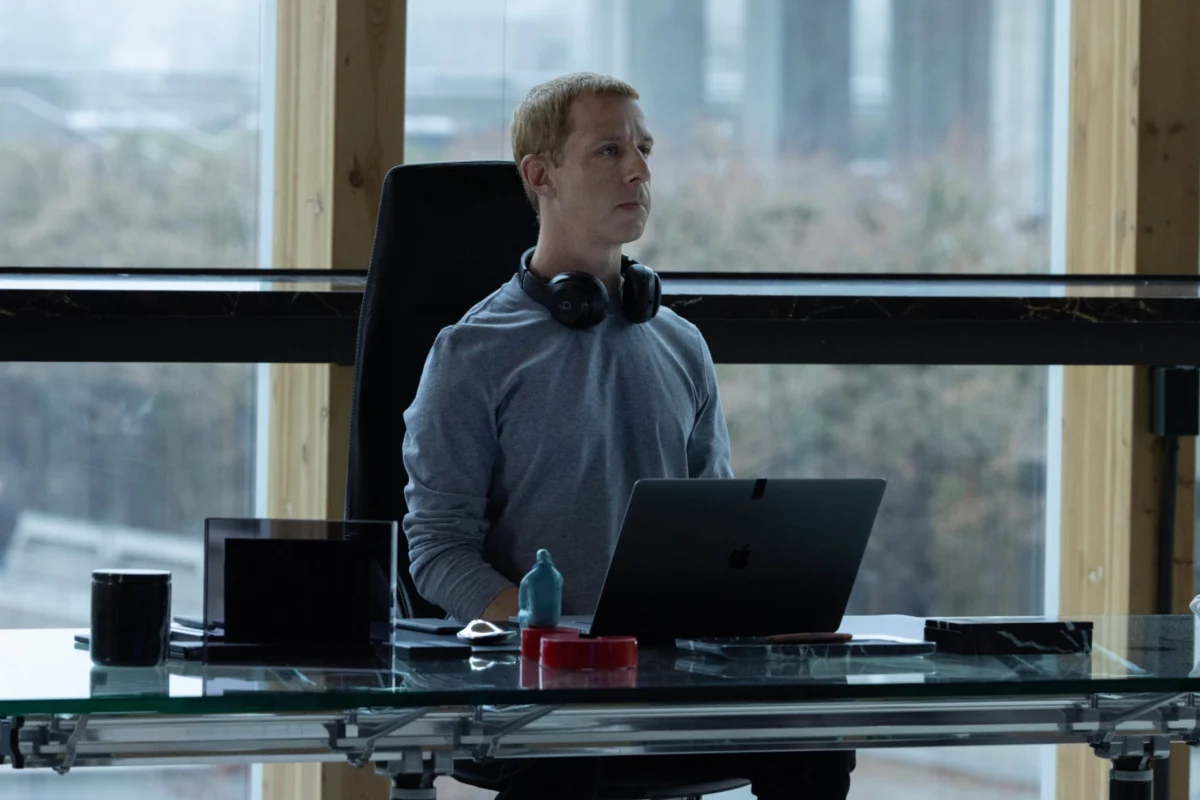
In sharp contrast to the horror boom, the debut of The Social Reckoning was marked by a profound lack of momentum. The film, which tackles the complex subject of a Facebook whistleblower leaking sensitive documents to the Wall Street Journal, managed only $5.5 million from 2,606 locations.
The comparison to Sorkin’s 2010 masterpiece, The Social Network, is inevitable but ultimately unfavorable. While that film opened to over $22 million and became a cultural touchstone that garnered eight Academy Award nominations and three wins, The Social Reckoning appears destined for a much quieter path. Despite a star-studded cast including Mikey Madison, Jeremy Allen White, and Jeremy Strong, the film failed to connect with its target demographic, earning a modest "B-" CinemaScore.
Industry analysts suggest that the film’s $30 million production budget—excluding marketing costs—places it in a precarious position. The failure of The Social Reckoning poses a difficult question for studios: have audiences developed a fatigue for Silicon Valley-centric narratives, or does the current theatrical landscape simply have no room for mid-budget dramas that don’t lean into franchise spectacle or high-octane thrills?
Chronology of the Weekend Market
The weekend’s box office performance unfolded in three distinct movements: the strong debut of Other Mommy, the plateauing of recent holdovers, and the slow-burn expansion of limited-release prestige titles.
By Friday, the industry saw the domestic annual box office total cross the $8 billion threshold—a milestone that was met with cautious optimism by exhibitors. Throughout Saturday, it became clear that while Other Mommy was drawing a youthful crowd (with two-thirds of the audience falling between the ages of 18 and 34), The Social Reckoning was failing to bridge the gap with older, more discerning moviegoers.
By Sunday, the rankings stabilized. The Anne Hathaway psychological thriller Verity occupied the second-place slot with $11.5 million, a 64% drop from its opening weekend. This trend of rapid decay for holdovers—seen also in Digger, which plummeted 60% in its second outing—indicates a market that is increasingly "front-loaded," where the majority of ticket sales occur within the first 48 hours of release.
Supporting Data and Market Analysis
The data provided by Rentrak reveals a complex picture of the 2024 theatrical landscape. While the overall box office is currently up 19% compared to the same period last year, the industry remains roughly 8% behind 2019 figures.
Box Office Top 10 (Estimated)
- Other Mommy: $27.5 million
- Verity: $11.5 million
- Resident Evil: $8.4 million
- Heart of the Beast: $7.1 million
- The Social Reckoning: $5.5 million
- Forgotten Island: $4.5 million
- Primetime: $4 million
- Digger: $3.2 million
- Angel and the Badman: $2.1 million
- The Odyssey: $2 million
The sustained presence of Christopher Nolan’s The Odyssey in the top 10, even in its 13th weekend, serves as a fascinating outlier. By leveraging 12 IMAX 70mm screens, the film added another $2 million to its domestic total, which now sits just shy of a staggering $623 million. This performance highlights the enduring power of premium large-format (PLF) experiences, which continue to drive ticket sales long after standard digital runs have concluded.
Official Responses and Industry Sentiment
Jim Orr, Universal’s head of domestic distribution, expressed satisfaction with the diverse turnout for Other Mommy. "No matter how you look at it, everybody turned out for it," Orr stated. "It wasn’t just one particular demographic. That usually is a very good sign." While Orr is optimistic about the film’s broad appeal, the low audience scores remain a point of contention for those tracking the film’s longevity.
Paul Dergarabedian, the head of marketplace trends at Rentrak, offered a more philosophical take on the weekend’s results. Addressing the struggle of The Social Reckoning, Dergarabedian noted that the October market is a testing ground for studios. "These movies that are topical in nature, sometimes they resonate with the culture, sometimes they don’t," he remarked. "You don’t always know what’s going to connect with audiences."
The sentiment across the industry is one of transition. With limited-release titles like the Cannes Palme d’Or winner Fjord ($124,000 across four screens) and Alex Gibney’s four-hour Elon Musk documentary Musk ($68,900 from four locations) garnering significant attention from niche audiences, it is clear that the theater is still a vital space for diverse storytelling. However, the commercial gap between these niche projects and the dominant horror-thriller market continues to widen.
Implications for the Future of Theatrical Distribution
The results of this weekend provide a roadmap for the coming months. Studios are increasingly likely to lean into low-budget, high-concept horror, where the return on investment is quantifiable and the audience is reliable. The "win" for Other Mommy reinforces the strategy that Blumhouse and Atomic Monster have perfected: provide a specific, visceral experience that feels essential to see on a big screen.
Conversely, the struggle of The Social Reckoning suggests that prestige dramas may need to pivot their distribution strategies. With streaming platforms increasingly eager to acquire these types of films, the theatrical window for adult-oriented dramas is shrinking. If a film cannot generate "event" status through word-of-mouth or spectacle, it risks being overshadowed by the sheer volume of content available in the current ecosystem.
As we look toward the final quarter of the year, the industry’s focus will likely remain on maintaining the 19% growth over last year. Whether the box office can bridge the final 8% gap to reach 2019 levels will depend on whether future high-profile releases can mimic the cultural resonance of the summer’s biggest hits, rather than the tepid reception of this weekend’s political thriller. For now, the theater belongs to the monsters and the psychological thrillers—the types of films that force audiences to turn their phones off and keep their eyes on the screen.
