

This Monday serves as a poignant reminder of the complexities inherent in celebrating Indigenous Peoples’ Day. Regardless of federal recognition or official nomenclature, the day stands as a vital opportunity to center Native voices, histories, and contemporary creative practices. As the art world shifts its focus toward these narratives, we find ourselves at the intersection of profound artistic innovation and necessary institutional critique.
The Resonance of Raven Chacon: Sound as Decolonial Act
At the heart of this week’s discourse is the work of Pulitzer Prize-winning Diné composer and artist Raven Chacon. In a recent dialogue with Hyperallergic Associate Editor Phillip Pyle, Chacon offered a window into his recent improvised performance series at the Park Avenue Armory’s Veterans Room.
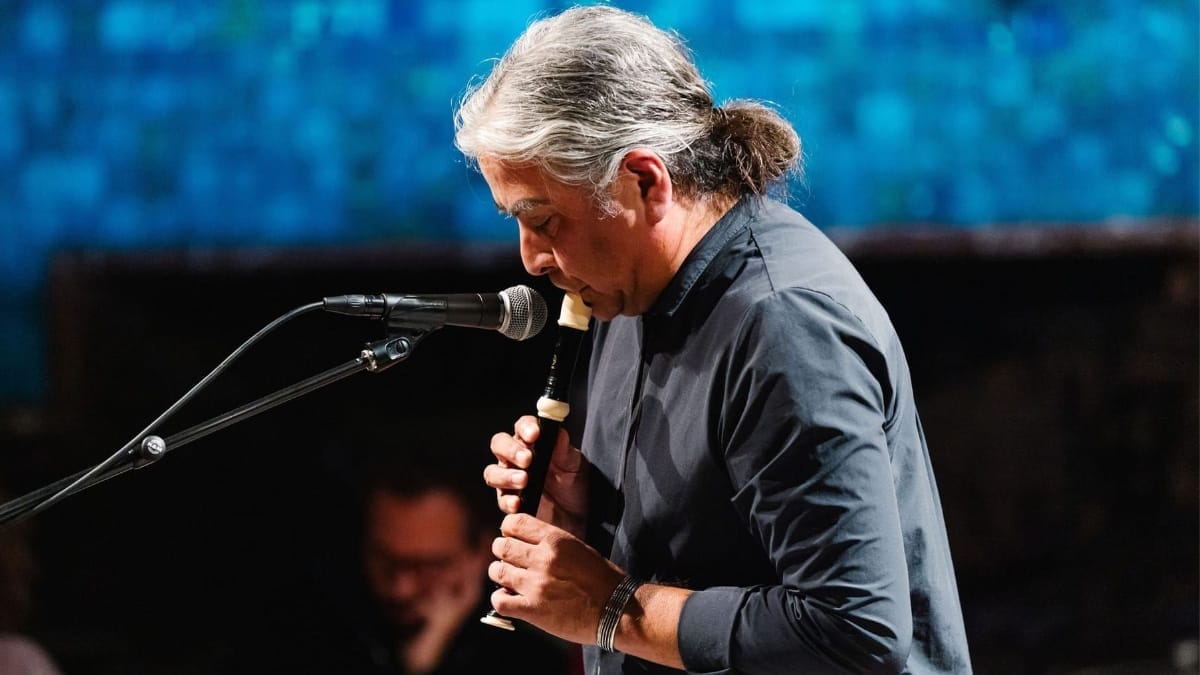
For Chacon, the act of performance is never merely aesthetic; it is a "collision." His setup—a meticulous arrangement of sound mixers, synthesizers, pedals, speakers, turkey calls, and ceramic horns—serves as a physical manifestation of his philosophy. Chacon is interested in the reclamation of the very technologies often associated with colonial imposition. By repurposing the tools of modern sound engineering alongside traditional instruments and organic materials, he effectively sonifies the history of the land.
"Music is a site of friction," Chacon notes. His work challenges the audience to listen beyond the melody, forcing a confrontation with the echoes of displacement and the resilience of Indigenous soundscapes. By placing these instruments in the rigid, historicized architecture of the Armory, he creates a spatial dialogue that demands the listener acknowledge the endurance of Native culture within the very centers of institutional power.

Chronology of Recognition and Institutional Struggle
The trajectory of Indigenous representation in New York’s cultural institutions has been uneven. While we are currently witnessing a wave of programming dedicated to "Indigenous Survivance," the path to this point has been marked by decades of advocacy by Native artists and curators.
- 1970s–1990s: Early efforts by Indigenous activists to pivot public awareness toward Native history. The emergence of the American Indian Community House and other grassroots organizations provided the first modern scaffolding for Native visibility in the city.
- 2010s: A gradual shift in museum mandates. Institutions began to acknowledge that their collections, often built upon colonial acquisition models, required a radical re-evaluation.
- 2022–2024: The "Curatorial Turn." Major institutions, including the Whitney and the Met, began centering Indigenous artists not as "ethnographic" subjects but as contemporary leaders in the art market.
- October 2026: The current moment. We see a confluence of retrospective exhibitions (such as the work of Truman Lowe) and a sharpened critical lens that refuses to accept surface-level inclusion.
Critique: When Representation Glosses Over Reality
While the art world is ostensibly more open to Native perspectives, the quality of that engagement remains a subject of intense debate. A recent exhibition featuring the work of the late Felix Gonzalez-Torres serves as a cautionary tale.
While Gonzalez-Torres is a titan of 20th-century art, the specific exhibition in question has drawn criticism for its sanitization of his legacy. By focusing on the visual elegance of his work while bizarrely glossing over his fierce AIDS advocacy and his explicitly political stance against systemic negligence, the curators have arguably neutered the artist’s intent. For an artist who utilized his platform to scream at the institutions of power, an exhibition that strips away that context is not just a missed opportunity—it is a fundamental failure of interpretation. It highlights a recurring issue in the contemporary art market: the desire to "celebrate" the art of marginalized voices while simultaneously scrubbing the radical politics that made that art urgent in the first place.
Native Art in New York: A Landscape of Survivance
For those navigating New York City this week, the imperative is to seek out shows that prioritize Indigenous agency. The current landscape is rich with exhibitions that embody "survivance"—a term coined by Gerald Vizenor that transcends mere survival, suggesting an active, creative presence.
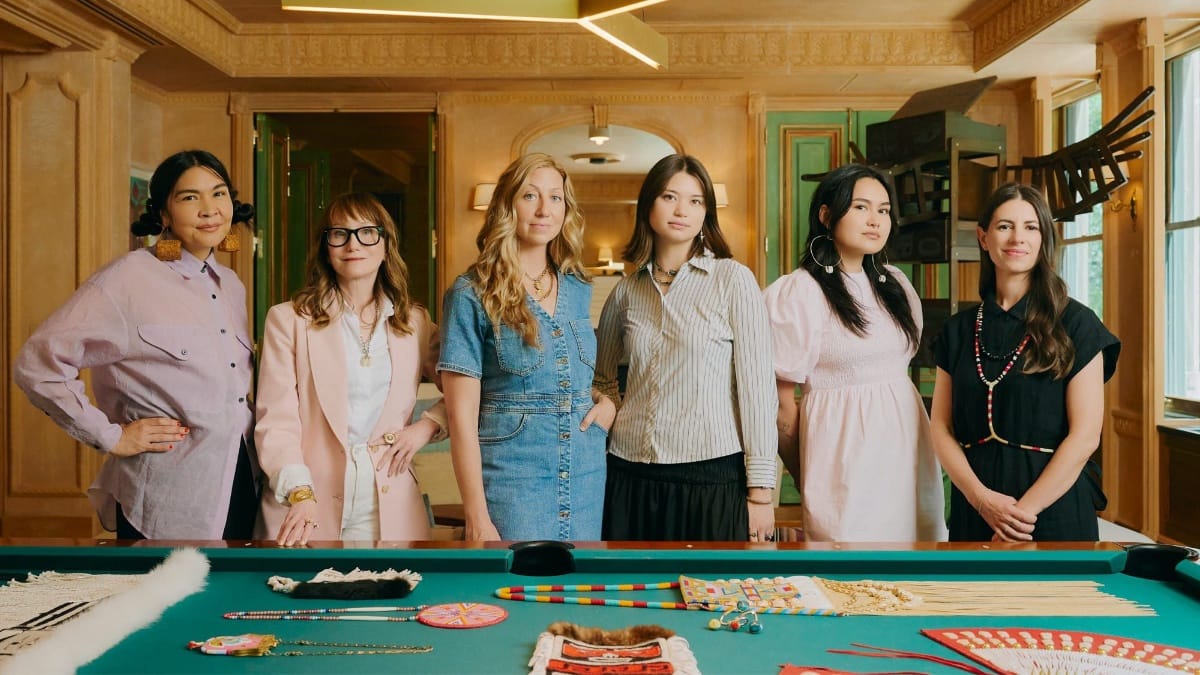
Notable among these are the works of Shelley Niro and Sarah Sense. Niro’s work, which often utilizes photography and film to challenge the monolithic representations of Native women, provides a sharp counter-narrative to the romanticized tropes often found in Western art history. Similarly, Sarah Sense’s intricate weaving of archival maps and photographs creates a cartography of identity that refuses to be constrained by colonial borders.
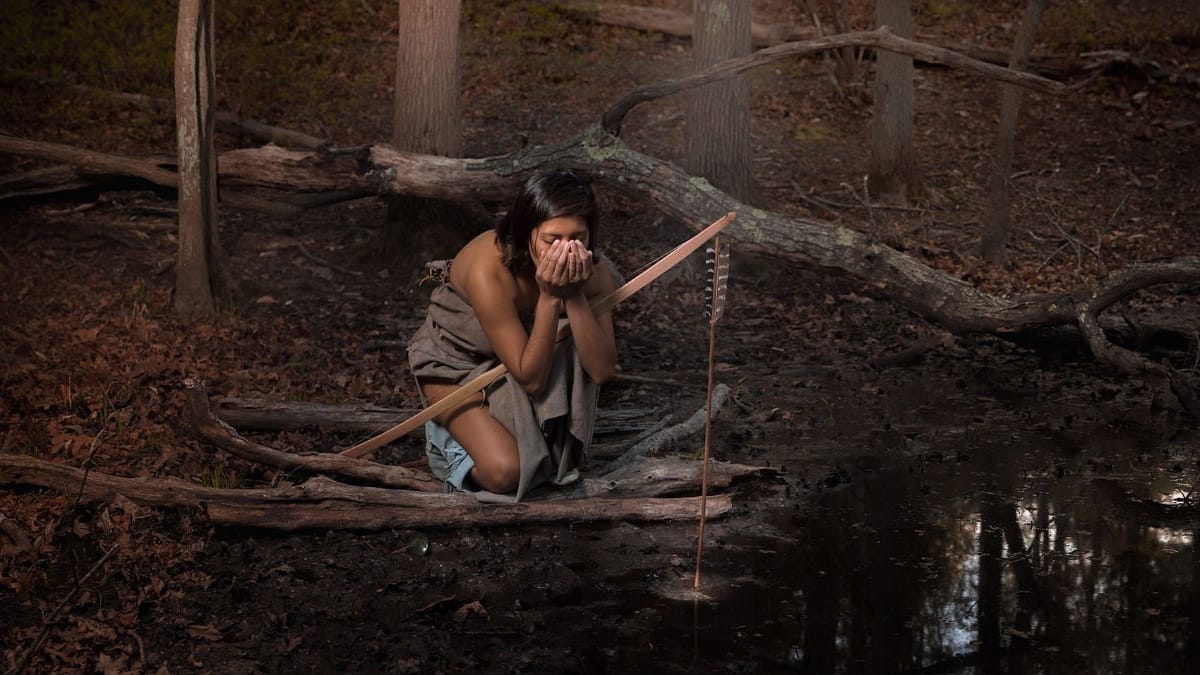
These artists, along with the recent retrospective of Hoocąk artist Truman Lowe, represent a significant shift. Lowe’s work—which masterfully transforms natural materials like willow and wood into fluid, architectural sculptures—functions as a bridge between ancestral knowledge and modernist form. By "listening to the water," as the exhibition title suggests, Lowe invites the viewer to understand landscape not as property, but as a living repository of memory.
Supporting Data: The Funding and Infrastructure Gap
Despite the increased visibility of Native artists, significant structural barriers remain. The "Asian Cultural Council – 2027 Fellowships & Grants" cycle, which recently opened, serves as a model for how institutions can support international and cross-cultural dialogue. However, the broader art ecosystem still lacks sufficient, dedicated funding for Indigenous-led research and preservation.
While festivals like the ArtFields Festival in South Carolina offer over $100,000 in prizes and encourage regional participation, there is a lingering need for sustained, long-term institutional investment that goes beyond the "Indigenous Peoples’ Day" window. The reality is that the financial support for Native artists remains disproportionately lower compared to their non-Native counterparts in the contemporary market.
Official Responses and the Ethics of Care
Institutions are increasingly under pressure to adopt "Ethical Stewardship" policies. This includes not only the repatriation of artifacts but also the inclusion of Native voices in the decision-making processes regarding how collections are displayed and interpreted.
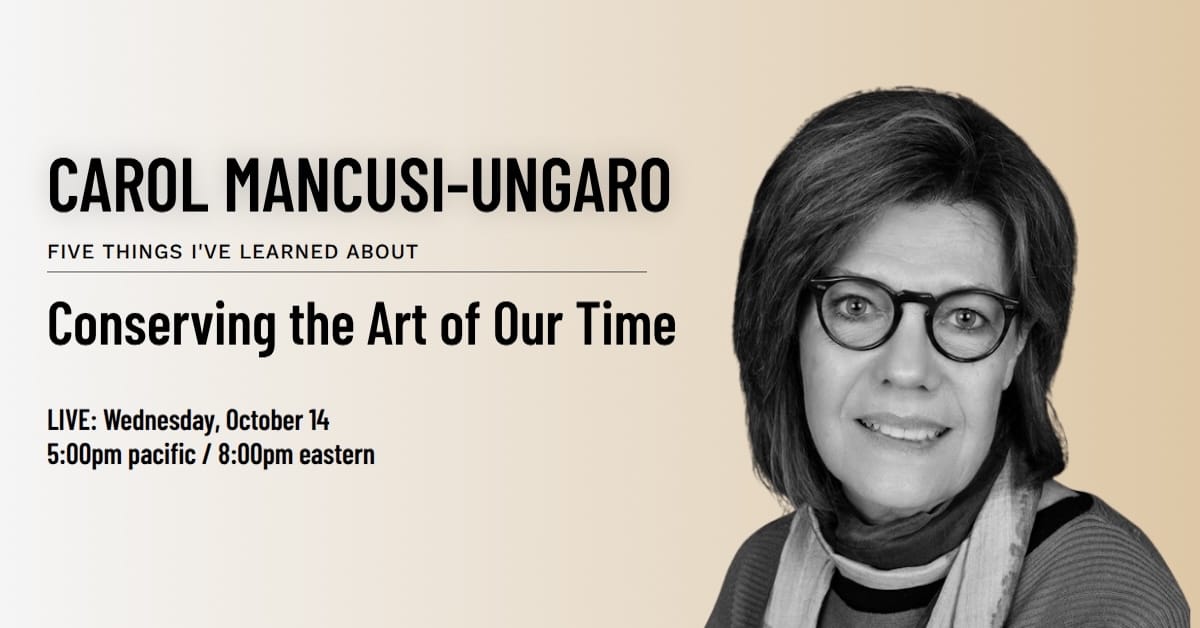
Carol Mancusi-Ungaro, a preeminent art restorer, has recently highlighted the challenges of preserving the works of postwar painters like Mark Rothko and Cy Twombly. Her work underscores a broader point: preservation is not just a technical act; it is an ethical one. When we apply this same rigor to Indigenous art, we must ask: Who is the custodian of this history? And what are the ethics of care when dealing with objects that hold spiritual or communal significance beyond their market value?
Implications for the Future of the Field
The implications for the art world are clear: passive inclusion is no longer sufficient. The future of the field rests on three pillars:
- Radical Contextualization: Museums must move away from the "silent object" model and engage with the political and historical context of the work. As seen with the critiques of the Gonzalez-Torres exhibition, omitting the political context of an artist’s life is a form of erasure.
- Resource Equity: The financial disparity in the arts must be addressed through targeted grants and long-term partnerships that allow Indigenous artists to lead their own retrospectives.
- Active Engagement: As demonstrated by Raven Chacon, the goal should not be to archive the past, but to utilize it as a dynamic, living force. The "collision" of traditional knowledge and modern practice is where the most vital artistic work is currently being produced.
As we conclude this reflection on Indigenous Peoples’ Day, it is vital to remember that the art world is a mirror of the society it inhabits. If the industry continues to prioritize the marketability of Native art over the sovereignty of the artist, it will fail to capture the depth of the "survivance" that defines the current movement. We must demand that institutions do more than just hang the work; they must listen to the history of the land that the work occupies.
In the coming months, the opening of the Gochman collection of Indigenous art in Katonah will be a litmus test for how private collectors and local institutions handle the responsibility of stewardship. As we look forward, the standard for success should not be the number of exhibitions, but the depth of the relationships built between these institutions and the communities they represent. The conversation has only just begun.
