


As we cross the threshold into our sixties, the biological landscape of our bodies begins to shift. One of the most common concerns for active seniors is the loss of muscle tone in the upper arms—often colloquially referred to as "arm jiggle." However, as a Certified Strength and Conditioning Specialist (CSCS), I am here to tell you that this is not an inevitable consequence of aging. With the right strategic approach, you can rebuild muscle mass, improve definition, and enhance functional strength without ever stepping foot inside a commercial gym.
The Science of Muscle Preservation After 60
Recent clinical research, including studies published in the National Center for Biotechnology Information (NCBI), confirms that our muscles remain highly adaptable regardless of age. While hormonal shifts and metabolic changes can contribute to a decrease in lean muscle mass—a condition known as sarcopenia—targeted resistance training acts as a powerful antidote.
When you engage in consistent, progressive strength training, you are not just improving aesthetics; you are sending a physiological signal to your body to synthesize protein and reinforce muscle fibers. After 60, the secret to success lies in a "triad of recovery": mechanical loading (lifting), nutritional support (protein intake), and sufficient systemic rest.
Why Home Workouts Are the Gold Standard
The primary barrier to fitness for many seniors is the "friction" associated with gym culture—the commute, the crowded equipment, and the intimidation factor of complex machinery. Home workouts eliminate these barriers entirely. With a modest collection of tools—a set of resistance bands, a pair of adjustable dumbbells, and a sturdy chair—you have everything necessary to train the biceps, triceps, shoulders, and upper back effectively.
This program is designed to be low-impact, high-efficiency, and, most importantly, sustainable. By prioritizing movement quality over heavy lifting, we can achieve significant results while safeguarding joint health.
The Six-Move Protocol for Arm Definition
This routine should be performed three to four days per week. Remember, the goal is not to exhaust yourself, but to stimulate muscle growth through controlled, intentional movement.
1. Band Curls: The Foundation of Bicep Strength
Biceps do more than just look good; they are essential for the "pulling" mechanics used in daily tasks like carrying groceries or lifting objects. Resistance bands are ideal here because they provide constant tension throughout the entire range of motion, which is often safer for the elbows than heavy metal weights.
- How to do it: Stand on the center of your band, holding one end in each hand. Keep your elbows pinned to your ribs, and slowly curl your hands toward your shoulders. Focus on a slow, three-second release back to the starting position.
- Target: Biceps and brachialis.
- Volume: 2–3 sets of 12–15 repetitions.
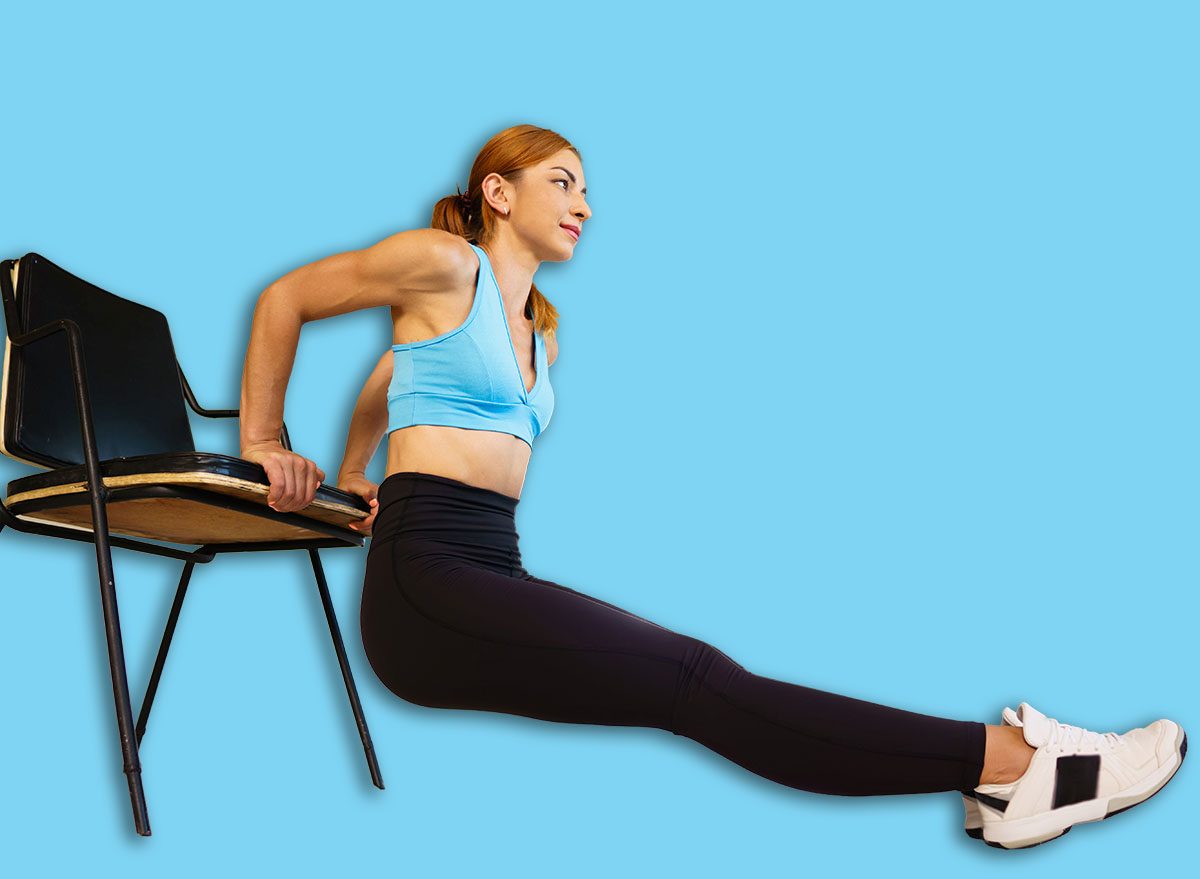
2. Chair Dips: Tackling the Triceps
The triceps make up the majority of the upper arm’s mass. If you want to firm the back of the arm, the triceps must be the focus. Chair dips are a functional powerhouse, mirroring the mechanics required to push yourself out of a chair or bed.
- How to do it: Sit on the edge of a sturdy, non-slip chair. Place your palms on the edge of the seat, slide your hips forward, and lower yourself by bending your elbows. Push back up using only your arm strength.
- Target: Triceps and anterior deltoids.
- Volume: 2–3 sets of 6–10 repetitions.
3. Incline Push-ups: Accessible Upper Body Power
Traditional floor push-ups can be harsh on the wrists and shoulders for those with limited mobility. By using an incline—such as a kitchen counter or a sturdy table—you reduce the percentage of body weight being lifted while still fully engaging the chest, shoulders, and triceps.
- How to do it: Place your hands on a stable, elevated surface. Maintain a straight line from your head to your heels. Lower your chest toward the surface, keeping your elbows tucked at a 45-degree angle.
- Target: Chest, triceps, and core.
- Volume: 2–3 sets of 8–12 repetitions.
4. Dumbbell Lateral Raises: Sculpting the Shoulders
Broad, toned shoulders create the illusion of a more tapered waist and help improve overall posture. Lateral raises isolate the lateral head of the deltoid, which is rarely used in daily life.
- How to do it: Hold light dumbbells at your sides. With a slight bend in your elbows, raise your arms out to the side until they are parallel to the floor. Lower them with control.
- Target: Medial deltoids.
- Volume: 2–3 sets of 10–12 repetitions.
5. Single-Arm Dumbbell Rows: Posture and Back Health
You cannot have strong arms with a weak back. The single-arm row is essential for balancing the "push" exercises above. By rowing, you engage the upper back muscles, which pulls the shoulders back and creates a more upright, youthful stance.
- How to do it: Place one hand on a chair for support. Lean forward with a flat back. With your other hand, pull the dumbbell toward your hip, focusing on squeezing your shoulder blade toward your spine.
- Target: Lats, rhomboids, and biceps.
- Volume: 2–3 sets of 8–12 repetitions per side.
6. Standing Shoulder Press: The Finishing Move
This compound movement ties the entire upper body together. It requires stability, core engagement, and pressing power.
- How to do it: Stand with feet hip-width apart. Hold weights at shoulder height. Press the weights straight toward the ceiling, fully extending your arms without arching your lower back.
- Target: Shoulders, triceps, and core.
- Volume: 2–3 sets of 8–10 repetitions.
Chronology of Progress: What to Expect
Consistency is the primary driver of physiological change. When you begin this program, the first two weeks are primarily about "neuromuscular adaptation"—your brain learning how to fire the muscles effectively.
- Weeks 1–4: Focus on mastering form. Do not chase heavy weights. If you can perform all reps with perfect control, you are succeeding.
- Weeks 5–8: You will notice an increase in "muscle endurance." Tasks like lifting a heavy box or pulling a door will feel easier.
- Weeks 9 and beyond: This is where visual changes begin to solidify. As muscle protein synthesis continues, the skin appears tighter against the underlying muscle, and the "jiggle" begins to diminish as adipose tissue is supported by firmer muscle tissue.
Supporting Data: Nutrition and Recovery
Exercise is only half the equation. To support muscle growth after 60, protein intake is non-negotiable. Research indicates that older adults require slightly more protein than younger adults to trigger the same muscle-building response. Aim for 20–30 grams of high-quality protein per meal (eggs, Greek yogurt, lean meats, or plant-based alternatives).
Furthermore, recovery is where the "firming" actually happens. If you train seven days a week, you are preventing your muscles from repairing the micro-tears created during exercise. Stick to the 3–4 day frequency to ensure your body has the time to rebuild stronger.
Official Perspectives on Senior Fitness
Geriatric fitness experts and organizations like the American College of Sports Medicine (ACSM) emphasize that the primary goal for those over 60 should be the preservation of independence through strength. The movements outlined here are not just for aesthetics; they are "functional fitness" movements. By maintaining arm strength, you are reducing your risk of falls (by being able to catch yourself), improving your ability to perform daily hygiene and chores, and significantly boosting your metabolic health.
Implications for Long-term Health
The ripple effect of this arm-strengthening program extends far beyond the upper body.
- Bone Density: Resistance training is one of the few ways to actively combat the decline in bone mineral density that leads to osteoporosis.
- Metabolic Rate: Muscle is metabolically active tissue. By increasing your muscle mass, you are effectively raising your resting metabolic rate, which makes weight management easier as you age.
- Confidence: Perhaps most importantly, the psychological benefit of feeling physically capable cannot be overstated. When you look in the mirror and see defined arms, it reinforces the belief that you are in control of your aging process.
Conclusion: Start Today
You do not need a gym membership, and you do not need expensive trainers to see results. You need a pair of dumbbells, a resistance band, and a commitment to showing up for yourself four times a week. Focus on the quality of your movement, fuel your body with adequate protein, and give yourself the grace to progress at your own pace. The strength you build today is the foundation for a more vibrant, capable life tomorrow.
